
Rewilding Research
The Global Rewilding Alliance works with experts worldwide to compile, review and share evidence showing the benefits of rewilding.
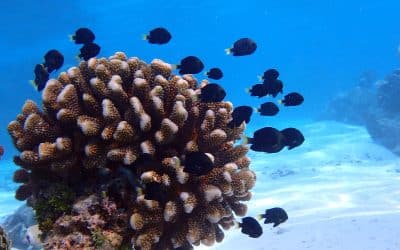
Damselfish-assisted repair of wounded corals surprises scientists
From thermal resistance to rapid wound healing, growing research shows how positive species interactions between Coral-dwelling fish and Corals help marine ecosystems survive warming seas and physical threats; marine experts weigh in on how aquarium trade threats and destructive fishing necessitate protecting these fish as they are essential for overall reef survival.
Impact of investment in the Route of Parks of Chilean Patagonia
From thermal resistance to rapid wound healing, growing research shows how positive species interactions between Coral-dwelling fish and Corals help marine ecosystems survive warming seas and physical threats; marine experts weigh in on how aquarium trade threats and destructive fishing necessitate protecting these fish as they are essential for overall reef survival.

Coral-associated fishes accelerate coral wound healing and photosynthetic recovery
This study conducted in French Polynesia shows Damselfish help wounded Corals heal faster, with recovery rates increasing by 55% for large wounds and 38% for small wounds, highlighting the key role of fish habitat protection in Coral conservation.
Yellowstone’s free-moving large bison herds provide a glimpse of their past ecosystem function
Geremia et al. performed grazing exclusion experiments to examine the effects of bison on soil and vegetation across their migration area. Grazed areas had higher soil microbe density and nitrogen content in both soils and plants. When they are given large areas to roam, bison create habitat heterogeneity and areas with enhanced nutrition that can support denser populations than are deemed...
Taking Animals Into Account: Africa Special Report to the Ramsar Convention on Wetlands
The report evaluates how wild mammals, birds, fish, reptiles and amphibians, macro-crustaceans (especially crabs and crayfish), and molluscs shape lakes, rivers and streams, as well as saltmarshes, seagrass meadows, estuaries, coastal lagoons, deltas and mudflats, mangroves, coral reefs, and kelp forests – all wetland types recognised by the Ramsar Convention on Wetlands. This is a special...
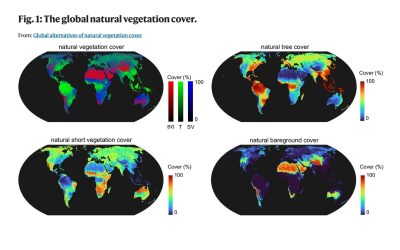
Global alternatives of natural vegetation cover
Preserving and restoring terrestrial ecosystems is essential to preventing the decline of life on Earth. To guide global conservation efforts, this paper presents a detailed counterfactual map showing Earth’s natural tree, short vegetation, and bare ground cover. This map accounts for environmental filtering along with realistic scenarios of fire frequency and wildlife herbivory. The most likely...
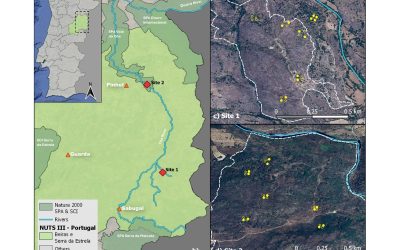
Semi-wild horse grazing as a rewilding strategy: assessing effects on vegetation structure and composition in the Côa Valley, Portugal
This study explores the early effects, over a three-year period, of a transition from extensive commercial cattle grazing to semi-wild horse grazing in two rewilding areas in the Côa Valley region, Portugal. Using grazing exclusion areas as control, the study tests whether the less intensive regime of semi-wild horse grazing can be used to manage vegetation structure and composition, to mitigate...

The Deer and the Tiger, the Forest and the Carbon
In this invited commentary, Schmitz reviews the newly published research in Global Change Biology. Schmitz comments that Roberts et al. (2025) address this formidable challenge to reveal how varying abundance and outright loss of a large predator—the tiger (Panthera tigris)—and the abundance of its “deer” (i.e., ungulate) prey species are related to the capture and storage of carbon in forests...
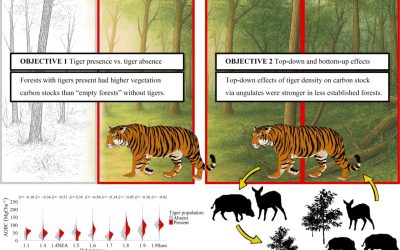
Global Tiger Density Linked With Forest Carbon Stock, Top-Down and Bottom-Up
Globally, forests with tigers living within them store more vegetation carbon than forests without tigers, near consistently across forest habitat types. Our results also showed that in disturbed forests, tigers appear to exert top-down control of carbon stocks through impacts on ungulate biomass where ungulate biomass and carbon stocks are low; in contrast, in more established forests with...
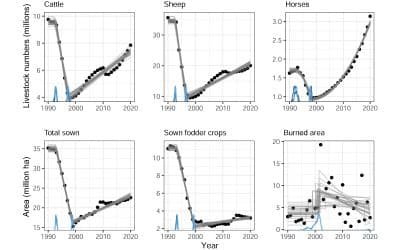
Livestock system collapse/recovery shaping steppe fire regimes
We synthesize evidence for patterns, causes and consequences of recent change in fire regimes across the Eurasian steppes, a neglected global fire hotspot. Key future research topics include the effects of future climate change, changing pyrodiversity and pyric herbivory on ecosystem resilience. Ongoing steppe restoration and rewilding efforts, and integrated fire management will benefit from a...
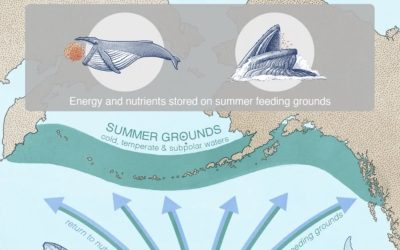
Migrating baleen whales transport high-latitude nutrients to tropical and subtropical ecosystems
This study brings key additional evidence to show that the recovery of whale populations will increase the resilience and adaptive capacity of oceanic ecosystems around the globe. The study looked at humpback, grey and right whales and how they feed over vast areas close to the poles during the summer months and then transport nutrients they build up on their bodies, thousands of miles to...
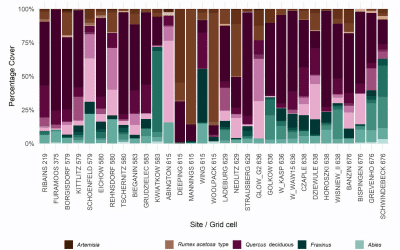
Beyond the closed-forest paradigm: Cross-scale vegetation structure in temperate Europe before the late-Quaternary megafauna extinctions
The study challenges the long-standing assumption that Europe’s temperate landscapes were uniformly covered by closed forest before human impact. They use pollen analyses to reconstruct vegetation patterns from the Last Interglacial and uncover a highly heterogeneous landscape - not the dense, continuous forests often assumed.
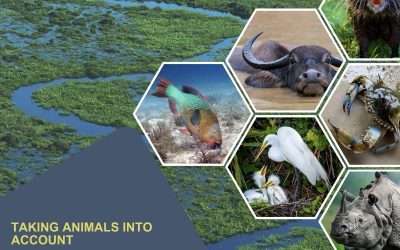
Taking Animals Into Account: The critical role of wild animals in shaping wetland ecosystems and the services they provide. A Report to the Ramsar Convention on Wetlands
The groundbreaking report reveals how wild animals play an underestimated but vital role in keeping the world’s wetlands functional and resilient. Compiled by the Global Rewilding Alliance and ten partner organisations, the study outlines impactful evidence that reintroducing and protecting key wild animal species could be a game-changer in tackling climate change, biodiversity loss, invasive...
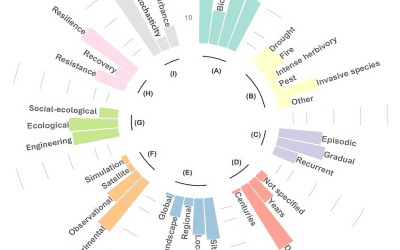
Quantifying the impacts of rewilding on ecosystem resilience to disturbances: A global meta-analysis
A meta-analysis to explore whether rewilding aimed at increasing biodiversity, disturbance stochasticity or connectivity increase ecosystem resilience. Rewilding generally enhances resilience with nearly 70% of observations reporting positive outcomes, 10% neutral and 20% negative. Enhancing connectivity is underrepresented, highlighting a gap in addressing this ecological function for...

Intertwined people-nature relations are central to nature-based adaptation to climate change
Fabien Quétier, Head of Landscapes at Rewilding Europe, has co-authored another important study that, in his words "Highlights the importance of understanding and integrating social, ecological, and social-ecological relations in climate change adaptation, revealing four archetypes that guide effective strategies for adaptation. The global rewilding movement keeps giving me hope in that it...
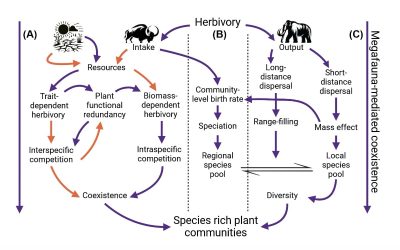
Shifting baselines and the forgotten giants: integrating megafauna into plant community ecology
This paper, focussing mainly on plants, shows how large herbivores directly impact ecosystem diversity and functionality through changes to selection, speciation, drift and dispersal.
Realising the potential of a circular economy for wood-based materials
This briefing paper aims to clarify and elevate the role of wood-based materials and regenerative forestry in a circular economy. As users of wood-based materials, the co-project participants evaluate current forestry practices and the opportunities of regenerative forestry for nature, the economy, and society.
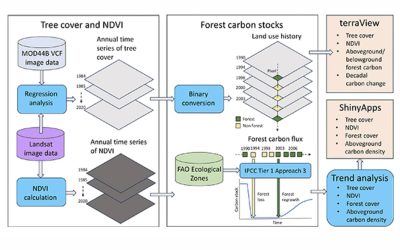
Toward the quantification of the climate co-benefits of invasive mammal eradication on islands: a scalable framework for restoration monitoring
Islands are currently hotspots of biological and cultural diversity but face threats from invasive species and climate change. Invasive mammal eradication on islands is a proven conservation intervention that helps reduce biodiversity loss.
Animating the Carbon Cycle website
Animating the Carbon Cycle (ACC), is an emerging field of science and policy, producing rigorous, peer-reviewed evidence to show how nature recovery is a credible, rapid and cost-efficient option. This website collects and presents available resources and evidence in an accessible way. DISCOVER THE ACC WEBSITE HERE

The human side of rewilding: Attitudes towards multi-species restoration at the public-private land nexus
We surveyed Montana, USA residents representing five stakeholder groups (local ranchers, statewide ranchers, rural residents, urban residents and members of conservation organizations) to assess public attitudes and behaviors towards a suite of species and ecological processes targeted for multi-species restoration in the Northern Great Plains. We also evaluated levels of public support for...
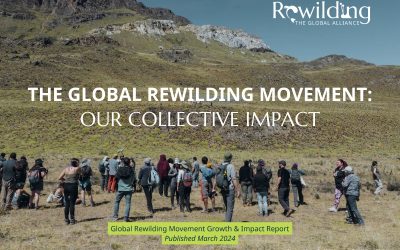
The Global Rewilding Movement: Our Collective Impact
The world's first attempt to summarise the collective impact of the global rewilding movement. A visually stunning, highly accessible 50-page report integrates many great stories, ideas and resources from across the movement. This resource for the whole rewilding movement demonstrates that rewilding is now a truly global movement, and that rewilders are organised, innovative, evidence-based,...
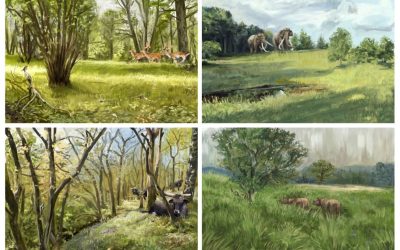
Substantial light woodland and open vegetation characterized the temperate forest biome before Homo sapiens
The extent of vegetation openness in past European landscapes is widely debated. In particular, the temperate forest biome has traditionally been defined as dense, closed-canopy forest; however, some argue that large herbivores maintained greater openness or even wood-pasture conditions. Here, the authors address this question for the Last Interglacial period (129,000–116,000 years ago), before...
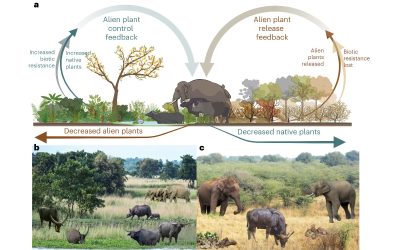
Megaherbivores provide biotic resistance against alien plant dominance
While human-driven biological invasions are rapidly spreading, finding scalable and effective control methods poses an unresolved challenge. Here, the authors assess whether megaherbivores—herbivores reaching ≥1,000 kg of body mass—offer a nature-based solution to plant invasions. Invasive plants are generally adapted to maximize vegetative growth. Megaherbivores, with broad dietary tolerances,...
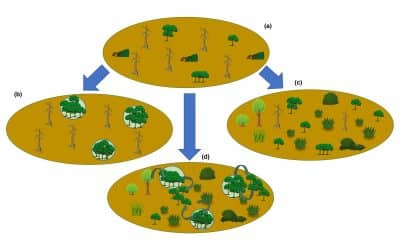
Restore or rewild? Implementing complementary approaches to bend the curve on biodiversity loss
In this perspective, we aim to help the scientific, practitioner and policy communities interested in nature recovery to appreciate the benefits of integrating restoration and rewilding approaches. We then call on them to support the emergence of infrastructures and frameworks that facilitate the coordination and integration of the restoration and rewilding agendas.
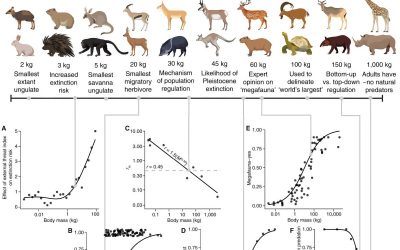
Impacts of large herbivores on terrestrial ecosystems
Large herbivores play unique ecological roles and are disproportionately imperiled by human activity. As many wild populations dwindle towards extinction, and as interest grows in restoring lost biodiversity, research on large herbivores and their ecological impacts has intensified. Yet, results are often conflicting or contingent on local conditions, and new findings have challenged...
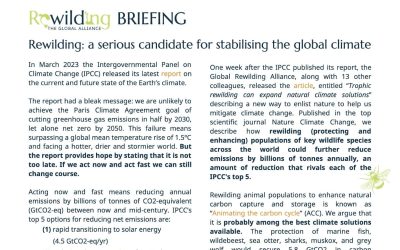
Rewilding, A Serious Candidate For Stabilising The Global Climate
In March 2023 the Intergovernmental Panel on Climate Change (IPCC) released its latest report on the current and future state of the Earth’s climate. The report had a bleak message: we are unlikely to achieve the Paris Climate Agreement goal of cutting greenhouse gas emissions in half by 2030, let alone net zero by 2050. This failure means surpassing a global mean temperature rise of 1.5ºC and...
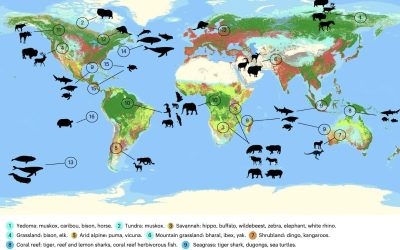
Trophic Rewilding Can Expand Natural Climate Solutions
This study presents scientific evidence showing that protecting and restoring wild animals and their functional roles can enhance natural carbon capture and storage and be a key component of natural climate solutions.
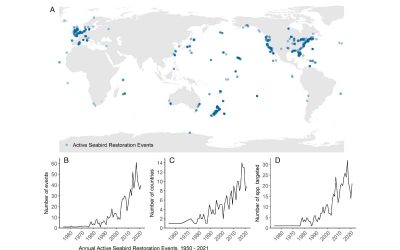
Tracking the global application of conservation translocation and social attraction to reverse seabird declines
This study addresses this gap for conservation decision makers responsible for seabirds and coastal management. We systematically reviewed active seabird restoration projects worldwide and collated results into a publicly accessible Seabird Restoration Database.
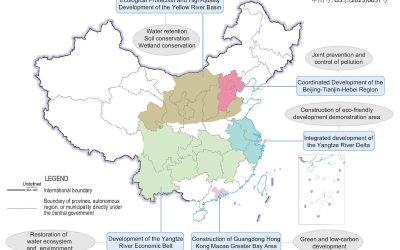
Ecological restoration for sustainable development in China
Research suggests that there existed local win−win synergies between ecosystem health and sustainable livelihoods and/or socioeconomic development. However, the identification of such win−win solutions for regional policymaking is still in progress, as benefits and incentives change across scales.
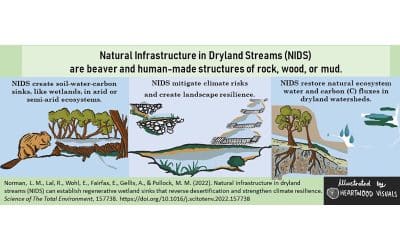
Natural infrastructure in dryland streams (NIDS) can establish regenerative wetland sinks that reverse desertification and strengthen climate resilience
The authors introduce Natural Infrastructure in Dryland Streams (NIDS), which are structures naturally or anthropogenically created from earth, wood, debris, or rock that can restore implicit function of these systems. In addition, we present the novel, evidence-based finding that NIDS can create wetlands in water-scarce riparian zones, with soil organic carbon stock as much as 200 to 1400 Mg...
Harnessing island–ocean connections to maximize marine benefits of island conservation
Eradication of invasive mammals and restoration of native biota are promising tools to address both island and ocean management goals. The magnitude of the marine benefits of island restoration, however, is unlikely to be consistent across the globe. We propose a list of six environmental characteristics most likely to affect the strength of land–sea linkages: precipitation, elevation,...
Ecological Protection and Livelihood Improvement in Ecologically Vulnerable Regions
The conflicts between protection and development are understood as the conflicts between ecological systems and social systems through dynamic land transitions such as land use (human control) and land cover (biophysical control).
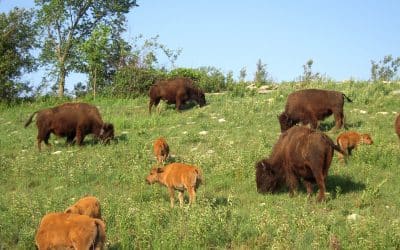
Bison outperform cattle at restoring their home on the range
High-diversity grasslands are increasingly recognized as “old-growth” communities, having assembled over at least millennia, and often much, much longer. Human-caused disturbance frequently disassembles such communities, reducing them to lower-diversity states. A substantial challenge to conservationists interested in habitat restoration is to reassemble high-diversity communities that have been...
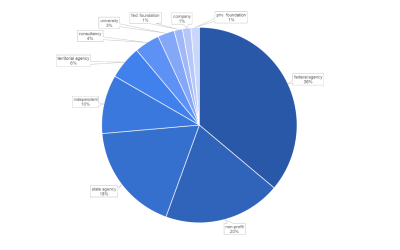
Assessment of Seabird Restoration Priorities for the U.S. Pacific Islands
Conservation priorities for non-federally listed seabirds breeding within the U.S. Pacific Islands (USPI), with a focus on seabird colony restoration using social attraction and translocation. It covers five distinct geographic regions: the Main Hawaiian Islands (MHI), the Northwestern Hawaiian Islands (NWHI) including Papahānaumokuākea Marine National Monument, the Commonwealth of the Northern...
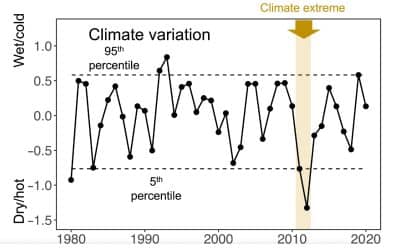
Reintroducing bison results in long-running and resilient increases in grassland diversity
Our results suggest that many grasslands in the Central Great Plains have substantially lower plant biodiversity than before widespread bison extirpation. Returning or “rewilding” native megafauna could help to restore grassland biodiversity.
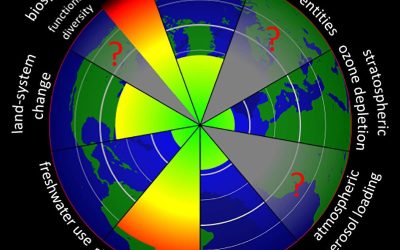
“Nature’s contributions to people” and peoples’ moral obligations to nature
This paper argues that far from being half of an unhelpful dichotomy, intrinsic natural values are incontrovertible elements of any honest effort to sustain Earth's biodiversity. The "good life" they support is a good life for humans, and not for nonhuman beings or collectives. While passingly acknowledging intrinsic natural values, the current IPBES platform gives little attention to these, and...
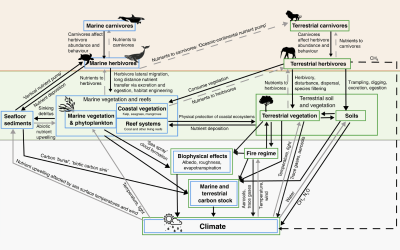
The role of large wild animals in climate change mitigation and adaptation
Two major environmental challenges of our time are responding to climate change and reversing biodiversity decline. Interventions that simultaneously tackle both challenges are highly desirable. To date, most studies aiming to find synergistic interventions for these two challenges have focused on protecting or restoring vegetation and soils but overlooked how conservation or restoration of...
Animating The Carbon Cycle
Against the backdrop of biodiversity decline and rising global temperatures, there has never been a greater awareness of our need for nature and the wide range of benefits it provides. Practical rewilding initiatives have already demonstrated that by enhancing so-called nature-based solutions, recovering nature can - and should - play a game-changing role in fixing our climate, increasing...
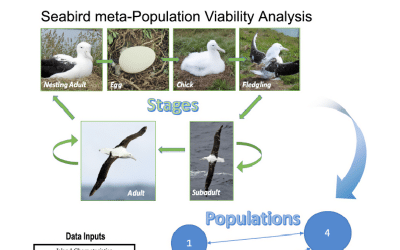
Seabird meta-Population Viability Model (mPVA) methods
The seabird meta-population viability model (mPVA) projects population trends and extinction risk for 102 seabird species under different conservation scenarios. It uses a stage-structured matrix model accounting for breeding island features, dispersal, and spatial distribution. Data sources include published and grey literature and expert input from over 500 contributors. Impacts of invasive...
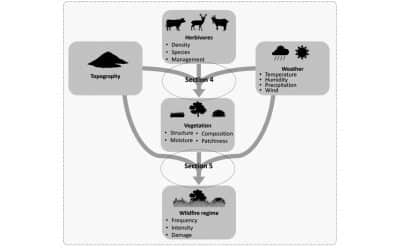
Empirical synthesis: herbivores reducing fuel loads and wildfire severity
"Here, we review the evidence on whether management with herbivores can reduce fuel load and mitigate wildfires, and if so, how to identify suitable management that can achieve fire mitigation objectives while providing other ecosystem services. We systematically reviewed studies that investigated links between herbivores, fire hazard, fire frequency and fire damage. We found that, in general,...
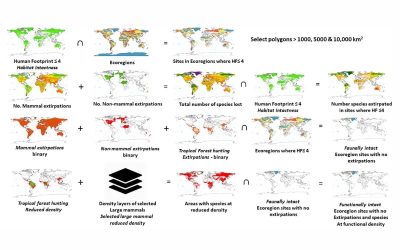
Where Might We Find Ecologically Intact Communities?
Conservation efforts should target the few remaining areas of the world that represent outstanding examples of ecological integrity and aim to restore ecological integrity to much broader areas with intact habitat and minimal species loss.
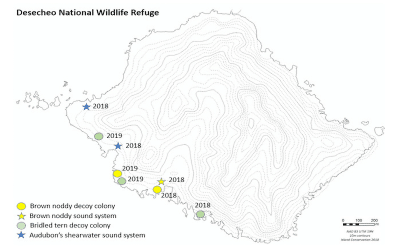
The use of social attraction techniques to restore seabird colonies on Desecheo Island, Puerto Rico
Desecheo Island, once a key seabird habitat in the Caribbean, saw major declines due to invasive mammals and past military use. Conservation efforts began in 1976, leading to the eradication of goats, macaques, and rats by 2016. In 2018, social attraction methods (decoys, mirrors and sound systems,) were introduced to aid seabird recovery, targeting bridled terns, brown noddies, and the...
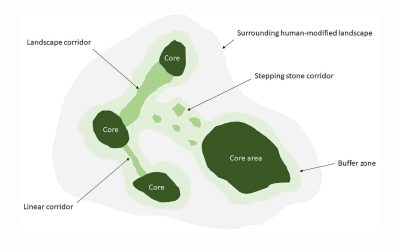
Guiding Principles for Rewilding
There has been much recent interest in the concept of rewilding as a tool for nature conservation, but also confusion over the idea, which has limited its utility. The authors of this paper developed a unifying definition and 10 guiding principles for rewilding through a survey of 59 rewilding experts, a summary of key organizations’ rewilding visions, and workshops involving over 100...
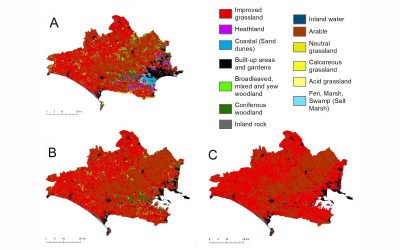
Ecological restoration of agricultural land can improve its contribution to economic development
Landscape-scale ecological restoration of agricultural land can potentially increase the contribution of this land to economic development and employment, by increasing flows of all ES other than those associated with agricultural production. The evidence provided by this research therefore supports calls for investment in natural capital, using approaches such as ecological restoration and...
Seabird Restoration Database website
Thanks to the generous support from the Packard Marine Bird Program, the Seabird Restoration Database was developed as the first conservation database of its kind, documenting global efforts to restore seabirds using active restoration techniques. Between 2020 and 2022, data were collated from literature, reports, and databases, and consultations were conducted with over 500 seabird experts to...
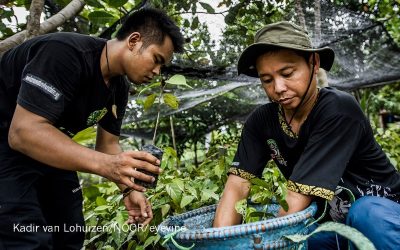
Restoring natural forests is the best way to remove atmospheric carbon
Plans to triple the area of plantations will not meet 1.5 degree climate goals. New and restored natural forests can help remove atmospheric carbon and lock it up within ecosystems in a safe and affordable way. (This article is behind a paywall)
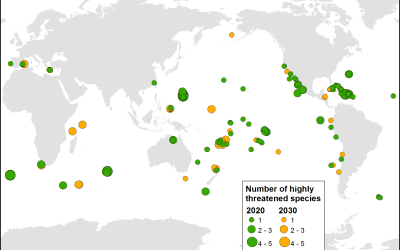
Globally important islands where eradicating invasive mammals will benefit highly threatened vertebrates
Eradicating invasive mammals from islands is a feasible and proven approach to prevent biodiversity loss. We developed a conceptual framework to identify globally important islands for invasive mammal eradications to prevent imminent extinctions of highly threatened species using biogeographic and technical factors, plus a novel approach to consider socio-political feasibility.
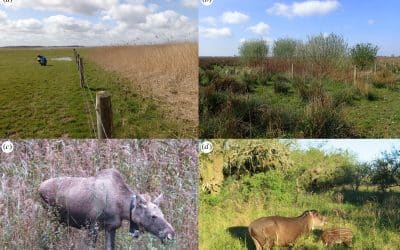
Trophic rewilding: impact on ecosystems under global change
There is increasing evidence that this global wildlife loss, or defaunation, does not only imply the loss of charismatic animals but also the functions they have in ecosystems. To restore these missing functions, a novel ecological restoration technique has emerged, referred to as rewilding. Rewilding aims to restore natural processes in ecosystems in general, and often focuses on...
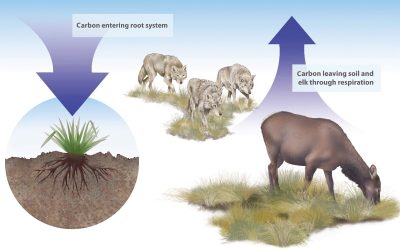
Effects of gray wolf-induced trophic cascades on ecosystem carbon cycling
It is predicted that predator-induced trophic cascades could have important impacts on ecosystem carbon cycling. Yet the magnitude and direction of predator impacts on carbon cycling have not been widely quantified until now.
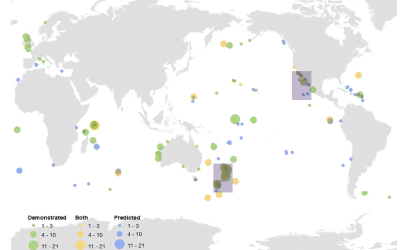
Invasive mammal eradication on islands results in substantial conservation gains
This study brings key additional evidence to show that the recovery of whale populations will increase the resilience and adaptive capacity of oceanic ecosystems around the globe. The study looked at humpback, grey and right whales and how they feed over vast areas close to the poles during the summer months and then transport nutrients they build up on their bodies, thousands of miles to...