
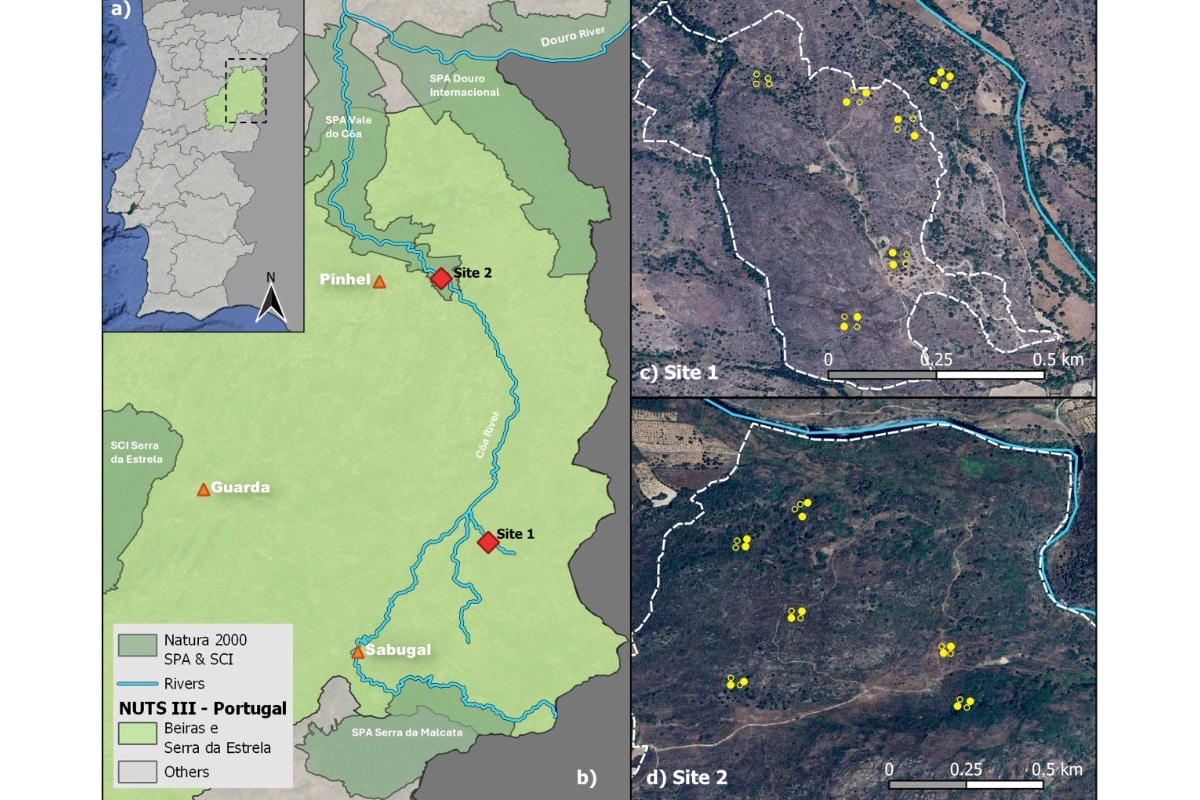
This study explores the early effects, over a three-year period, of a transition from extensive commercial cattle grazing to semi-wild horse grazing in two rewilding areas in the Côa Valley region, Portugal. Using grazing exclusion areas as control, the study tests whether the less intensive regime of semi-wild horse grazing can be used to manage vegetation structure and composition, to mitigate local fire hazard and promote biodiversity. Results indicate that semi-wild horse grazing contributes to maintaining open habitats by controlling grass dominance, thereby reducing local fire hazard and potentially fostering habitat and food resources for insects. While this demonstrates the potential of using semi-wild horse grazing in rewilding, the results also suggest that horses alone, particularly at low densities, have limited impact on woody vegetation structure.

Policy & Community Wins for Nature: $200M for 100 species, a New UNESCO Site & More
2026 is delivering major wins for nature recovery and rewilding. Credit from left to right: 1. Filmico, Acandi Wildlife Sanctuary 2. Marcus Westburg, Rainforest Trust 3. Zanji Sikhala, IFAW 4. Tsvibrav from Getty Images 5. Kamchatka 6. John Carnemolla from Getty...