
A street in Wellington. Photo: Predator Free NZ.
Wellington, New Zealand, is demonstrating that a modern city can successfully rewild through three major overlapping initiatives over the past 25 years: Zealandia (the world’s first fully fenced urban sanctuary), Predator Free Wellington (which cleared the Miramar Peninsula of invasive predators), and The Capital Kiwi Project (which reintroduced wild kiwi). Backed by community-driven trapping resembling municipal infrastructure, native bird populations—including kākā, kererū, tūī, and kiwi—have seen dramatic increases. This collaborative, citizen-supported approach offers a unique, context-dependent model for urban conservation and global rewilding efforts.
Wellington has spent 25 years fencing a valley, emptying a peninsula of rats and returning Kiwi to its hills… and the bird counts say it’s working.
Each year between early November and early January, observers work their way through a hundred marked points in the forested parks and reserves of New Zealand’s capital city. At each one, they stand still for five minutes and write down every bird they can see or hear, returning a second time on a different day to compare.
It is dull, methodical work, and it has produced some of the most persuasive evidence anywhere that a modern city can be made wilder on purpose.
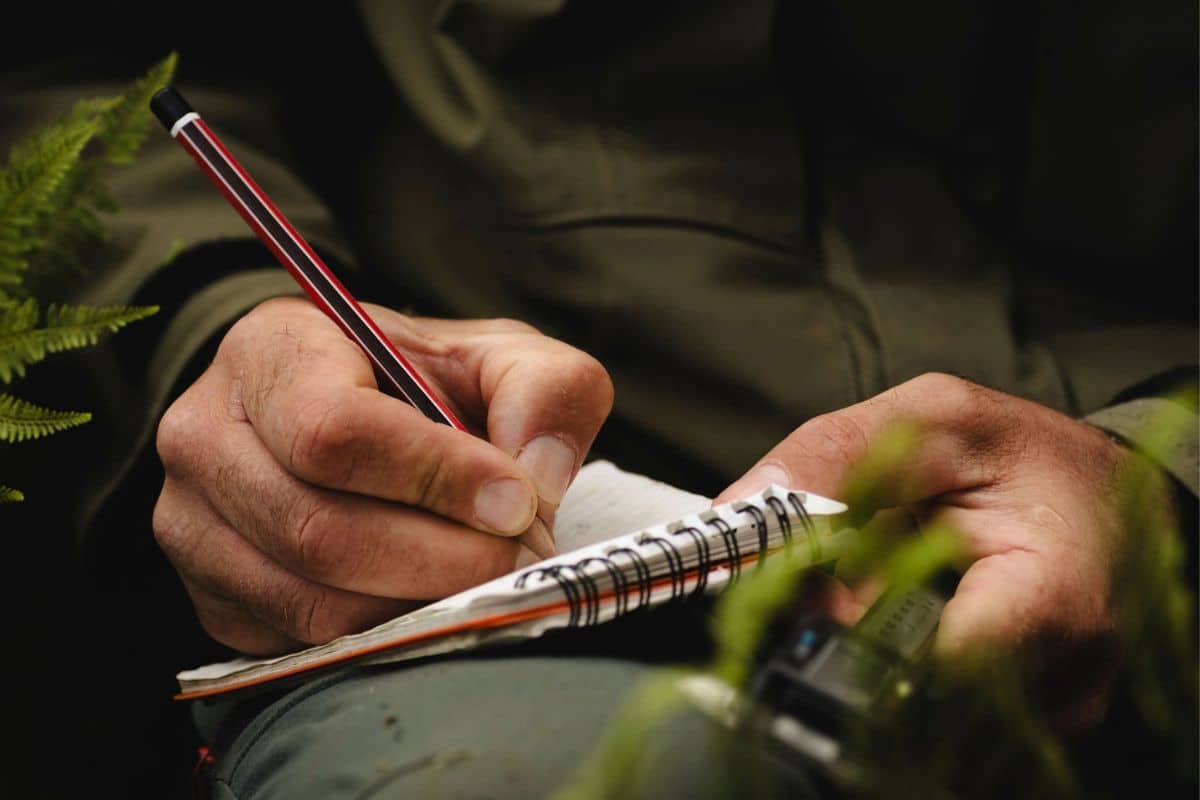
Ongoing bird count. Photo: Predator Free NZ
Over the first decade of counts, the survey recorded a 250 percent rise in detections of kākā, a large native forest parrot, and a 186 percent rise in kererū, the New Zealand wood pigeon. Tūī, a nectar feeder with a tuft of white at its throat, more than doubled. The number of native birds recorded per count rose by half. Introduced birds increased as well, and Wellington has become one of a very small number of cities in the world where native biodiversity is measurably rising.
None of this is happening in a backwater. Wellington is where Peter Jackson built The Lord of the Rings’ Middle-earth, and where the visual effects houses that made James Cameron’s Avatar films still work. Musical comedy duo Flight of the Conchords came out of the bars along Cuba Street; filmmaker Taika Waititi went to school here. The gaming studio behind Mini Motorways runs from an office in the central city, Jacinda Ardern went to work up the hill at Parliament, and the craft breweries are thick enough on the ground to be a reason to visit on their own.
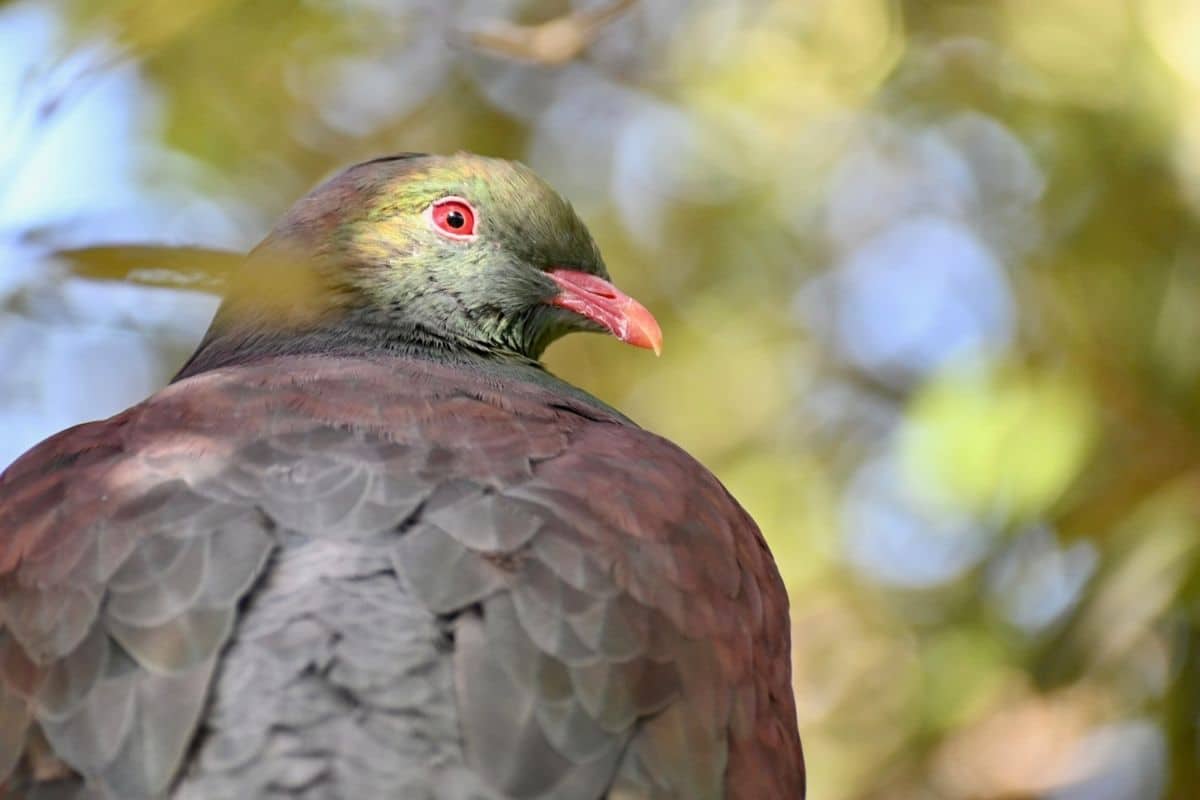
A kererū. Photo: Predator Free NZ.
The biodiversity gains are the product of three overlapping projects, run by different organisations over a quarter of a century, that have gradually erased the line between the city and the conservation land around it.
Zealandia: An urban source, not an isolated island.
Enter Zealandia Te Māra a Tāne, a forested valley of 225 hectares that sits a mile and a half from the New Zealand Parliament. In 1999, it was enclosed by a 8.5-kilometre fence engineered to exclude every introduced mammal — rats, stoats, weasels, possums, and cats — and became the world’s first fully fenced urban sanctuary. A haven for native biodiversity, which would eventually evolve.
Its founders were not principally interested in the valley. To them, it functioned as a source for native wildlife. Birds bred behind the fence, crossed it and colonised the suburbs beyond, an effect ecologists call the halo. And those kākā, kererū and tūī breed freely well beyond the fence now, in ordinary suburban gardens.
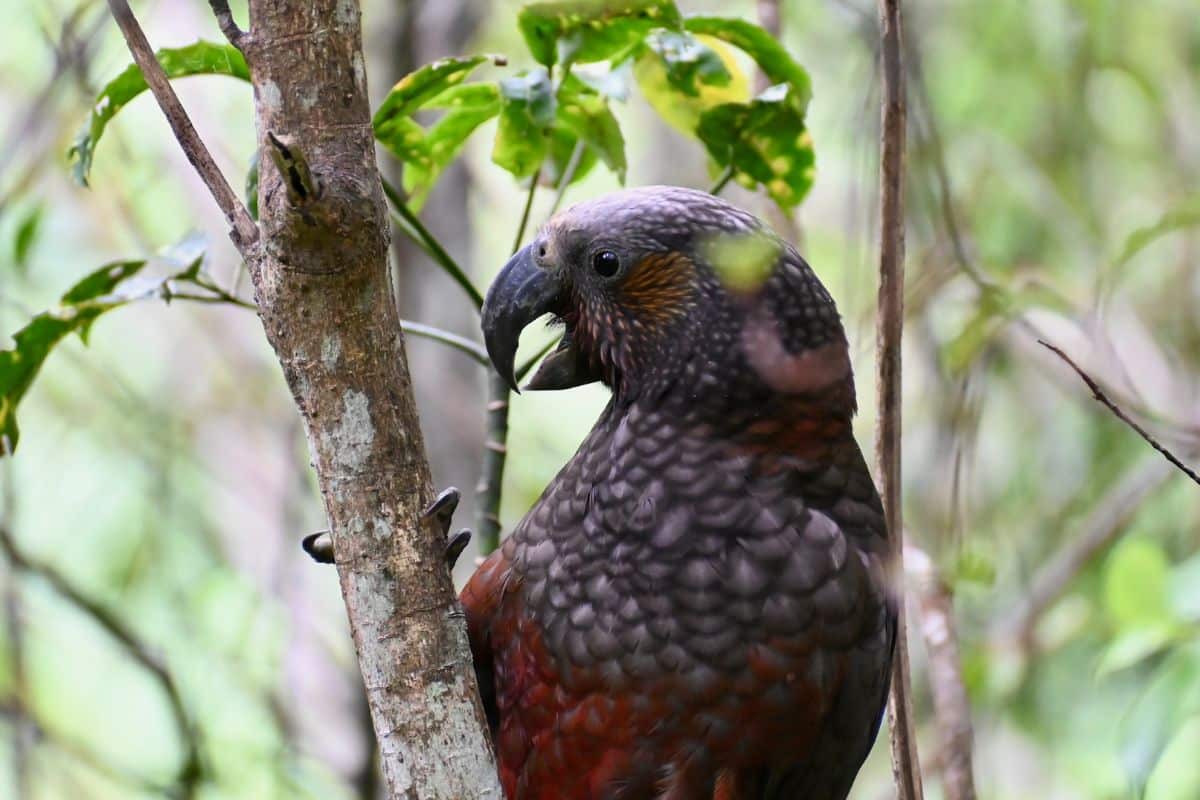
A kākā in Zealandia. Photo: Predator Free NZ.
Other reintroduced species have barely left it. Toutouwai (North Island robin), tīeke (saddleback) and hihi (stitchbird) stay clustered within a mile of the wire, and banding work in the reserves just outside showed why: of 37 adult toutouwai marked in 2017, 11 still held territory the following breeding season and four survived a further winter. They nest successfully but are then often predated, most likely by the city’s free-roaming domestic cats. It is an ongoing problem, and not one a fence can solve alone.
Predator Free Wellington: Can a neighbourhood remove invasive species?
The second project was perhaps the most ambitious and large-scale: to remove invasive species from a densely populated urban area. Spoiler: yes, it worked.
Predator Free Wellington started with the Miramar Peninsula: 1,093 hectares holding seven suburbs, some 20,000 residents, a dozen schools, an airport runway at its neck and thousands of private back gardens whose owners each had to give permission for a trap or bait station.
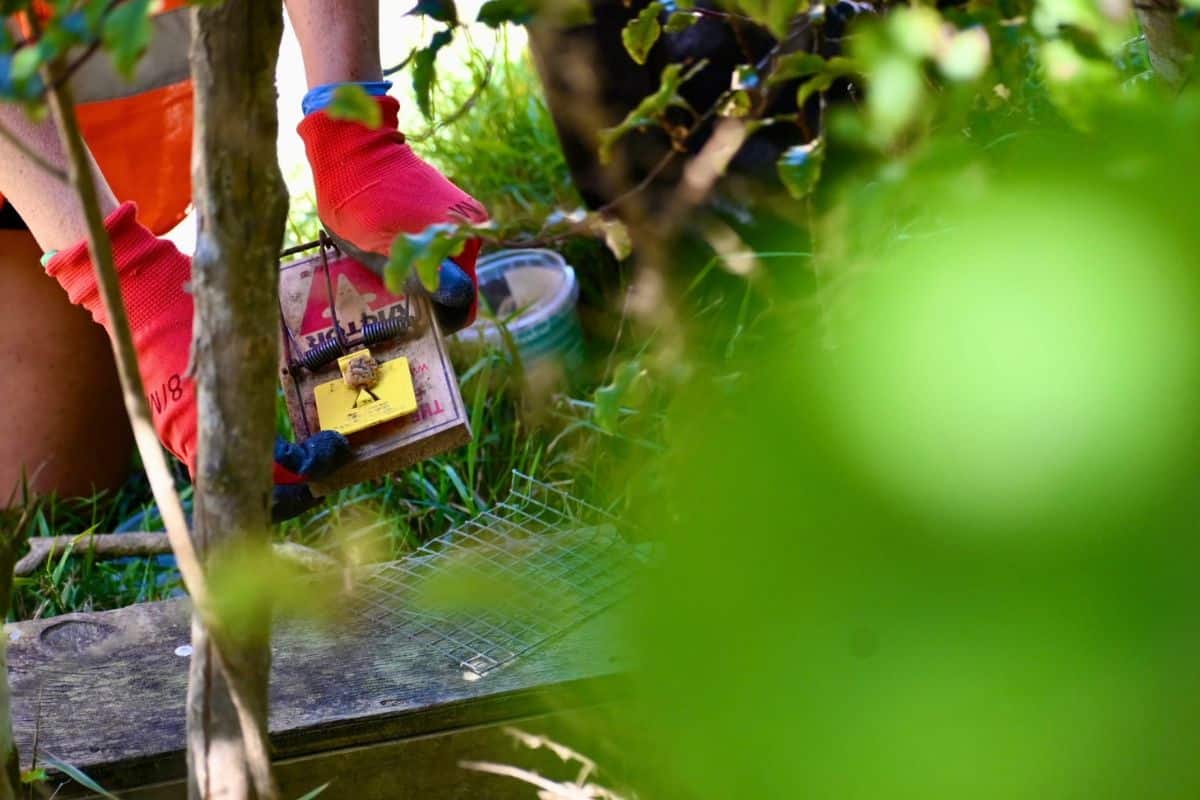
Trap check. Photo: Predator Free NZ.
In November 2023, 6 years after the project started, the peninsula was declared free of Norway rats, ship rats, stoats and weasels, the first urban area of its size and social complexity anywhere to achieve it. Keeping it that way requires a permanent biosecurity operation of monitoring cameras, rat detection dogs and residents willing to report droppings.
The ecological effect was rapid. Native bird detections rose 136 percent between 2017 and 2023. Kōtare, the sacred kingfisher, increased fivefold. Riroriro, the grey warbler, rose 280 percent. Tree wētā, a heavy flightless insect, roughly tripled. Kākāriki, a native parakeet, appeared on the peninsula for the first time in living memory.
Community trapping and the sanctuary’s halo work hand-in-hand; birds spreading out from behind the fence now arrive in a landscape where they can thrive.
The project is working west and north through a five-phase programme covering about 30,000 hectares and 70,000 households, and has cut its cost per acre by as much as three-quarters as it goes.
Capital Kiwi: Can the iconic kiwi return to the capital?
The third project aimed at having Wellington filled with New Zealand’s national symbol and namesake: the kiwi. And again, the project was successful. Efforts over the last 10 years have brought the iconic bird back.
The Capital Kiwi Project has released 250 kiwi across 32,800 hectares of hills, wind farms and regional park on the city’s western edge, areas that had held no wild kiwi for more than a century.
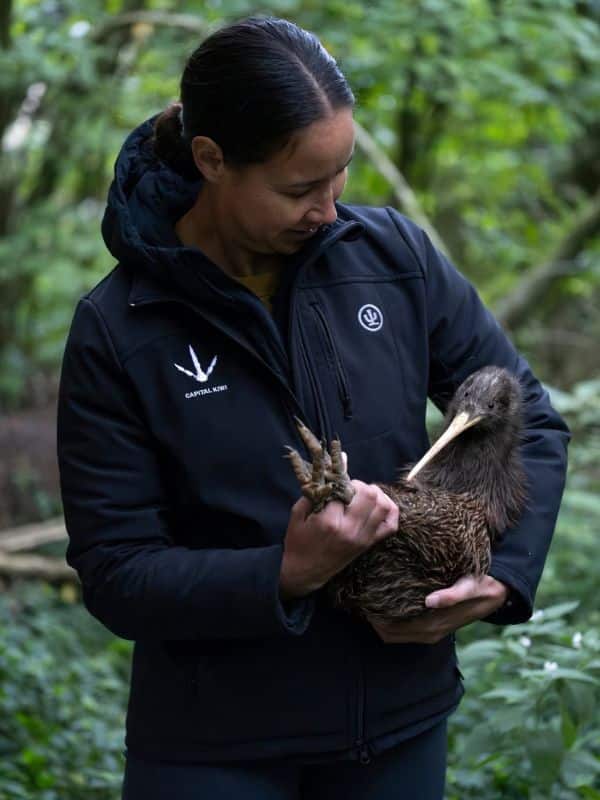
Kiwi release. Photo: Capital Kiwi
More than 5,000 traps went into the hills first, laid across public land and working farms with the agreement of more than 100 private landowners. The birds were translocated once stoat numbers (Kiwi’s number one predators) had collapsed, in November 2022.
Kiwi chicks hatched in the hills the following season, the first born near the capital in at least 150 years. They were conceived, laid, hatched and raised there by parents living wild, without the incubators and hatcheries that have underpinned most kiwi conservation for three decades. Current chick survival is running near 90 percent, roughly three times the level authorities look for in a population capable of sustaining itself.
Young birds carry a small radio transmitter until they reach about two pounds, the weight at which a kiwi can fight off a stoat. When they get there, the transmitter is cut off. It is a minor piece of fieldwork that captures the mission of actively growing wild kiwi.
The last transmitter came off early last month.
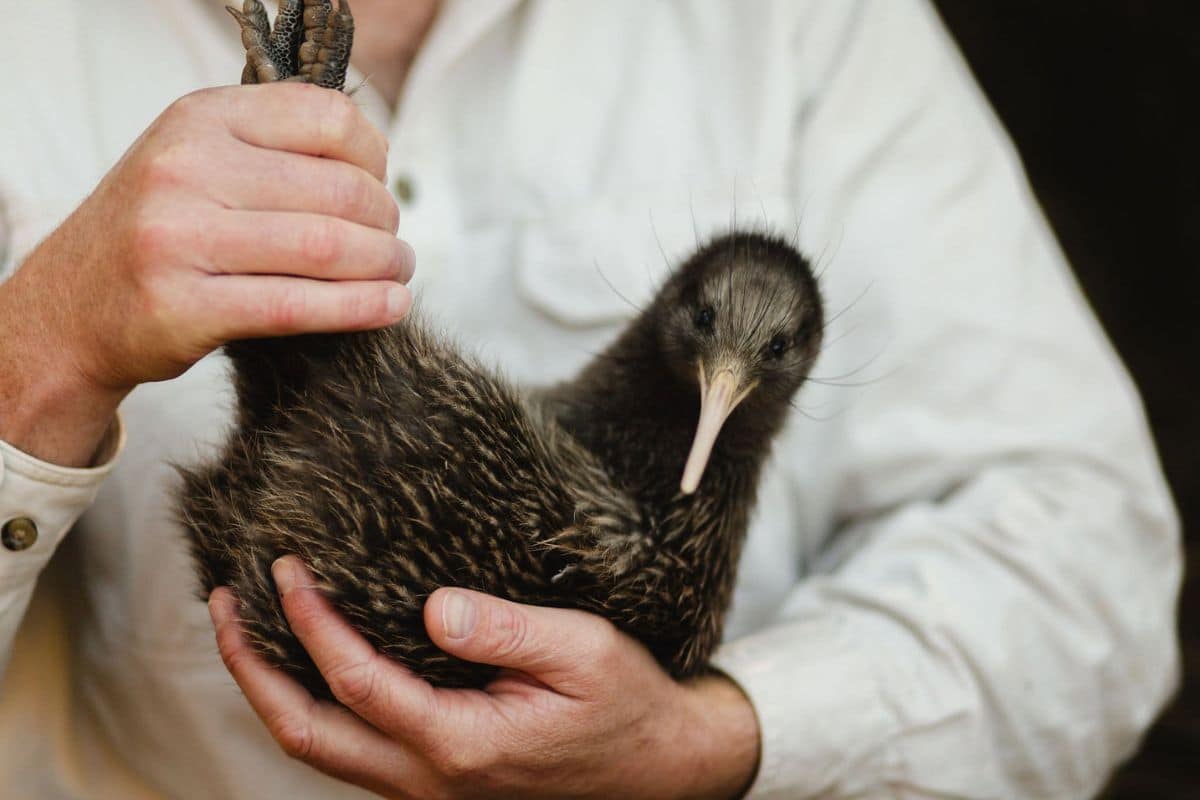
A kiwi ready to be reintroduced. Photo: Capital Kiwi
A civic responsibility
Wellington sits inside a national commitment. The Predator Free 2050 strategy, adopted as government policy in 2016, commits New Zealand to eliminating rats, stoats and possums from the entire country by mid-century.
Its most unusual feature is not the target but the participation. More than 9,000 community trapping initiatives now operate alongside large landscape projects, supported by organisations, including our partner, the Predator Free New Zealand Trust. Tens of thousands of people trap in their own gardens. Neighbours compare tips and tricks. Schools check tracking tunnels to see what species are in their parks. The activity resembles municipal infrastructure more than an environmental campaign.
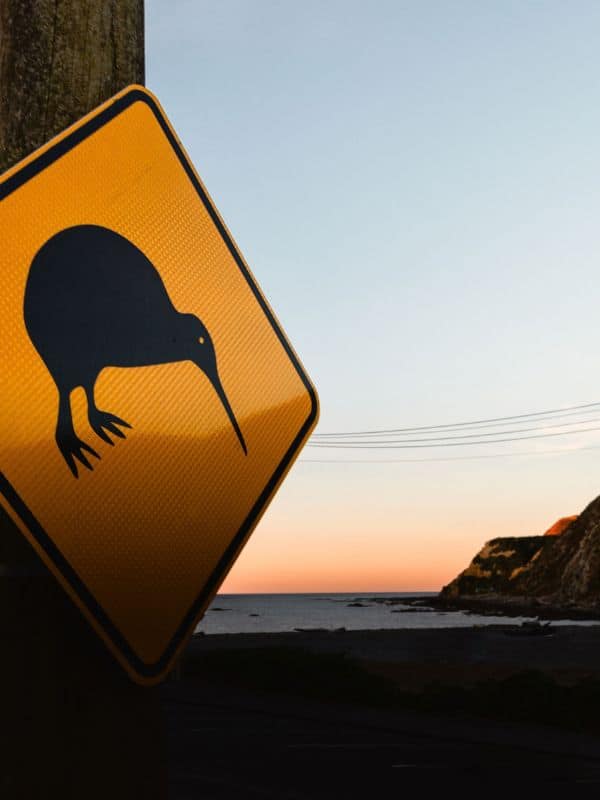
Kiwi sign. Photo: Predator Free NZ.
This project offers further proof of how people are key to rewilding efforts. In this case, the people of New Zealand’s capital came together and chose to live in a city filled with wild, healthy nature. From working farms to private gardens, from streets to public parks – landscapes are being rewilded through the consent of the people who live there.
Nothing on this scale has been tried before. Invasive species removal has succeeded on islands, usually uninhabited, measured in dozens of hectares. New Zealand has proposed the same thing for a country, held by five million people who all have to agree to it. And impressively/against all odds, the capital city is where it has gone furthest: a wild and windy town of steep streets above the Cook Strait, where the bird counts keep going up.
The inaugural Predator Free Conference launches in Wellington on Feb. 1 and 2, 2028, bringing New Zealand’s practitioners, researchers and community groups together with counterparts from overseas. Sign up to be first in line for early-bird pricing, with a further discount for members of the Global Rewilding Alliance.
–
New Zealand has some of the most unique wildlife and ecological processes on Planet Earth. As the wildlife there has evolved with few predators, rewilders face a very particular set of challenges. From a global perspective, fencing species and removing predators is an uncommon form of rewilding, as most of the challenges the rest of the world faces are an absence of predators and fragmented nature. Wellington, and the organisations driving Predator Free 2050, a huge-scale rewilding initiative, also offer further proof of how rewilding is not a one-size-fits-all approach, but is context-dependent. It also proves how the greatest knowledge and the wisest approaches come from the locals and the land they inhabit.
But whilst rewilding is context-dependent, one thing unites all rewilders: our commitment, vision and passion for a planet wild again. In that, we are not alone.

About the Global Rewilding Alliance
The Global Rewilding Alliance brings together over 300 organisations across every continent to catalyse a worldwide movement for nature’s recovery. We accelerate learning, convene evidence, and share the successes and benefits of rewilding —inspiring more organisations to rewild and unlocking new resources for rewilding. Learn more about our work.
About Predator Free New Zealand
Founded in 2013, the Predator Free New Zealand Trust is an independent charitable trust that works alongside a variety of agencies, organisations and groups, all with the ambitious vision of eradicating rats, stoats and possums by 2050. New Zealand-wide local community groups, hapū/iwi and private landowners are working towards the Predator Free 2050 Vision.