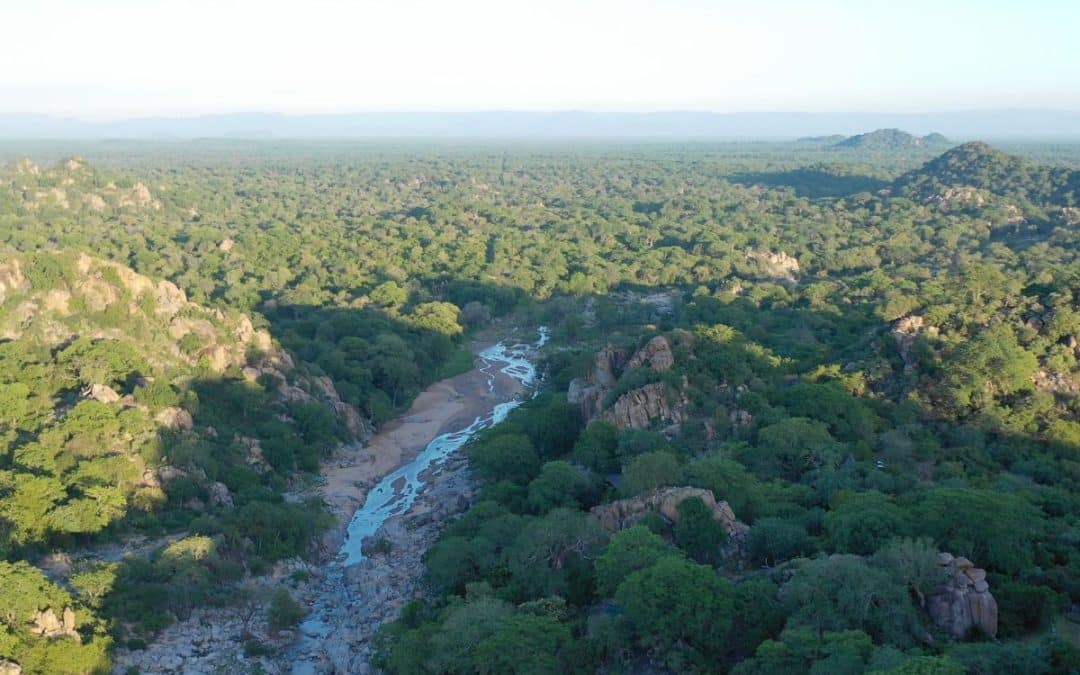
Aerial view of Sango. Photo credit: Sango Nature Project.
Over the course of 30 years Sango Nature Project has rewilded the Sango Nature Reserve, reintroducing several species and restoring ecological processes through rigorous, science-based rewilding, with climate, people and biodiversity in mind. Several species have returned, including Black and White Rhino, Cheetahs, Leopards, Hippos and Elephants, among others. Now it is a thriving conservancy that hires 78% of staff from the local area, has created a wildlife corridor for Wild Dogs and holds 8.5 million tons of certified carbon.
In 1993, Wilfried Pabst acquired a piece of land in southeastern Zimbabwe that had been ground down by more than a century of intensive cattle ranching. The soils were exhausted, the native vegetation stripped bare, and most of its wildlife long gone.
What he saw in that depleted landscape, however, wasn’t ruin – it was potential for landscape-wide healing, the return of wildlife and the processes they provide, as well as local people who would eventually become community tied to the land. That conviction, and the patient, science-led work that followed, gave rise to what is now one of Southern Africa’s most compelling rewilding success stories: the Sango Nature Project, our Alliance Partner.
Landscape-scale transformation
Spanning nearly 60,000 hectares of savanna, woodland, wetlands, and riverine habitat along 24 kilometers of the Savé River, the Sango of today looks almost nothing like the degraded ranch it once was.
The 30-year transformation from degraded ranch to a nationally-treasured wildlife conservancy took time and intention. Cattle infrastructure was dismantled, other pressures on the land were reduced, and nature was given the conditions it needed to recover, a key principle of rewilding. In 2005 to 2006, a turning point in their rewilding story came with the reintroductions of Lions and White Rhinos.
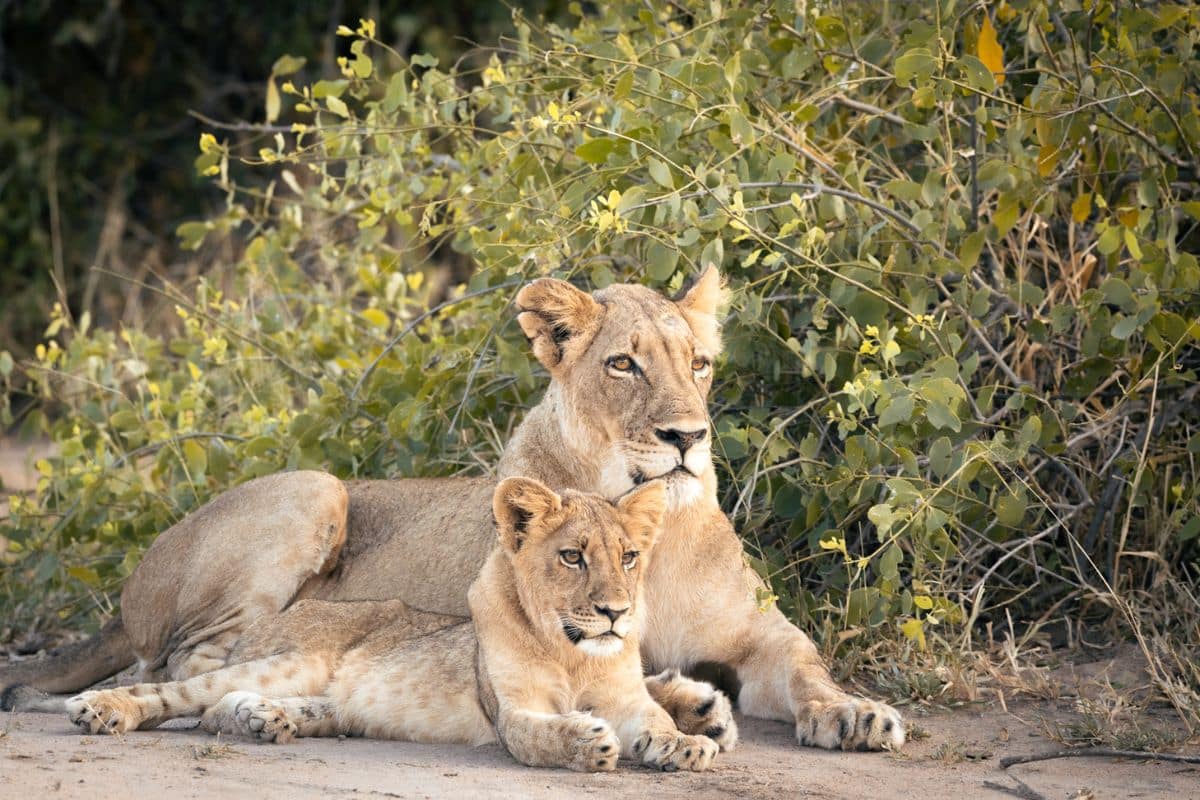
Lion mother and cub. Photo credit: Sango Nature Project.
A Wildlife Bounce-Back Success Story
Today, Sango is home to thriving populations of Elephants, African Wild Dogs, Cheetahs, Leopards, Hippos, and one of the continent’s most significant concentrations of Black Rhinos – an umbrella species. By protecting approximately one-seventh (14%) of Zimbabwe’s entire remaining Black Rhino population, this puts Sango as one of the single most important individual genetic reservoirs for the species in Southern Africa.
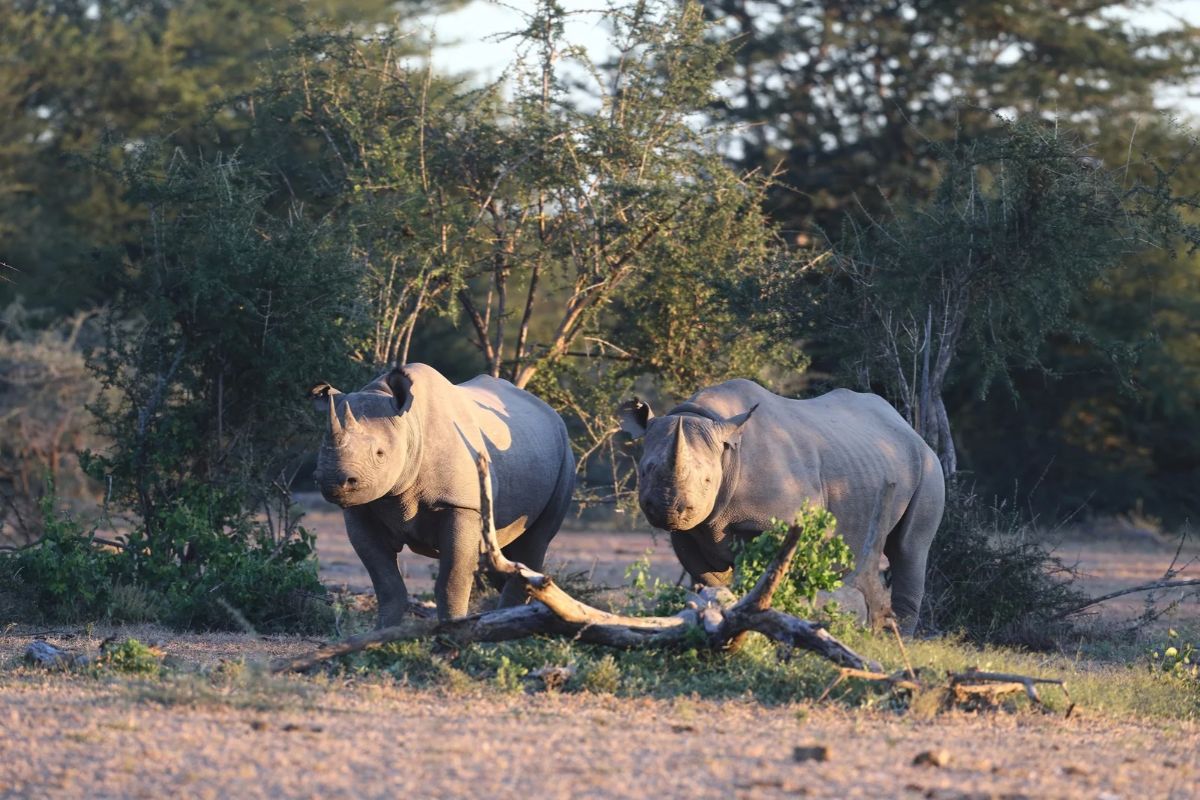
Black Rhino. Photo credit: Sango Nature Project.
The Black Rhino’s success story here isn’t alone.
The African Wild Dogs (painted dogs) are among Africa’s most endangered carnivores – classified as ‘endangered’ on the IUCN Red List – due to habitat fragmentation and snare trapping. In partnership with the African Wildlife Conservation Fund (AWCF), Sango has built one of the safest habitats for Wild Dogs in the region, where packs achieve an extraordinary 80% hunting success rate.
Sango serves as a crucial wildlife corridor linking the Savé Valley to surrounding landscapes like Malilangwe and Gonarezhou National Park, allowing Wild Dog packs to safely disperse and naturally repopulate neighboring reserves.
Why does this matter?
- As “coursing predators” (hunters that pursue prey over long distances rather than ambushing), Wild Dogs test an animal’s stamina. Consequently, they selectively catch older, weaker, or diseased prey – such as Impala and Kudu – improving the overall genetic health and resilience of herbivore populations.
- They create what we call a “Landscape of Fear”: By constantly moving through huge ranges (often over 1,500km2), Wild Dogs keep herbivore herds on the move. This prevents antelopes from overgrazing single patches of vegetation, allowing plant communities, trees, and riverbanks to regenerate.
- Although Wild Dogs eat quickly to avoid losing food to larger carnivores, their kills supply vital food for smaller scavengers, including Jackals, Vultures, and insect populations – their presence affecting a whole array of other species.
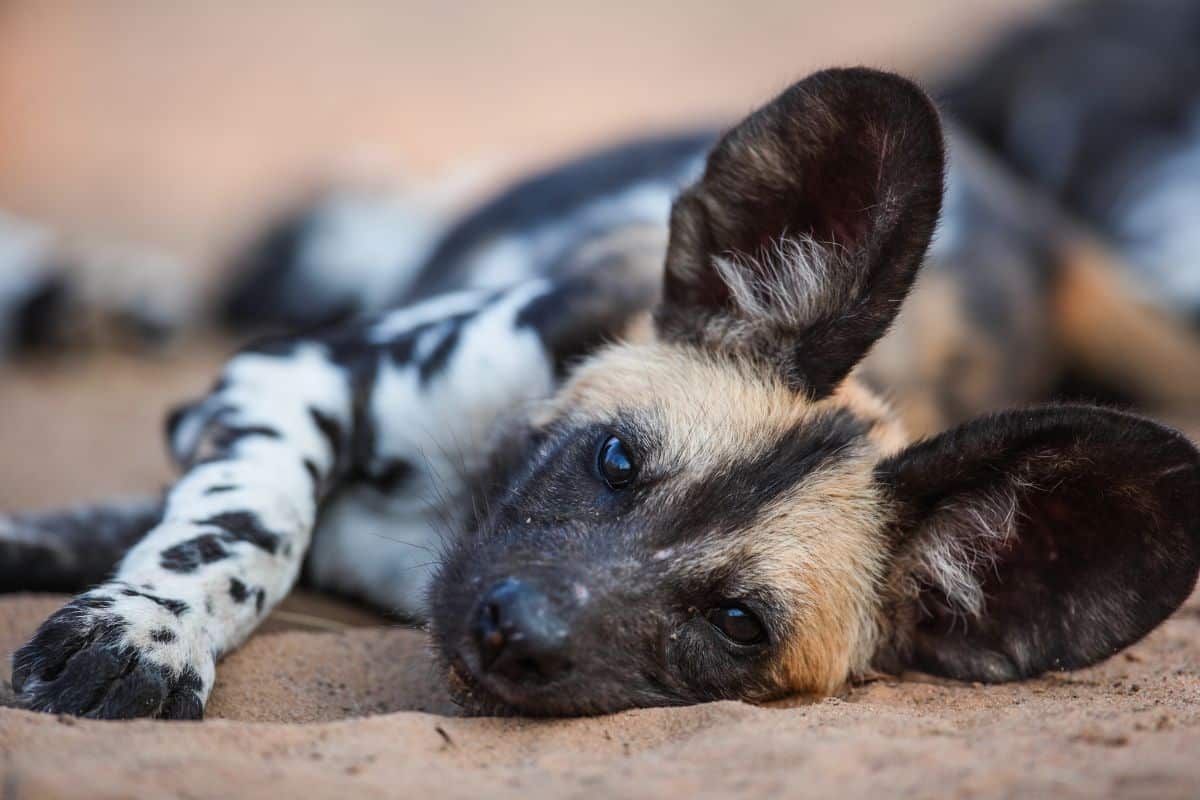
African Wild Dog – each individual has their own unique coat pattern. Photo credit: Sango Nature Project.
The presence of these animals has re-ignited processes within these landscapes that reinforce resilience and health of the entire region, benefitting wildlife and people. Forests are regenerating, soils are healing, and the land holds 8.5 million tons of certified carbon: a quietly staggering number that puts Sango’s climate contribution on par with its biodiversity work. It is yet another testament to the interconnection between biodiversity and climate – with populous and diverse wildlife species as the protagonists.
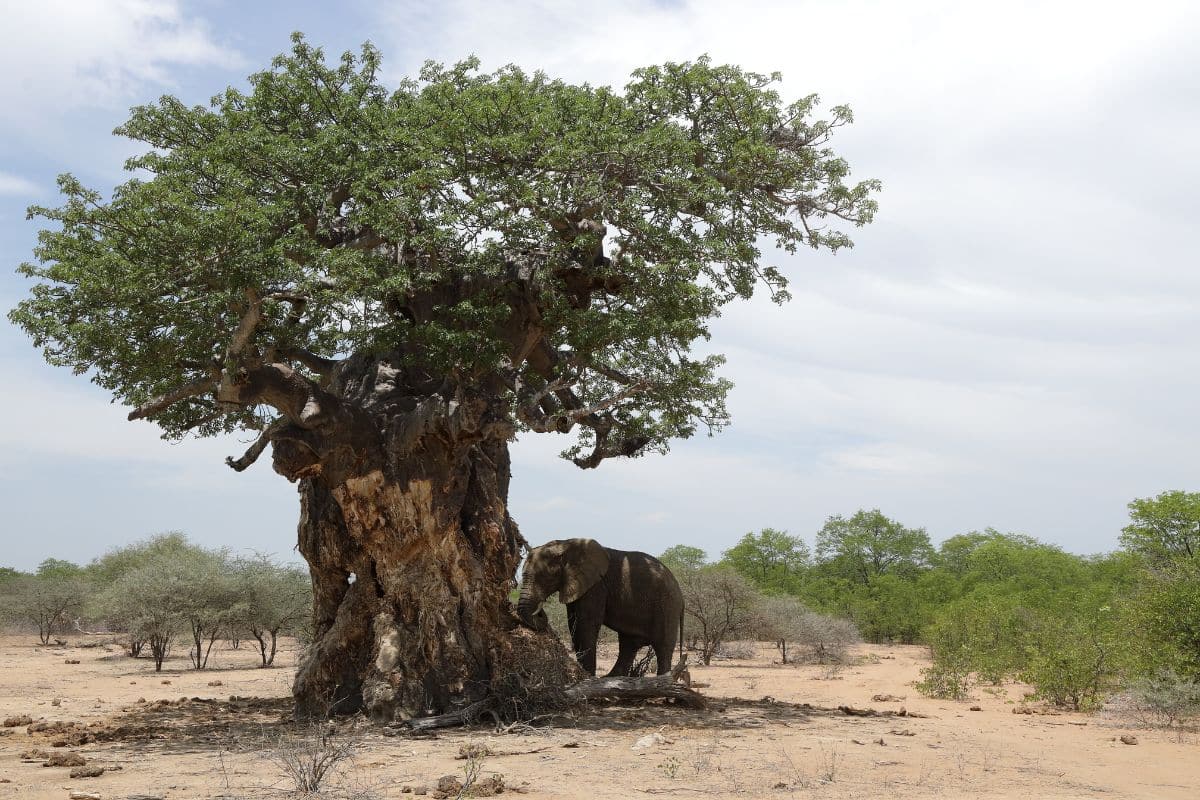
Elephant and Baobab tree. Photo credit: Sango Nature Project.
The people within
As we continue to repeat, a rewilding success story is only as significant as the involvement of people. Sango stands out, beyond the rewilding world that is gaining serious momentum, in how deliberately it has built community into its core. More than three-quarters – 78% – of the conservancy’s workforce comes from the surrounding communities, and Sango’s engagement with its neighbors extends well beyond employment. Boreholes, schools, clinics, conservation education programs, anti-poaching training and human-wildlife coexistence efforts are all part of the picture.
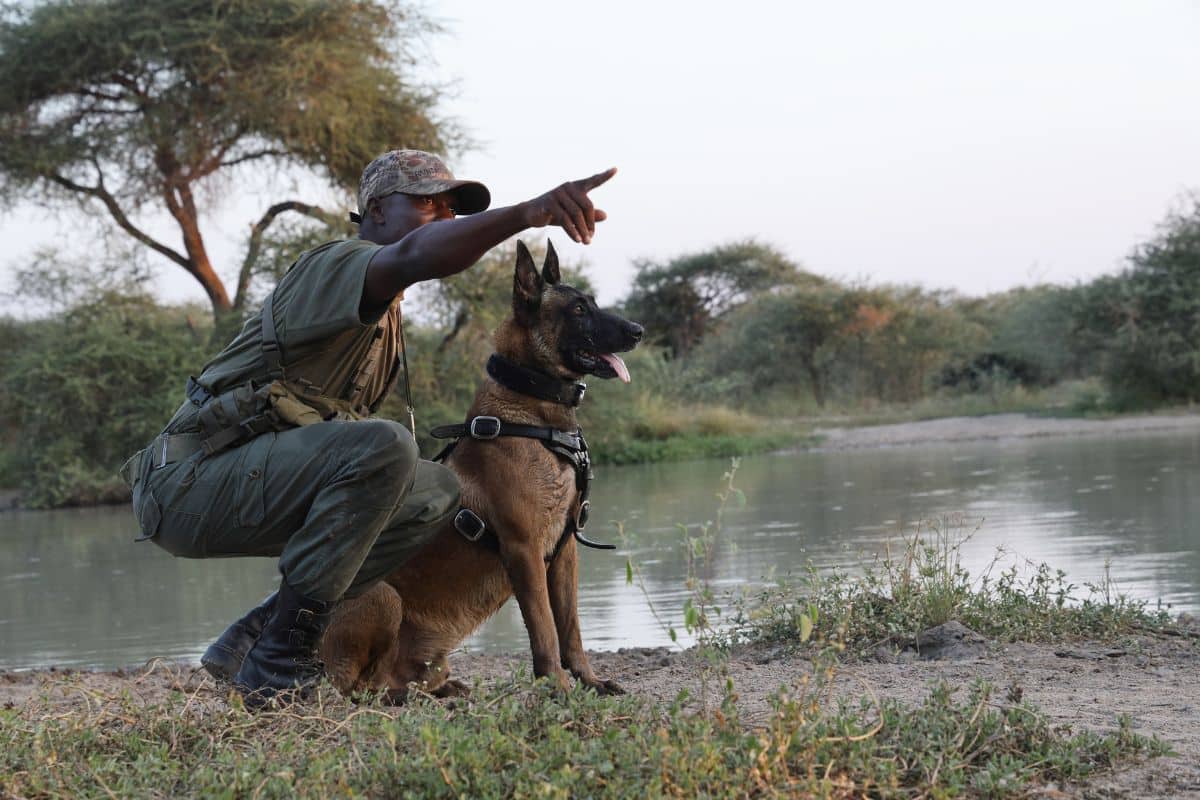
Sango funds approximately 50 rangers and deploys 25-30 directly, including a Canine Unit. Photo credit: Sango Nature Project.
This integrated approach of ecology, climate, and community woven together nicely reflects the pillars of rewilding. From European river restoration to the reintroduction of wolves in North America and large-scale rewilding efforts across sub-Saharan Africa, practitioners are increasingly making the case that nature’s recovery is not a luxury but a necessity, and that it works best when it works with people and local communities. Sango sits squarely within that tradition, and with its carbon stock independently certified by TÜV Nord, its candidacy for the IUCN Green List, and an ongoing B Corp certification process, it has the credibility to show for it — more evidence that the model holds up to scrutiny.
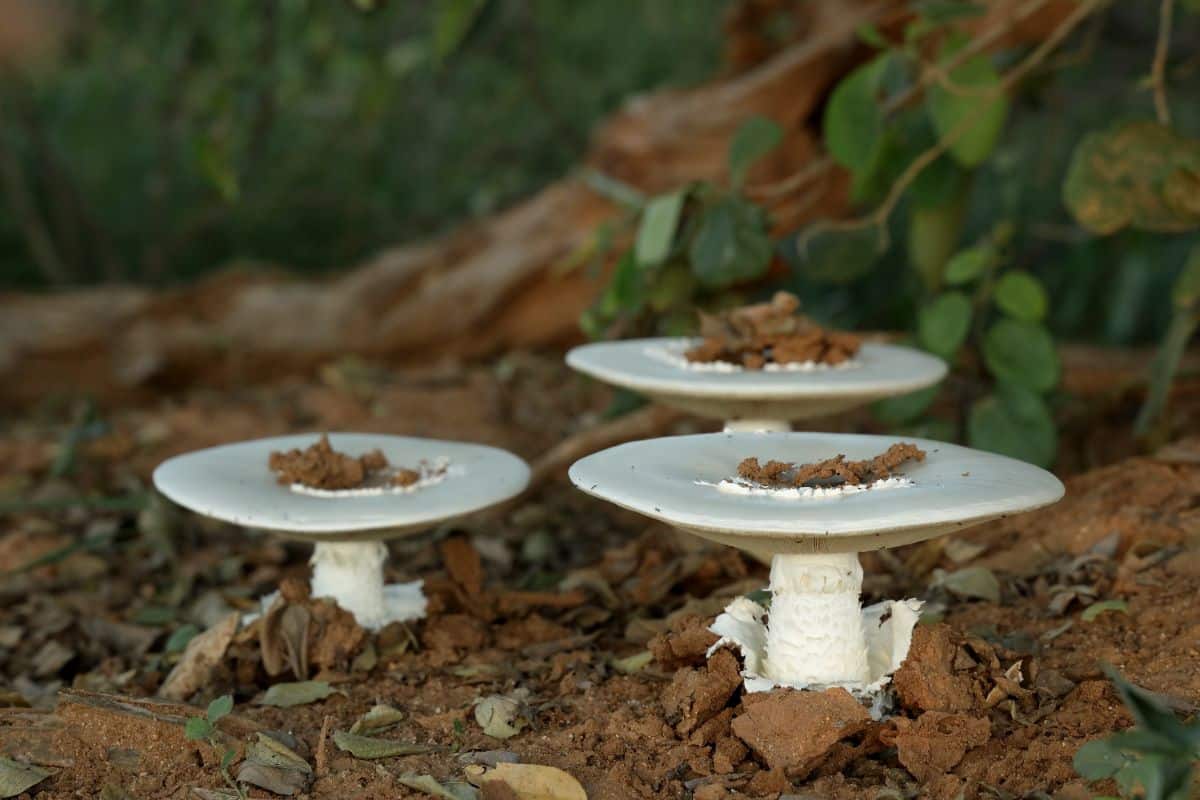
Life is rebounding above and below ground. Photo credit: Sango Nature Project.
Looking to the Horizon
The next chapter for Sango is ambitious. The team is working to expand the conservancy by 40,000 adjacent hectares, conduct further wildlife translocations to build up populations elsewhere, and ultimately replicate the Sango model across Southern Africa.
Thirty years ago, a degraded cattle ranch in Zimbabwe was handed a second chance. What grew from that decision is yet another proof of concept for an entire movement — and the clearest argument yet that when you give nature time, space, and genuine support, it comes back. We are delighted to have them as an Alliance Partner.
https://www.instagram.com/sangowildlife/
About the Global Rewilding Alliance
The Global Rewilding Alliance brings together over 300 organisations across every continent to catalyse a worldwide movement for nature’s recovery. We accelerate learning, convene evidence, and share the successes and benefits of rewilding —inspiring more organisations to rewild and unlocking new resources for rewilding. Learn more about our work.