Credit: NACRES
NACRES (Centre for Biodiversity Conservation & Research) protects and restores biodiversity across Georgia and the South Caucasus. Founded in 1989, NACRES combats “empty forest syndrome” by reintroducing keystone species like the critically endangered Caucasian Red Deer and conducting field research on elusive predators like the Caucasian Leopard. To ensure sustainable coexistence, NACRES implements community-based ranger programs, human-wildlife conflict solutions, and eco-village initiatives. Additionally, the organisation safeguards expansive habitats through grassland monitoring, wetland restoration on the Javakheti plateau, and forest fire risk mapping, fostering long-term ecological resilience and harmonious relationships between local communities and their wild neighbors.
One of the world’s great wonders
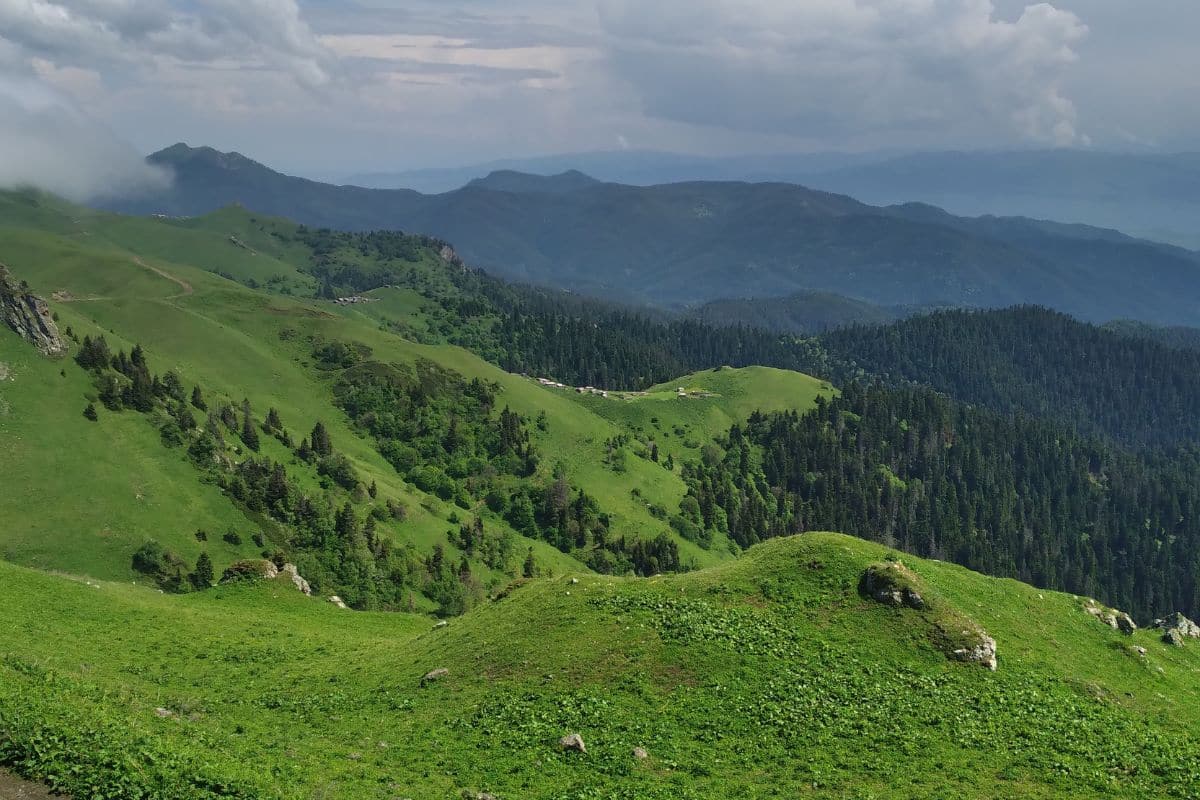
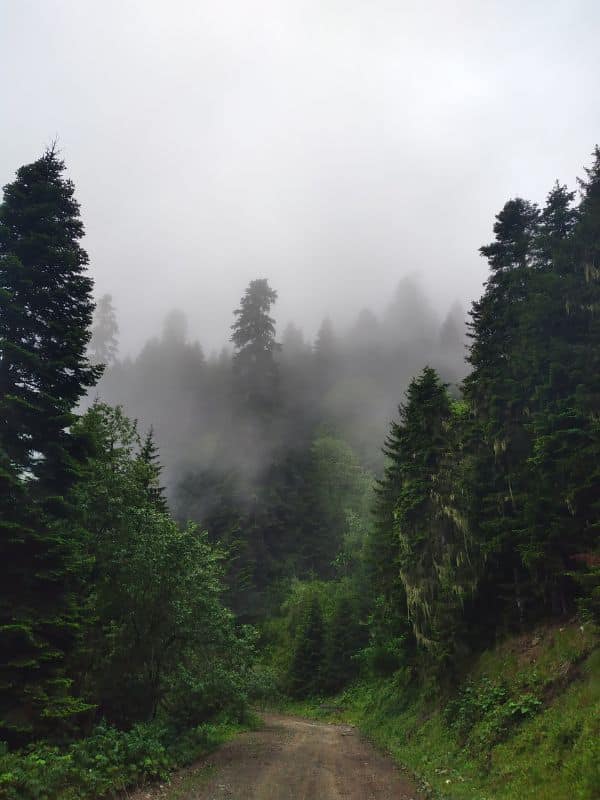
The forests of Georgia rise from the Black Sea coast, climb through the Colchic rainforest into the beech and oak canopies of the Greater Caucasus, before dissolving into alpine meadows beneath 5,000-metre peaks. This is one of the world’s great wonders, a Pleistocene refuge where trees have grown undisturbed since before the last ice age. Brown Bears shoulder through the undergrowth and Grey Wolves trace ridgelines once patrolled by Leopards (of which there are very few left). Above, Golden Eagles and Bearded Vultures ride thermals over gorges where the last Wisent once roamed and where, with the right stewardship, they might roam again. It is in this ancient place that our partners at NACRES are working to restore what has been lost, and to give Georgia’s forests and their wild inhabitants the chance to flourish once more.
The Global Rewilding Alliance is delighted to spotlight our Alliance Partner NACRES Centre for Biodiversity Conservation & Research, whose work spans the forests, rangelands, wetlands, and mountains of Georgia and the wider South Caucasus.
Old Roots for the Recovery of Endangered Species
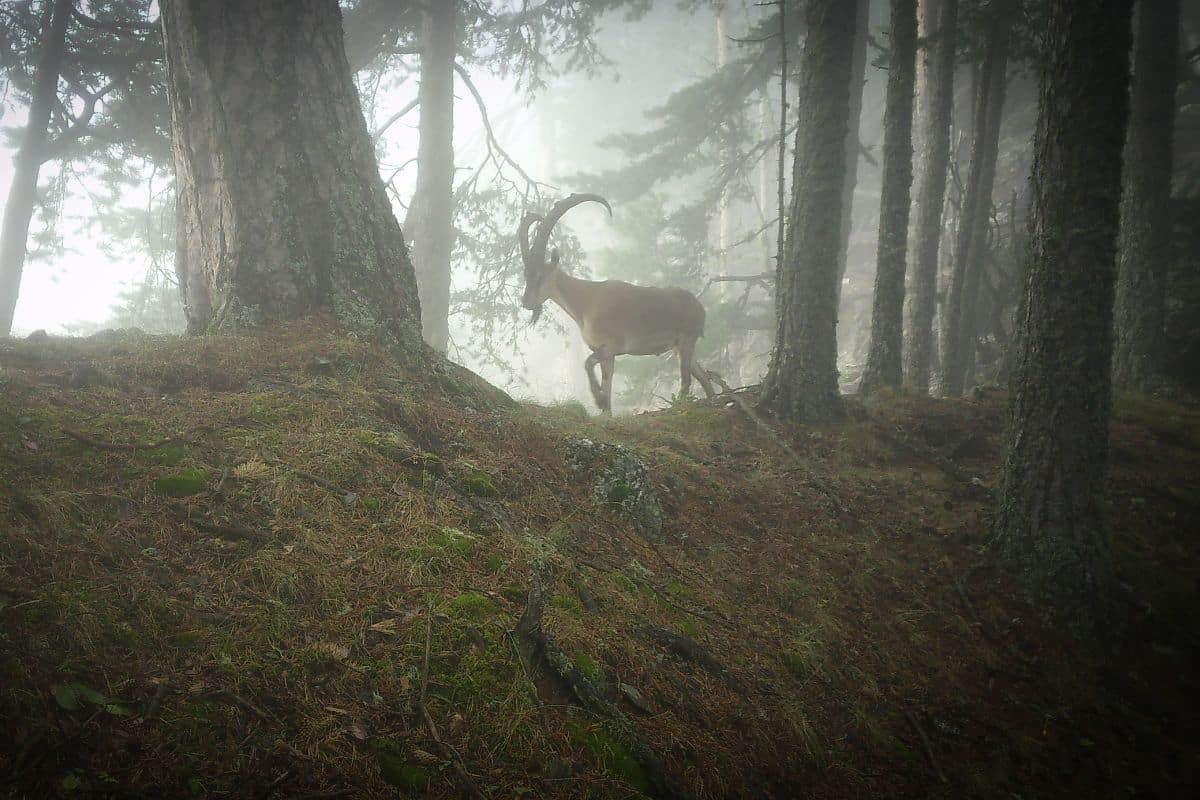
NACRES began in 1989 as a small circle of naturalists determined to protect the region’s threatened species. More than three decades on, that founding spark has grown into one of Caucasus’ most respected and longest standing biodiversity organisations, with its team authoring numerous scientific articles, management plans, policy documents, and species databases that inform decisions across the region. Their dedicated focus spans an impressive array of rare and endangered mammals, encompassing the Red Deer, Bezoar Goat, Eastern Caucasian Tur, Brown Bear, Striped Hyena, and more.
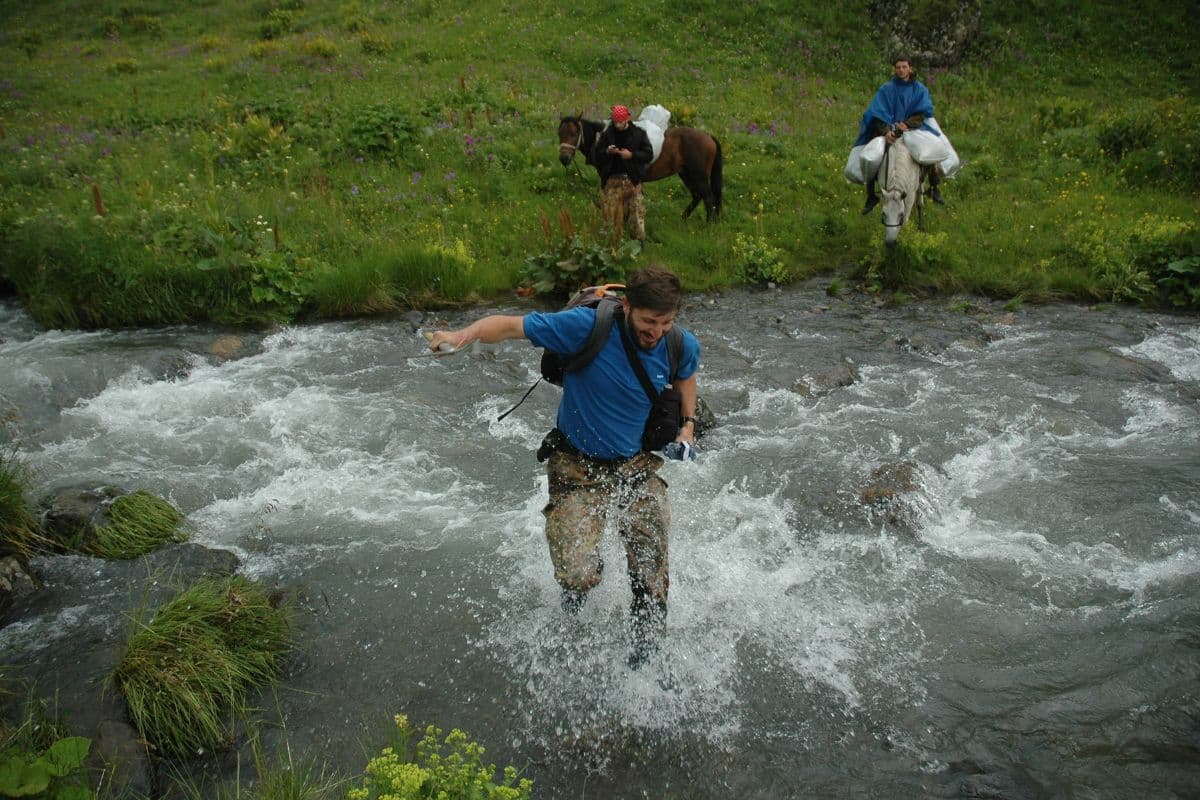
“Who Needs Bridges”. Credit: NACRES
Countering the Empty Forest Syndrome through Rewilding
A central pillar of the NACRES mission involves returning majestic mammals to their ancestral habitats. Speaking to one of our team members, Irakli Shavgulidze (Director & Chair of Governing Board at NACRES) spoke of how their studies showed that wildlife was suffering not only because of habitat destruction, but in certain cases, due to “Empty Forests”.
Georgia has a lot of forests of different kinds, many in remote areas between mountain belts, that seem intact, their green faces sweeping the valleys. However, without large predators and the diverse herds of prey moving, disturbing, and shaping them, these ‘empty forests’ are deceptively silent twins of their healthy states. As a result, the team are focusing more on rewilding forest ecosystems, realising the need for large herbivores and other keystone species.
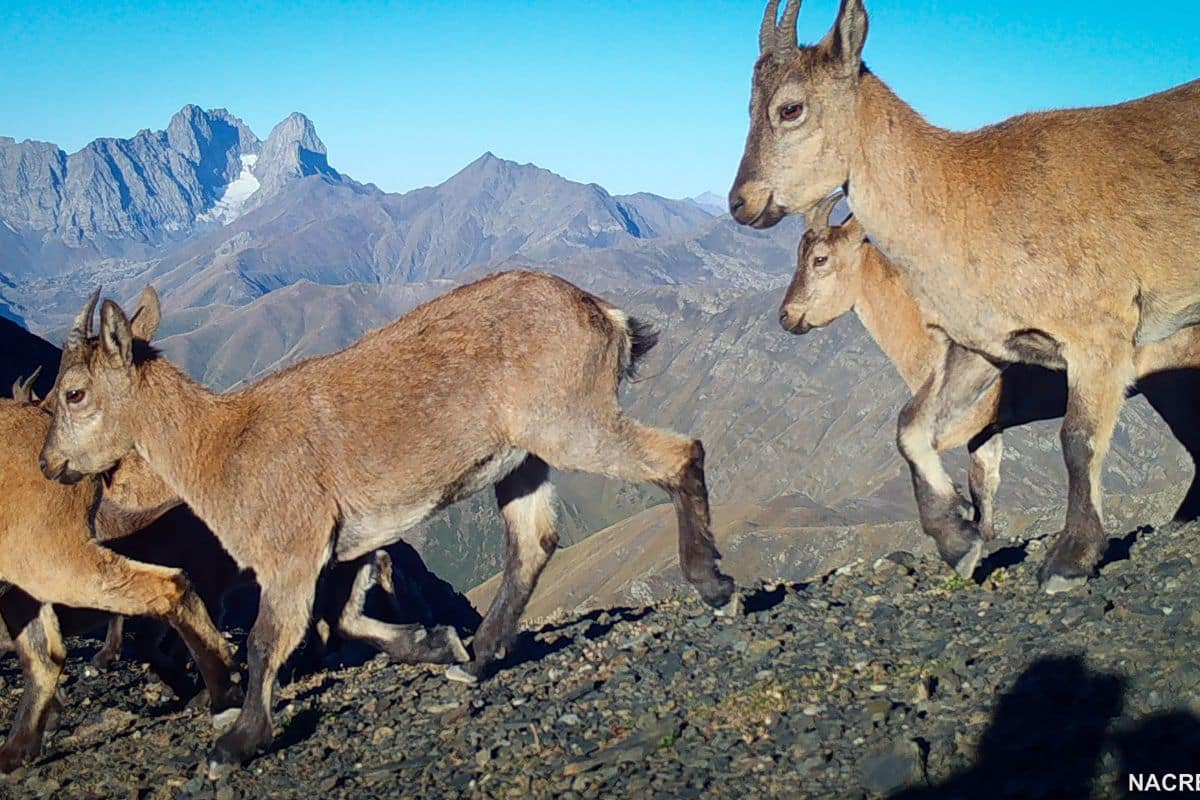
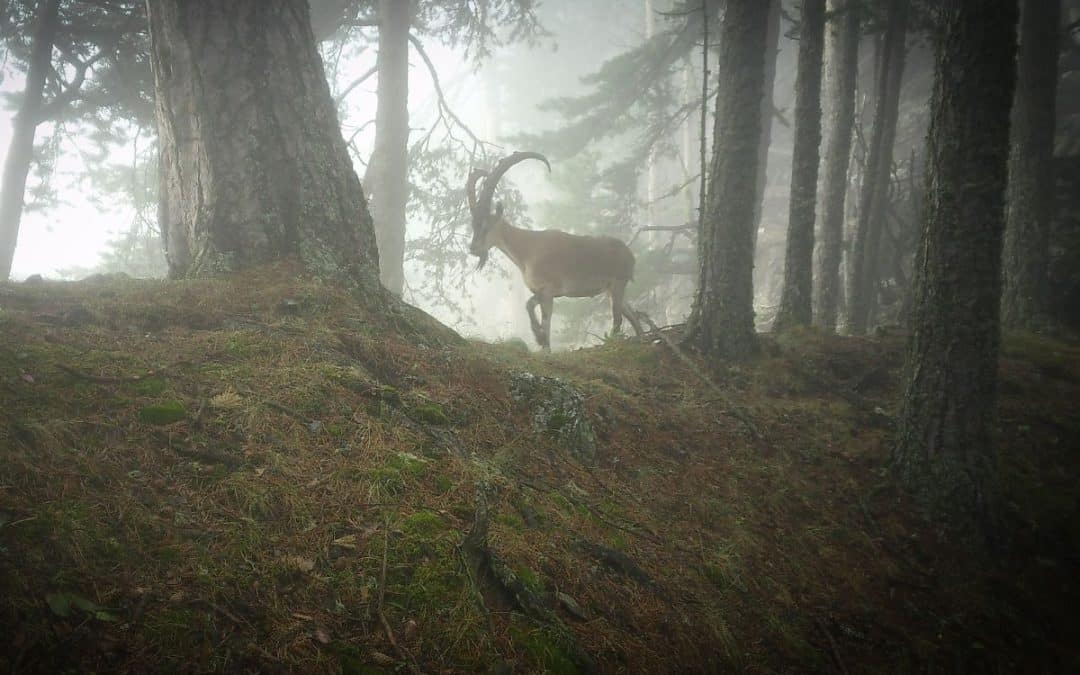
Eastern Caucasian Tur (Capra cylindricornis). Credit: NACRES/WWF
For decades, the Caucasian Red Deer was missing from the Saguramo range, leaving forest ecosystems ecologically incomplete. As the country’s only true forest megaherbivore, this species plays a vital role in shaping vegetation and supporting predators. To rectify this absence, and bring balance back to the forest, NACRES conducted a feasibility study for rewilding the Tbilisi National Park through the reintroduction of Red Deer and are now sourcing funding for implementation. While many readers may see the Red Deer as a common species in their part of the world, locally in Georgia’s forests, they are critically endangered.
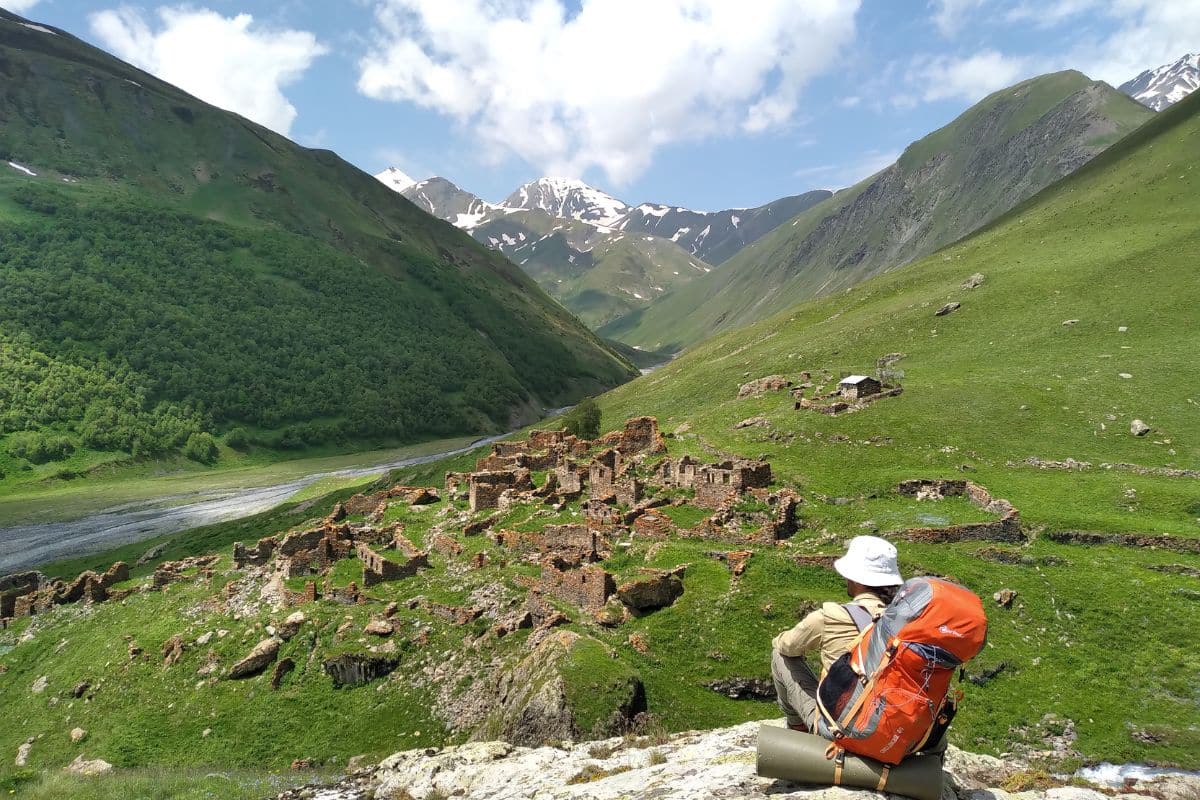
Hiker overlooking the ruins of an abondoned village in Kazbegi. Credit: NACRES
Simultaneously, the team conducts extensive field research to protect other rare animals. Through strategic camera trapping and field tracking, determined researchers continue the vital search for the Caucasian Leopard to ensure these elusive predators have a secure future.
Living Alongside Wild Neighbours
Sharing land with large carnivores and ungulates is rarely simple, and NACRES meets that reality with care through extensive community engagement. The team works through research and targeted results-driven interventions, building trust between people and the species living alongside them. Where human-wildlife interactions create tension, they promote coexistence by introducing community-based insurance schemes and providing farmers with effective tools to protect their livestock.
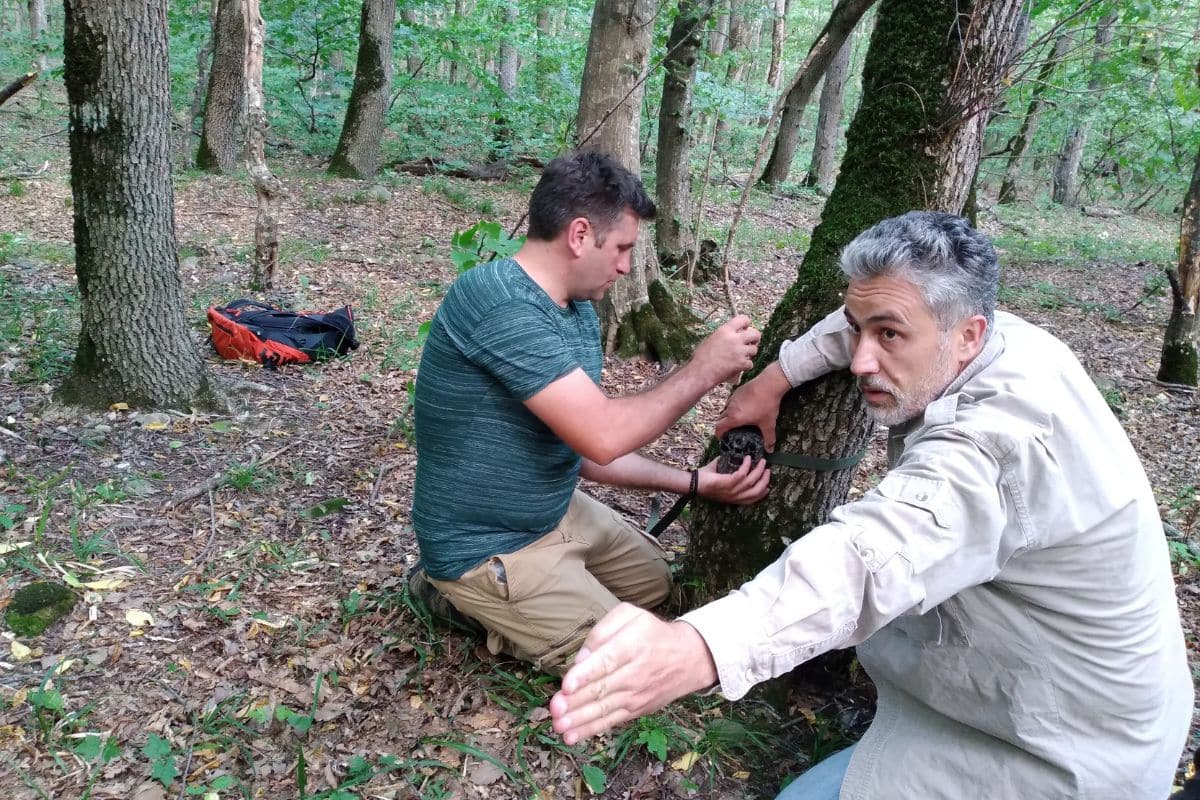
Setting Camera Traps, Tbilisi National Park. Credit: NACRES
They further foster coexistence through an innovative Community Ranger Program that trains local individuals to assist in biodiversity monitoring across multiple national parks, including Borjomi-Kharagauli, Erusheti, and Javakheti, turning residents into active stewards of the landscapes they call home. These rangers set up camera traps, map species sightings, and lead local outreach initiatives. And to support local economies, NACRES are developing an ecovillage concept for Didi Sakhvlari to generate sustainable alternative income through nature-based tourism.
Protecting Habitats, Protecting Home
Beyond species protection, NACRES implements crucial measures to preserve expansive habitats. For over fifteen years, the organisation has monitored vital grassland ecosystems to maintain healthy grazing practices. In the face of increasing climate pressures, they are mapping forest fire risks across Georgia. Working alongside dedicated forestry student volunteers, they gather essential data to prevent and mitigate devastating wildfires – including identifying fuel sources and their density, human settlements, habitats of interest, and access road availability across the region – to support the implementation of targeted measures. Local volunteers have also stepped forward as firefighters, standing ready to defend their forests.
Their holistic approach extends to the Javakheti plateau, where they lead efforts to restore vulnerable wetlands. By analysing hydrology and engaging local NGOs and women’s groups, they ensure that the restoration process benefits all stakeholders involved.
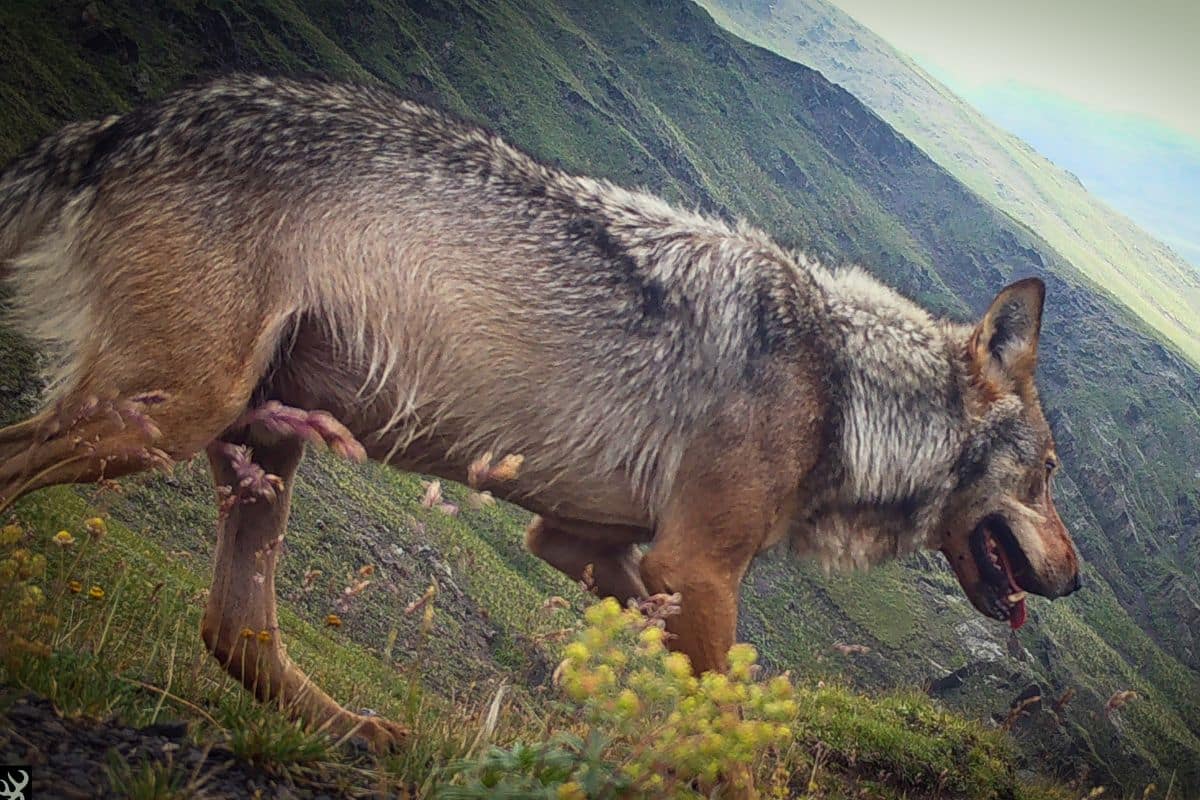
Gray Wolf in Khevsureti. Credit: NACRES/WWF
Rewilding the Earth’s ecosystems relies on localised, science-driven action and profound respect for the natural world. Our friends at NACRES Centre for Biodiversity Conservation & Research have a model that can be emulated by the movement at large. They show that real ecological recovery looks like a Leopard’s footprint in fresh snow, a ranger’s notebook filled with meticulous records, or a farmer who has learned to appreciate a wild neighbour instead of seeing them as a threat. They show that the determined actions of today forge a clear path toward a resilient, vibrant planet where the progeny of all species can flourish in enduring harmony.
Learn more about NACRES’ inspiring work.