
Rewilding grasslands & rangelands can deliver climate, nature and social resilience
Rangelands – including grasslands, tundra, savannah, woodlands and deserts – cover 54% of the Earth’s landmass and support the livelihoods of millions of people.
Yet, grasslands & rangelands, with their key contributions often overlooked, are considered a highly threatened ecosystem. They are under threat from climate change, unsustainable livestock grazing, habitat conversion for agriculture, afforestation, infrastructure development and mining.
Rewilding is an ecological restoration strategy focused on returning wild animals to play their critical ‘ecosystem engineer’ role in shaping their natural habitats, always with a human-wildlife co-existence perspective.
GRASSLANDS & RANGELANDS CASE STUDIES
On-the-ground rewilding projects for grassland & rangeland recovery led by our partners.
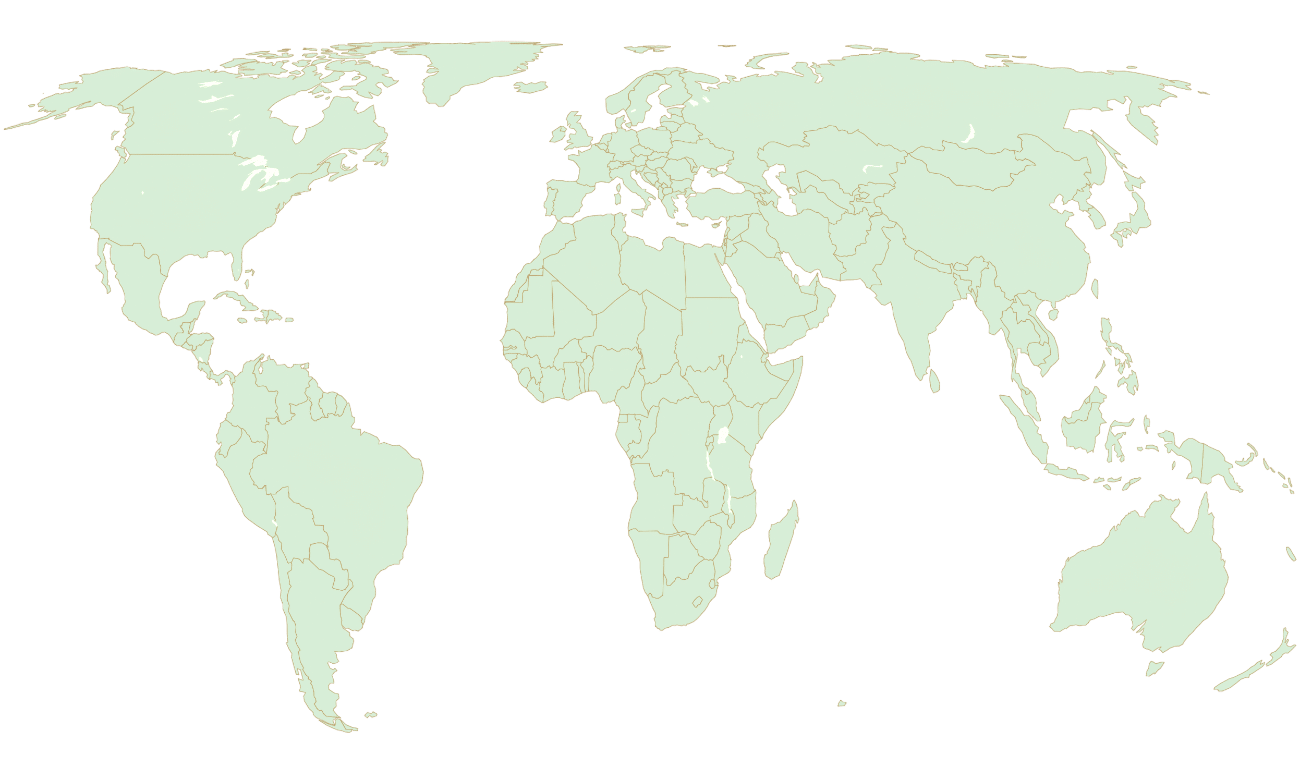
This map uses the Equal Earth projection, endorsed by the The United Nations General Assembly in September 2026 to encourage accurate geographical representation in educational and global applications.
Rewilding Chile and Tompkins Conservation
Chile
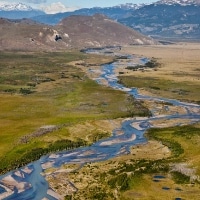
Tompkins Conservation donated 500,000 hectares to help create seven national parks.
By reducing livestock pressure and restoring native species, including Guanacos, Pumas, Darwin’s Rheas, and Andean Condors, degraded rangelands recovered at scale. Tompkins Conservation donated 500,000 hectares to help create seven national parks, offering a powerful global model for rangeland ecosystem recovery.
Case study: From Rangeland to Wildland
Enonkishu Conservancy
Kenya
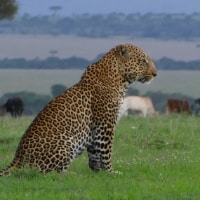
The Maasai community set aside land for rewilding while combining traditional practices.
The Maasai community set aside land for rewilding while combining traditional practices with solar-powered innovations to almost eliminate livestock predation, proving that degraded rangelands can regenerate under community leadership. A win-win-win for people, cattle, climate, and wildlife.
Case study: Wildlife Conservancy
Peer-reviewed study: Bridging the conservation and development trade-off? A working landscape critique of a conservancy in the Maasai Mara
Presentation Slides: Building Community Resilience Through Wildlife Conservancies
Mali Elephant Landscapes
Mali
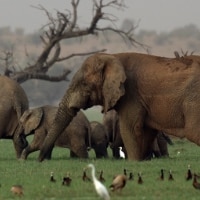
This initiative has supported over 800 communities in a conflict-affected region, aligning ecological recovery with community needs.
Working across 17 communes and six million hectares, this initiative has supported over 800 communities in a conflict-affected region to protect and restore habitat, aligning ecological recovery with local governance and community needs.
The Corbett Foundation
India
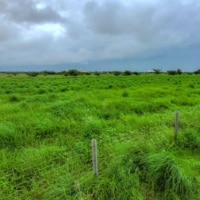
Through participatory, livelihood-linked restoration, degraded land has been transformed into productive native grassland.
Through participatory, livelihood-linked restoration, degraded land has been transformed into productive native grassland supporting over 70 bird species, 60 insect species, 8 reptile species, and 7 mammal species and providing communities with harvestable grass, reducing grazing pressure.
Case study: Community-Centric Grassland Restoration
Southern Plains Land Trust
United States
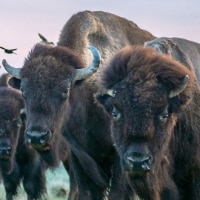
SPLT has reintroduced Black-footed Ferrets, Beaver, and Bison while preserving the natural processes.
Rewilding large ecologically significant grasslands in symbiosis with wildlife, SPLT provides a safe refuge for wildlife. They have reintroduced Black-footed Ferrets, Beaver, and Bison while preserving the natural processes, fire regimes and nutrient cycling that define these habitats.
Case study: Holistic Landscape-Scale Rewilding
Olson Bison Rewilding Project
Canada
The Olson family has reintroduced wild-type Bison as a keystone species, with more than 5,000 free-roaming Bison now inhabiting tens of thousands of acres of restored prairie.
For over 30 years, the Olson family has reintroduced wild-type Bison as a keystone species, with more than 5,000 free-roaming Bison now inhabiting tens of thousands of acres of restored prairie, demonstrating what private land stewardship can achieve to restore ecosystems at large scale, support biodiversity, respect cultural histories, and inform global rewilding practice.
Case study: Reintroducing Bison
Grassland & Rangeland resources
Resources produced by the Grasslands & Rangelands Initiative on ‘The Ecological Uplift’. Rewilding can restitute the ecological processes that make grassland & rangeland ecosystems functional.
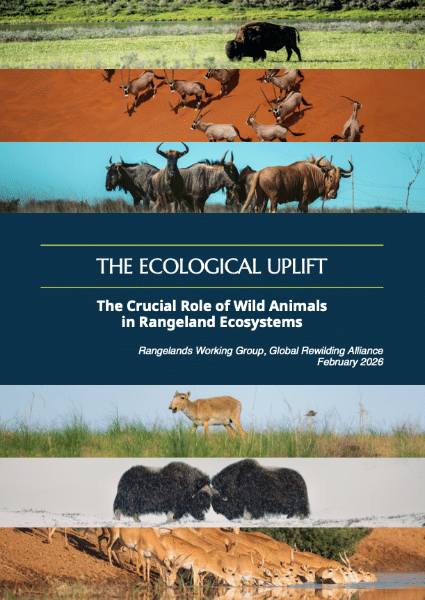
The Ecological Uplift
Rangelands, including grasslands, tundra, savannah, woodlands and deserts, are increasingly degraded. Rewilding grasslands and rangelands can deliver climate, nature and social resilience. This briefing focuses on the contribution wild animals make to the resilience of grasslands and rangelands worldwide.
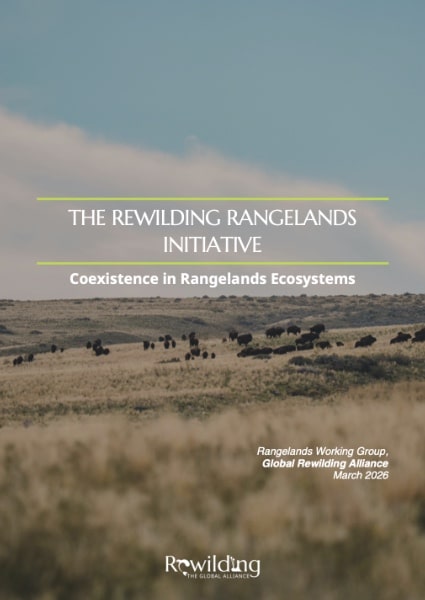
The Rewilding Rangelands Initiative
Rewilding offers a clear path toward restoring ecological functionality in grassy ecosystems. Translating that path into durable change requires coordinated effort across disciplines, sectors, and geographies. The Rewilding Rangelands Initiative advances that work through two complementary strategies.
Insights & Updates

Rewilding the World’s Rangelands
As pressures increase, the costs are becoming clearer: degraded rangelands deliver fewer ecosystem services and weaken one of the planet’s largest natural carbon stores. Rewilding offers a realistic, science-based pathway to restore that functionality. The Rewilding Rangelands Initiative aims to accelerate this recovery worldwide, bringing together science, practice, and policy for lasting outcomes for people and nature.
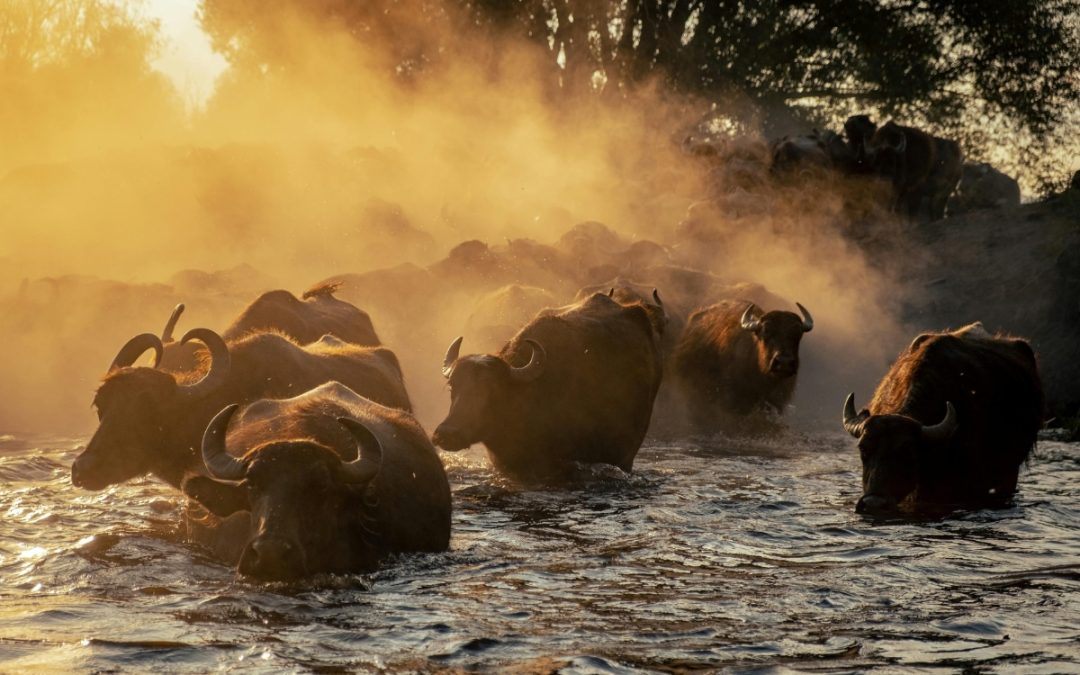
Finding common ground: the case of pastoralism and rewilding
Progress toward big challenges, like protecting rangelands and the pastoralists who use them, can be strengthened by finding partners who share common ground. In this co-authored article, we propose that pastoralism and conservation communities join forces to protect the large landscapes through which abundant wildlife and nomadic pastoralists have migrated since time immemorial.
Photo credit: Zeynep Sude Emek from Pexels.
Webinars
Rewilding Rangelands: Rising from the Ashes

Hosted by the Global Rewilding Alliance, in collaboration with WILD Foundation and Naturnahe Weidelandschaften.
Across three continents — Central Asia, Africa, and South America — we join Altyn Dala Conservation Initiative, Sahara Conservation and Rewilding Chile who are proving that even heavily degraded rangeland ecosystems can be transformed into thriving, wildlife-filled landscapes. Their successes demonstrate that we can turn the wheel and scale up our impact on restoring earth’s life-support systems.
Speakers include:
- Steffen Zuther, Project Manager for Altyn Dala Conservation Initiative at Frankfurt Zoological Society
- Tim Woodfine, CEO at Sahara Conservation
- Cristián Saucedo, Wildlife Director at Rewilding Chile
The Ecological Uplift
3 core pillars that support healthy and functional grassland & rangeland ecosystems
Image credit – James Alfaro
1.
More wildlife to rebuild the ecological foundation of grasslands & rangelands
Image credit – Peace Parks Foundation
2.
Wilder working landscape embracing coexistence and regenerative practices
Image credit – The Corbett Foundation
3.
Enhanced ecosystem services because healthy grasslands & rangelands sustain billions of lives
The Grasslands & Rangelands Working Group
Our Alliance Partners and allies are uniting to bring a rewilding perspective on grasslands & rangelands issues as a scientifically sound, socially responsible approach to enhance the ecological and economic value of grasslands & rangelands across the world to the benefit of people, nature and climate.
A collaboration of Alliance Partners and experts have joined the Grasslands & Rangelands Working Group, including:




Plus expert representatives from Swedish University of Agricultural Sciences; Nelson Mandela University (South Africa); Utrecht University (The Netherlands); Conservation International (USA); University of Cape Town (South Africa).
The Prairie Remembers – A Bison Rewilding Story
This short film captures the story of a ranching family working to revive the ancient ways of the land. The Olson Bison Rewilding Project is one of North America’s most significant privately led rewilding initiatives and a testament to the impact one family can have. By reintroducing wild-type Bison as a keystone species, the Olson family is witnessing the revival of an entire ecosystem.
One thing that I have learned over the past 30 years is that rewilding bison is in fact rewilding “everything”. Bring back the bison performing their historic role, and the other flora and fauna will follow.
Tom Olson, Founder of the Olson Bison Rewilding Project
2026: The International Year of Rangelands and Pastoralists
The Global Rewilding Alliance is actively contributing to this agenda:
This document introduces the ‘Ecological Uplift’ – a science-based rewilding approach for rangelands that restores species diversity and natural processes while strengthening ecosystem resilience and pastoralist livelihoods. Read the full paper here
Led by UN University Bonn – this article evaluates rewilding and six other approaches for ecosystem health, food security, and human well-being. Read the full article here
Bringing the wild back to our lands
Stay up to date with insights and findings from our global working groups on key rewilding themes.
Grasslands & Rangelands FAQ
Frequently asked questions about Grasslands & Rangelands, their importance, and the Grasslands & Rangelands Working Group