

Saiga Antelope herd. Photo credit: Altyn Dala Conservation Initiative, Rob Field
Rangelands cover more than half of the Earth’s land surface, underpinning food systems, livelihoods, biodiversity, and climate regulation worldwide. Yet many are no longer functioning as they once were — large wild animals have been lost, food webs simplified, and soils degraded. As pressures increase, the costs are becoming clearer: degraded rangelands deliver fewer ecosystem services and weaken one of the planet’s largest natural carbon stores. Rewilding offers a realistic, science-based pathway to restore that functionality. The Rewilding Rangelands Initiative aims to accelerate this recovery worldwide, bringing together science, practice, and policy for lasting outcomes for people and nature.
What are rangelands?
Rangelands are grass-dominated ecosystems, including grasslands, savannas, shrublands, woodlands, deserts, and tundra, stretching from the tropics to the poles.
For millennia, rangelands were shaped by herds of large herbivores, their predators, and natural disturbances such as fire. These forces regulated vegetation, maintained open landscapes, built soils, and supported high biodiversity alongside human use.
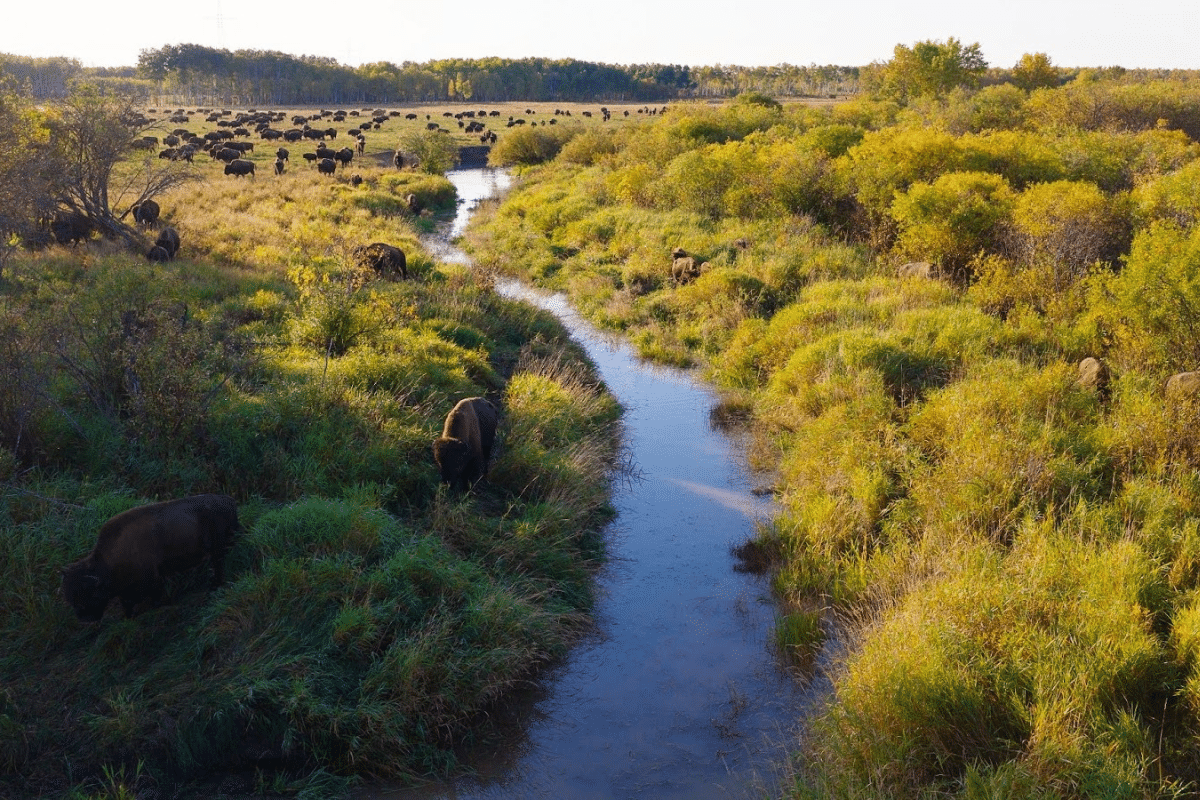
Bison herd. Photo credit: Patrick Thrash, Fin and Fur Films.
Today, rangelands support a wide range of users and values. Pastoralists, ranchers, extractive industries, wind and solar energy development, conservation organizations, and others operate within them. Rangelands also store approximately 34% of global terrestrial carbon, with nearly 94% of that carbon held in soils, particularly in natural and extensively grazed systems.
When rangeland processes break down, these values erode. Soil carbon is lost to the atmosphere, forage becomes unreliable, water regulation weakens, and livelihoods become more vulnerable to climate extremes.
The rewilding solution
Rewilding is a practical approach to restoring ecosystem functionality under contemporary conditions. It aims to re-establish self-regulating ecological processes so that ecosystems can sustain themselves and continue to deliver services to people.
In rangelands, ecosystem function is shaped by many variables, but two are especially impactful: 1) the intensity and pattern of human use and 2) the diversity and abundance of ecologically influential species, particularly large herbivores and predators. These species act as ecosystem engineers, driving trophic interactions, nutrient cycling, and carbon dynamics.
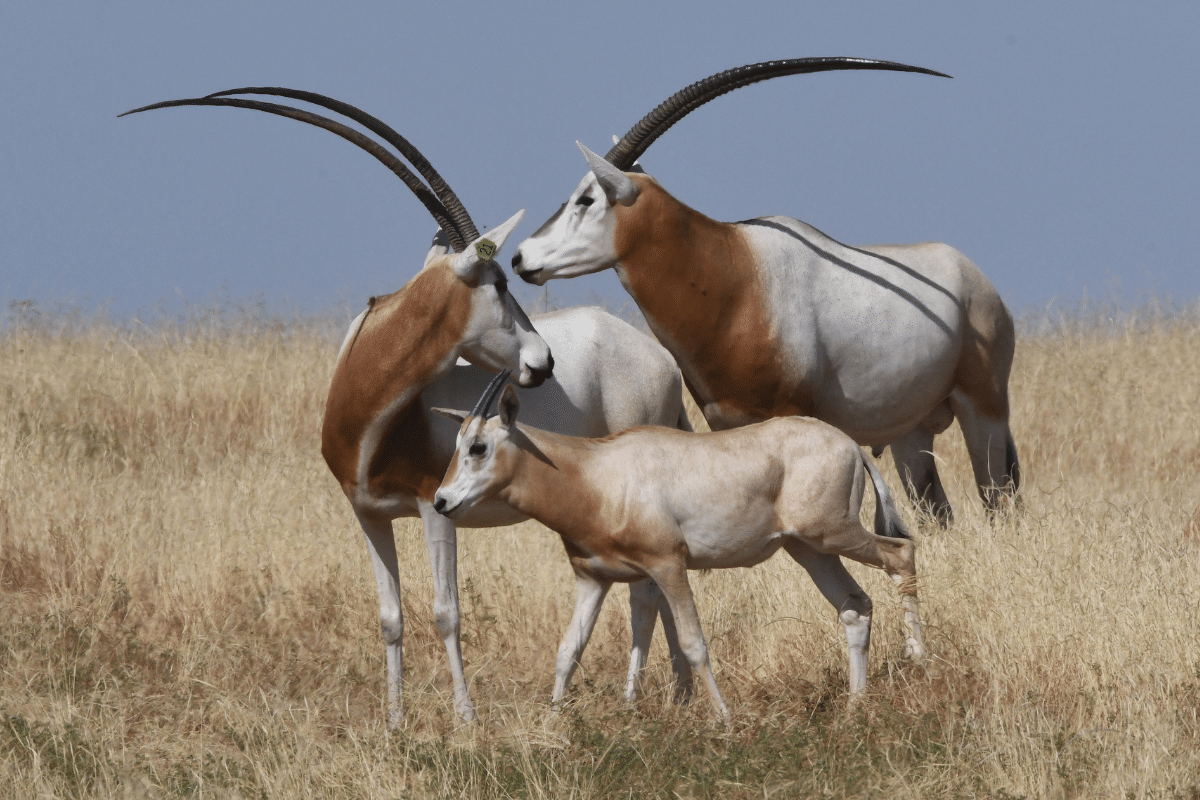
Scimitar-horned Oryx. Photo credit: John Newby.
Rewilding acts on these leverage points. It seeks to reduce chronic overexploitation and allow space for natural processes, including trophic cascades, by restoring key species in sufficient densities. Unlike conventional restoration, which often emphasizes historical species composition, rewilding prioritizes function, resilience, and future capacity in a changing climate.
Growing evidence shows that wild herbivores play a critical role in these outcomes. In the Serengeti, the recovery of wildebeest populations facilitates the annual sequestration of approximately 4.4 million tons of CO₂, equivalent to more than a quarter of Tanzania’s fossil fuel emissions in 2021. In Canadian and US prairie ecosystems, bison grazing has the potential to drive carbon capture at a scale comparable to national emissions, if landscapes were managed for ecological function.
Rewilding does not imply exclusion. Pastoralists, ranchers, and other land users are integral to rangelands and, when supported by good policies and incentives, can be powerful stewards of ecosystem function. Mobile pastoral systems, in particular, have co-evolved with rangeland variability for millennia. At the same time, rewilding recognizes ecological limits. Long-term viability depends on aligning land use with carrying capacity and maintaining areas where natural processes operate with minimal human pressure.
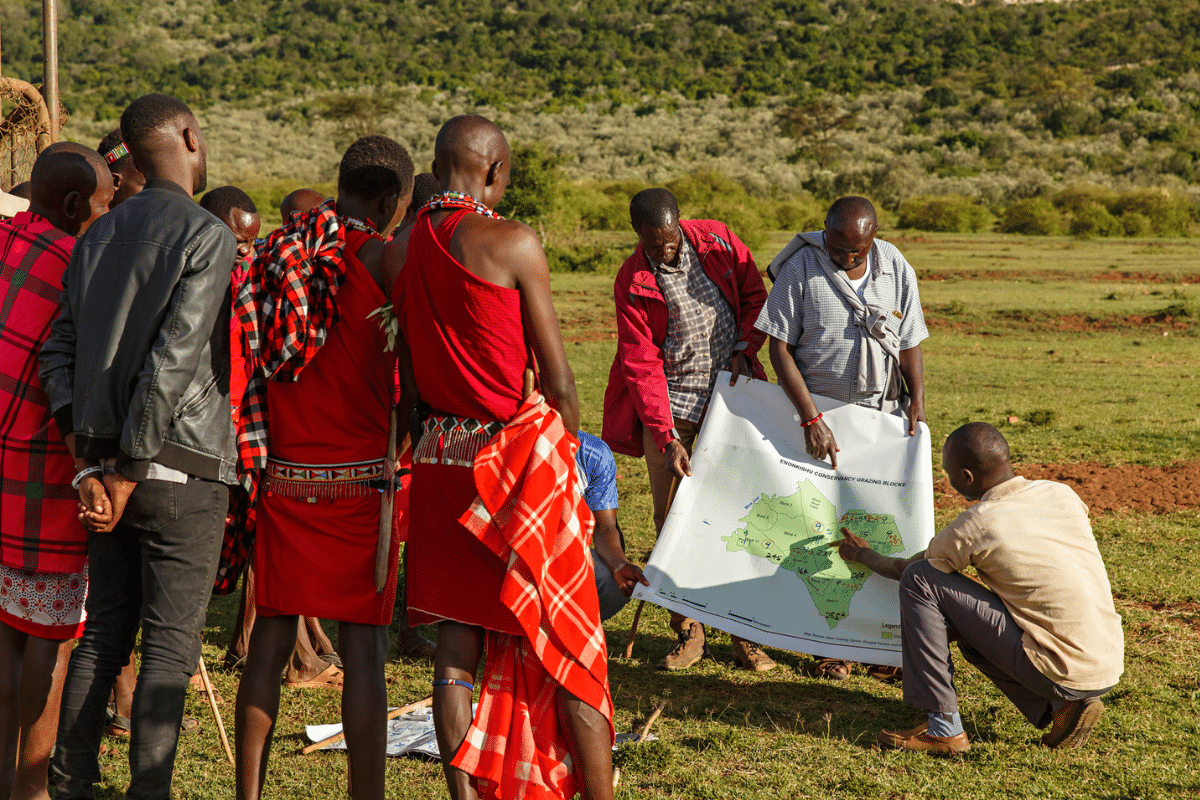
Collaborating with local communities. Photo credit: Enonkishu Conservancy.
Ecosystem functionality
Ecosystem functionality refers to the suite of biological, chemical, and physical processes that allow ecosystems to maintain themselves and deliver services over time. In rangelands, these processes include energy flow through trophic levels, soil formation, microbial activity, vegetation recovery after grazing or drought, and the regulation of fire and water. Functionality depends not only on which species are present, but on how they interact and at what scale.
When functionality declines, rangelands lose resilience. Degraded systems can become locked into self-perpetuating cycles, becoming less and less useful for the people and wildlife that depend on them.
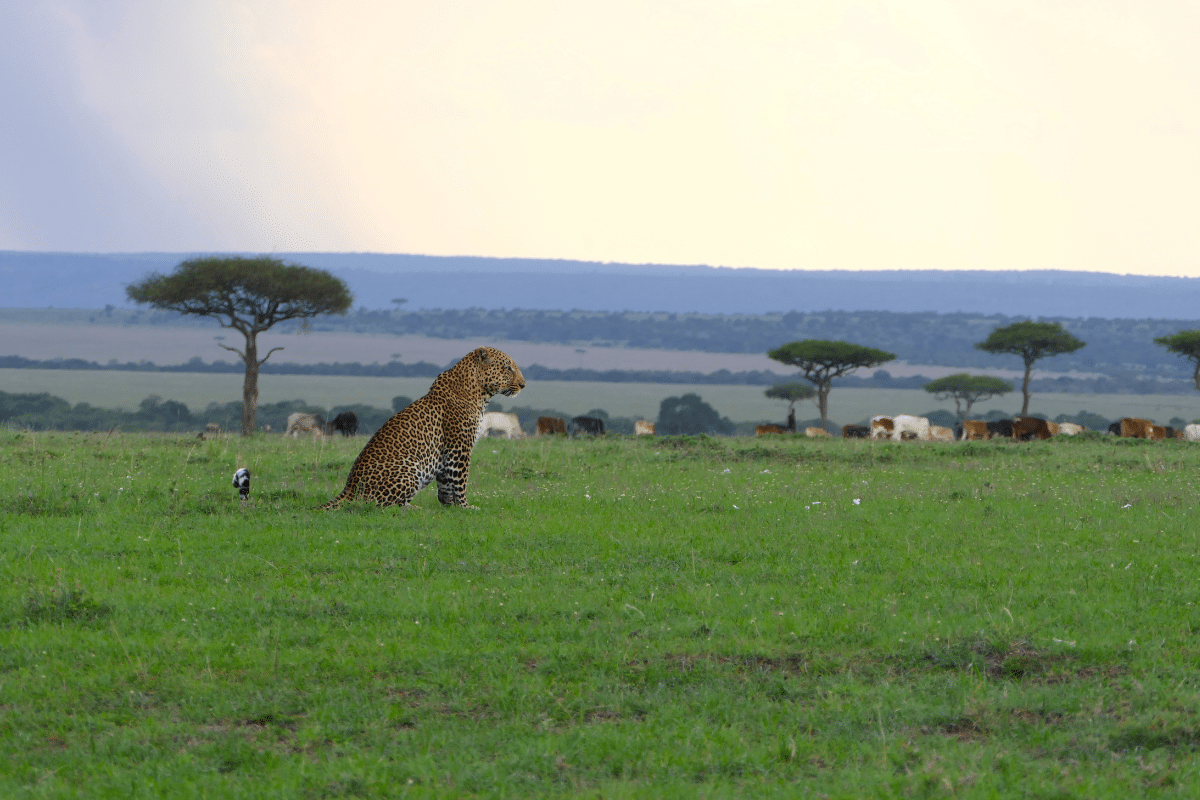
Leopard and livestock. Photo credit: Enonkishu Conservancy.
The Global Rewilding Alliance Rangelands Initiative: Goals and Actions
The Alliance’s Rewilding Rangeland Initiative aims to accelerate the recovery of rangeland functionality worldwide. We act as a convener, bringing together science, practice, and policy, while our members implement and specialize in rewilding across diverse geographies.
The Rewilding Rangeland Initiative’s work is organized around two goals.
Goal 1: Create the conditions for change
Rangelands are often mischaracterized as empty or degraded. In reality, they are among the planet’s most culturally and ecologically rich landscapes. Rangeland biomes are the setting of awe-inspiring large animal migrations. They have been the home of pastoralists since time immemorial, and billions of people depend on the goods and services they provide today. We help draw attention to the ecosystem’s value by providing an inspiring vision that draws on science, economics, and skilled storytelling. This has included extensive collaboration with the International Year of Rangelands and Pastoralists.
Connecting also involves building a globally active community of practice. Many Alliance members work in rangelands. While the environmental, political, and social challenges they face differ, there is immense value in partnership. The GRA Rewilding Rangelands Initiative brings them together under a global vision for rangelands and a framework for joint action.
Goal 2: Achieve tangible gains on the ground
Working with our members, we aim to bring back wildlife abundance and protect open space.
Rewilding techniques are adaptable to place. In some contexts, GRA members such as American Prairie, Rewilding Chile, and Rewilding Argentina restore large, defaunated grasslands by buying land, reconnecting habitats, reintroducing native wildlife or their proxies, and stimulating a tourism industry that supports the local economy. In other contexts, members such as Enonkishu Wildlife Conservancy in Kenya, the Corbett Foundation in India, Rewilding Europe or American Prairie work with pastoralists, ranchers, and land managers seeking to reverse degradation while maintaining viable livelihoods. Across the spectrum, we promote approaches that increase landscape connectivity, rebuild trophic interactions, and allow ecological processes to recover at scale.
Read more about them here.
We also work internationally to advance policy frameworks that recognize the role of wild animals, intact food webs, and functional ecosystems in meeting climate, biodiversity, and development goals.
Learn more about The Rewilding Rangelands Initiative – Coexistence in Rangelands Ecosystems.
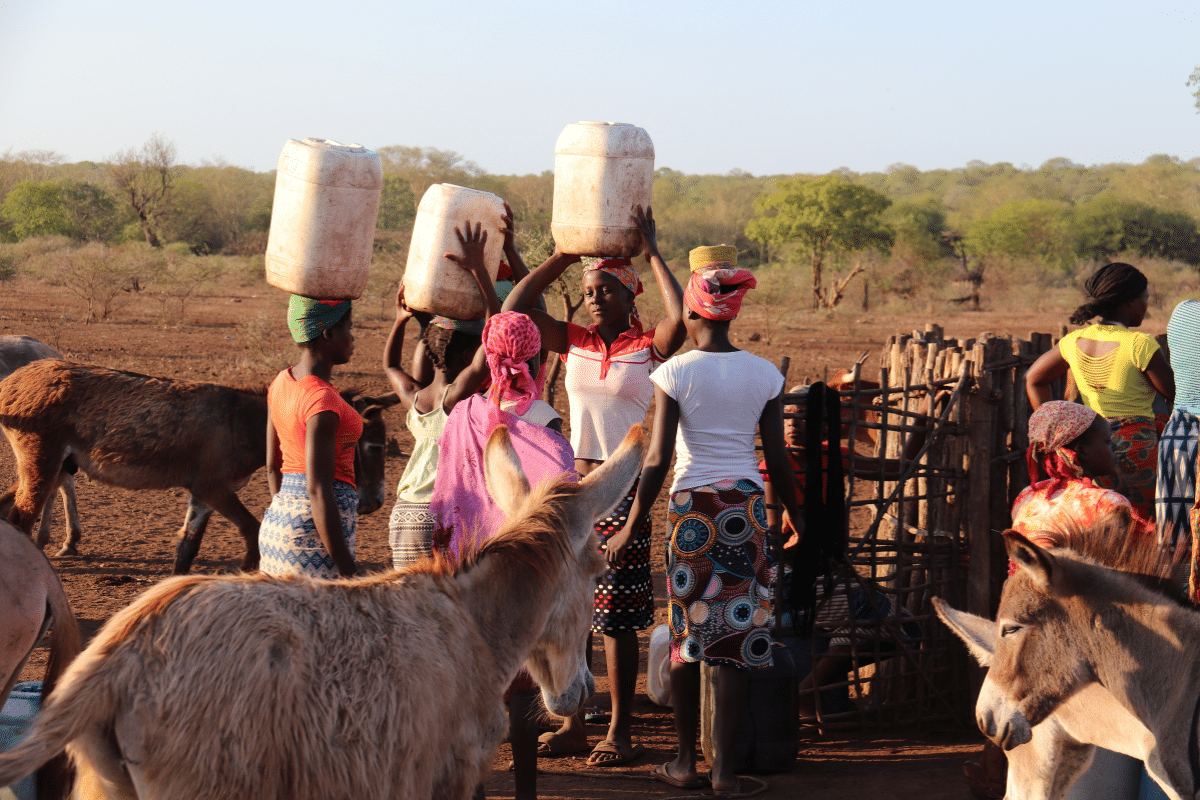
Mavondzo women & water. Photo credit: Peace Parks Foundation.
Looking forward
Rangelands sit at the center of some of the most pressing challenges of our time. Climate instability, biodiversity loss, and the decline of rural communities are converging sharply in these landscapes.
Rewilding offers a science-based framework for responding to these challenges by restoring how rangelands function. This approach is most effective when policymakers, practitioners, and land users share a common understanding of ecosystem function and act on it together. The Global Rewilding Alliance works to build that shared understanding and to support those translating it into lasting outcomes for people and nature.

Condor Release in Patagonia National Parks in collaboration with Manku project (January 2026). Photo credit: Franco Davico.
This article was co-authored by Jennifer Gooden and the Global Rewilding Alliance team.

About Jennifer Gooden
Jennifer Gooden is President and CEO of the Biophilia Foundation, which advances biodiversity conservation on private lands in North America. Her work with grantees and partners spans conservation strategy and research, with a focus on riparian restoration, rewilding, private land stewardship, and conservation psychology. A member of the Global Rewilding Alliance’s Rangelands Working Group, Gooden holds a DPhil and MSc from Oxford’s School of Geography and the Environment and an AB from Harvard University.

About the Global Rewilding Alliance
The Global Rewilding Alliance is a worldwide organisation catalysing the rewilding movement through a network of over 290 partners working across every continent. Through the Rewilding Rangelands Initiative, the Alliance brings together partners and experts active in rangelands to advance rewilding in practice, shape tomorrow’s policies that prioritise ecosystem functionality and strengthen the conditions for coexistence to provide lasting change for people, nature, and planet.