
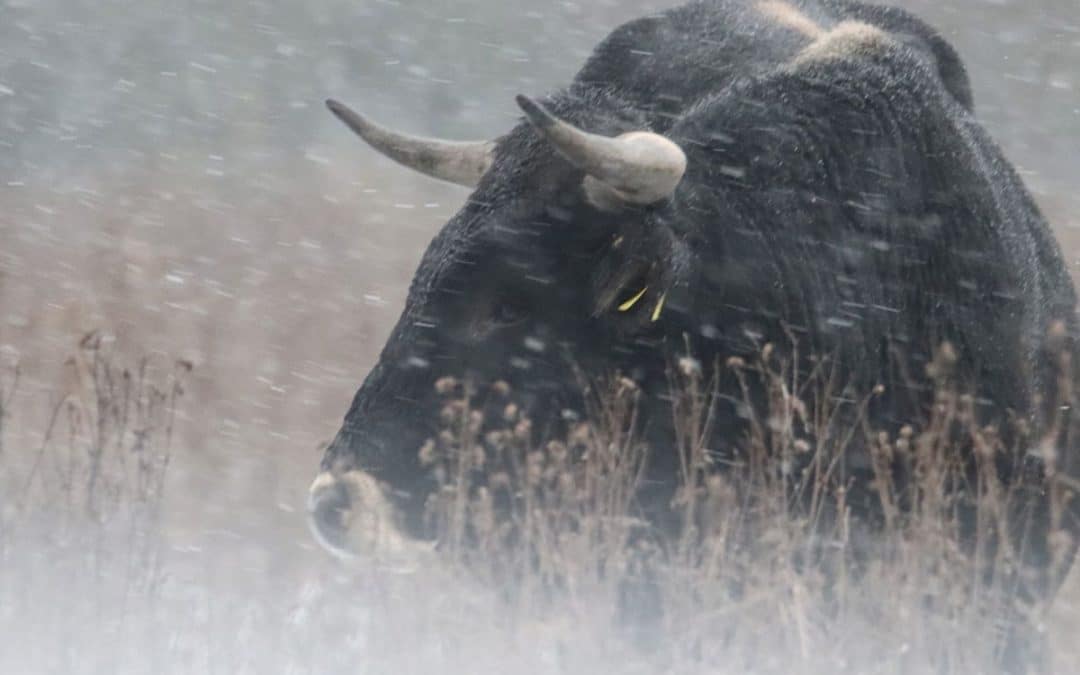
In Saksfjed Vildmark, Tauros bulls have been released – the species closest to the extinct aurochs. Photo: Frederik Josefsen – Saksfjed Vidlmark / Hempel Foundation
The Hempel Foundation’s The Wilderness in Denmark restores 2,500 ha of former farmland into biodiversity-rich landscapes. Saksfjed Wilderness hosts wetlands, meadows, and woodlands, reintroducing keystone species like Tauros, rare discoveries, and native wildlife. Combining research, education, and practical rewilding, it connects local, national, and European efforts, while promoting public awareness. Globally, Hempel also aims to conserve 5 million ha of tropical forests. Their work exemplifies large-scale nature restoration, demonstrating how rewilding rebuilds ecosystems, boosts biodiversity, and reconnects people with the wild.
The Hempel Foundation, as dedicated philanthropists and the majority owner of the Hempel Group, is committed to the return of biodiversity and to restoring our planet’s precious ecosystems. They see that diversity of nature is not only beautiful, but essential for us to survive, thrive and it underpins all economic activity, and therefore is intrinsically linked to people.
The Wilderness: bringing us all closer to the wild
The Hempel Foundation has launched The Wilderness, a new nature restoration hub in Denmark built around four connected sites – Mols Laboratory, Asnæs Peninsula, Nørholm Estate, and Saksfjed Wilderness – totaling nearly 2,500 hectares.
The initiative unites research, education, and practical rewilding to convert former agricultural land back into biodiversity‑rich landscapes and identify best practices for large‑scale nature restoration. It will support scientists, students, and practitioners, strengthen field‑based learning, foster national and European rewilding collaboration, and enhance public understanding of nature restoration through outreach, partnerships, and a dedicated knowledge platform.
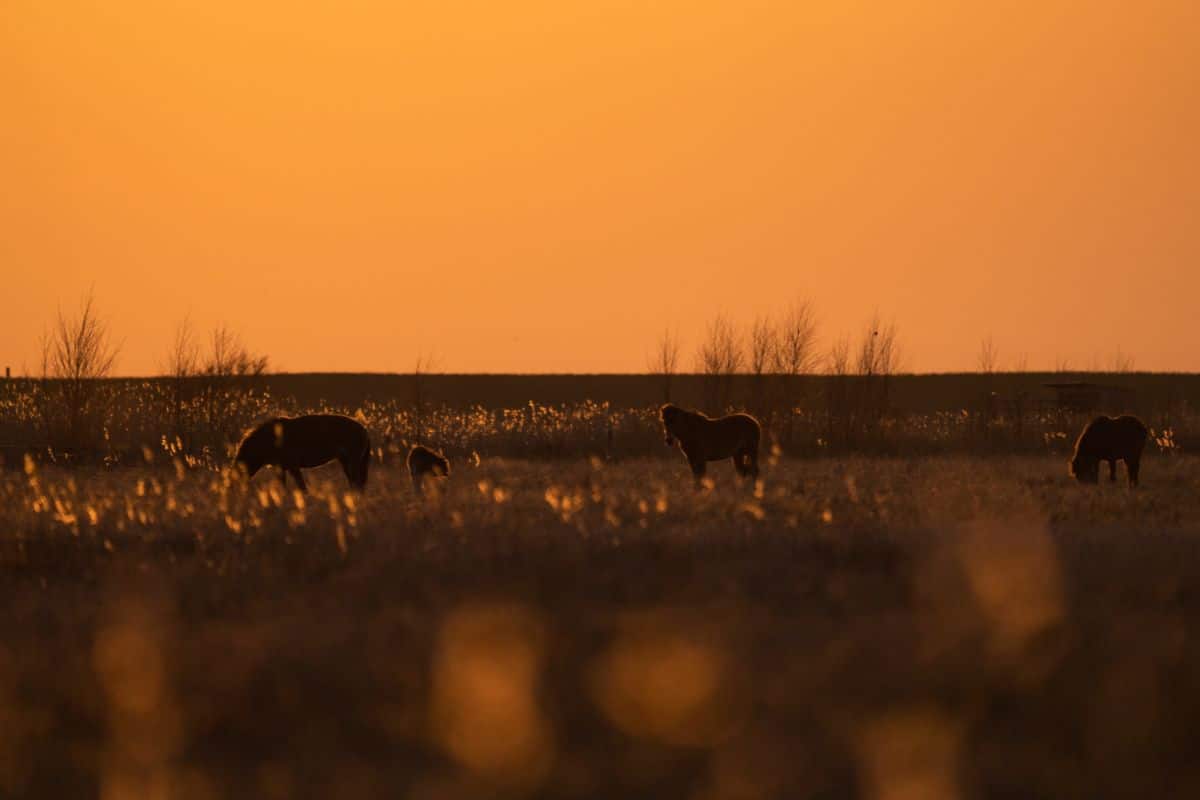
The Exmoor ponies at Saksfjed Vildmark are helping to enhance the diversity of both habitats and wildlife. Credit: Saksfjed Vidlmark / Hempel Foundation
Species big & small return to Saksfjed Wilderness
One of the Hempel Foundation’s most ambitious projects is the restoration of Saksfjed Wilderness in southern Denmark, located on the island of Lolland along the coastline of the Northeast Baltic Ocean. This 800-hectare area, once used for agriculture, is being transformed into wild nature as part of one of Denmark’s most ambitious rewilding projects. The coastal area comprises meadows, wetlands and woodlands; a mosaic of landscapes that hosts a plethora of species.
In August of 2025, they welcomed the return of 30 Tauros, a giant ox resembling the ancient auroch, to Denmark for the first time. These large herbivores will increase biodiversity and create wilder nature. “They are referred to as “keystone species” because their impact is so important to other species. Large herbivores, such as Tauros, create the habitats that many endangered species depend on,” says Thor Hjarsen, biologist and project head for the Hempel Foundations biodiversity portfolio in Denmark. Indeed, ‘nothing like this has been seen since the 1600s’.
Large herbivores, such as Tauros, create the habitats that many endangered species depend on.
Thor Hjarsen, biologist and project head for the Hempel Foundation
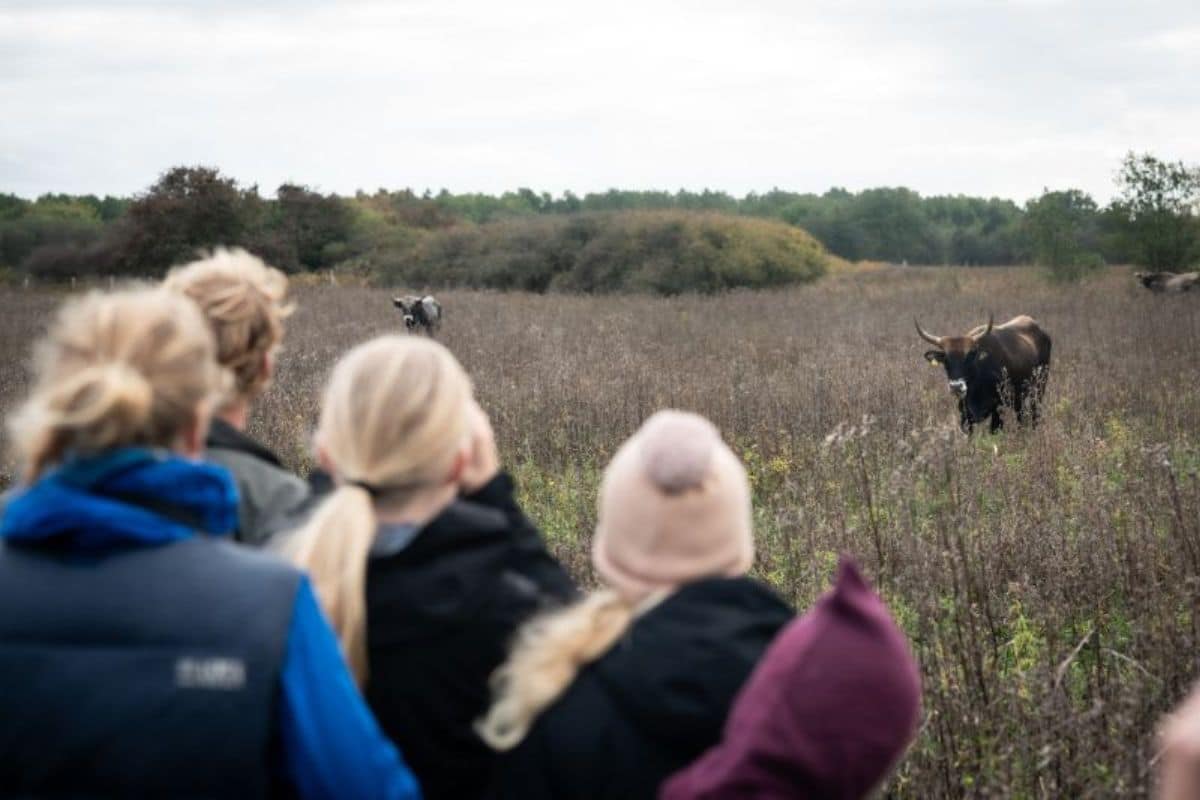
Tauros Safari at Saksfjed Wilderness Credit: Lars Hestbæk/Frederik Josefsen – Saksfjed Vidlmark / Hempel Foundation
Just previous to the arrival of giants, a small but unexpected discovery was made: a new species of pseudoscorpion Mesochelifer ressli was found. The discovery marks the first time this species has been spotted in the country. These results show the beginnings of what happens when we give space to nature. The discoveries of both demanding and rare species underscore the area’s vast potential as a habitat for specialized wildlife.
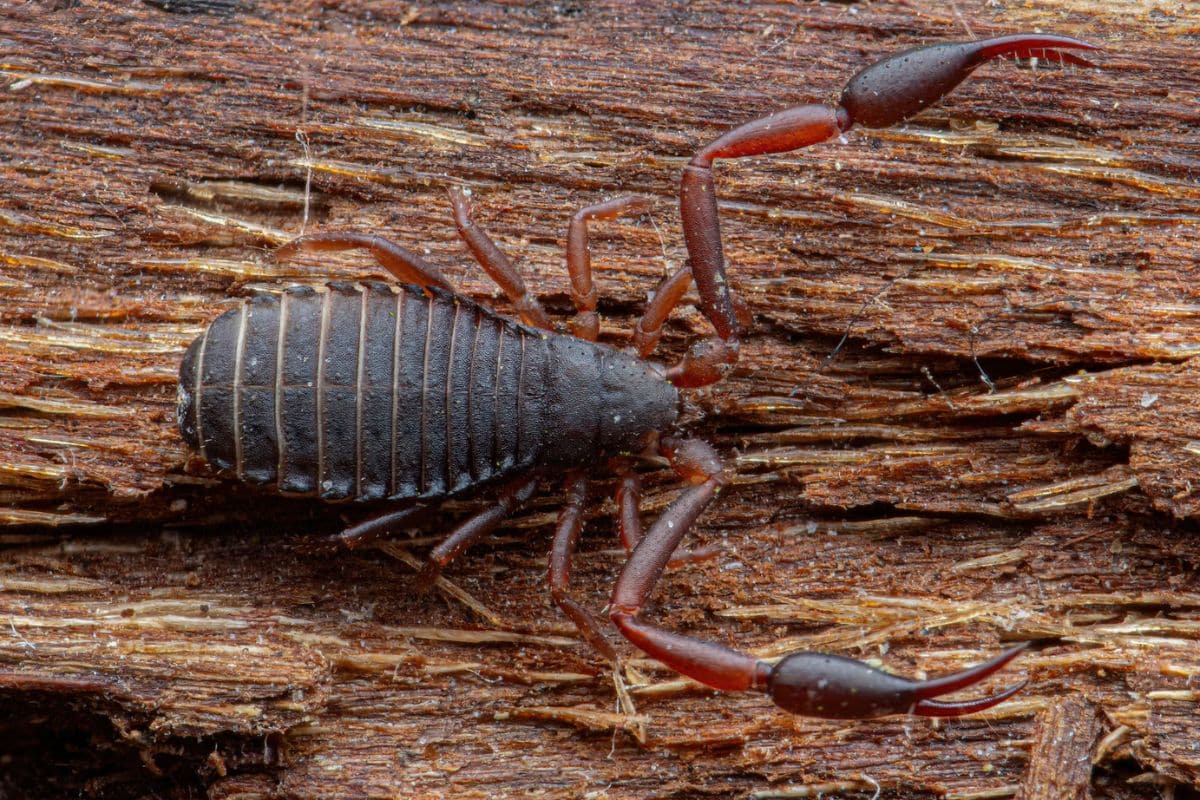
For the first time, the pseudoscorpion Mesochelifer ressli has been found in Denmark. The discovery was made in Saksfjed Wilderness on southern Lolland – a large-scale rewilding area spanning 800 hectares. Credit: Saksfjed Vidlmark / Hempel Foundation
Re-weaving the dynamic web of life
The project is set to become one of Denmark’s largest nature restoration efforts, contributing to a flourishing habitat for birds, insects, and other wildlife species that call the area home.
The Hempel Foundation is rewilding Saksfjed by introducing natural dynamics, such as creating wetlands, fostering biodiversity through controlled grazing with species like Galloway cattle and Exmoor ponies, and restoring natural water levels.The area is adjacent to the 217-hectare Saksfjed-Hyllekrog nature reserve, further expanding the protected natural spaces for Denmark’s diverse wildlife. Connecting together the wild places on our planet is crucial for the health of our ecosystems. Specifically, they are re-establishing wetlands and hydrological balance by closing drains, introducing natural forest dynamics and open grazing for species-rich forest development and, importantly, collaborating with local and European partners, as well as engaging the public.
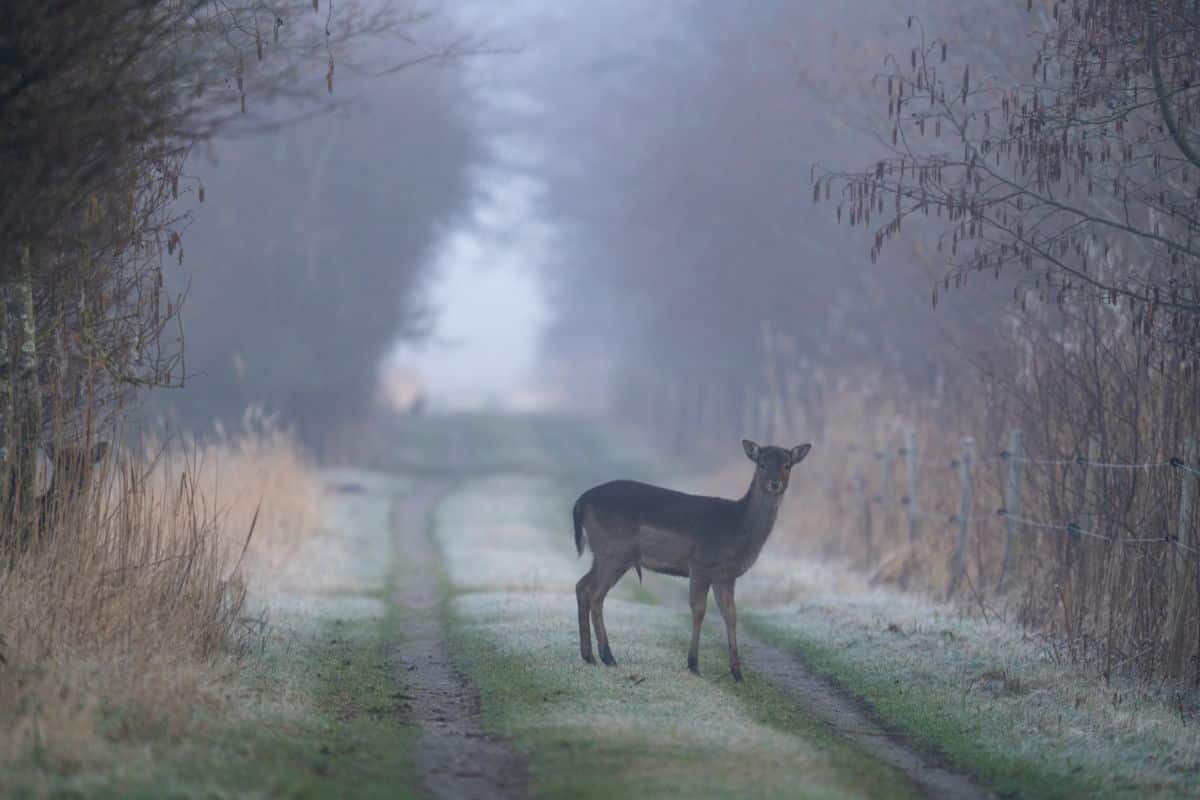
Deer in the morning fog at Saksfjed. Credit: Saksfjed Vidlmark / Hempel Foundation
Global Reach and answering what is rewilding?
Beyond Denmark, the Hempel Foundation is committed to conserving five million hectares of the world’s most critical tropical forests by 2030. Their projects span the Atlantic Forest, Indonesia, Eastern Afromontane, and Madagascar – regions that, despite covering only 0.3% of the planet, harbor nearly one-third of all species on Earth.
Within their Wilderness project, they dedicate huge amounts of energy to increase the awareness of rewilding and the importance of biodiversity. Undoubtedly their work is contributing to the momentum of the global rewilding movement.
We are proud to have them in our Alliance!
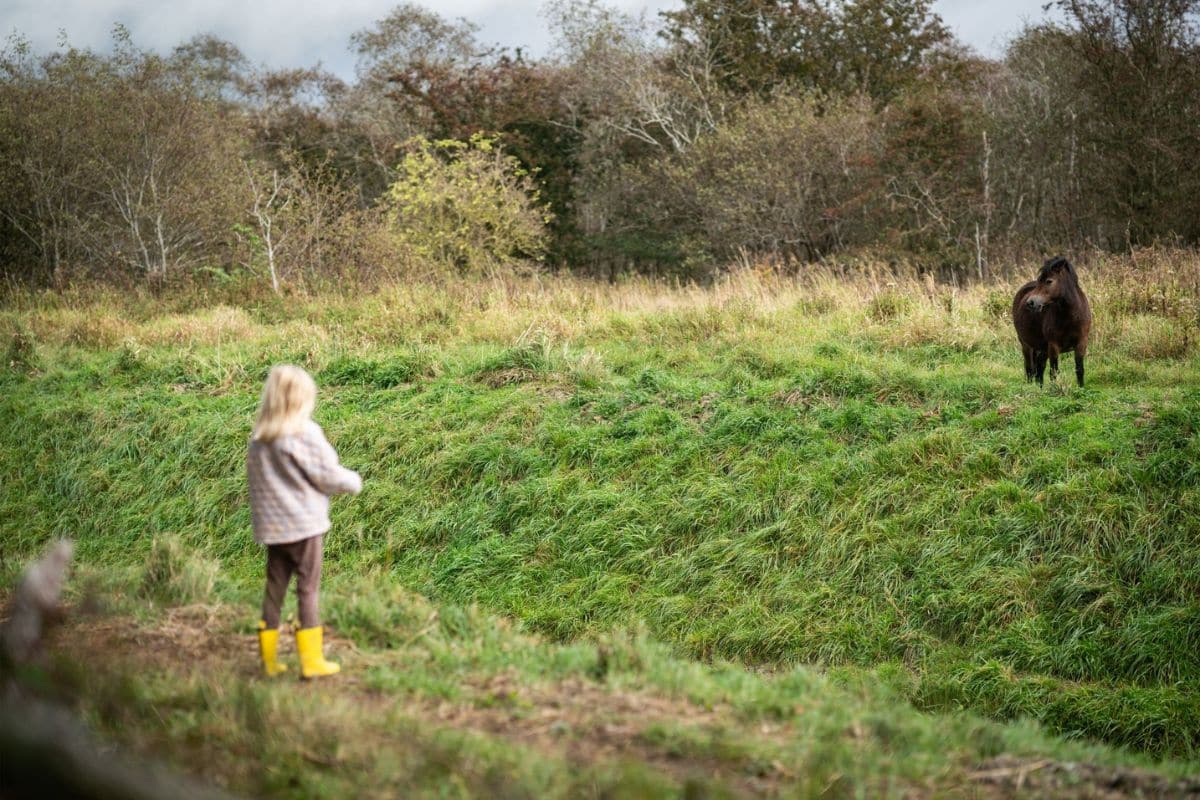
Little girl meets Exmoor pony during a Tauro Safari at Saksfjed Wilderness Credit: Lars Hestbæk/Frederik Josefsen – Saksfjed Vidlmark / Hempel Foundation