
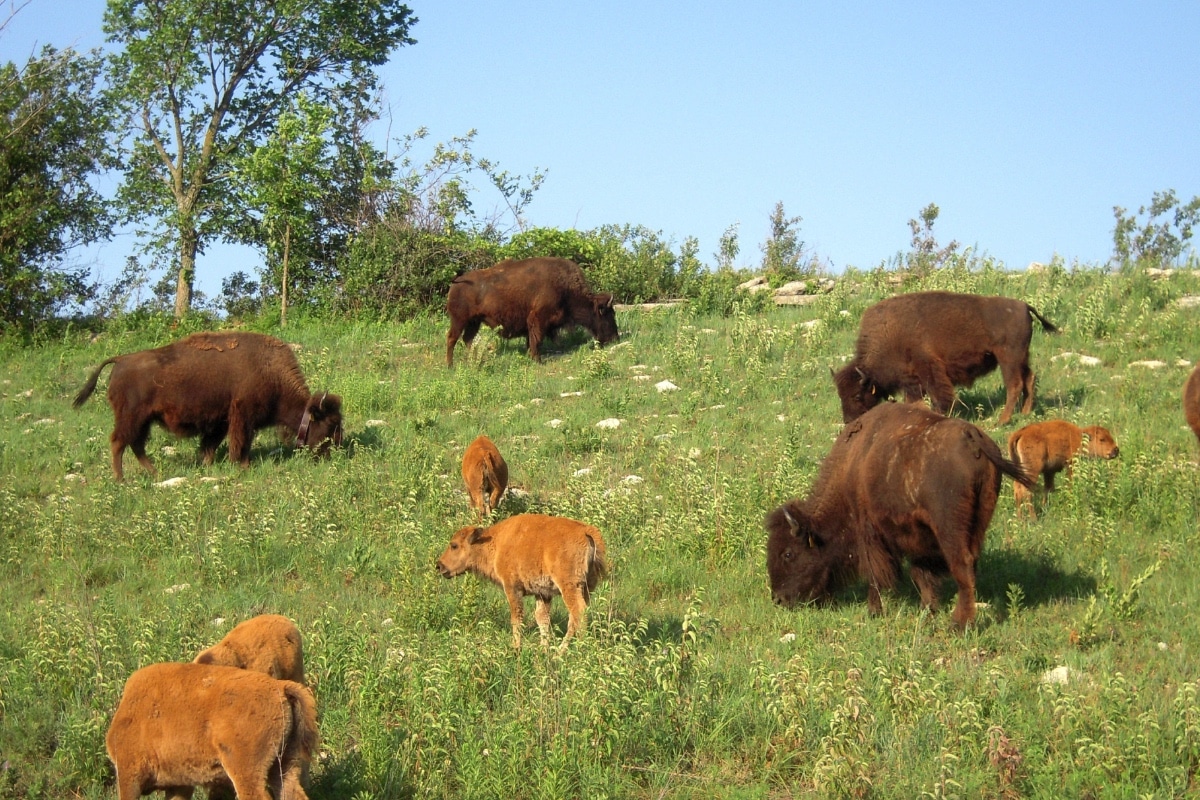
High-diversity grasslands are increasingly recognized as “old-growth” communities, having assembled over at least millennia, and often much, much longer. Human-caused disturbance frequently disassembles such communities, reducing them to lower-diversity states. A substantial challenge to conservationists interested in habitat restoration is to reassemble high-diversity communities that have been degraded by anthropogenic disturbance. Although we know that certain North American grasslands have the potential for very high diversity of plants and other organisms, we know relatively little about the historic influences of extirpated large native herbivores, which can be keystone species in the communities they inhabit.

Policy & Community Wins for Nature: $200M for 100 species, a New UNESCO Site & More
2026 is delivering major wins for nature recovery and rewilding. Credit from left to right: 1. Filmico, Acandi Wildlife Sanctuary 2. Marcus Westburg, Rainforest Trust 3. Zanji Sikhala, IFAW 4. Tsvibrav from Getty Images 5. Kamchatka 6. John Carnemolla from Getty...