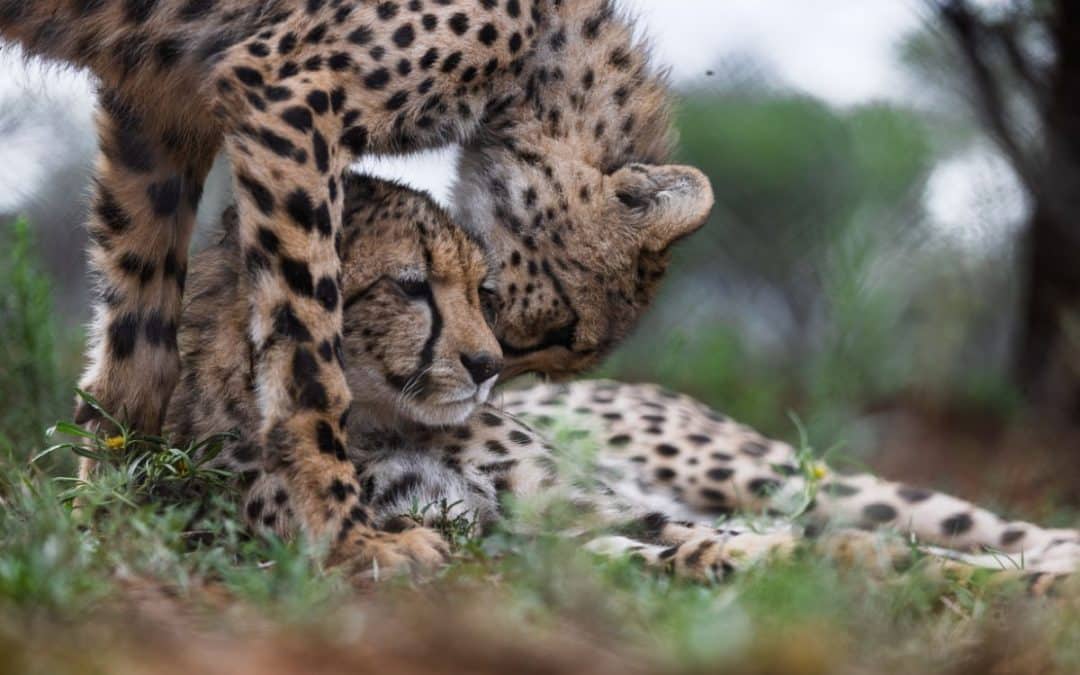
CCF residents, credit: Cheetah Conservation Fund
Bianca Thiglia, from the Global Rewilding Alliance team, recently visited our longstanding Alliance Partner in Namibia: the Cheetah Conservation Fund. Bianca explores how CCF’s real impact lies in not only rescuing and releasing cheetahs, but in mediating the conflict between predators and livestock farmers — through helplines, veterinary care, livestock guardian dogs, and hands-on farmer support. The article covers CCF’s careful, tracked release process, its research and education facilities, and its blended-finance model combining tourism, farm products, and donations. Ultimately, this is yet another story about how rewilding succeeds when local communities are treated as partners, not obstacles.
I’ve been working at the Global Rewilding Alliance for over a year now and I also am a massive wildlife nerd – I really couldn’t help but include a visit to our Alliance Partner Cheetah Conservation Fund (CCF) in the itinerary of my non-work trip to Namibia. If you’re considering travelling to Namibia, read carefully, because visiting the CCF will surely make your experience even wilder and, most importantly, impactful in more than one way.
As you might imagine, CCF is all about rescuing and releasing Cheetahs into their habitats but, to really understand rewilding, we need to consider what happens underneath the spectacular releases and rehabilitating of these purring spotted predators (yes, Cheetahs purr like cats and you will hear them do so if you visit the non-releasable residents of the CCF).
Humans and predators, a diplomatic conundrum
The CCF rescues Cheetahs mainly from two sources: the illegal pet trade, mainly in Somaliland, and as a result of human-wildlife conflict in the Namibian context. Pastoralism is one of the most important sources of livelihood for Namibians and it is not easy to raise livestock in areas where the fastest mammal on Earth hunts. The conflict between farmers and Cheetahs has been going on for generations. As these large predators at-times prey on livestock, the main source of sustenance for local communities, humans strive to protect their herds and might even end up killing Cheetahs to do so.
Now, imagine an external organisation stepping in and lecturing farmers on how important Cheetahs are to the ecosystem and suggesting to let them be. This does not really solve the human-wildlife conflict and leaves farmers unsupported and unheard. Over time, the divide between the Cheetahs and the human communities might even become more polarised, as it happened in several other contexts around the world (if you follow the current discussion around Wolf management in Europe, you know exactly what I’m talking about).
And here is where the CCF is really doing the heavy lifting.
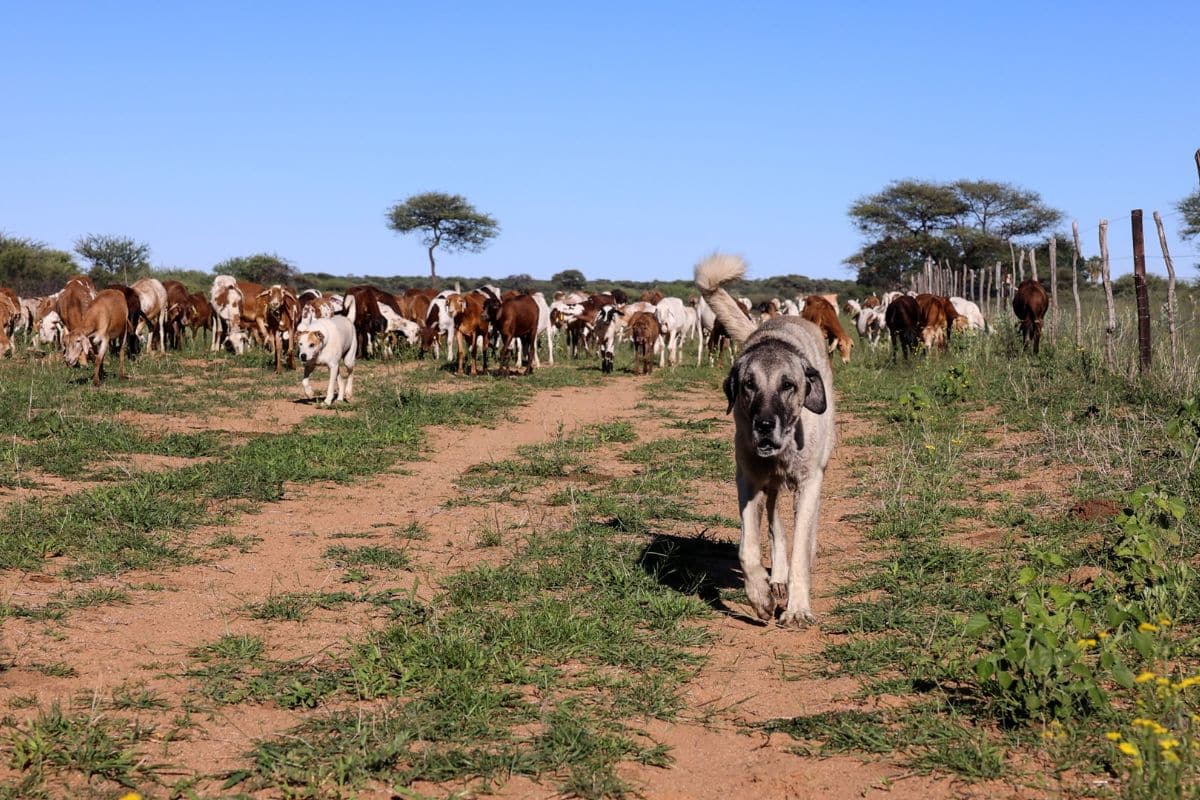
CCF livestock guardian dog. Credits: Cheetah Conservation Fund
If you visit, you might focus on the stories of past and present Cheetahs, spend time observing these incredibly beautiful animals feed, run, and receive their medications. Amongst this, it would be easy to miss the core of the work of this organisation. The work they have been doing behind the scenes for years is a concerted effort in establishing themselves as a shelter both for Cheetahs and struggling farmers, a mediator between wildlife and human communities, a trusted partner every farmer can go to to ask for help, brainstorm ideas, and learn how to better develop their business – all the while coexisting with large predators. The organisation serves the local people as much as the local felines.
The end result? Now any farmer in the area that has a Cheetah problem calls the CCF instead of taking it upon themselves to manage the conflict. The CCF is viewed as a business partner and a community member, not as an external actor advocating against their main source of livelihood. The CCF team is out there every day, providing training, testing those farmers’ innovative ideas that would represent too great of a financial risk to experiment for a small private business, vaccinating and providing free vet care for livestock and local dogs, and sharing best agricultural practices. Most importantly, they have a helpline any person can call in case of Cheetah sighting or attack.
The “CCF Family” now includes thousands of farmers, supported by a direct and free helpline forever. And whenever a farmer reaches out with a Cheetah problem, the CCF intervenes and coordinates with local government institutions. Together, they discuss possibilities of relocation of the Cheetah or provide the needed support, including through trained livestock guardian dogs.
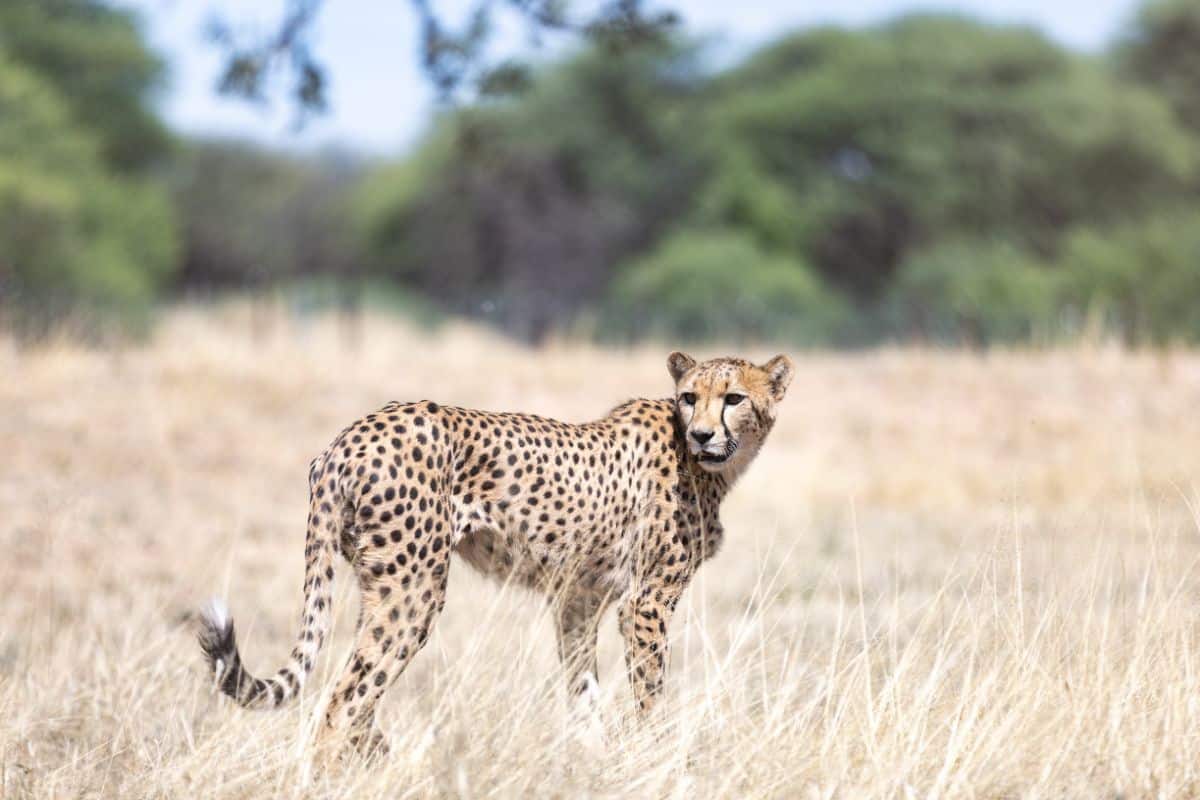
CCF resident, credit: Cheetah Conservation Fund
A delicate release process
Whenever a Cheetah is successfully rehabilitated or relocated, the release site is carefully assessed, accounting for factors such as biome and potential for conflict. Every released animal is collared and tracked for approximately one year so the team can ensure their success, intervene if the animal is struggling, and track whether the Cheetah is getting too close to livestock. Farmers in the area are notified and are connected to an early warning system they can use in case of any problem.
The team is always on the lookout for new possible release sites and, after a careful assessment, they even successfully partnered with Indian institutions. In 2022, CCF helped facilitate the translocation of eight cheetahs from Namibia to India as part of India’s effort to reintroduce the species 70 years after it was declared extinct there. The project has since received Cheetahs from South Africa and Botswana and with numerous births, their cheetah population is now nearly 60 individuals.
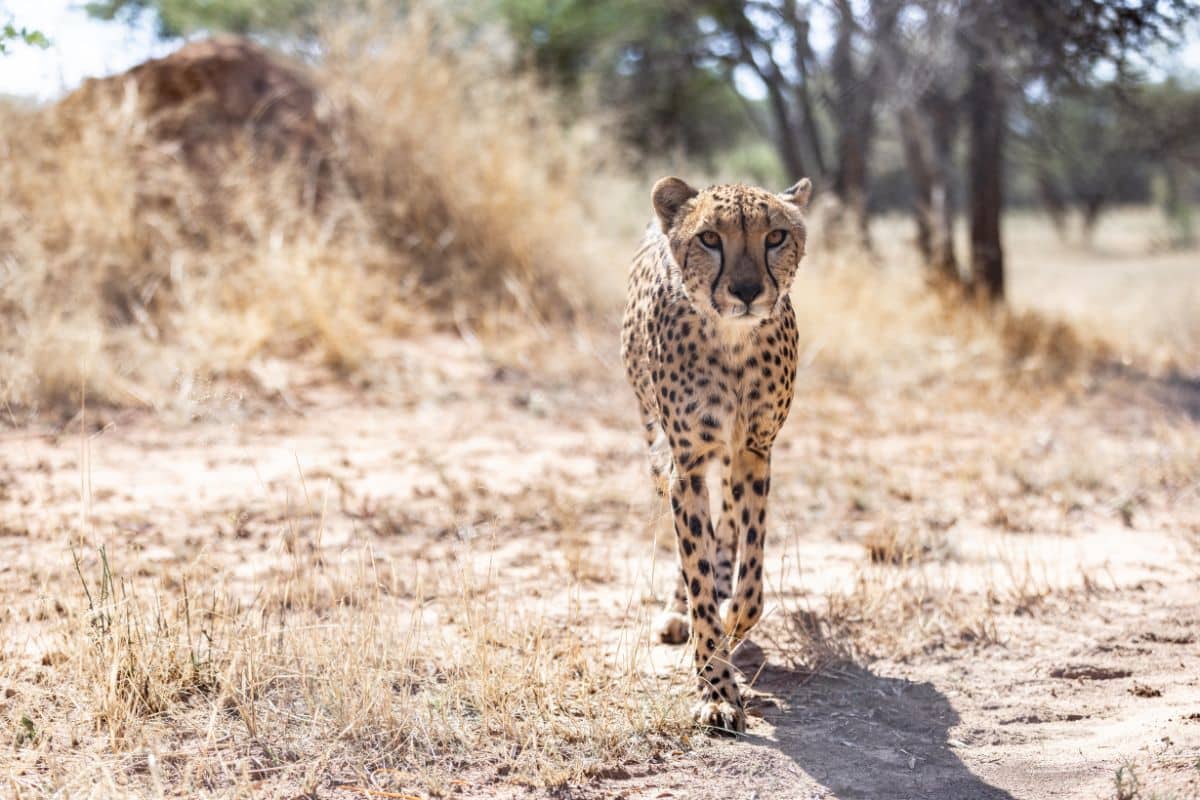
CCF resident, credit: Cheetah Conservation Fund
Research and science
As you might imagine, the rescue centre is not the only CCF facility. They also manage an education centre, a model farm, a museum, a research centre, a genetics laboratory, and a vet clinic specialised in carnivores.
The research centre is available for external scientists and students to use. It includes a genetic bank for future breeding programmes and to track Cheetah genetic diversity, but it also collects data about other wildlife, and human-wildlife conflict.
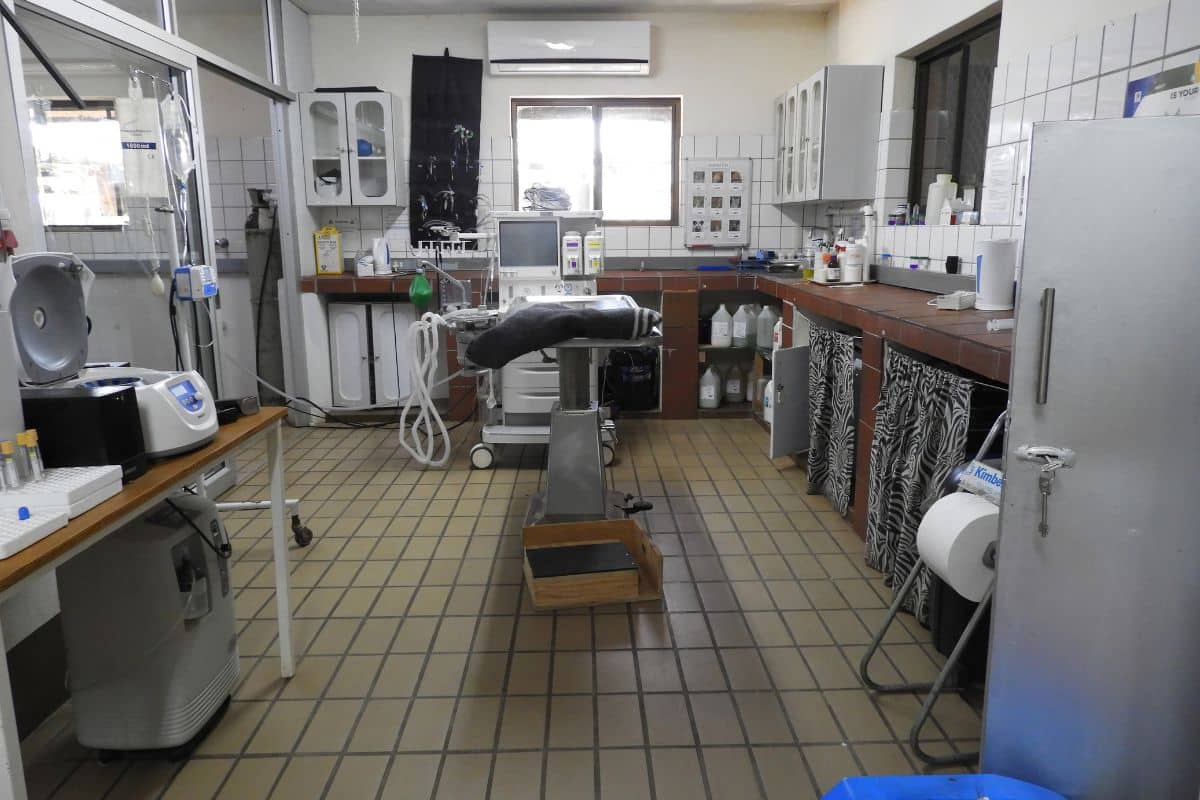
CCF vet clinic, credit: Bianca Thiglia
The veterinary clinic is equipped to welcome a variety of other animals. The vets are also deployed in the field, to support farmers and vaccinate local dogs as part of their One Health program. During these missions, the CCF team also identifies possible local dog candidates for the livestock guardian programme among unwanted litters. Currently, they are assessing the effectiveness of local dogs vs imported livestock guardian dog breeds to test their effectiveness, and we’re really looking forward to discovering the results of this research.
The business side of the project
For those that appreciate insight on the management side of a rewilding organisation, the CCF is confirming what we already noticed at the Alliance. The most financially successful and self-sufficient rewilding projects muster a blended-finance model. CCF relies on donations, but it also has its own sources of revenues to ensure its financial independence and the ability to carry out their activities throughout the years.
Visitors can stay at their lodges, and come to observe the resident non-releasable Cheetahs running and feeding (the Cheetahs that will be released have no contact with the public, to preserve their wild nature). Moreover, the CCF model farm also produces organic food products, including goat milk cheese and icecream, that are sold to local lodges and to the public, as an alternative source of revenue. But this does not mean that support is not needed, donations still remain a fundamental pillar to ensure CCF rescue and rewild action can be sustained in the future.
Yet again, we see how rewilding cannot happen without the inclusion of local communities. Humans can be -and should be- a fundamental part of rewilded ecosystems and a lot of this relies on the careful management of the human-wildlife coexistence. We are happy to share this story of success and the lessons learned from the experience of Alliance Partners such as the Cheetah Conservation Fund.
Are you planning your next trip to Namibia yet?

About the Global Rewilding Alliance
The Global Rewilding Alliance brings together over 300 organisations across every continent to catalyse a worldwide movement for nature’s recovery. We accelerate learning, convene evidence, and share the successes and benefits of rewilding —inspiring more organisations to rewild and unlocking new resources for rewilding. Learn more about our work.