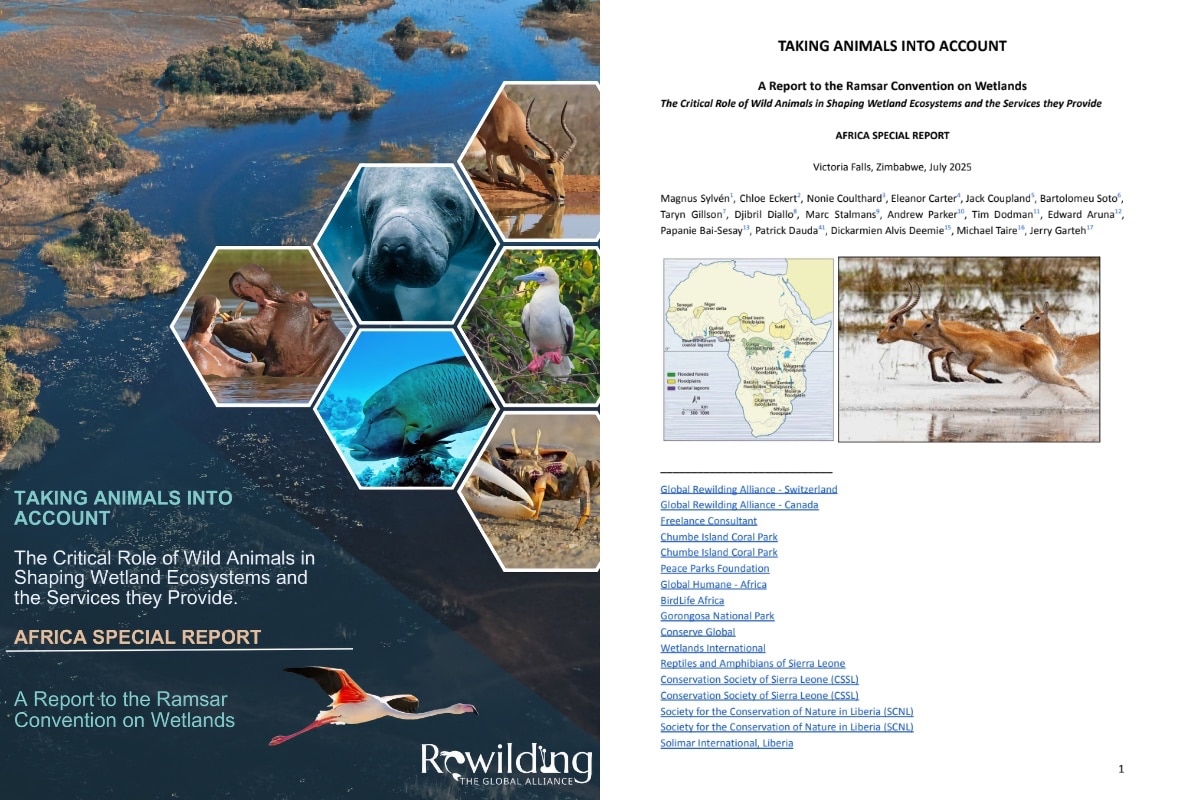
The report evaluates how wild mammals, birds, fish, reptiles and amphibians, macro-crustaceans (especially crabs and crayfish), and molluscs shape lakes, rivers and streams, as well as saltmarshes, seagrass meadows, estuaries, coastal lagoons, deltas and mudflats, mangroves, coral reefs, and kelp forests – all wetland types recognised by the Ramsar Convention on Wetlands. This is a special follow-up report of “Taking Animals into Account”, featuring the African continent, based on a literature review and a set of case studies. The report highlights the ecological and functional importance of a wide spectrum of species, some strongly associated with inland and coastal wetlands such as hippos, Nile crocodiles, dugongs, Mediterranean monk seals, otters, sharks, and many fishes and waterbirds; and others with a more indirect connection, such as the African buffalo, elephant, and the Striped and Spotted hyenas.
How Satellite Remote Sensing Is Unlocking New Possibilities for Rewilding Success, a new guide for practitioners
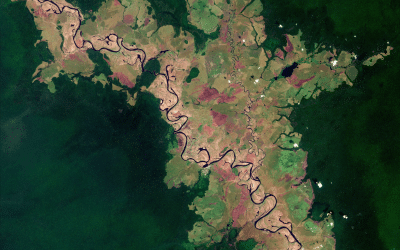
This Copernicus Sentinel-2 image captures the meandering course of the Likouala-aux-Herbes river in the Republic of the Congo. Credit: contains modified Copernicus Sentinel data (2025), processed by ESA.In recent years, satellite remote sensing (SRS) has become...