
Closing diamond mine alone the lower Orange River / Rewild Pangaea
Rewild Pangaea, founded in 2025 by brothers Luca and Elias Kuhn von Burgsdorff addresses one of the great environmental challenges of the twenty-first century: what happens when mines close. As demand for critical minerals accelerates, mining will continue expanding across the world, often leaving behind scarred land and forgotten communities. Rewild Pangaea is developing a new model to turn extraction into renewal — transforming post-mining landscapes into biodiversity hotspots, carbon sinks, and foundations for new community-owned economic growth. Their flagship work takes place in South Africa’s Richtersveld, where they partner with the indigenous Nama community to restore one of the world’s most extraordinary landscapes.
Who owns the land?
The Richtersveld is one of South Africa’s most important stories of land restitution.
Here, the Orange River cuts through desert mountains before meeting the Atlantic Ocean along South Africa’s remote Diamond Coast. Fog drifts inland from the cold Benguela Current. Giant Quiver Trees rise from rocky slopes. And across a 2-billion-year-old landscape shaped by wind, drought, and time, life has evolved into forms found nowhere else on Earth.
In 2003, the indigenous Nama community regained ownership of approximately one million hectares of ancestral land following a landmark restitution case. The victory restored ownership of the land, but the economic benefits of decades of diamond extraction never reached the community.
Today, that same landscape offers a rare window to chart a different path.
For more than a century, alluvial diamond mining defined the Richtersveld. It brought jobs and infrastructure, but also left scars across the land. Now the rise of synthetic diamonds is accelerating the industry’s decline. Mines are closing, jobs are disappearing, and communities are searching for what comes next.
At the same time, scientists are warning that the Richtersveld is degrading. The combination of mining, overgrazing, succulent poaching, and increasingly frequent and severe droughts are tipping the ecosystem over an edge. Perennial vegetation is disappearing, soils are becoming dust, and the Namib Desert is slowly advancing southward.
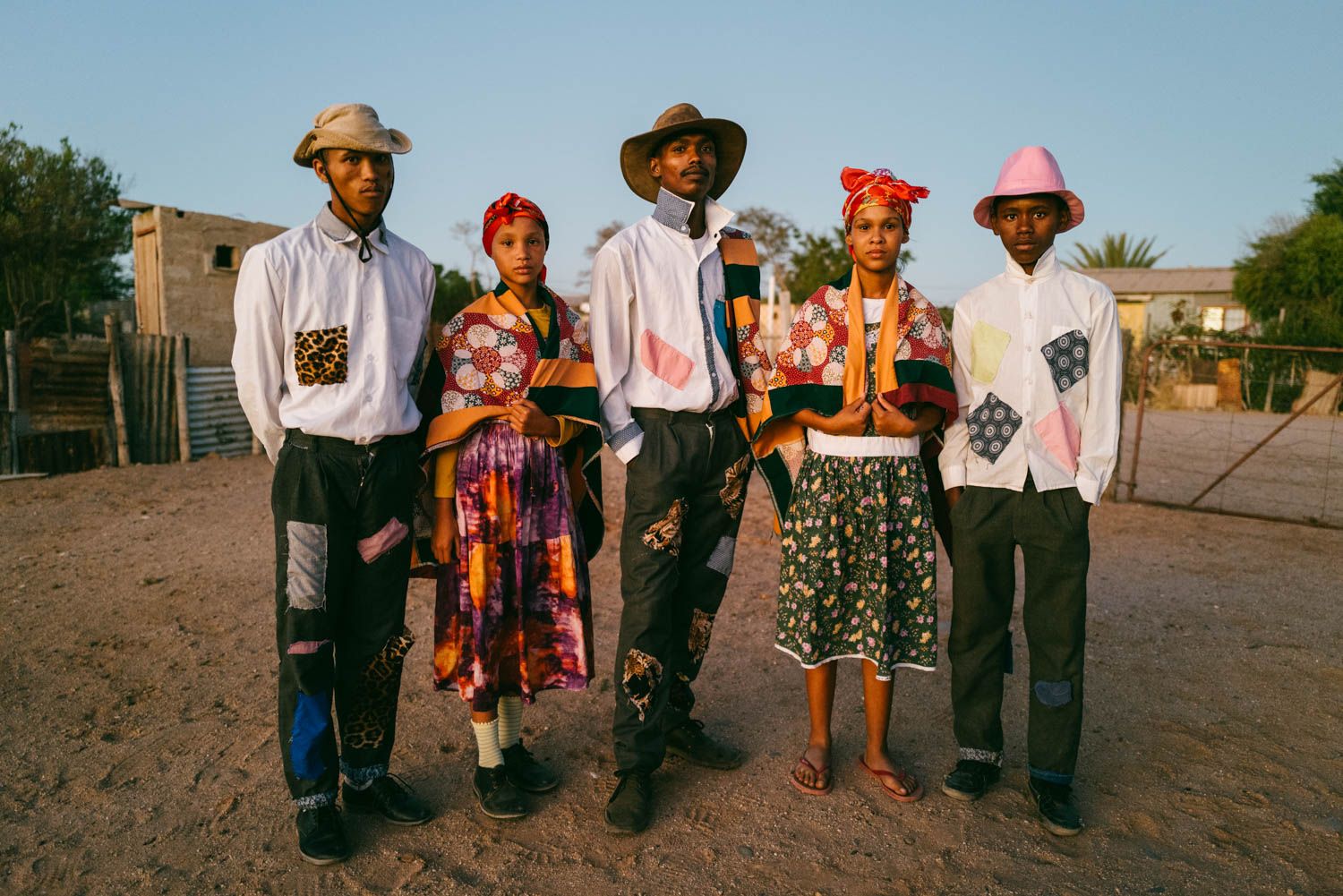
Nama youth in Sanddrift / Out of Mined – Protect the West Coast
Why does Richtersveld biodiversity matter?
The northern Succulent Karoo is the most biodiverse semi-arid region on the planet. More than 6,000 plant species grow here, one third of which exist nowhere else.
For Rewild Pangaea, this moment represents both a challenge and an opportunity: using nature restoration in one of the world’s oldest and biodiverse landscapes to build a post-mining future for the people who call it home, and turning the legacy of extraction into reinvestment.
One of the people helping guide that journey is Pieter van Wyk, a SANParks botanist known across South Africa as the ‘Plant Shepherd’. Part Nama, part Afrikaans, Pieter grew up walking the mountains and valleys of the Richtersveld, studying and protecting its remarkable flora.
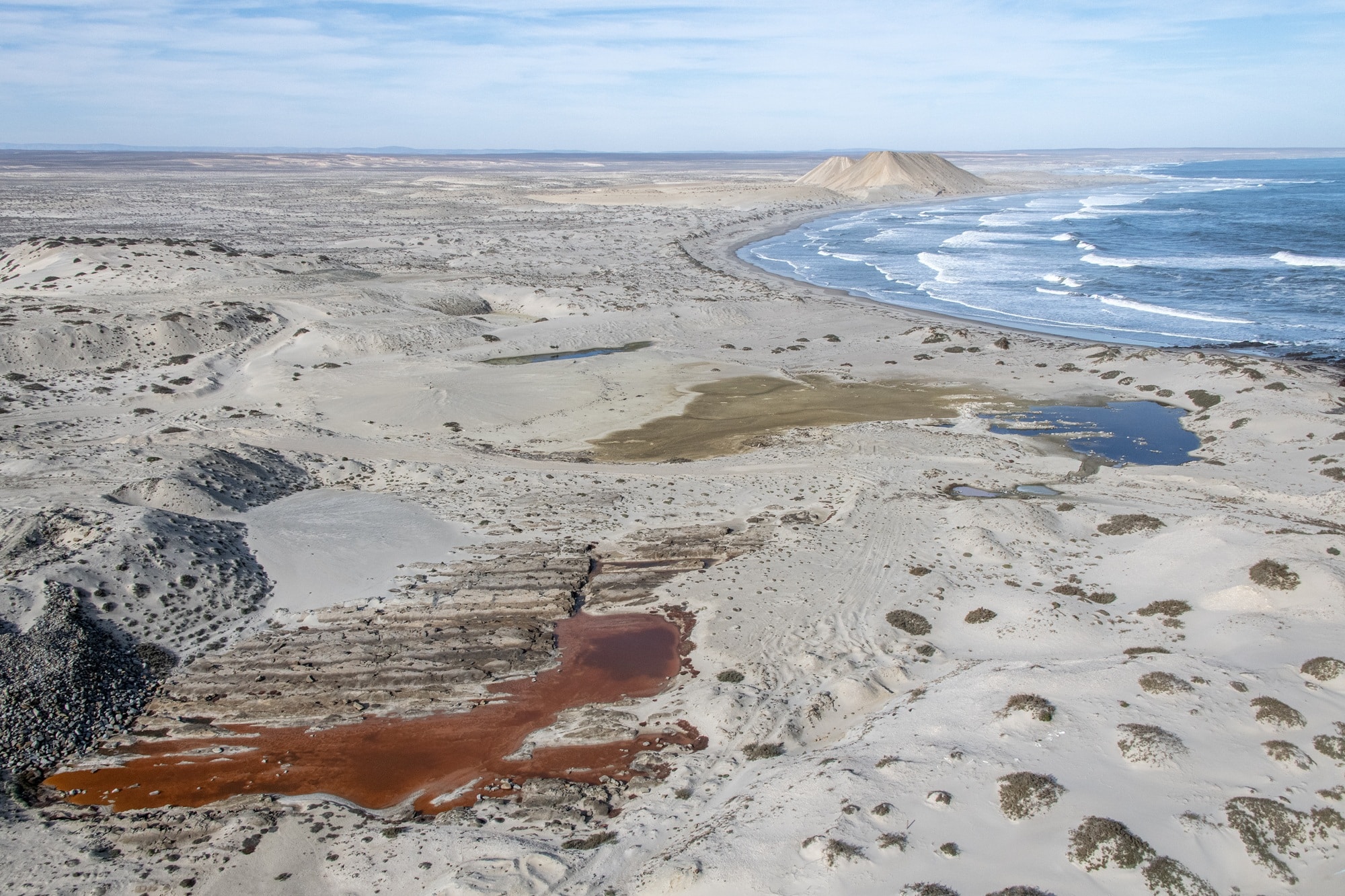
Diamond mines desertifying the coast / Rewild Pangaea
Together with Pieter, SANParks, the University of Cape Town, the South African Agricultural Research Council, and local land users, Rewild Pangaea has begun revegetating the Aniesvlakte plains.
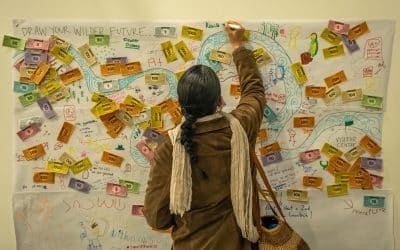
Following community co-design workshops in January 2026, this landscape was selected as a priority for action. The plains upriver from Alexander Bay have become a source of severe dust storms affecting the nearby towns of Kuboes and Sanddrift, while also containing one of the largest remaining populations of the critically endangered Giant Quiver Tree.
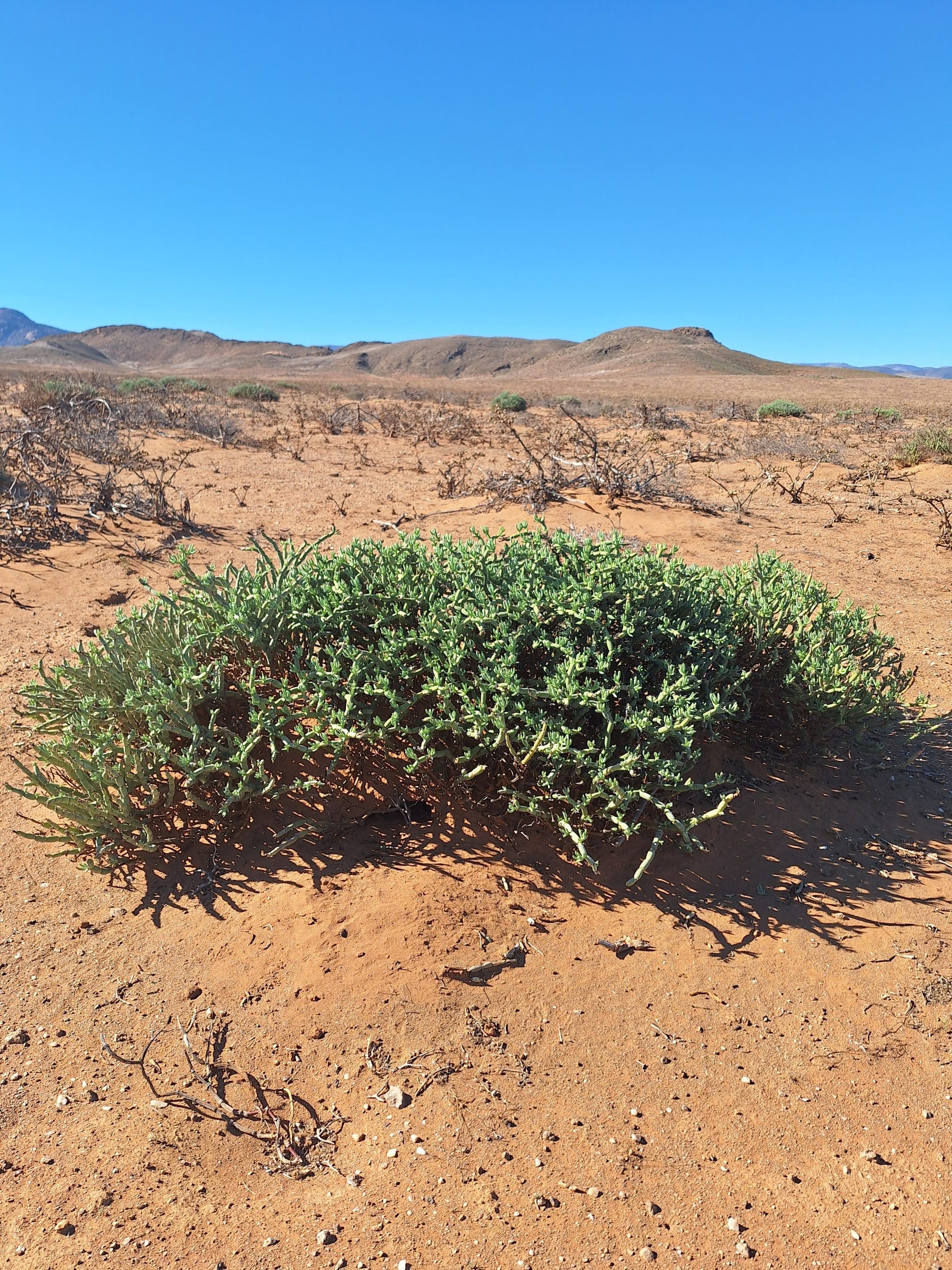
Scorpiontail, an ecosystem engineer / Rewild Pangaea
The pioneer of the restoration effort is a humble but remarkable plant known locally as Scorpiontail.
This fast-growing drought and wind-resistant succulent once dominated vast areas of the Richtersveld’s open plains. Its dense cushions trap moving soil to form mounds that can grow meters high, retaining moisture and creating habitat for hundreds of other species.
As one of the last survivors during droughts, it is the plant of choice for goats, and has therefore over the decades largely disappeared from the Aniesvlakte. The impact has been disastrous. Without its sheltering microtopography, the wind strips the land of its topsoil, so little else can grow.
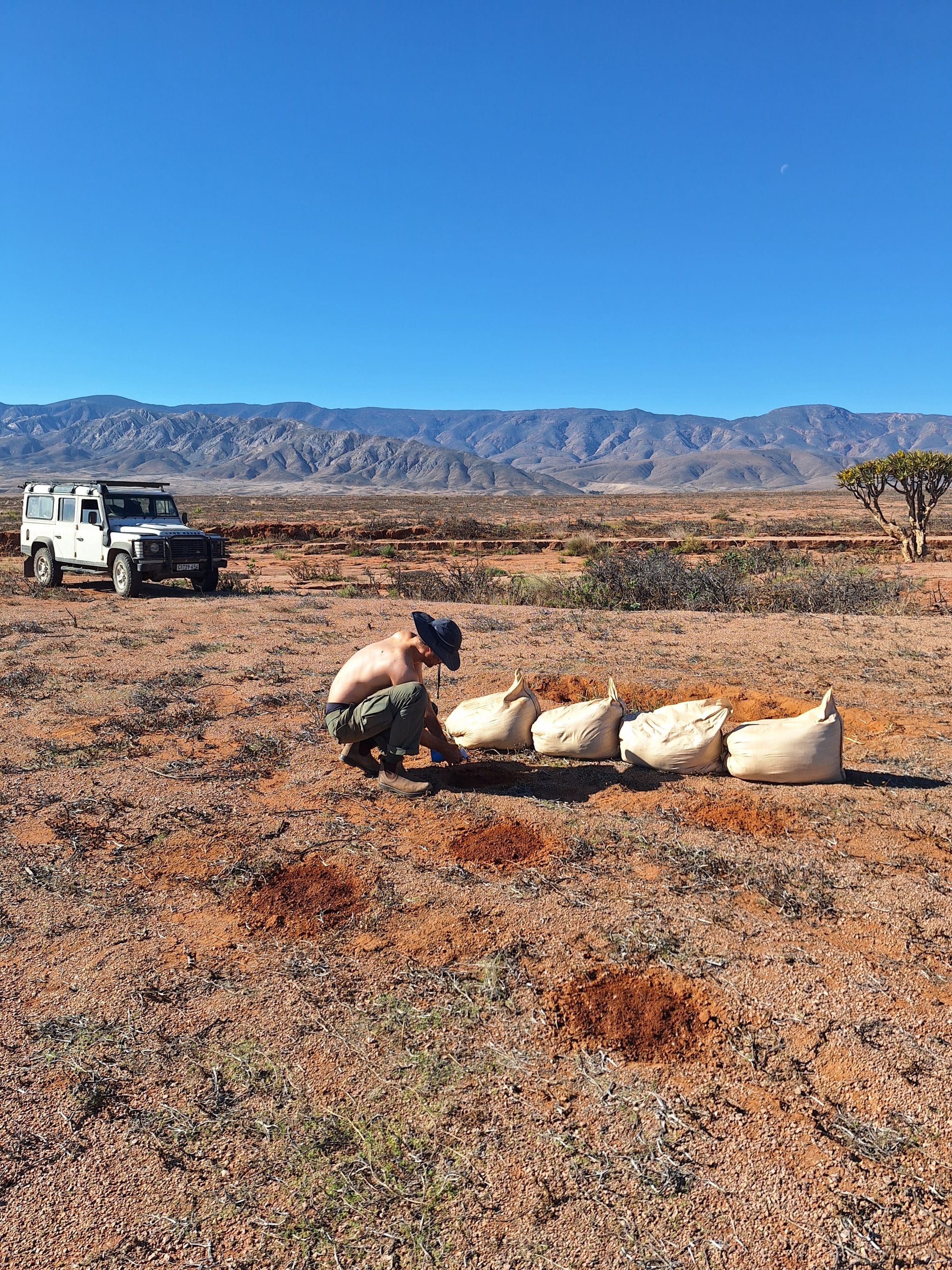
To help reverse that trend, the team has established its first scientific restoration pilot, planting Scorpiontail ahead of the winter rains. This has never been tried before. But the science is based on nearly 50 years of monitoring by Dr. Norbert Juergens of the University of Hamburg. If the pilot is successful, restoration will scale to 10,000 hectares in 2027, and continue growing from there.
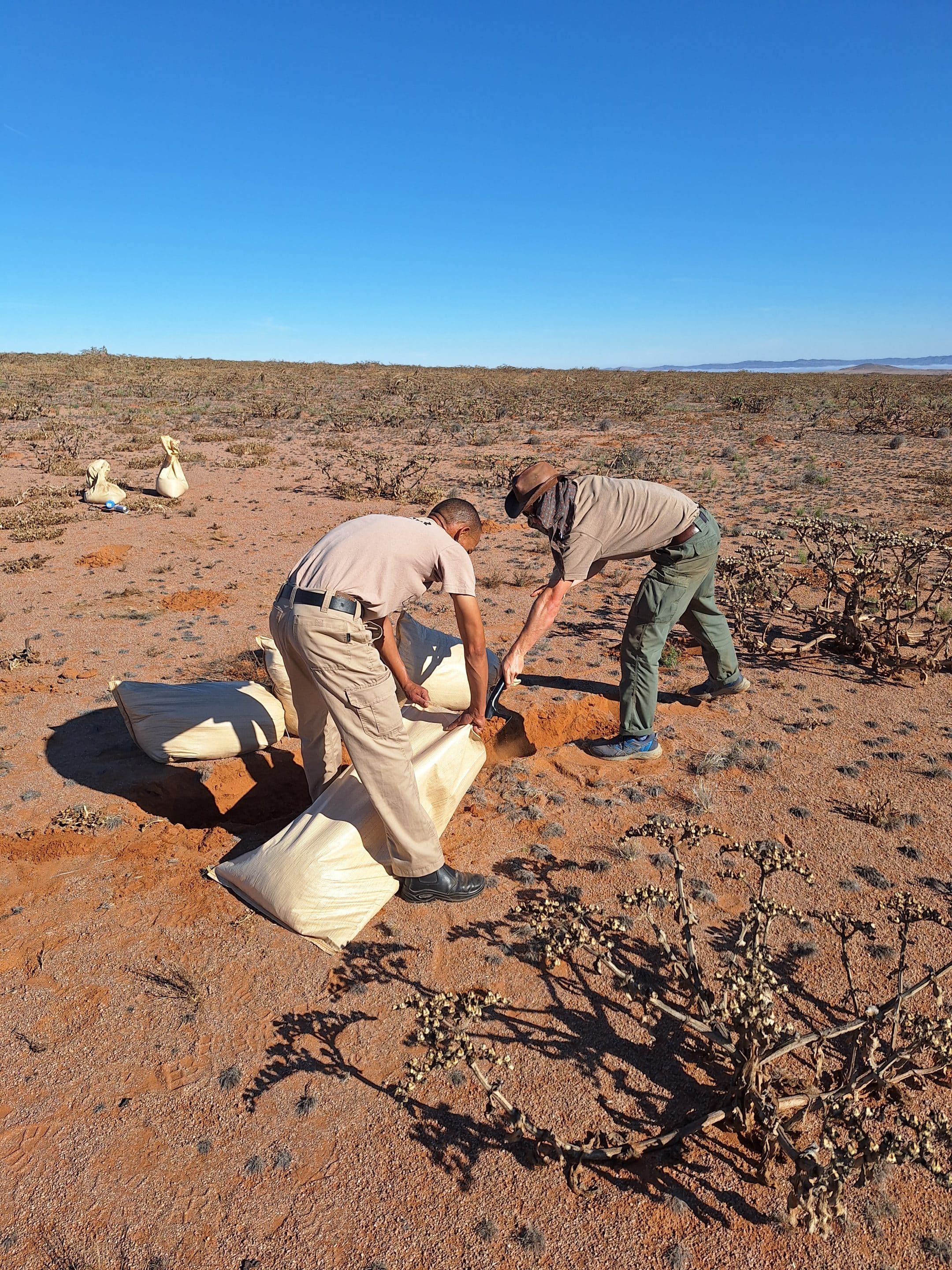
Testing sandbags as wind barriers to revegetate the plains / Rewild Pangaea
A Bold Vision: the World’s Largest Quiver Tree Forest
But the vision stretches far beyond a single species.
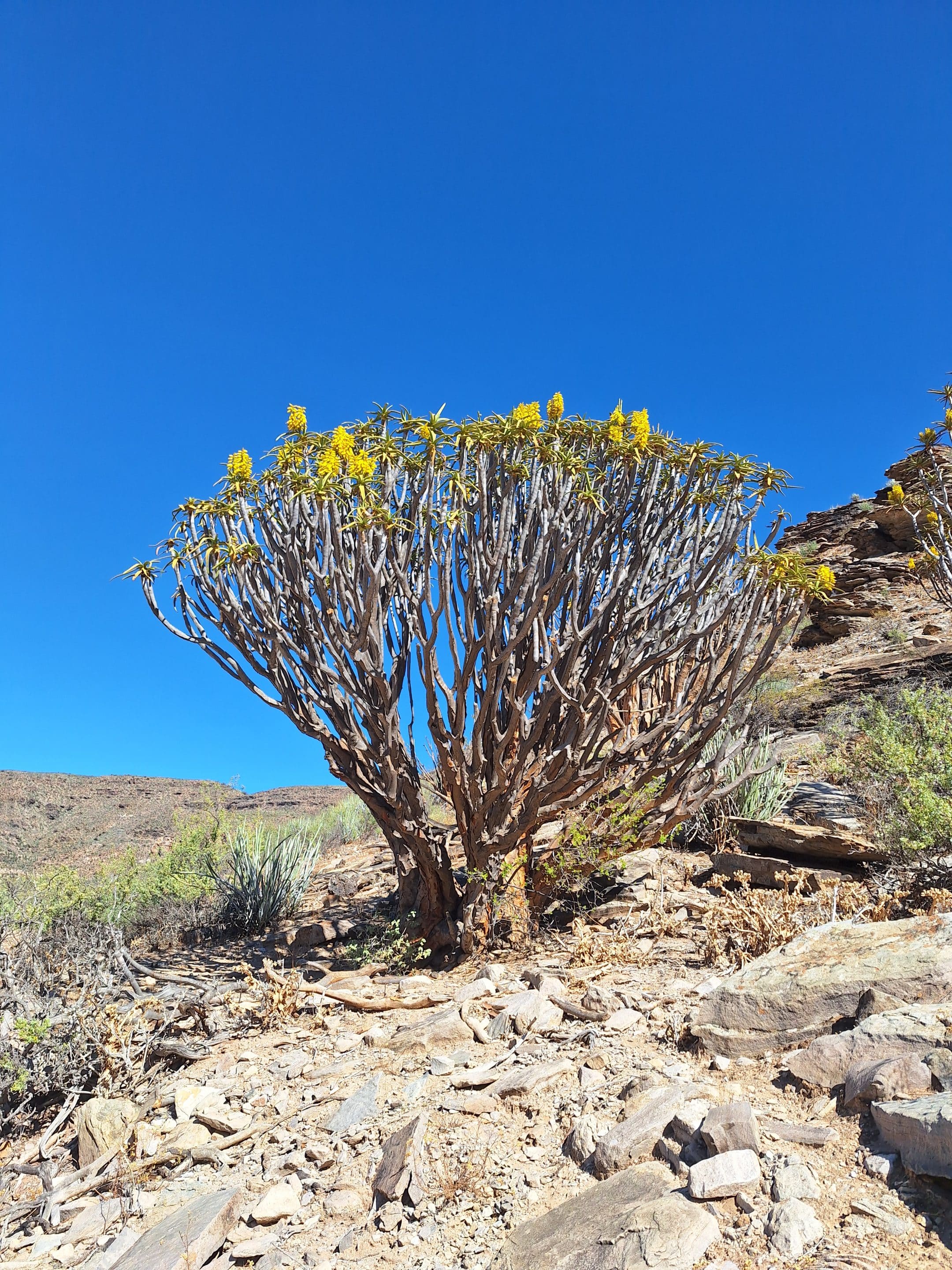
The Richtersveld is home to three extraordinary quiver trees: the Common Quiver Tree, the Maiden Quiver Tree, and the Giant Quiver Tree. The latter two occur nowhere else on Earth.
As restoration progresses, Rewild Pangaea and its partners aim to introduce nursery-grown Quiver Trees into recovering landscapes, helping reconnect fragmented populations and secure the future of these iconic species.
Pieter and the community’s long-term ambition is bold: to establish what could become the world’s largest Quiver Tree forest.
As the ecosystem recovers, wildlife will return from the adjacent Ai-Ais/Richtersveld National Park: Oryx, Ostrich, Springbok, Mountain Zebra, Cape Leopards, and the world’s smallest Tortoise.
The Aniesvlakte is only the first step in a much larger journey. To help realise SANParks’ 2040 strategy of ‘mega-living landscapes’, Rewild Pangaea is building a vast corridor of restored habitats across one million hectares of communal land — connecting the Orange River, the Atlantic coastline, and the Richtersveld mountains.
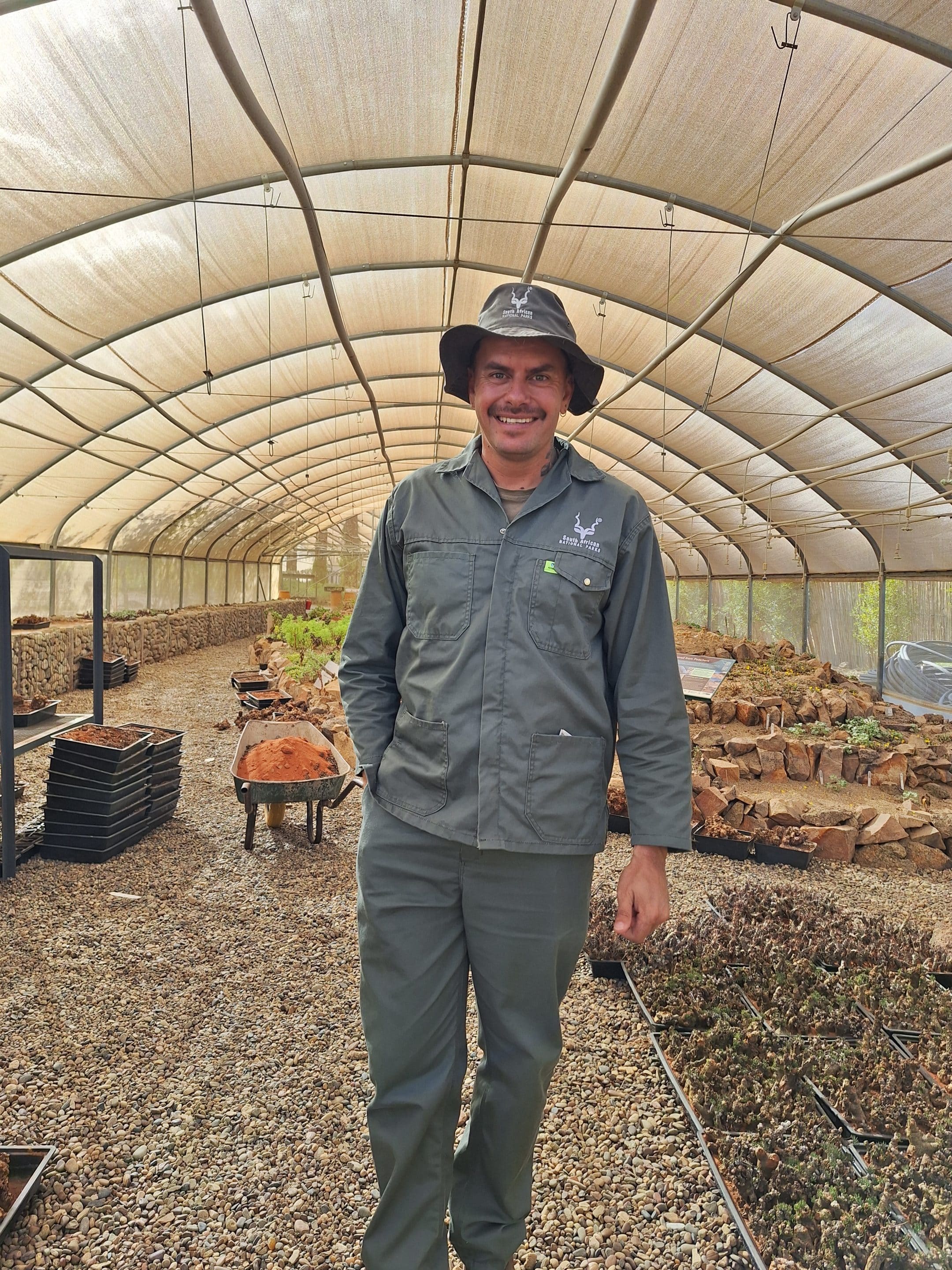
Botanist Pieter van Wyk, advisor to Rewild Pangaea / Rewild Pangaea
Rebuilding the local economy: what comes after mining?
The post-mining challenge the Richtersveld faces is not unique. Around the world, thousands of mines will close in the coming decades. Too often, they leave behind forgotten communities on degraded land.
Rewild Pangaea believes these landscapes can become something else.
Their model combines mine rehabilitation, landscape-scale restoration, and community-led reinvestment. Rewild Pangaea works with mining companies to close and rehabilitate mines, as it is their obligation to do so. But the impacts of mining do not stop at the fence. So they work with universities and philanthropists to launch restoration pilots and scientific monitoring. Once the ecosystem begins to recover, they are able to scale restoration using outcome-based nature finance.
In the Richtersveld, given its exceptional biodiversity, Rewild Pangaea is developing high-integrity biodiversity credits. Post-mining landscapes create a natural demand for these outcomes: mining companies seeking to go beyond minimum rehabilitation obligations, and downstream companies looking to reduce nature-related risks in their supply chains and invest in measurable ecological recovery.
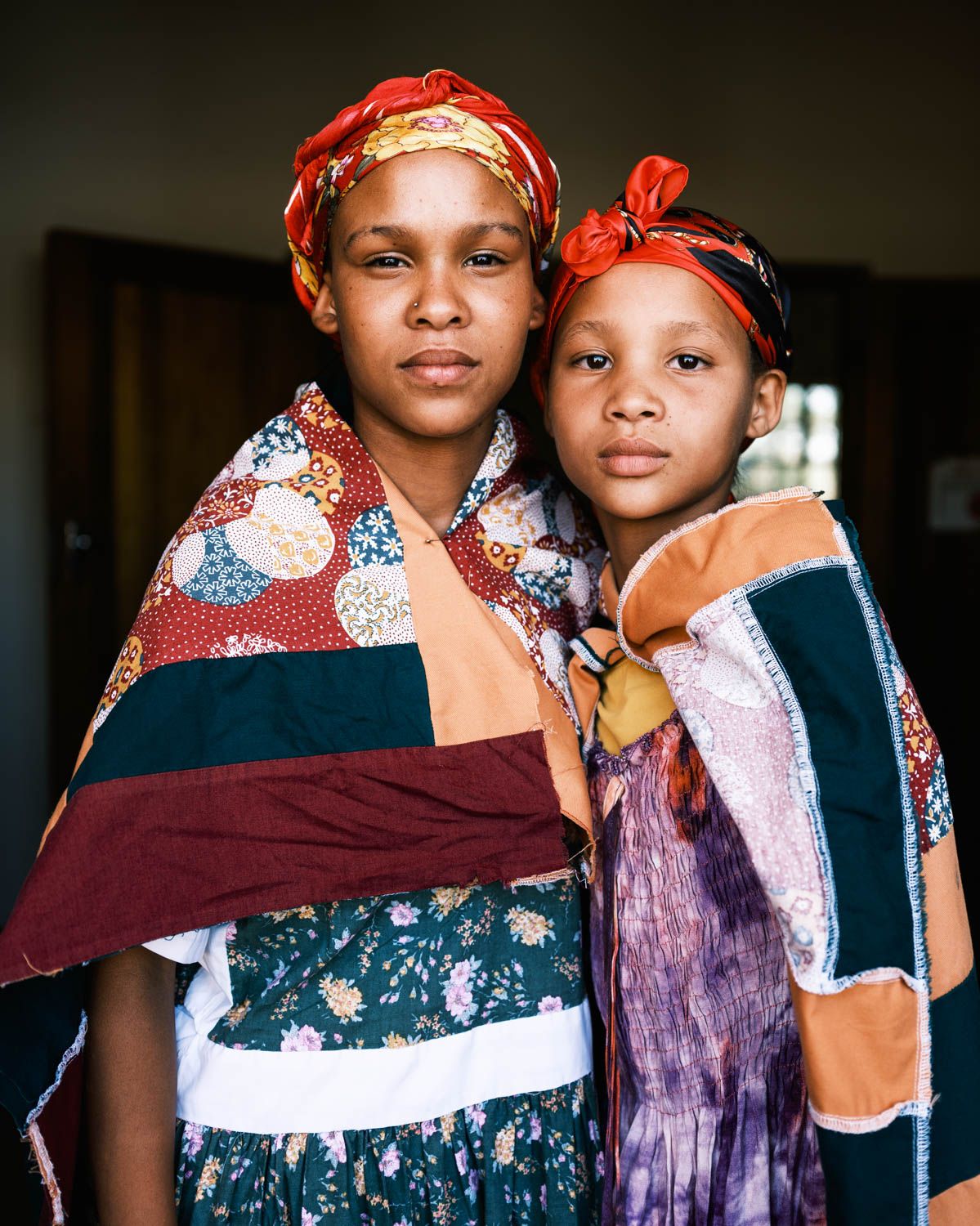
From left to right: Nama Sisters in Sanddrift, Maiden Quiver tree, planting Scorpiontail, workshop with locals, succulent flowering, view of Richtersveld plains, Nama youth playing / Out of Mined – Protect the West Coast & Rewild Pangaea
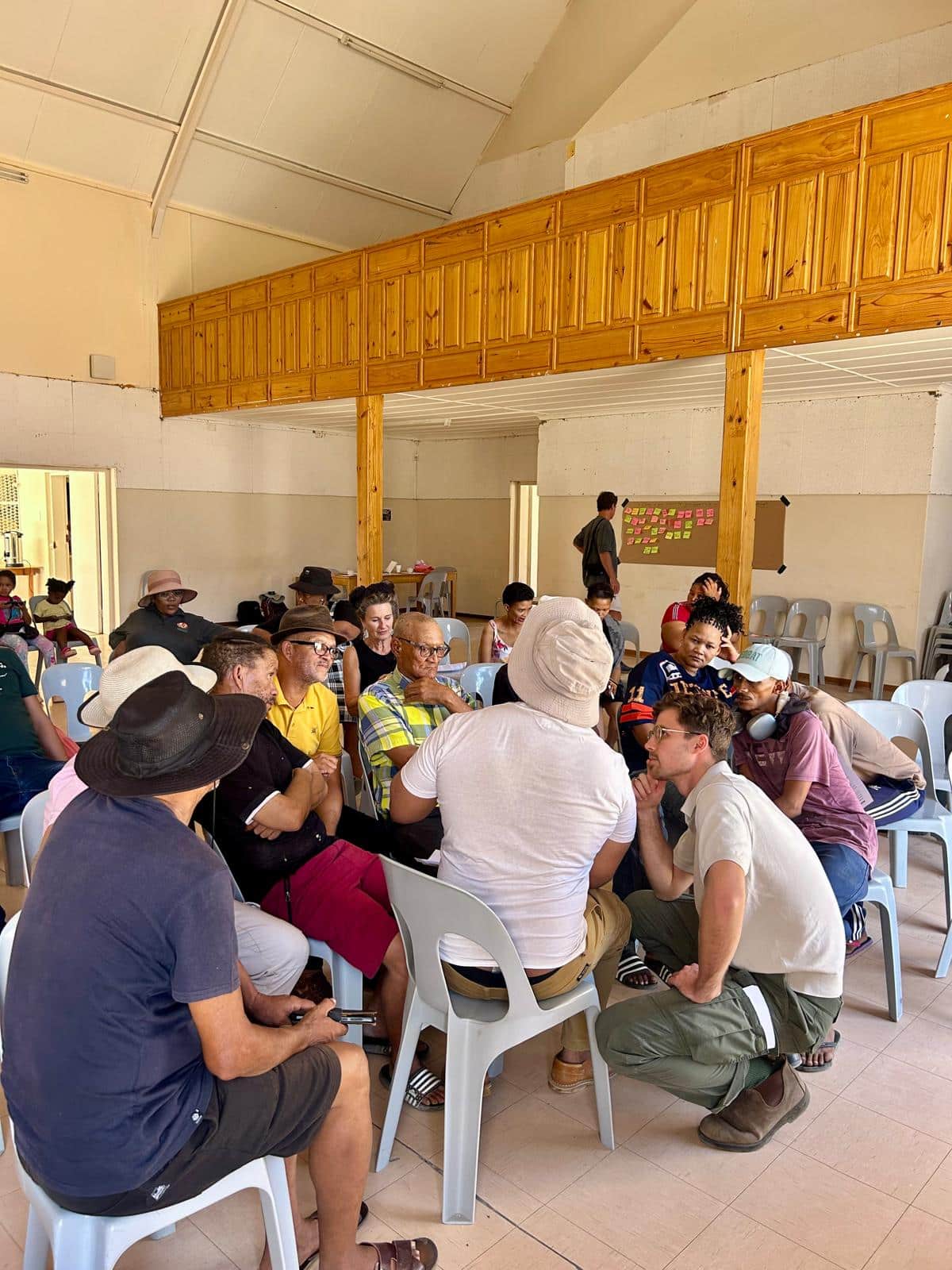
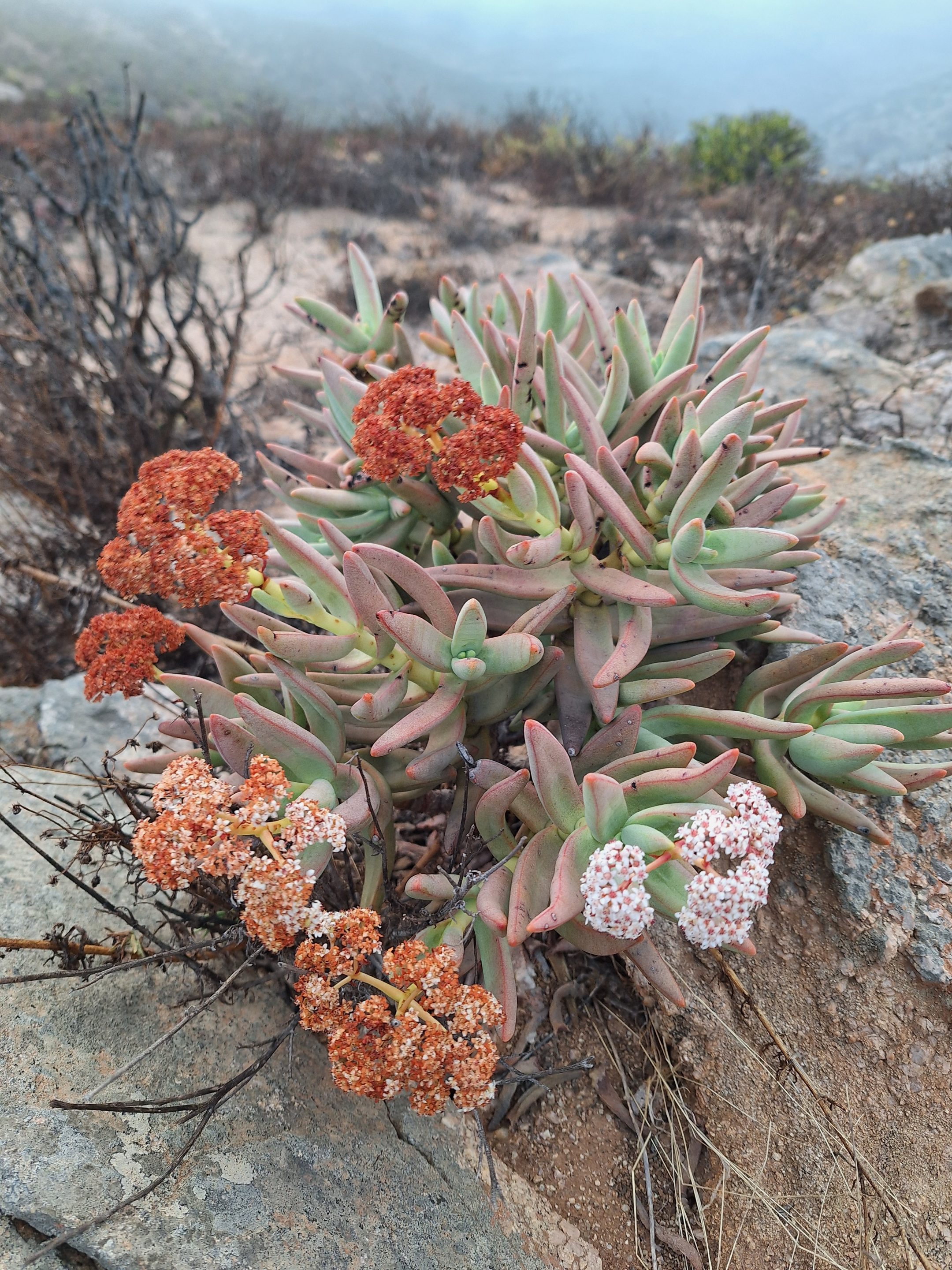
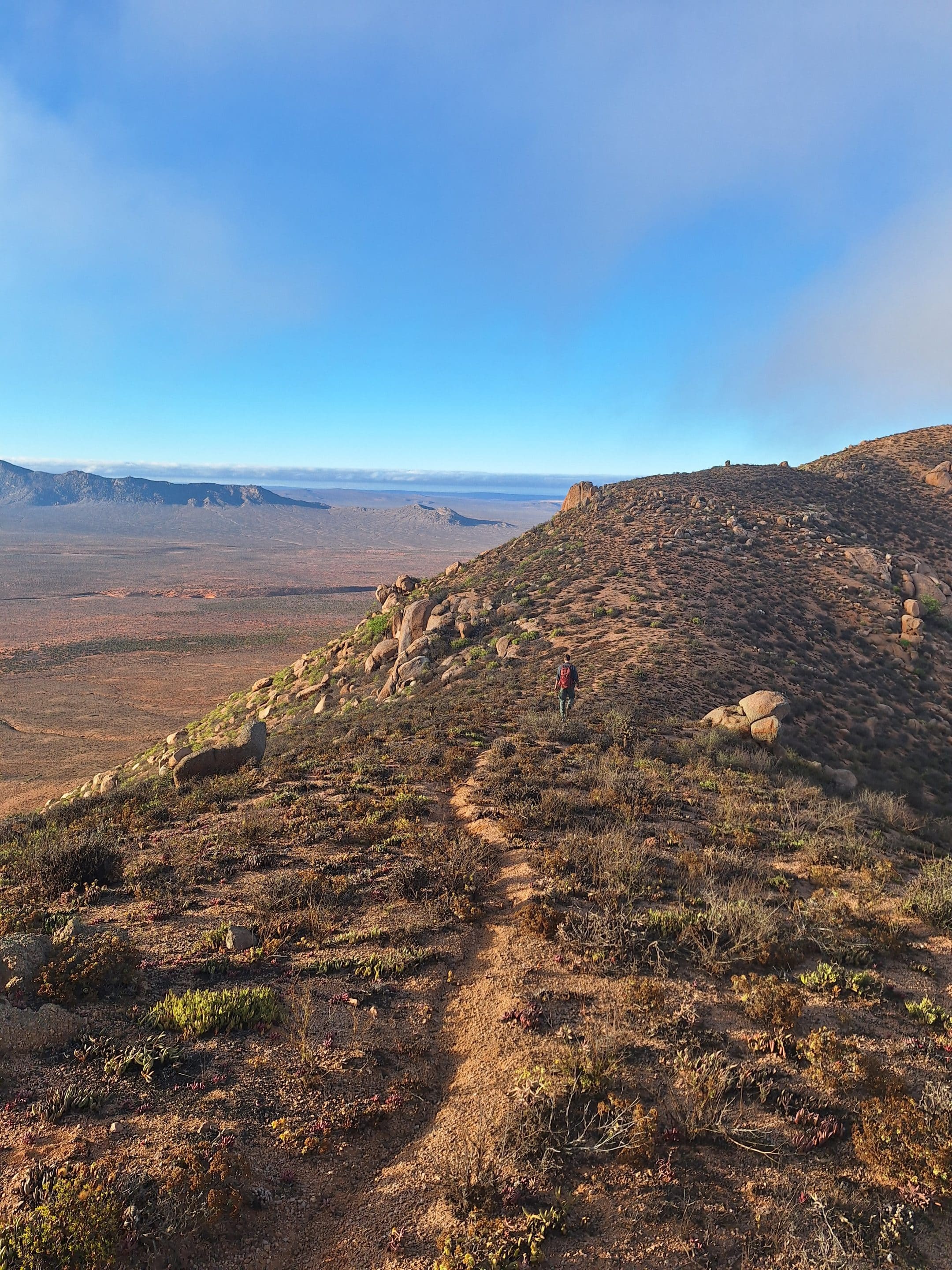
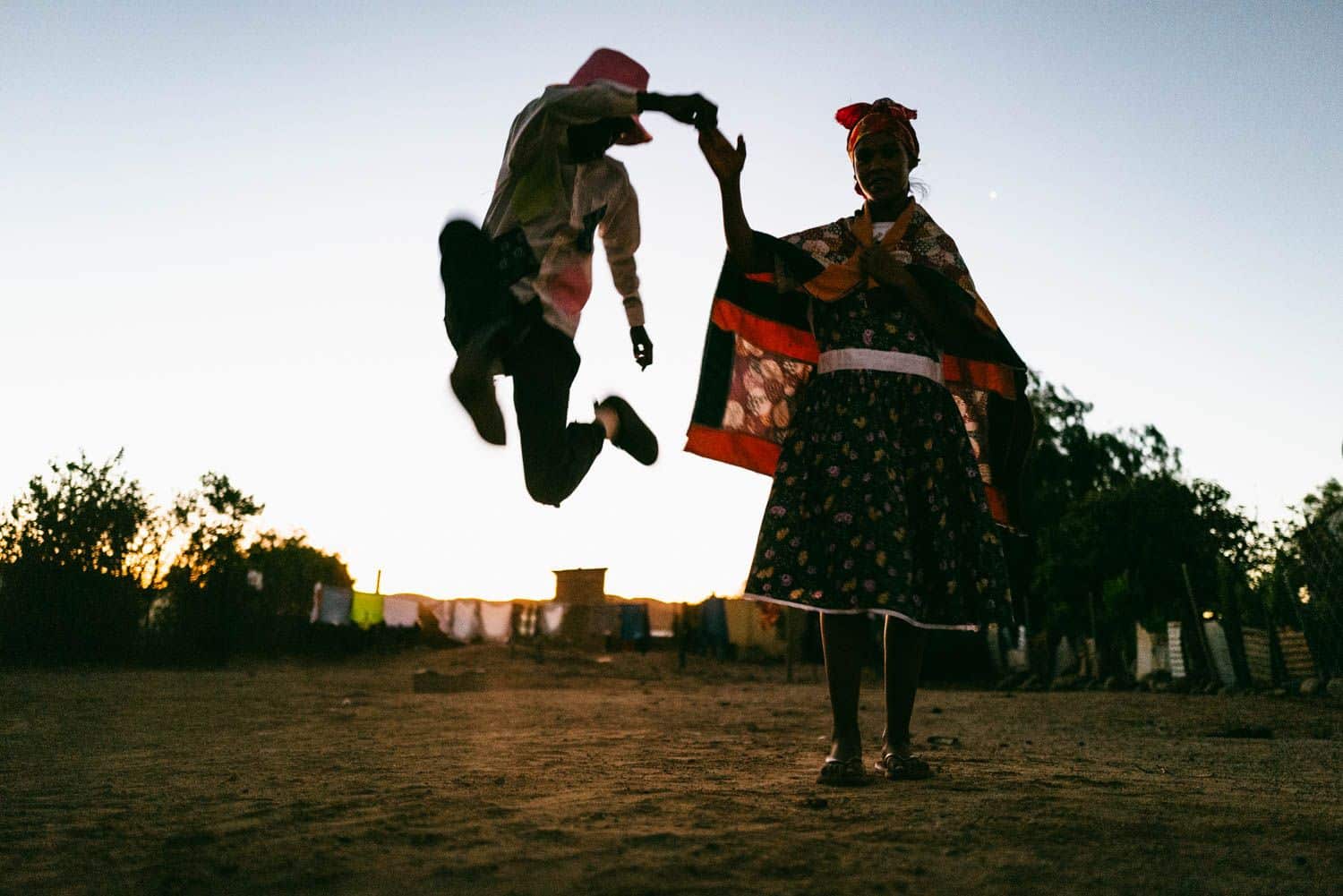
At least 60% of future revenues are reinvested by the communal landowners to help diversify the local economy beyond mining. For example, Rewild Pangaea is working with the community-owned commercial farm, Richtersveld Growers, to expand along the Orange River where the mines used to be and absorb mining jobs. The remaining 40% is secured in a trust for long-term land stewardship.
Rewild Pangaea’s ambition is to build a model that can be replicated the world over, such that every closing mine becomes a green island of renewal, owned by the people.
Their journey begins in the Richtersveld, where the era of diamonds is fading, and a different future is emerging. This region is a reminder that rewilding is not only about restoring wildlife. It is also about restoring economic possibility and hope.
Come along for the ride! Follow Rewild Pangaea on Instagram for a behind-the-scenes look at what it takes to transform a former mine into an island of ecological recovery.
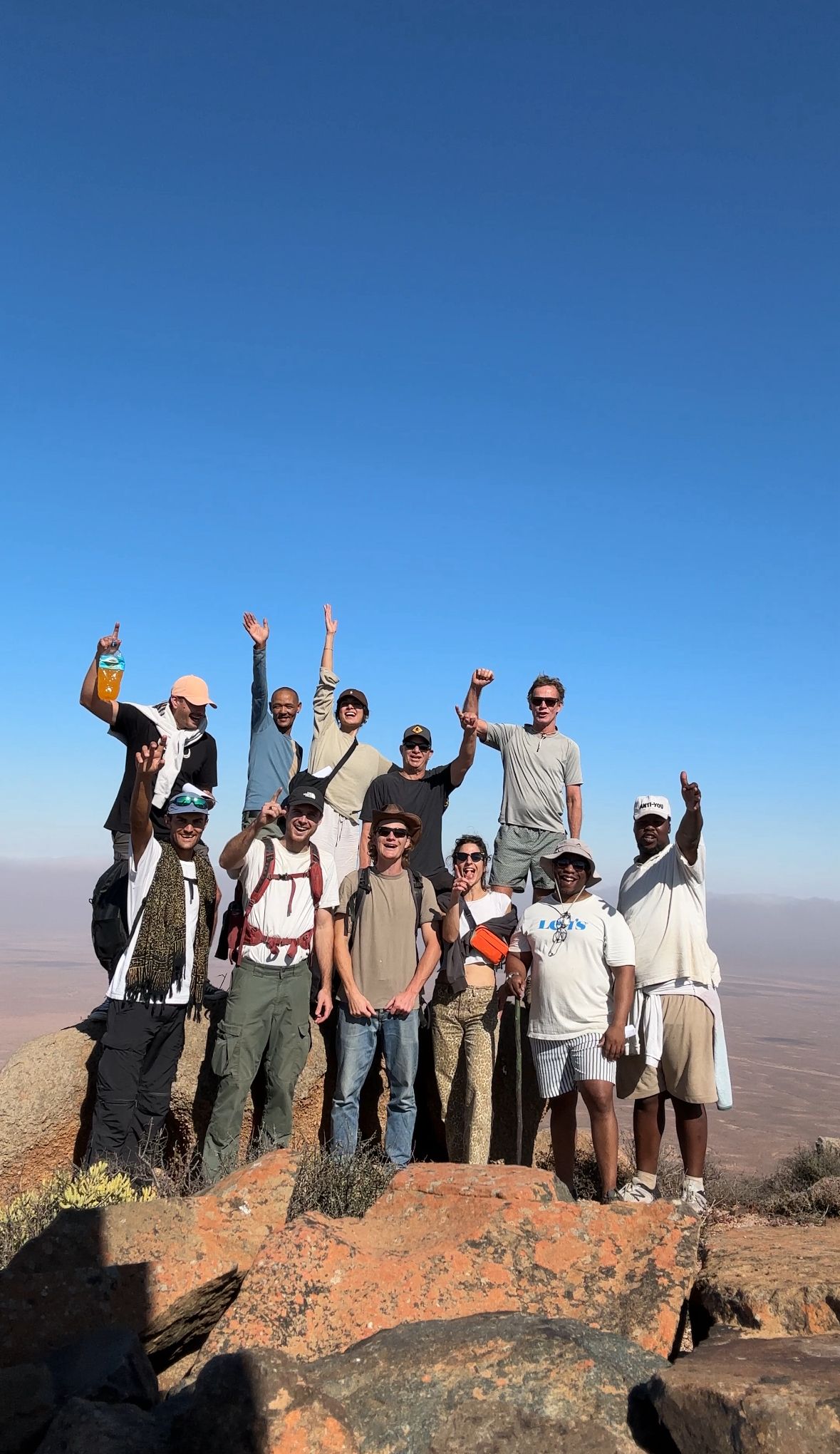
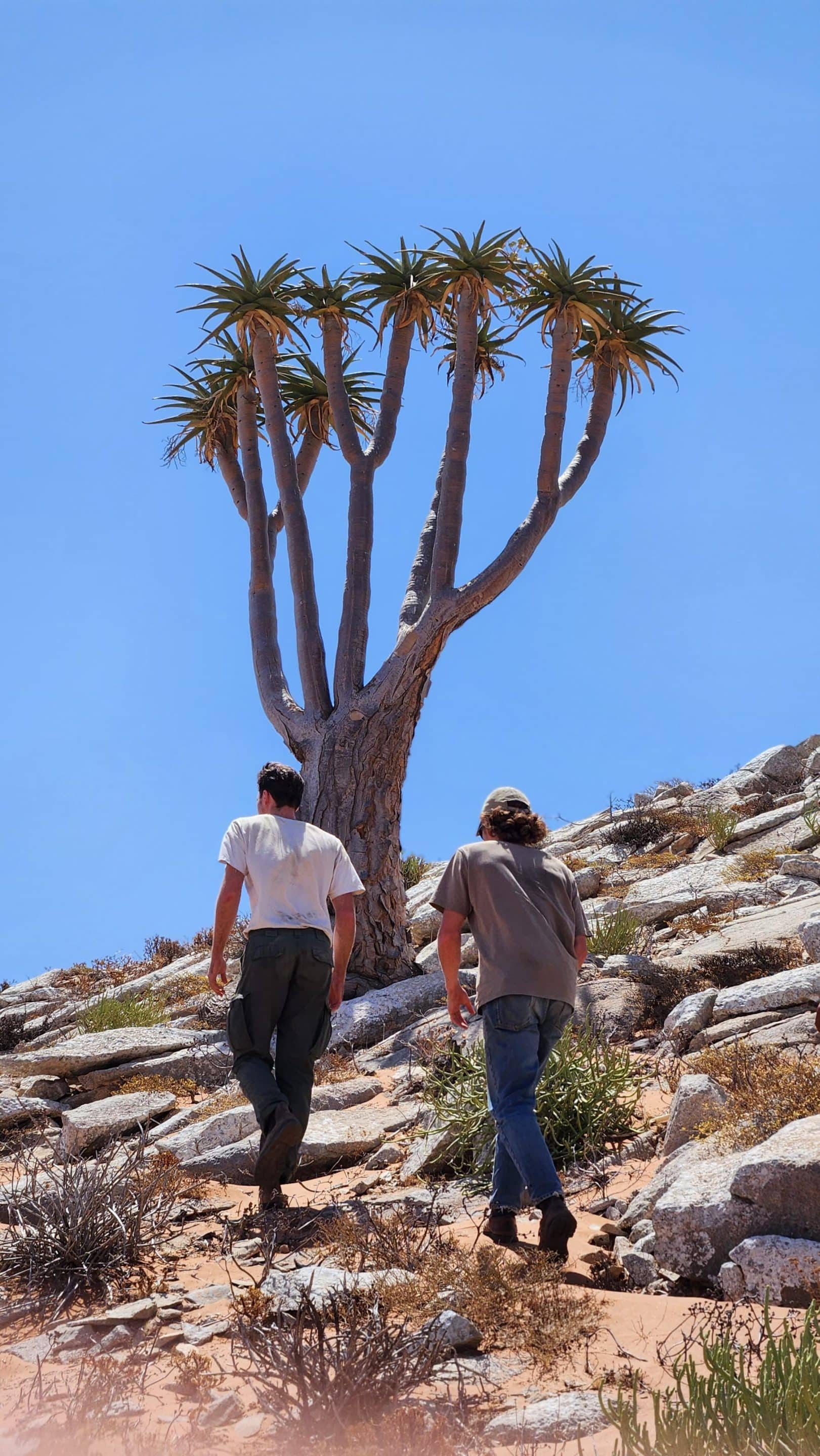
Rewild Pangaea team, brothers and founders Elias and Luca Kuhn von Burgsdorff walking toward a Giant Quiver Tree / Rewild Pangaea

About the Global Rewilding Alliance
The Global Rewilding Alliance brings together over 300 organisations across every continent to catalyse a worldwide movement for nature’s recovery. We accelerate learning, convene evidence, and share the successes and benefits of rewilding —inspiring more organisations to rewild and unlocking new resources for rewilding. Learn more about our work.