by GRA Team
In this keynote address at the Citizen Zoo Rewilding Conference 2025, Cambridge University, Alister discusses the evolution of the global rewilding movement, identifying five stages: invention, experimentation, preparing for scaling (the current stage), exponential...
by GRA Team
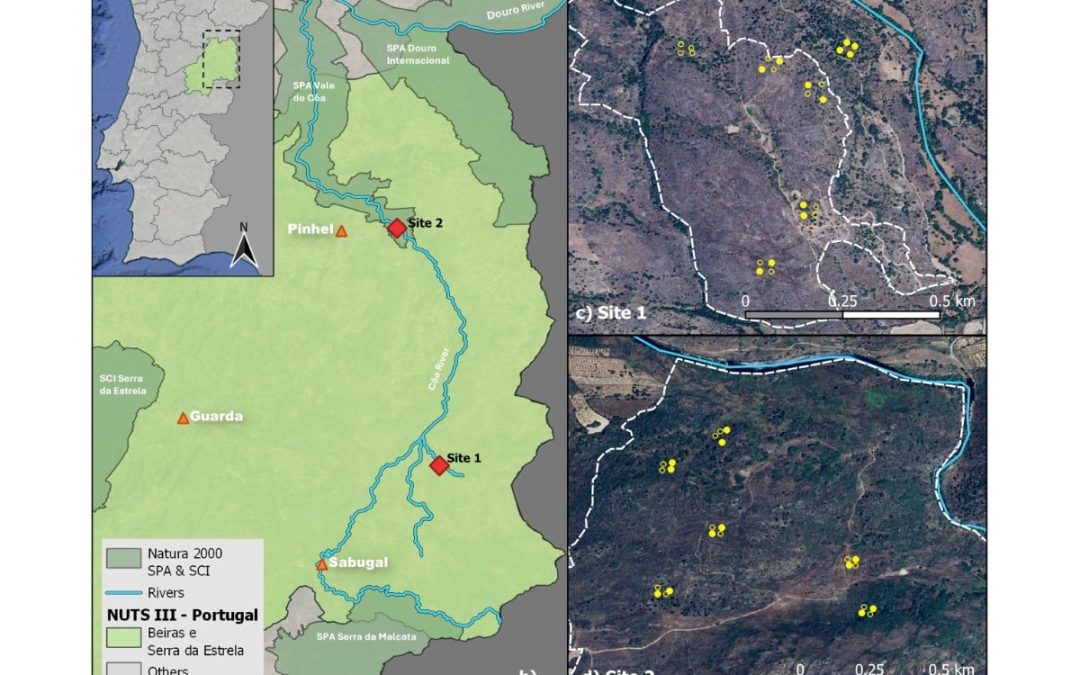
This study explores the early effects, over a three-year period, of a transition from extensive commercial cattle grazing to semi-wild horse grazing in two rewilding areas in the Côa Valley region, Portugal. Using grazing exclusion areas as control, the study tests...
by GRA Team
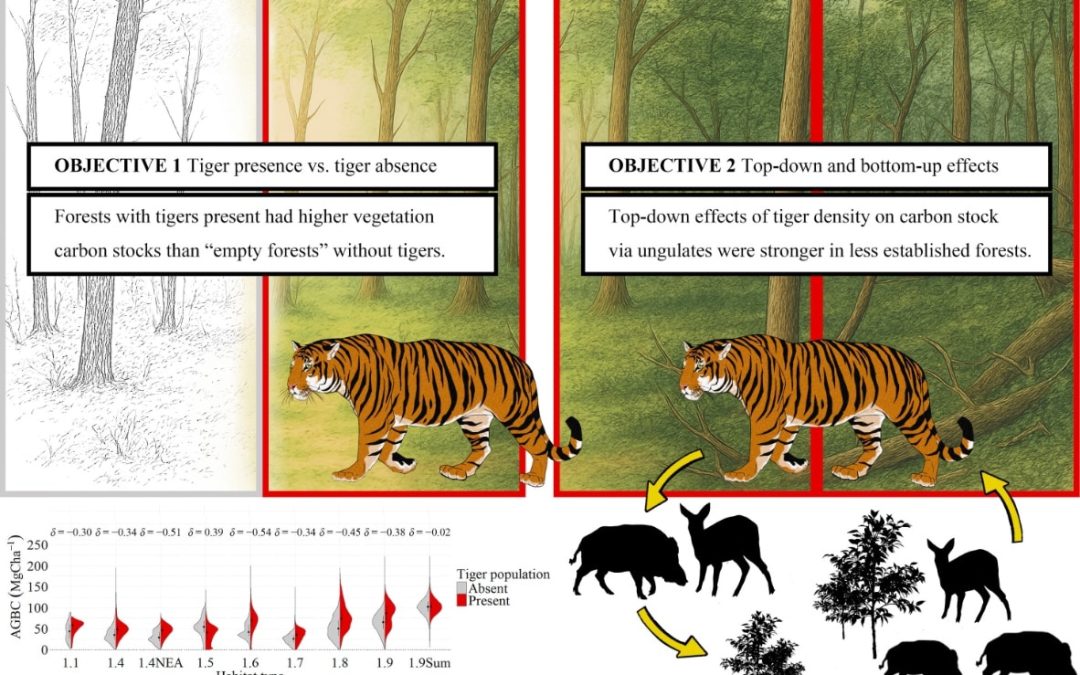
In this invited commentary, Schmitz reviews the newly published research in Global Change Biology. Schmitz comments that Roberts et al. (2025) address this formidable challenge to reveal how varying abundance and outright loss of a large predator—the tiger (Panthera...
by GRA Team
Globally, forests with tigers living within them store more vegetation carbon than forests without tigers, near consistently across forest habitat types. Our results also showed that in disturbed forests, tigers appear to exert top-down control of carbon stocks...

by GRA Team
Listen on Climate Curious Sea otters are helping to capture carbon, says Alister Scott, the co-director of the Global Rewilding Alliance, on Climate Curious. By reintroducing sea otters back to their habitat in San Francisco, scientists have seen a growth in sea...