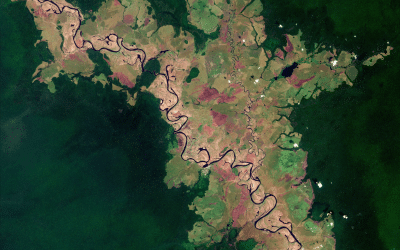
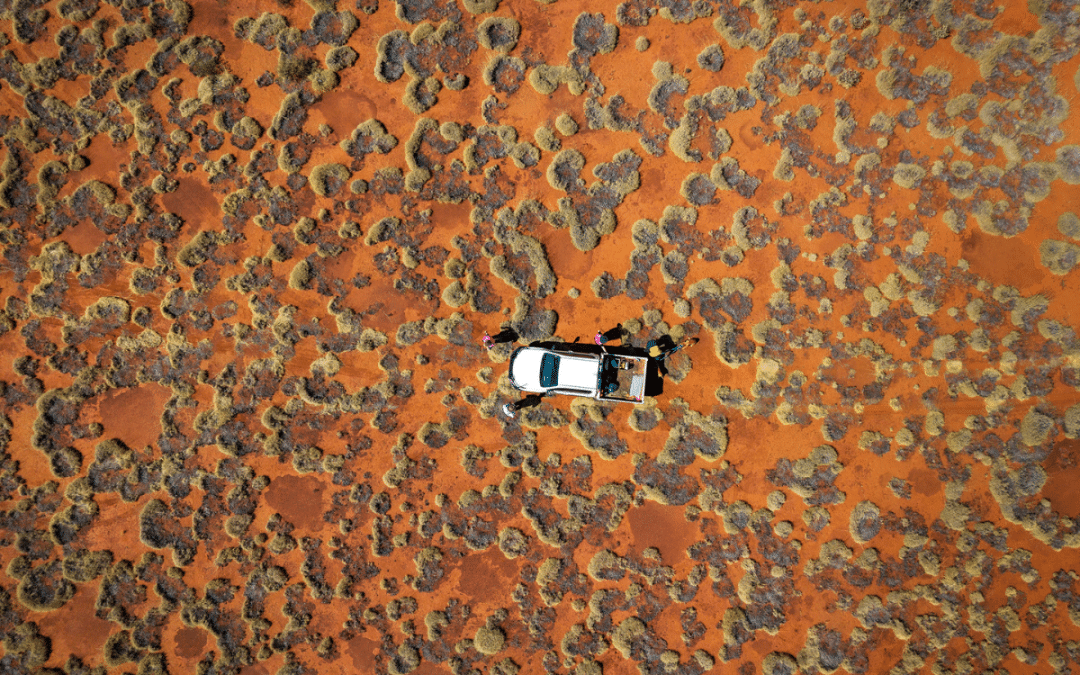
For the Love of Wildlife’s micropitting approach is restoring life in Western Australia. Credits: For the Love of Wildlife
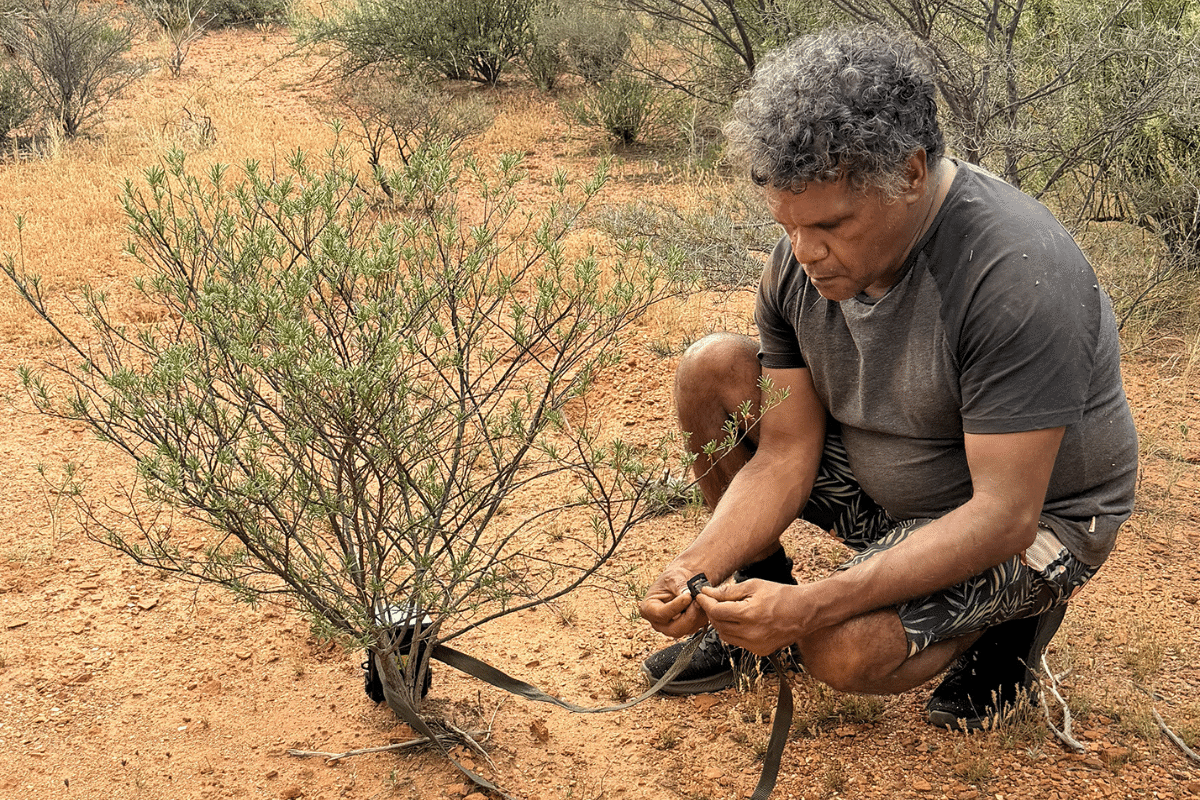
Aboriginal Custodian Matt Thomas, Pira-Kata Aboriginal Group, returned to Country in Western Australia’s Ngaanyatjarra Lands after decades away to be part of Project PanGaia. Last month, Matt stepped out of the vehicle and stood quietly, taking in the landscape after the rains. After a moment, he said, “This is magic.”
Matt was setting foot on one of For the Love of Wildlife’s trial sites, where the team has been implementing Project PanGaia’s micropitting approach led by Indigenous stewardship principles. The team themselves had not returned since the rains, and like Matt, were uplifted by the landscape-scale transformation that had occurred.
This is what they saw.
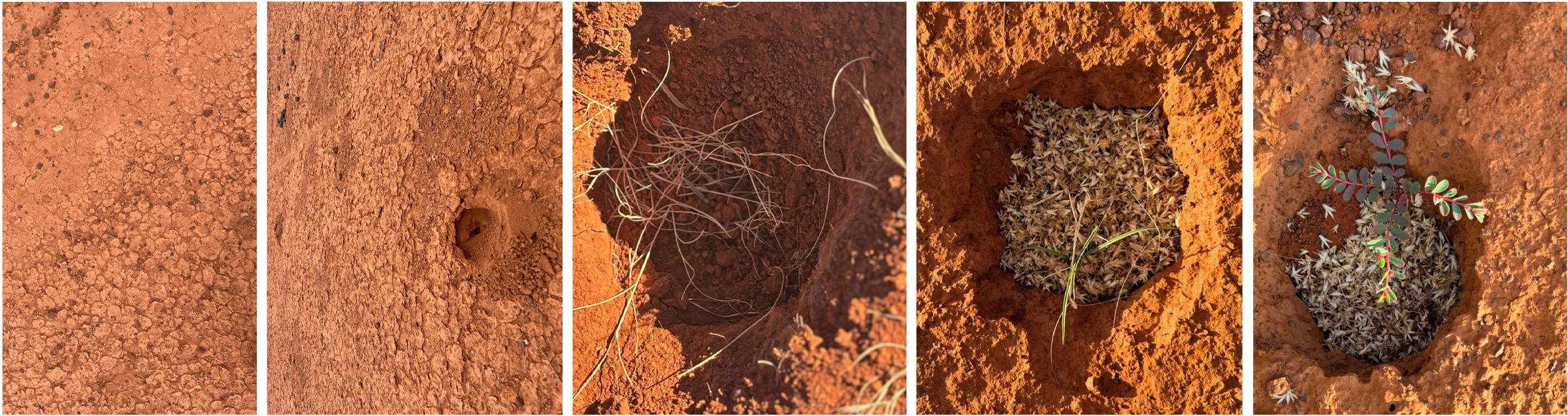
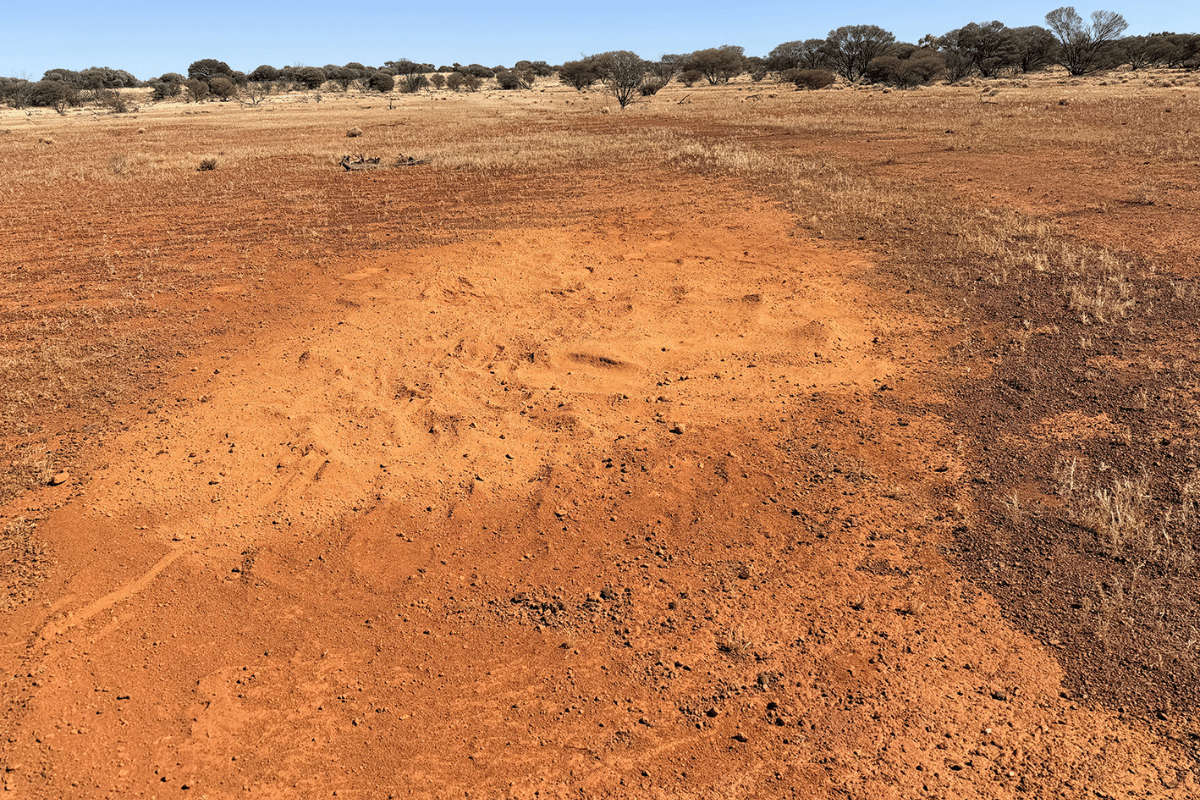
Left to right: the ground before any micropitting, more than 1,000 micropits dug over the year; grasses and leaf litter collect in the pits. After the rains…there is growth!
A story of life rebounding
What started as a dust bowl that had suffered for decades without native fauna, turned into a story of life rebounding. Micropitting in the trial sites last year, with help from the rains over summer, transformed the landscape with growth in the pits and grasses over the entire area.
Project PanGaia’s micropitting approach is a biomimicry and rewilding method designed to rehabilitate degraded, hardened soils in Australia’s outback.
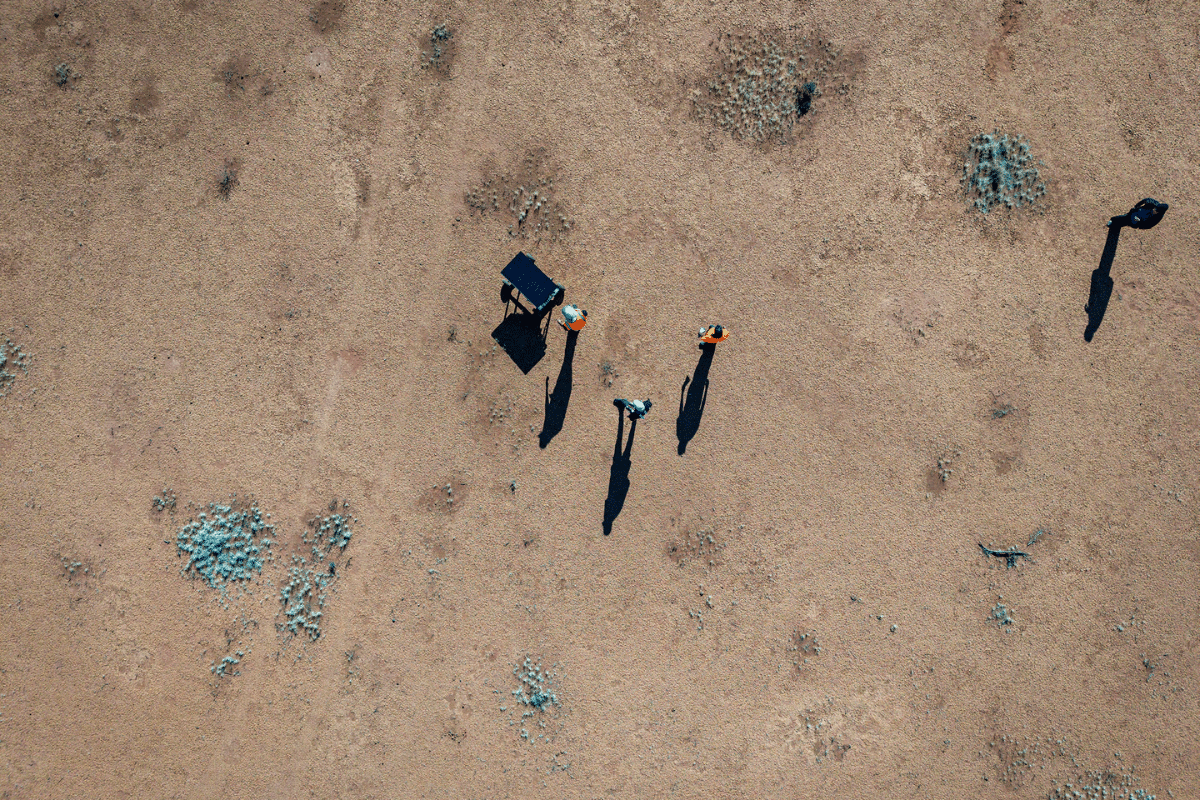
The prototyped solar-powered, lightweight, rovers dig small, angled holes in the earth’s crust where nutrients, plant litter, seeds, and water can collect, providing a cycle for further germination and growth of seedlings. This natural process, known as bioturbation, was historically carried out by millions of native Australian marsupials. Unfortunately, these marsupials have been severely diminished or entirely lost from the landscape due to overstocking, land clearing and increased predation by invasive species such as feral cats and foxes.
By kick-starting the pitting process themselves, the team hopes that the resulting aerated soils, native grasses, and ideal habitat will welcome back the original diggers: native wildlife.
Project PanGaia’s central hypothesis is that by mimicking the lost bioturbation behaviour of Australia’s burrowing marsupials (Bilbies, Bandicoots, Bettongs) we can reactivate the soil carbon cycle that has effectively been suspended across more than 52 million hectares of Australia’s arid interior.
In this case, we can talk about “Prewilding”. Technology is doing the groundwork that is necessary before the wild kin can get to work and nature can take over.
The story of this Rover inspired us to invent the term “prewilding”, which on reflection, is happening in different creative ways around the world: the use of oyster shells from artificial oyster beds to create the substrate for new wild oyster beds in Australia, where they were completely dredged out many years ago; the sinking of statues onto the seabed in Italy to prevent bottom trawling; and, even more prosaically, the installation of nest boxes where nesting sites for birds have been systematically eradicated through the loss of old trees and buildings.
Alister Scott, Global Rewilding Alliance’s Executive Director
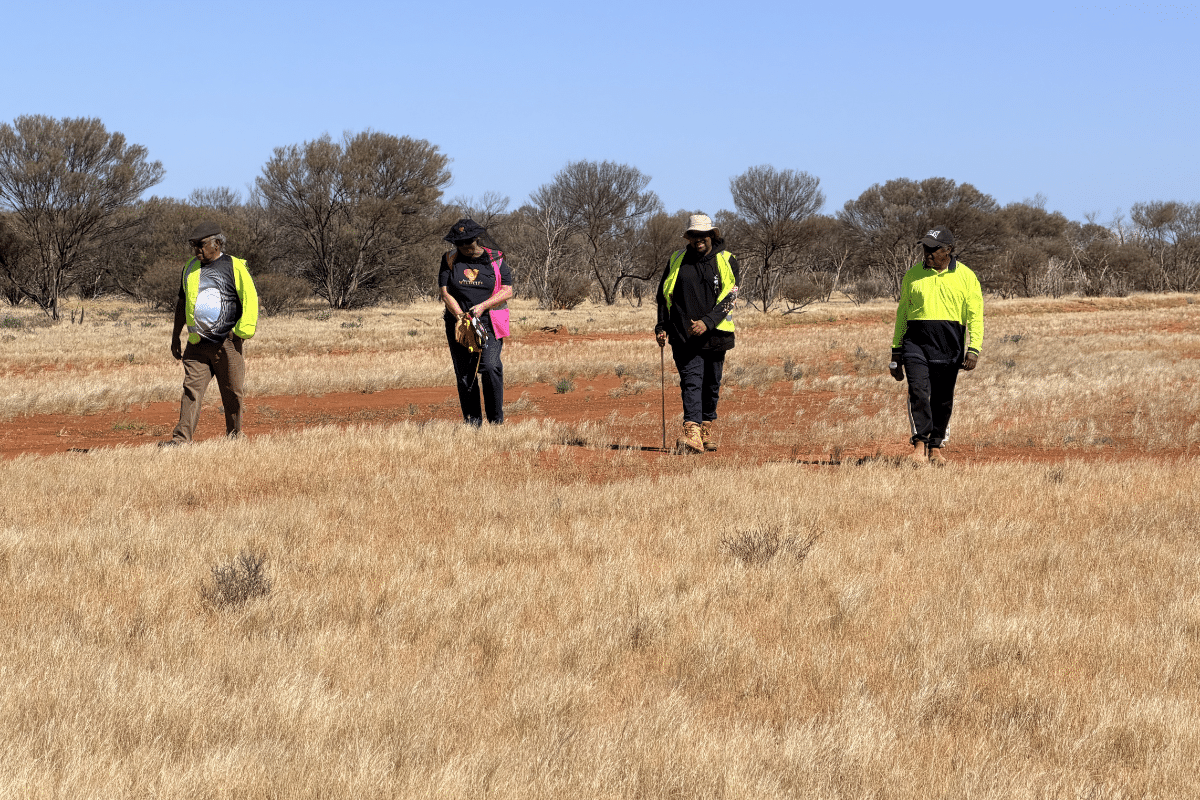
The approach hopes to lay the foundations for the return of ecosystem functionality to Country where people, native fauna and flora, and landscape-wide processes can thrive. “Rewilding outback Australia to restore its original savannah ecosystem is an ambitious but achievable goal”, their team says.
Doing what the lost Marsupials once did
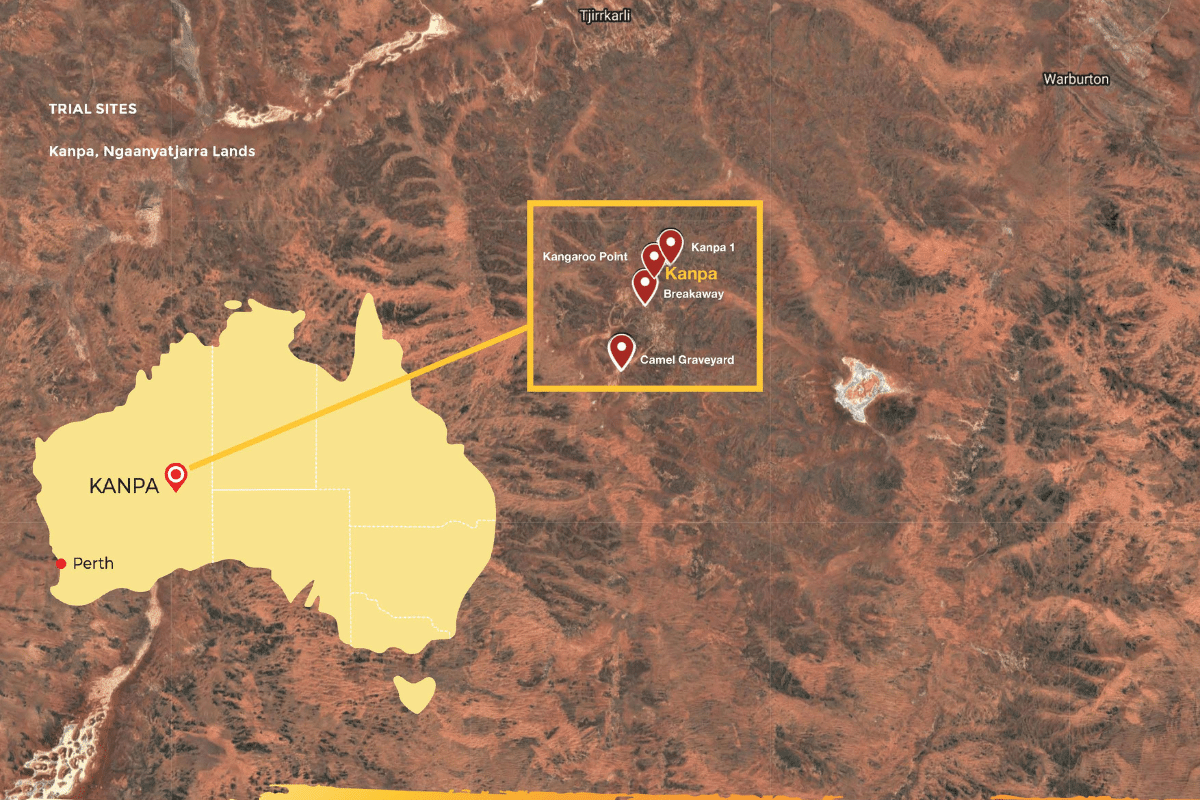
When For the Love of Wildlife’s team created over 1,000 micropits across eight hectares of highly degraded land in Kanpa, on the Ngaanyatjarra Lands in 2025, they were making an act of faith. Originally carried out by Australia’s charismatic digging mammals, the hardened crust of the earth became pocketed with small, angled holes that let the water in, giving seeds a place to land.
In April and May 2026, after the first meaningful rainfall in five years, they returned to Kanpa to see the results. What emerged from the four trial sites surpassed what they had imagined.
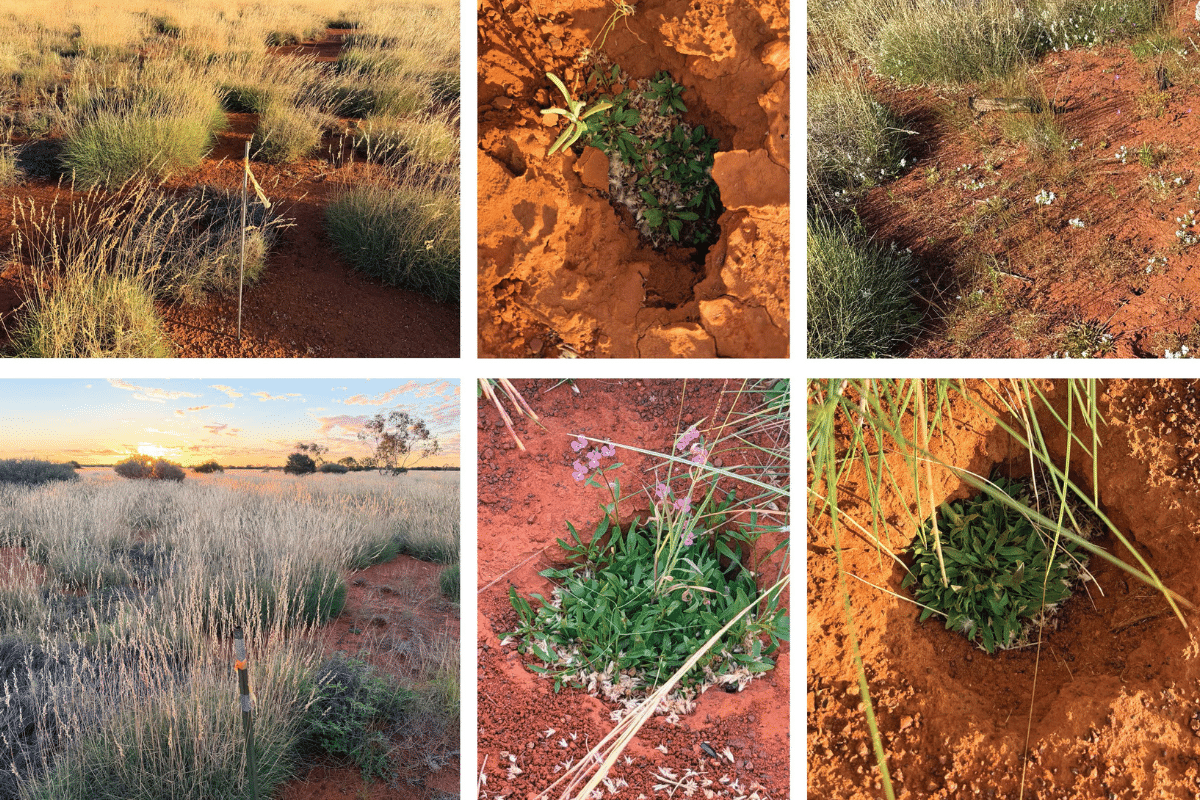
Found at the trial sites: thriving grasses, blossoming desert wildflowers, and native wildlife
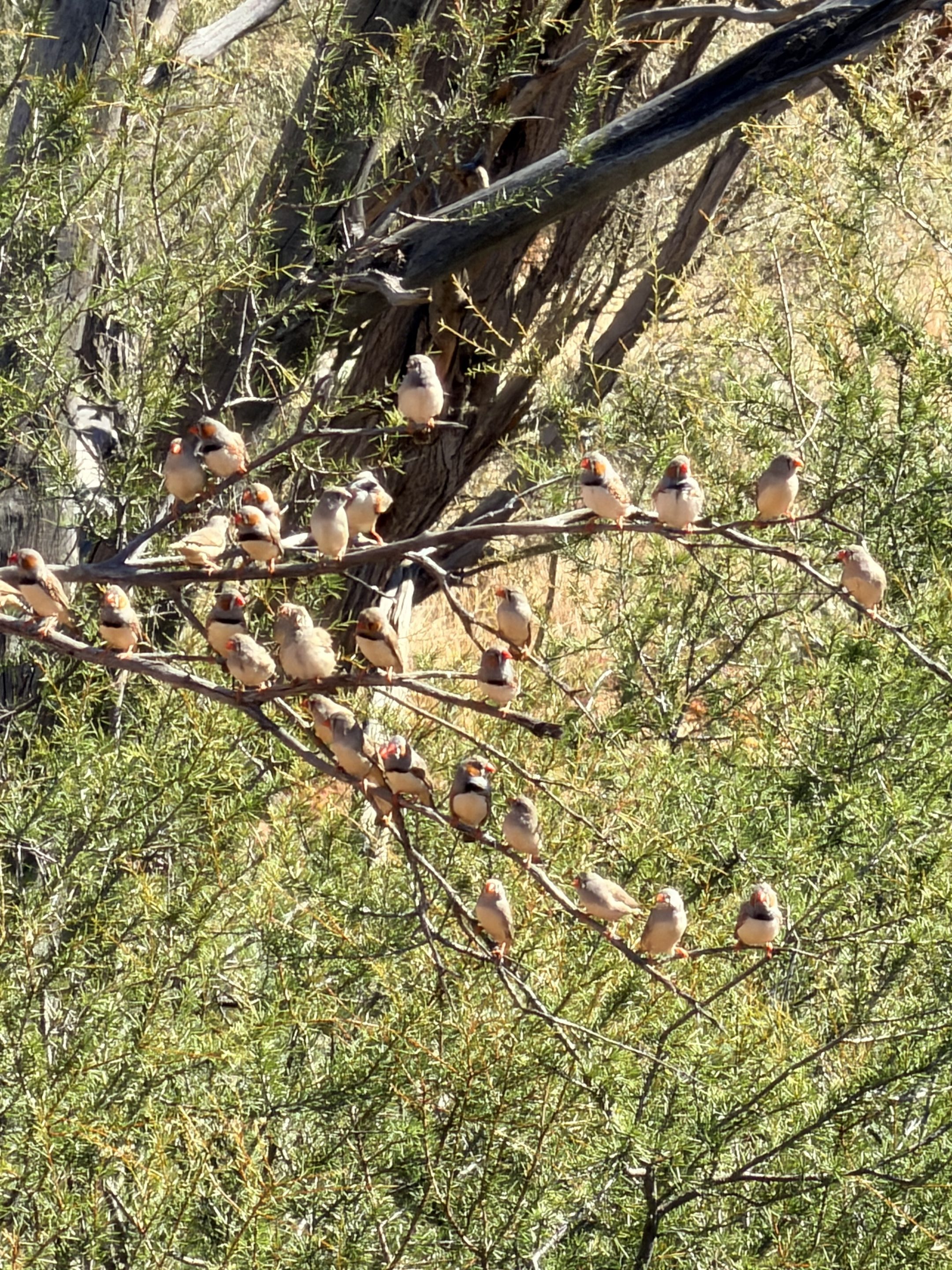
With excitement, the team recently reported clues of nature healing. The once degraded lands have begun to see natural processes take hold, supporting native flora, healthy soils, hints of the original diggers, and, in places, more birds than have ever been recorded before.
See for yourself:
Kanpa 1 trial site
The spinifex is green and so high that the team nearly lost their teammate Kalina behind its swaying fronds! Blossoming desert wildflowers have established themselves in the micropits, restoring more colour to the red earth backdrop. In one of the blocks, there are additional diggings; someone (a Bilby, Dunnart or Spinnifex Hopping Mouse) has moved in, doing what wildlife does when it finds soft, aerated ground.
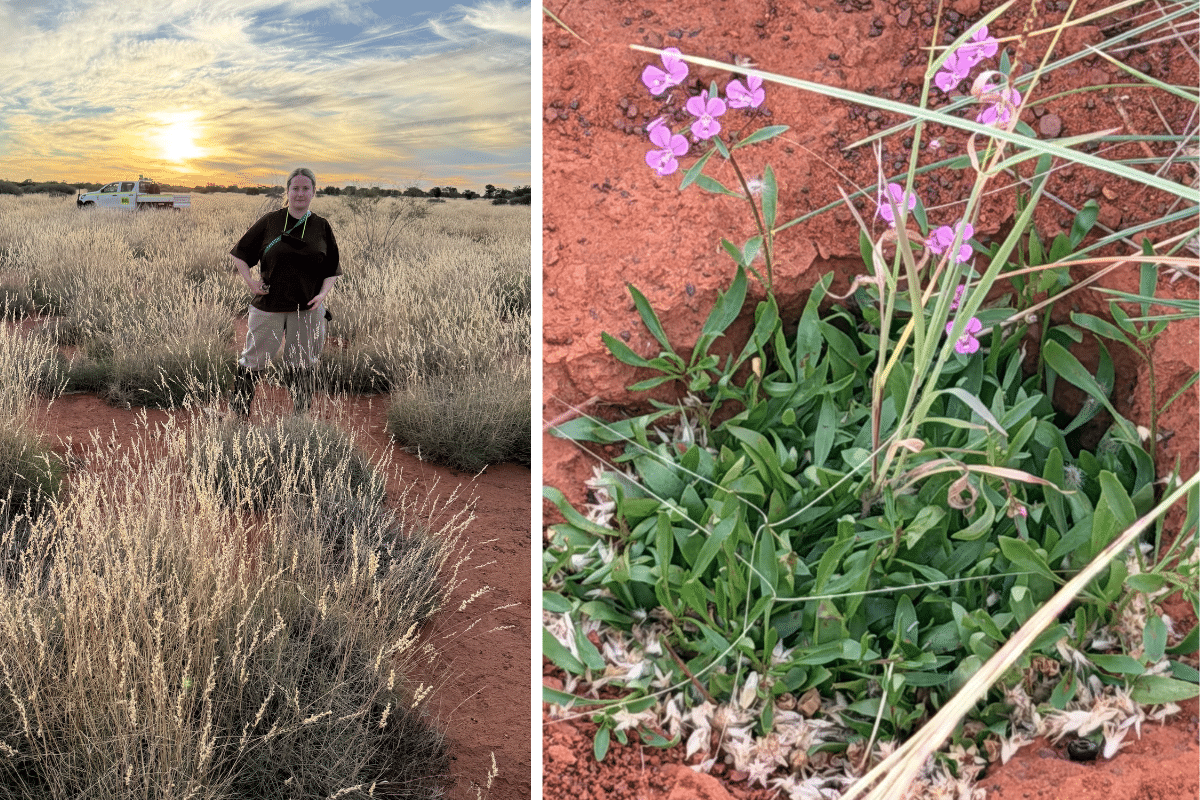
In a recent article ‘Kanpa – Our first trip after the rains, April to May 2026‘, the team made the description: “There is a pull to Kanpa that is hard to explain to anyone who hasn’t felt it. The red dirt, the majesty of the breakaways, the community we’ve grown to love, the carpet of stars, the simple, basic little house with no hot water, the beautiful conversations over a fire. It has woven itself into the tapestry of our psyches and no matter how long we’ve been away, the moment you turn off the sealed road and the gravel begins, something in you exhales.”
Kangaroo Ground trial site
Donalea Patman OAM, For the Love of Wildlife’s Founding Director
The Breakaway trial site
The majestic site sits between two massive breakaways. The Breakaways at Kanpa are ancient ridges of ochre and terracotta sandstone, fractured and folded by fifty million years of erosion into dramatic cliffs, plateaus and cave systems. In a landscape where the soil has been rusting since before time, these formations rise from the flat desert floor without warning, the exposed bones of a planet older than most people can imagine.
The ground here was scarred by Hunt Oil seismic surveys more than fifty years ago. When they finished their search for oil reservoirs, they dug massive pits, pushed in all their equipment (vehicles included!) and buried the lot. In some places, nothing had grown back since. Until now.
Standing onsite in May 2026, seeing grasses returned and succulents settling quietly into the micropits, while knowing the recent history of extraction and degradation, the team’s describing word was ‘profound’. A beautiful patch of wildflowers now marks the centre of the trial site.
The area has a special significance, as For the Love of Wildlife previously documented Bilby activity on camera here. This time, they captured evidence of a Skink (a native lizard), more birds than we have ever recorded at this site, and then, at 10.30pm, a tiny Dunnart on the trail camera. “If you have never seen a Dunnart appear on a camera at that hour of the night, please imagine with us a moment of pure, uncomplicated joy” explains Donalea.
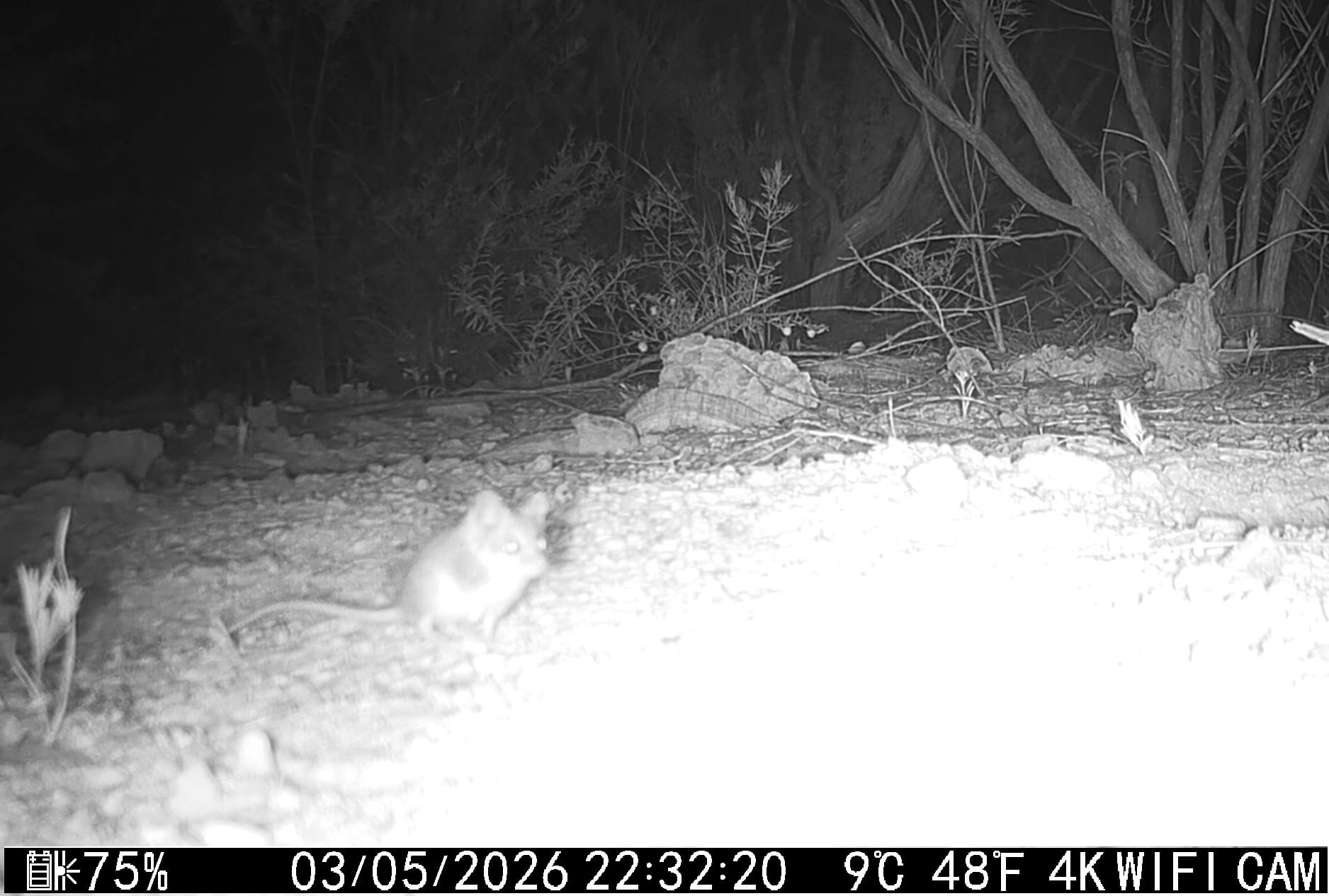
What a surprise to find this little one on a camera at the Bilby digging site. A Dunnart! Credits: For the Love of Wildlife
Camel Graveyard trial site
At this site, Matt said “This is magic.”
Imagine with us: grasses across the sites, succulents settled into the micropits, insects and butterflies moving through what had been, not long ago, a dust bowl with no life at all. The pits have largely filled from rain and wind, but growth is pushing through them, reaching upward.
Several dead camels still decompose in the sun and, around them, life is returning.
Whilst Western science will take time to formally prove what these changes mean for the soil, what we all witnessed with our own eyes was an active, joyous butterfly garden in the middle of one of the most degraded landscapes in Australia.
Kalina Krawczyk, Project PanGaia, For the Love of Wildlife
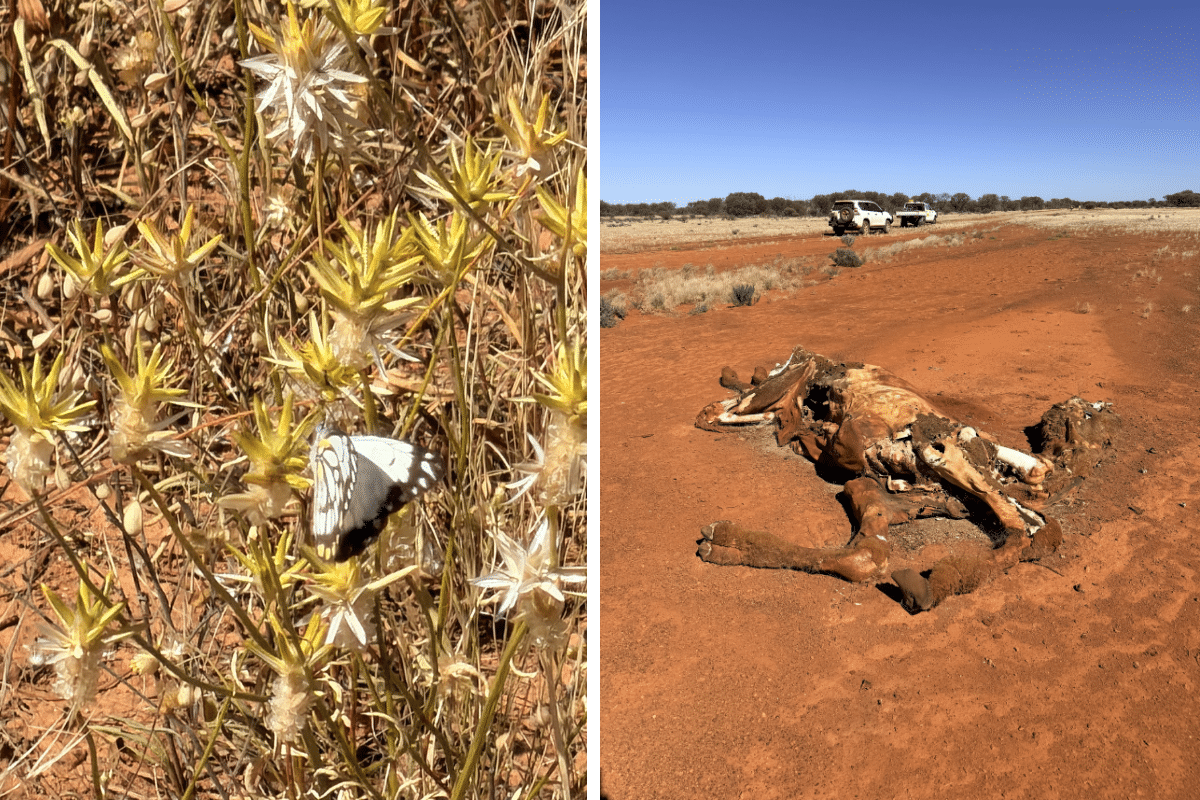
Excited to see so many butterflies, grasshoppers and bugs. Credits: For the Love of Wildlife
Why the transformation matters
These results are the fruits of a methodology working exactly as it was designed to.
Project PanGaia’s micropitting approach was built around a specific and urgent reality. According to the CSIRO and Bureau of Meteorology (2022), Central Australia faces a future of extreme rainfall events interspersed with longer and longer droughts. When rain does come, it needs somewhere to go. On degraded land with a hardened, hydrophobic crust, it runs off; the water either evaporates or creates flooding and erosion.
The micropits change that. They break the crust. They hold the water. They give the seeds a place to land and the soil a chance to breathe. In this case, when five years of drought finally broke over the Kanpa this summer, the water fell into thousands of prepared, waiting pits. The land and its living inhabitants did the rest.
Recently, Donalea Patman OAM, For the Love of Wildlife’s Founding Director, said: “This journey has asked every one of us to dig deep: to unlearn and relearn, to confront our own white bias and Western perspectives and to let go of our dependence on tidy timelines and predictable outcomes.”
“Co-designing a rewilding project with Pira-Kata Aboriginal Group, our partners in the Central Desert, guided by an earth-centred approach, has stretched us in ways we never could have imagined.”
Harnessing technology for Dull, Distant, Dirty & Dangerous jobs
Across the world, more than one billion hectares of degraded land await the same invitation to recover and the same first, stubborn obstacle stands in the way: Dull, Distant, Dirty and Dangerous jobs. Work too vast and too remote for human hands alone. In this case, that work is being carried out by solar-powered rovers. Moving slowly across broken ground, pit by pit, these machines are doing what the missing marsupials once did.
But the land isn’t only missing its animals. It’s missing its people too.
When custodians were removed from Country, the Country began to sicken. The poverty and health crisis in central Australia today is inseparable from that displacement. The rovers may be able to help bridge what’s been broken.
The technology is doing more than digging, it’s also bringing young generations back into conversation. Elders hold the knowledge of how to read and tend this land. We need their stories and wisdom to be passed down before they pass away. Meanwhile, young people who love gaming are drawn to this technology. It brings them into Caring for Country. The machines become a point of contact between youth and Elders, between technology and traditional knowledge.
The rover itself is still a prototype. The goal is to refine it, improve it, and ultimately scale its production. If the model can be proven in one of the harshest, most isolated landscapes on earth, it may be able to travel, offering a key ingredient needed to see nature recover at scale.
Project PanGaia offers the global rewilding movement a quietly radical idea: we can help kickstart a process, and let nature do the rest.
What comes next
For the Love of Wildlife’s teams are heading back to Kanpa in late June 2026 with their Curtin University soil scientist, Dr Karla Cautivo-Reyes, who will establish the formal scientific baseline program that will allow them to document and prove these changes rigorously over time.
For now, the joy is palpable, the pits are working, the land is responding. And somewhere in the Western Desert, in a field that was silent not long ago, there are butterflies.
To learn more about For the Love of Wildlife, visit their website and follow them on Instagram, Facebook, and LinkedIn.
About the Author, Donalea Patman OAM
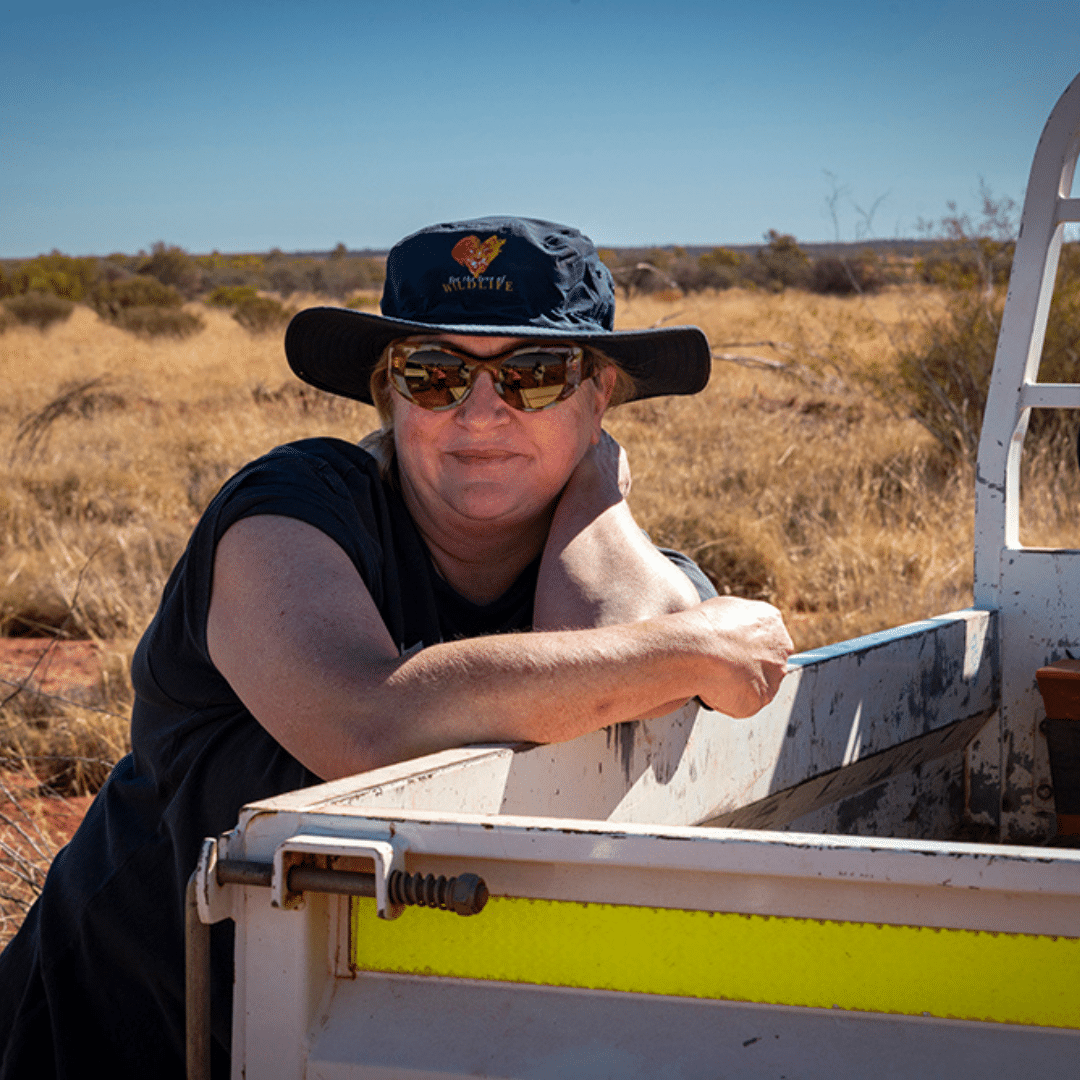
Donalea Patman OAM is the Founding Director of For the Love of Wildlife Ltd, an Australian registered charity leading Project PanGaia, a world-first biomimicry and rewilding initiative on the Ngaanyatjarra Lands of Western Australia. Working in deep partnership with the Pira-Kata Aboriginal Group under the cultural leadership of Elder Preston Thomas and Custodian Matt Thomas, the FLOW team combines Indigenous stewardship, autonomous technology and Western science to restore some of Australia’s most degraded landscapes. With red dirt in their hair and hope in their hearts, they are just getting started.