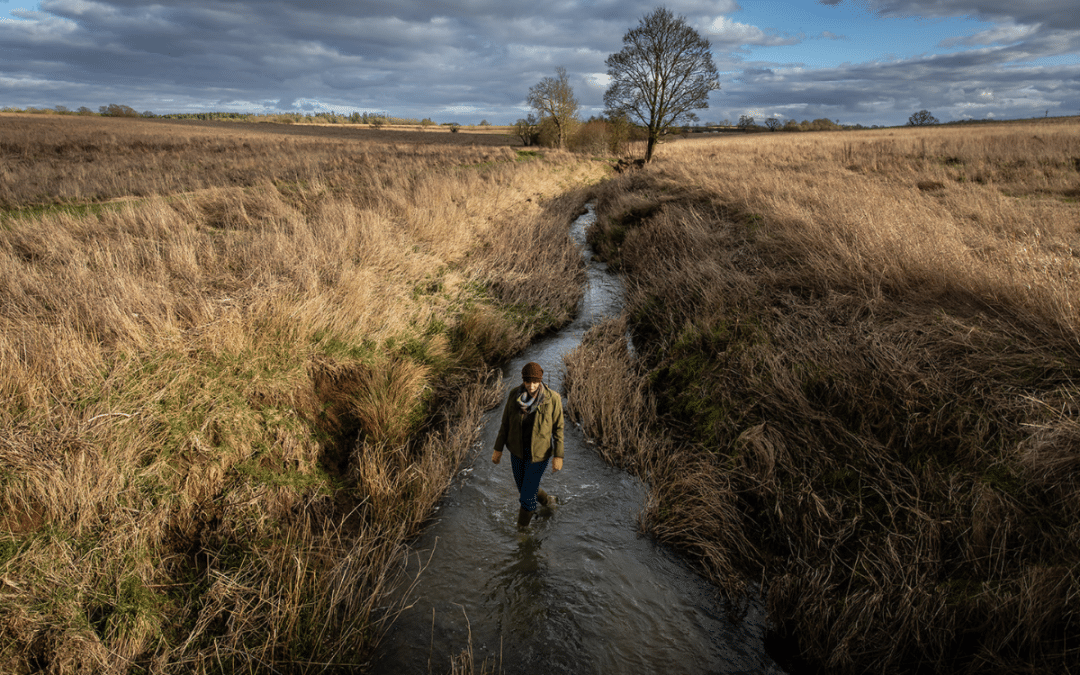
Boothby Wildland, a 617 hectare former arable farm in Lincolnshire, is now being led by Nature. Nature is bouncing back quickly and wildlife is returning. Photo credit: Nattergal
The UK Nature’s Rights Bill just passed its Second Reading in the House of Lords (3 July 2026) — the first time Nature’s rights have entered UK parliamentary process. Authored by Mumta Ito, it introduces an Integrated Rights Framework recognising Nature as a legal subject, with all other rights flowing from it. The Bill creates legal duties to protect and restore Nature. For rewilding, this is huge: it would embed restoration into planning, finance and land-use law — giving investors the legal certainty needed to back rewilding at scale.
“People have rights.
Corporations have rights.
But Nature doesn’t have rights.”
While Nature provides us with the air we breathe, the water we drink, and the ecosystems that sustain every aspect of our lives – showing up for us every single day – as our Executive Director Alister Scott said above at a recent event in the UK House of Lords, our legal systems have been slow to recognise the reality that we are part of Nature, not apart from her – and that protecting Nature means protecting the living foundations of human life, communities and economies. That is beginning to change.
What is the Nature’s Rights Bill
The UK Nature’s Rights Bill marks the first time in history that Nature’s rights have entered the UK parliamentary process. Originated and authored by Mumta Ito (UK lawyer and founder of Nature’s Rights), the Bill recognises Nature as a legal subject and rights-bearing entity, whose rights form the foundation of human life, society, and the economy, rather than an afterthought to it.
Unlike many Rights of Nature approaches that add Nature’s rights into the existing adversarial hierarchy, the Bill introduces an Integrated Rights Framework (IRF) that reframes how rights are held in society by recognising that all rights arise from Nature. The IRF sets out the right relationship between the rights of Nature and other existing rights. In doing so, it resolves conflicts upstream so that economic decisions are made in ways that serve the health and vitality of both people and Nature.
It introduces a legal duty on individuals, businesses, and public bodies to take reasonable and proportionate steps to protect, restore and regenerate Nature and act consistently with respect to ecological limits. And it creates the governance structures needed to monitor and enforce that duty, including a Nature Guardianship Council and Bioregional Councils. A big emphasis is on local democratic involvement in community ecological governance – and non-adversarial stakeholder conflict resolution, with a restorative justice Tribunal only as a last resort. The Bill aims to redirect the goals of the system so that the economy serves life – with parliamentary oversight, phased implementation and institutional support to make that shift practical.

Mumta Ito, Founder of Nature’s Rights,
architect of the Integrated Rights Framework and author of the UK Nature’s Rights Bill
In other words: it resets the hierarchy. It reestablishes a relationship of reciprocity with Nature.
The Bill received its Second Reading in the House of Lords on 3 July 2026 and now moves to Committee stage — a historic step for the first UK parliamentary Bill to recognise Nature’s rights, and one the Global Rewilding Alliance is proud to stand behind.
Why Nature Needs Rights
Many of us are somewhat aware of the destruction to biodiversity and natural systems in the UK: 41% of species have declined, 1 in 6 faces extinction, 97% of wildflower meadows are lost, farmland bird populations have dropped by more than half; all of which have very real consequences on our daily lives. As sea levels and temperatures rise, millions of people are endangered and air pollution alone already kills 40,000 people yearly. And the UK is far from alone. Globally, our legal and economic systems treat Nature as a resource to be extracted, even as the costs of that extraction are now impossible to ignore.
To date, we have been under-appreciating the role that Nature plays in our prosperity, and ultimately, our survival. Without legal standing, natural systems are being destroyed, rivers polluted, and we have little to no legal right to defend them. Nature’s rights intends to address the gap.
We have laws to protect people and corporations. Comparable laws to protect the Nature that people and corporations both depend on are gaining traction.
The UK Nature’s Rights Bill aims to treat the cause, not just the symptoms, by making ecological protection, restoration and regeneration part of the default architecture of decision-making. In doing so, it stands for citizens and local communities.
Rewilding writes a more hopeful story for Nature & People, putting Nature’s Rights into Practice
Rewilding shows what Nature’s rights look like on the ground. It supports life rebounding across the planet, repairing the web of life and the global systems within it, in a way deeply tied to human development and future generations to come. The benefits of rewilding are tangible: by making ecosystems more resilient, rewilding protects all living beings, including us – buffering communities from floods, droughts, and wildfires, reducing the impact of heatwaves, purifying our air and water, and creating jobs and sustainable livelihoods.
Our community- and people-led movement harnesses the innate ability of Nature to heal herself and our role as stewards in returning the processes, global cycles, and infrastructure that all life on Earth depends on, including ourselves.
The Global Rewilding Alliance, with over 300 partners rewilding together 2.2 million sq km of land and 6 million sq km of sea, is bringing back hundreds of native species, protecting intact ecosystems, and proving that Nature can often recover faster, and at a greater scale, than most people believe possible. Rewilding puts Nature’s rights into practice.
Explore our movement’s success stories proving that rewilding works.

The Nature’s Rights Bill would help rewilding move from inspiring but often isolated projects into the mainstream of law, policy, planning, finance and land-use decision-making. By requiring decisions to respect Nature’s rights, ecological integrity and safe ecological limits, and by creating tools such as Rights Impact Assessments, bioregional governance and regenerative transition support, the Bill would make restoration and rewilding easier to justify, fund, govern and protect for the long term.
The proposed Bioregional Councils and Bioregional Implementation Plans are especially relevant to rewilding because they support decision-making around ecological systems – catchments, habitats, corridors, landscapes and seascapes – rather than treating Nature through fragmented administrative silos.
Working together with policy and lawmakers, we can continue scaling this movement for People and Nature. By embedding Nature into everyday decision-making, we view Nature not as a constraint on human activity, but as its foundation.

A Global Shift Already Underway
The UK is not acting in isolation. Around the world, a growing body of law is recognising what Indigenous Peoples have stewarded the world across: that Nature is not property, but a living community of which we are part.
In 2008, Ecuador was the first country in the world to legally recognise Pachamama’s rights in its constitution (Articles 71 to 74), giving communities the legal standing to protect ecosystems.
Bolivia followed in 2010, recognising Nature’s right to life, regeneration, and clean water with Bolivia’s Law of the Rights of Mother Earth (Ley de derecho de la Madre Tierra).
In 2017, New Zealand granted legal personhood to a forest and a river. A groundbreaking decision that recognised both their ecological importance and their sacred spirit in Māori tradition, appointing guardians to represent its interests.
In 2022, Spain’s Mar Menor lagoon became the first ecosystem in Europe to gain legal rights, driven by the power and vision of citizens! Over half a million citizens, witnessing the rapid and devastating degradation of their beloved ecosystem, mobilised to make it happen.
The UK Bill builds on this global movement but also takes a further step: it does not only recognise Nature’s rights; it sets out an Integrated Rights Framework to guide how Nature’s rights relate to human, economic, corporate and property rights across decision-making.
Nature’s rights are increasingly being advanced by communities, Indigenous peoples, citizens, lawyers, lawmakers and movements across the world.
The momentum is growing.

Kent Wildlife Trust develops nature-based land management practices, while giving wildlife a voice. Photo credit: Donovan Wright, Kent Wildlife Trust
The Global Rewilding Alliance Stands With Nature
The Global Rewilding Alliance supports the UK Nature’s Rights Bill, and the broader rights-of-nature movement across the globe.
We do so because we believe Rewilding and the rights of Nature are inseparable. One without the other is incomplete. Nature needs legal recognition not only to be protected, but to recover, regenerate and shape the decisions that affect her. And protection, without active restoration, is not enough.
The Nature’s Rights Bill is built on the Integrated Rights Framework, a model that challenges the status quo: an exploitative relationship with Nature driven by short-term economic gain, with benefits unequally distributed and legal systems that prioritise corporate and property rights over ecological health.

In its place, the Integrated Rights Framework embeds Nature’s rights as foundational across all governance, ensuring that human and economic rights are fulfilled within, not at the expense of, ecological health. The result is a legal system designed to go beyond merely preventing harm and actively promote regeneration: delivering long-term economic resilience, social equity, and well-being for people and planet alike.
For rewilding, the resulting shift is transformative: regeneration goes from relying on voluntary effort into a legal foundation, integrating the restoration of biodiversity into how we govern, invest, and build.
Crucially for rewilding, the Bill also addresses the flow of money: it requires economic and financial decision-making to align with Nature’s rights, helping redirect investment away from nature-negative activity and toward restoration, regeneration and long-term resilience.
Rights for Nature will enable and mainstream rewilding at scale, giving investors the clarity, predictability, and durability they need to back rewilding, in both public and private land.
Alister Scott, Executive Director of the Global Rewilding Alliance
Law can drive regeneration. A world where Nature has rights is a world where all of us, human and non-human alike, are protected.
For funders and investors, this matters because rewilding cannot scale on goodwill alone. It needs legal certainty, durable governance, aligned incentives and long-term protection against reversal. The Nature’s Rights Bill would help create those conditions by embedding regeneration into the rules that shape planning, public spending, finance, land use and accountability.
Support the Nature’s Rights Bill campaign
- Add your organisation to the Statement
- If you are in the UK, email your MPs urging them to sign the Early Day Motion
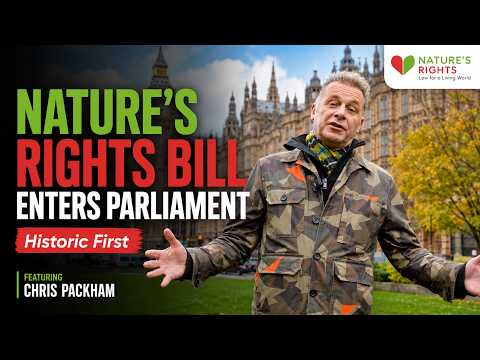
- Watch & share the following video, featuring Alister Scott, Executive Director of the Global Rewilding Alliance, in support of the UK Nature’s Rights Bill at the UK Houses of Parliament.
- Visit Nature’s Rights to find out actions you can take to directly support the movement