
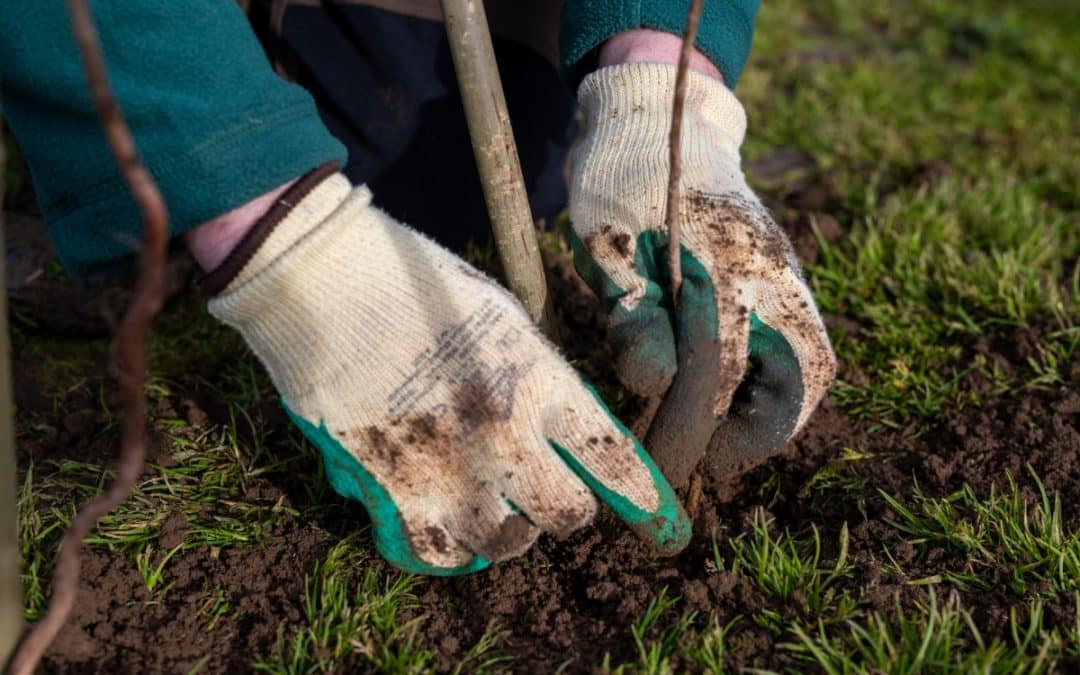
The term ‘empty forests’ stuck with us when we first heard it in the Global Rewilding Alliance team; planting trees has long been adopted as the silver bullet in the environmental movement, but forests are only alive when their inhabitants are present. These living, dynamic, ‘full forests’ can be as different as chalk and cheese from tree plantations, a concept stewarded by many of our Alliance Partners.

Living Forests for People
The International Tree Foundation’s roots date back over 100 years to 1922 when Richard St Barbe Baker, a Forestry Officer in Kenya, joined visions with local chief, Josiah Njonjo to bring together Watu wa Miti or Men of the Trees. Their enthusiasm and passion for protecting trees captured the minds of many and it persists today.
A century later, their success is still determined by the relationship between people and forests. Within East Africa, the UK and Ireland, ITF partners with local groups to identify degraded landscapes, restore native tree cover, and protect threatened species that call them home.
Mzee Shija Sele, Tanzanian farmer
In Western Tanzania, a farmer named Mzee Shija Sele, who took part in their Sustainable Community Forestry Programme, found that restoring his land had turned him into a local steward: “I have been able to increase the value of my land. People in my community are coming to learn from me and I enjoy sharing such knowledge with fellow farmers.”
In doing so, the work they do is about investing in a future where the local communities have agency. Mzee Shija Sele adds: “I love seeing beehives, fruit trees and green gardens in the same place — this is the way to go toward achieving sustainability.”
Native Trees are the Hosts of Life
Trees are powerful ecosystem builders. They anchor soils, regulate water cycles, and produce much of the air we breathe – hence being the renowned ‘lungs’ of our planet – and create shelter and food for numerous species (including us!). ITF focuses its work on high-impact landscapes such as degraded hillsides, water catchments in highlands, drylands, wetlands and forest edges where the return of living forests has multiplied impact. These vulnerable areas are crucial to reconnect fragmented habitats and revive biodiversity; building ‘core’ areas – one of the three C’s of rewilding.

The Return of the Wild Animals
Following large-scale tree planting campaigns across Kenya in 2024, ITF shifted its focus to monitoring what was actually happening in the ground. They found that birdsong and insect activity have intensified across the restored areas. In Meru Forest, Elephant populations are rising and in Ndaragwa Forest, small animals — Dik-diks, Antelopes, Hares, even Worms — are too. Worms are a particular win, as an indicator of soil health, they signal hope for the invisible foundation that everything else depends on.

When Wildlife Returns, So Does Balance
The presence of wildlife – or return of key species in the case of once degraded forests – reactivates ecosystem processes that benefits local families (and global systems) in myriad ways. Amongst them, wildlife-rich forest ecosystems: improve soil fertility, which creates higher crop yields and fruit harvests, offer diverse income streams, for instance, seedling production. The result is a landscape where ecological recovery and human well-being reinforce one another.
The ITF recognises that planting trees should restore entire systems: the fungi beneath the soil, the water moving through the landscape, the communities whose knowledge and custodianship make survival rates mean something. A forest with its insects, predators and prey, and its people, is an ambitious, inspiring goal.
Across its projects, ITF’s impact is measured in the restoration of landscapes as well as in the resilience of the local communities. Following them as they lead the way to vibrant and living landscapes is the key aspect in the success of our Partner’s work. We’re looking forward to hearing about the many more stories to come as the restored landscapes burst to life.


Visit their website to find out more: https://www.internationaltreefoundation.org/