
Chumbe lighthouse at sunset. Credit: Kozanow Productions.
Chumbe Island delivers benefits for biodiversity, climate resilience and livelihoods through effective management and self-sustenance. Established in 1994, Tanzania’s first Marine Protected Area became the world’s first financially self-sustaining MPA through ecotourism. Since then, coral cover has recovered by 80%, commercially valuable fish biomass has increased nearly eightfold, top predators such as reef sharks have returned, and endangered species including the Aders’ Duiker have been reintroduced. The sanctuary also increases commercial fish for locals and educates nearly 13,000 people while reinvesting revenue into rewilding and local communities. Chumbe is a successful, replicable model for marine rewilding worldwide.
Isaline Tihon, from the Alliance’s team, shares her memories of the region: “When I was 8 years old we set off from Lusaka, Zambia to Dar es Salam, Tanzania by train. After 4 days of travel, stops, delays, incredible landscapes – stories that will remain part of me forever – we then made our way to the beautiful coast of Paje, Zanzibar. Details of the names of places may elude me at this time, but I can still smell the sea air and taste it on my tongue. I remember walking the beach at low tide watching women harvest seagrass, setting out to the ocean on a small wooden fishing boat and swimming until the breathtaking sunsets called us back.
On the other side of Zanzibar’s coast, on an island called Chumbe, little did I know that a Marine Protected Area – just as old as me – was working hard to protect the iconic species I was sharing my swims with.
That MPA, managed by our Alliance Partner Chumbe Island Coral Park (CHICOP), has become an exemplary story of success in the rewilding movement – all in just my lifetime.”
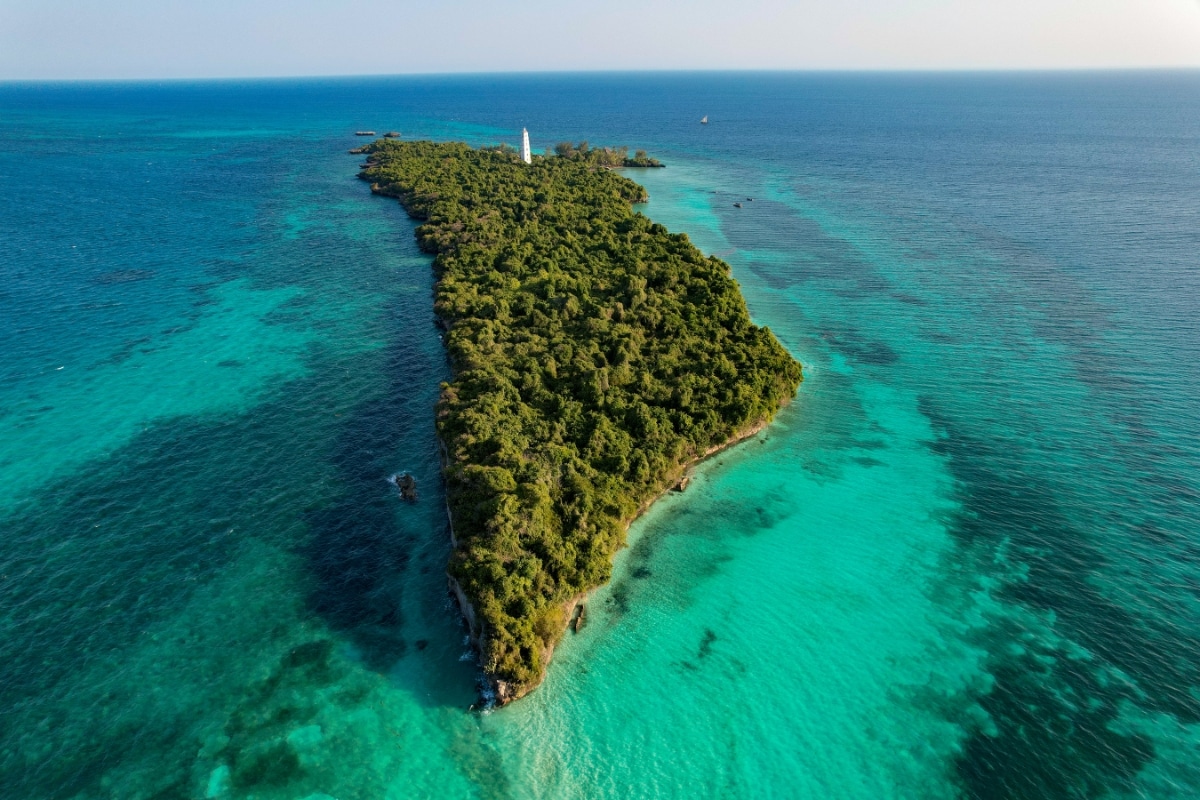
Aerial view of Chumbe Island. Credit: Chumbe Island Coral Park.
A Self-Funded Model for Living Oceans
In the early 1990s, as marine degradation was advancing rapidly across Tanzania’s coast, Chumbe Island was uninhabited, only used intermittently as a military training area, and rarely visited by local fishers. Its reef and forest, reminders of an ancient ecological time, therefore held an extraordinary reservoir of biodiversity. Recognising this, social entrepreneur Sibylle Riedmiller proposed an innovative model: a self-funded Marine Protected Area (MPA) supported by ecotourism rather than government budgets.
In 1994, after extensive collaboration with Zanzibar’s government and local communities, the Chumbe Island Coral Reef Sanctuary and Forest Reserve were legally established, becoming Tanzania’s first MPA. Managed by our Alliance Partner, a small, low-impact eco-lodge was launched in 1998 becoming the first financially self-sustaining MPA in the world.
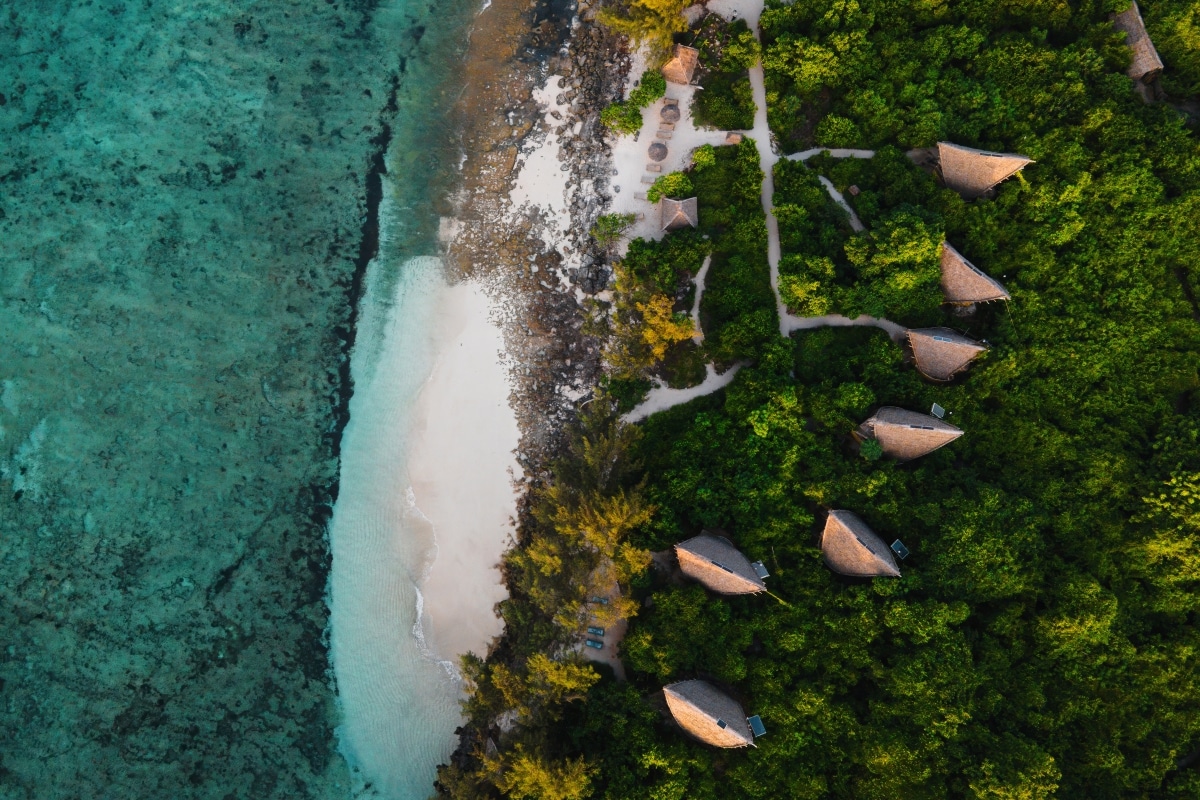
Chumbe Island Coral Park’s eco-lodge. Credit: Lyfe Travel.
Given Space, Abundance Returns
… to our Oceans
Featured in our Wetlands Africa Special Report, which collated case studies of landscape-scale revival and the central role of wildlife in driving ecosystem functionality — and all of the resulting ecosystem services — Chumbe Island has become an inspiring (and replicable) model combining healthy ecosystems and reliable livelihoods.
Remarkable biodiversity recovery: Live, hard coral cover has rebounded to up to 80%, with 59 coral genera, 529 reef fish species, and 257 invertebrate species recorded. The sanctuary also supports important foraging grounds for green and critically endangered Hawksbill Turtles, sustained by seven species of seagrass.
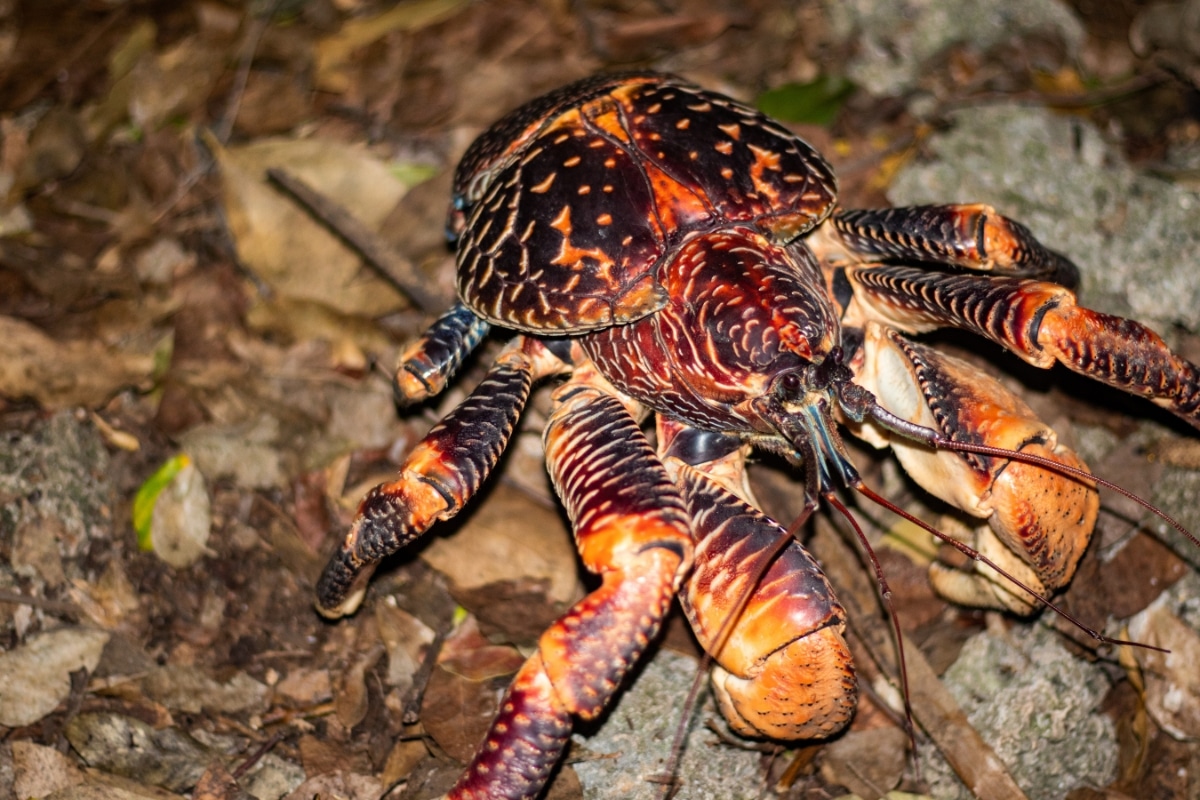
Coconut Crab (Birgus latro). Credit: Chumbe Island Coral Park.
Return of top predators: White-tip reef sharks and nurse sharks are now frequent visitors to the area, reflecting the ecological value of these waters. As top predators, they help maintain balanced and productive reef ecosystems (see our research on Animating Carbon: Sharks are critical to marine carbon cycles).
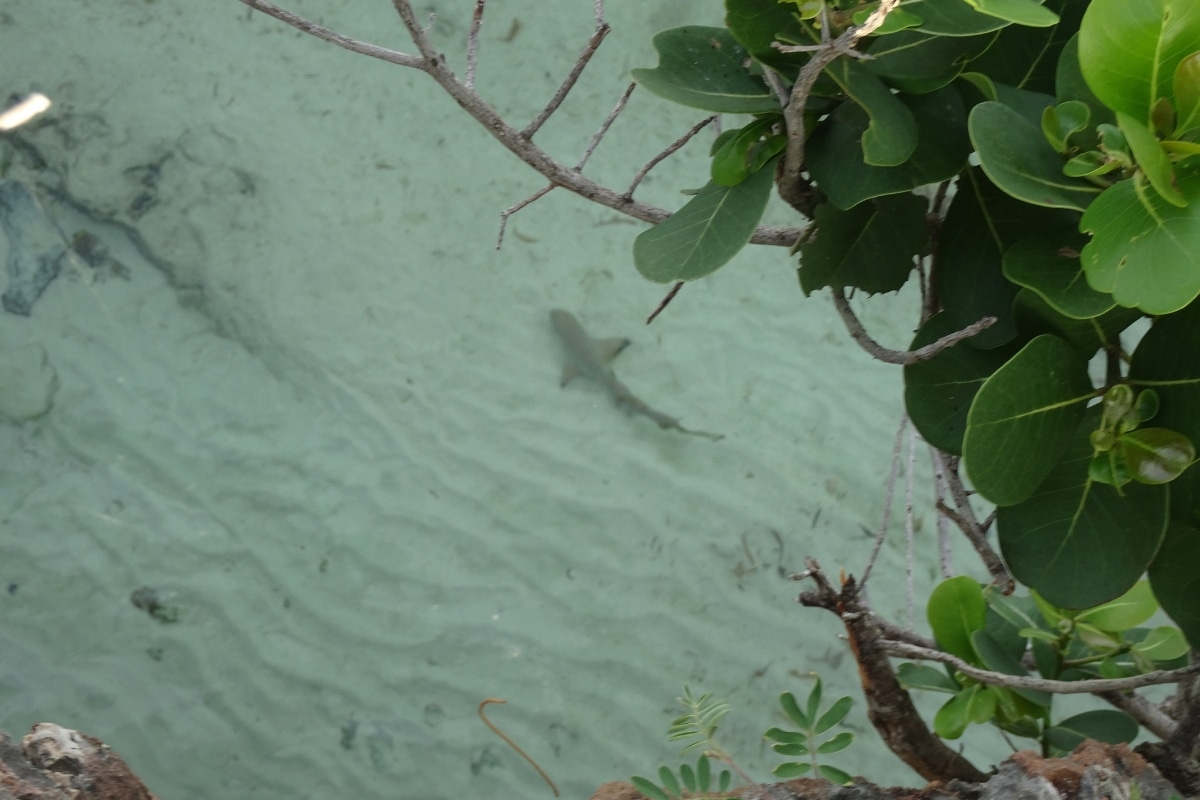
Blacktip Reef Shark. Credit: Chumbe Island Coral Park.
Surge in commercially valuable fish biomass: Commercially valuable fish biomass has increased nearly eightfold, from 194 kg/ha to over 1,500 kg/ha! Fish grow to maturity within the sanctuary and spill over into surrounding waters, supporting local fisheries and food security at a time when nearshore fisheries across Zanzibar are under severe pressure.
Enhanced coral resilience: The high abundance of herbivorous fish has helped prevent algal dominance, allowing corals to recover and reducing the risk of permanent ecosystem degradation common on unprotected reefs.
… on Land
Welcoming the Aders’ Duiker: Chumbe Island has become a new refuge for the endangered Aders’ Duiker following the successful translocation of a breeding pair into its protected forest. Closely monitored through camera traps, the Duikers play an important ecological role as forest herbivores, helping maintain healthy forest structure.
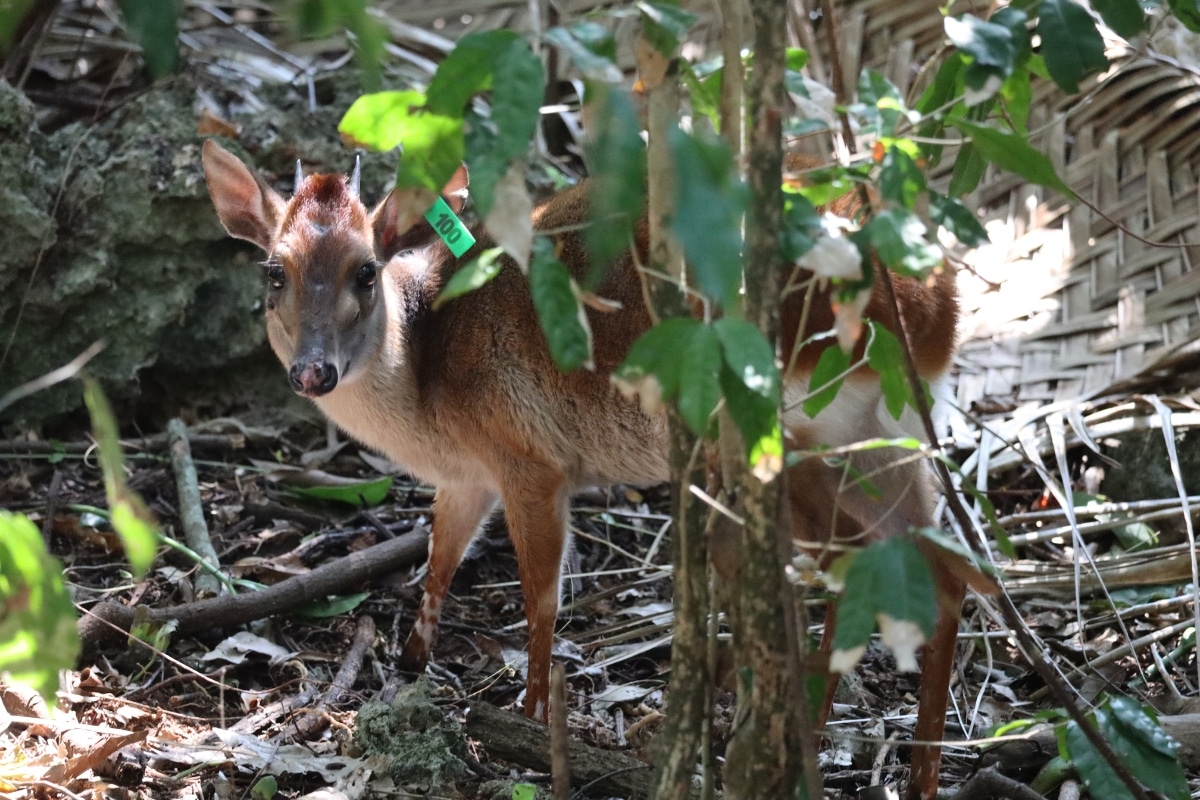
Ader’s duiker. Credit: Chumbe Island Coral Park.
People-centered: Beyond biodiversity recovery within the coral reef and forest reserves, the organisation has reached nearly 13,000 people through environmental education, while ecotourism revenues have generated millions of dollars reinvested into conservation, local employment, and community support.
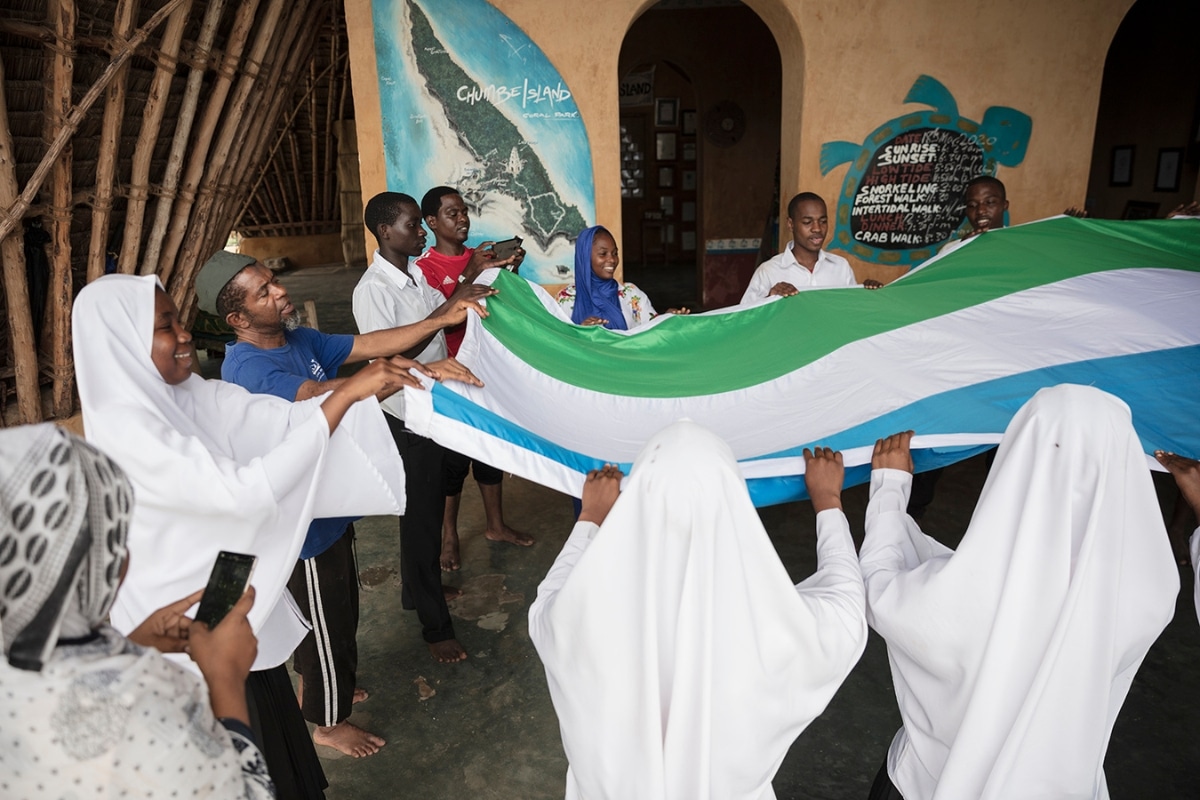
Chumbe Island Coral Park Environmental Education. Credit: Chumbe Island Coral Park.
Globally relevant: a case study for us to learn from
Their success story has global relevance in two core ways:
- The entire globe across, we are all connected by our oceans. We rely on living oceans that sustain entire communities, climate stability, and support an enormous proportion of life on Earth.
- Chumbe provides a blueprint for others to follow worldwide. Models like this are replicable, and stitched together in a mosaic, could turn the tide for our threatened marine ecosystems (and the countless global systems that rely on them).
The relationship between marine ecosystems, industrial fishing, and the ocean’s role as a natural carbon sink is outlined in “Fisheries and Marine Carbon Processes in the Context of Climate Change“. The Chumbe Island team contributed to our collection of case studies of Alliance Partners engaging in ecosystem-based marine management, showing practical examples of initiatives taken to curb the negative effects of the fishing industry: Case studies.
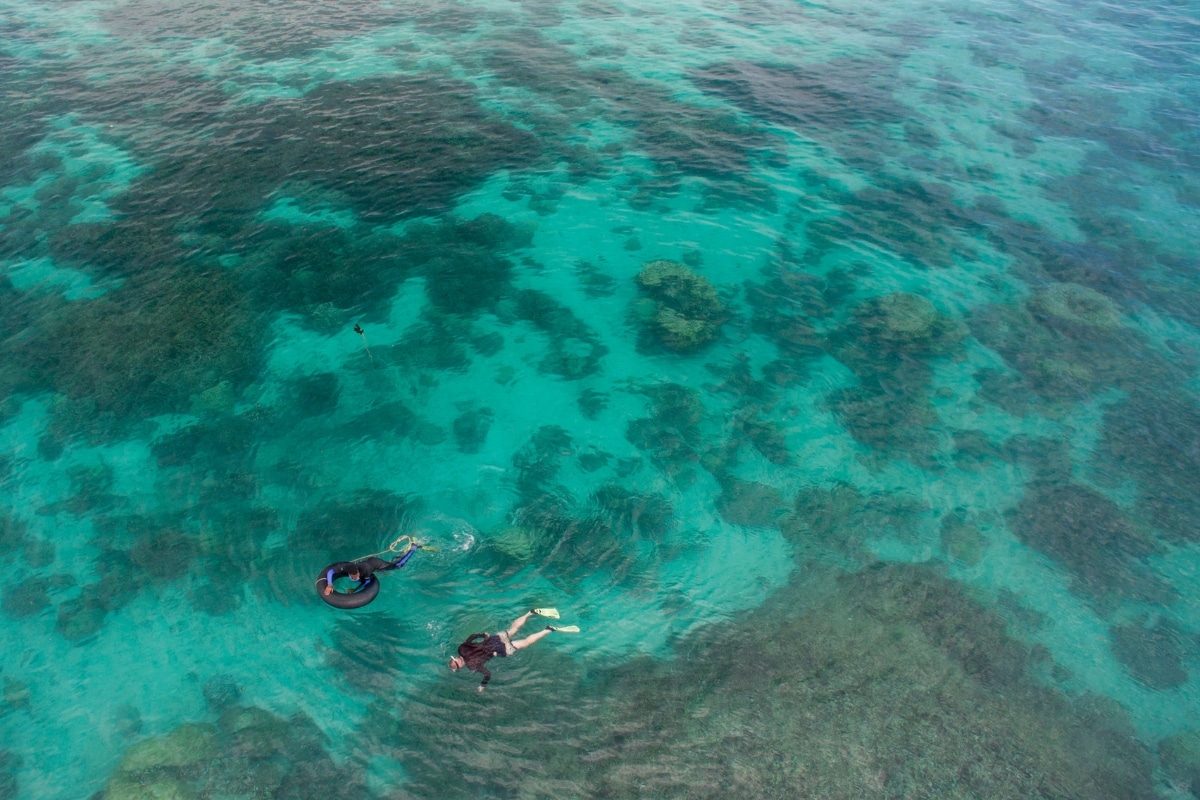
Snorkeling in the Marine Park. Photo credit: Chumbe Island Coral Park.
Chumbe demonstrates how well-managed protected areas can produce outsized impacts. Its scale has enabled close monitoring, rapid response to threats, and experimentation with advanced restoration approaches. Replicated across other critical habitats, this model could form interconnected networks of refugia and migration corridors, strengthening regional biodiversity and building resilience in the face of climate change.