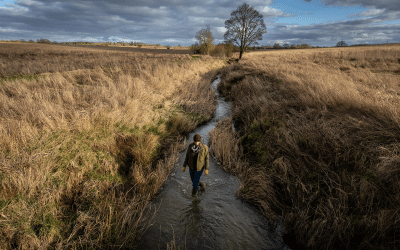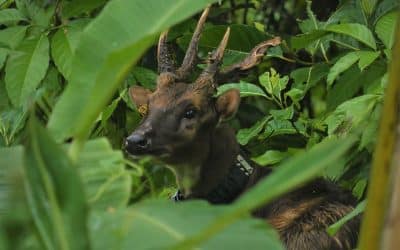
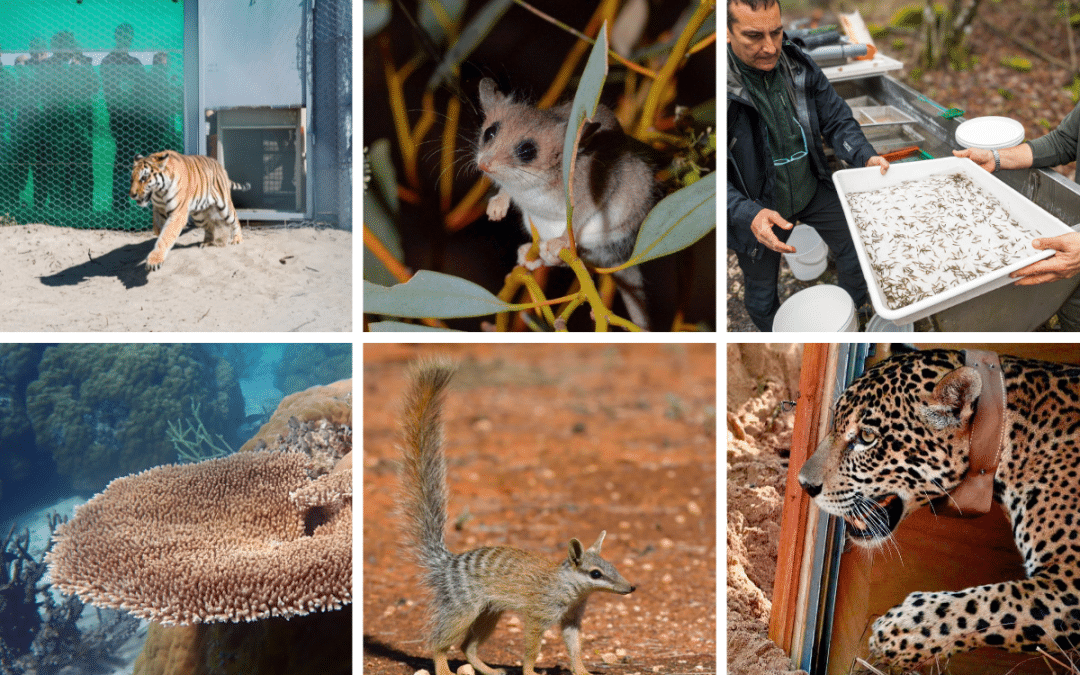
Species return and nature recovers around the world. Credit from left to right: 1. Government of Kazakhstan 2. Wayne Lawler, Australian Wildlife Conservancy 3. Filippo Castellucci, Rewilding Europe 4. Island Conservation 5. Wayne Lawler, Australian Wildlife Conservancy 6. Comunidad Inti Wara Yassi
Rewilding efforts around the world is driving major species comebacks in 2026: Kazakhstan released its first wild Tiger in 70 years, Bolivia completed its first rehabilitated Jaguar release, and Scotland’s Glen Affric saw its first Beaver kits in 400 years. Population recoveries are accelerating too: New Zealand’s Kākāpō Parrot has grown from 51 to 236 birds, Red Wolves logged their best breeding season in a decade, the Hawaiian Stilt was downlisted from endangered to threatened after growing from under 200 to 1,500+ birds, and Australia’s Numbat moved from Endangered to Near Threatened. Elsewhere, a Western Pygmy Possum resurfaced after 26 years, endangered Pygmy Hogs were released in India, Scottish Wildcats bred wild for a third straight year, and invasive rat removal on Palau’s Ulong Island boosted fish biomass by 183% and seabird numbers by 286%.
Our Global Rewilding News from the last couple of months brings together uplifting stories of wildlife returns from our Alliance Partners and national governments from all across the globe. Our global movement unites for nature recovery, recognising that a thriving future for both nature and people starts with practical, sustained actions on-ground.
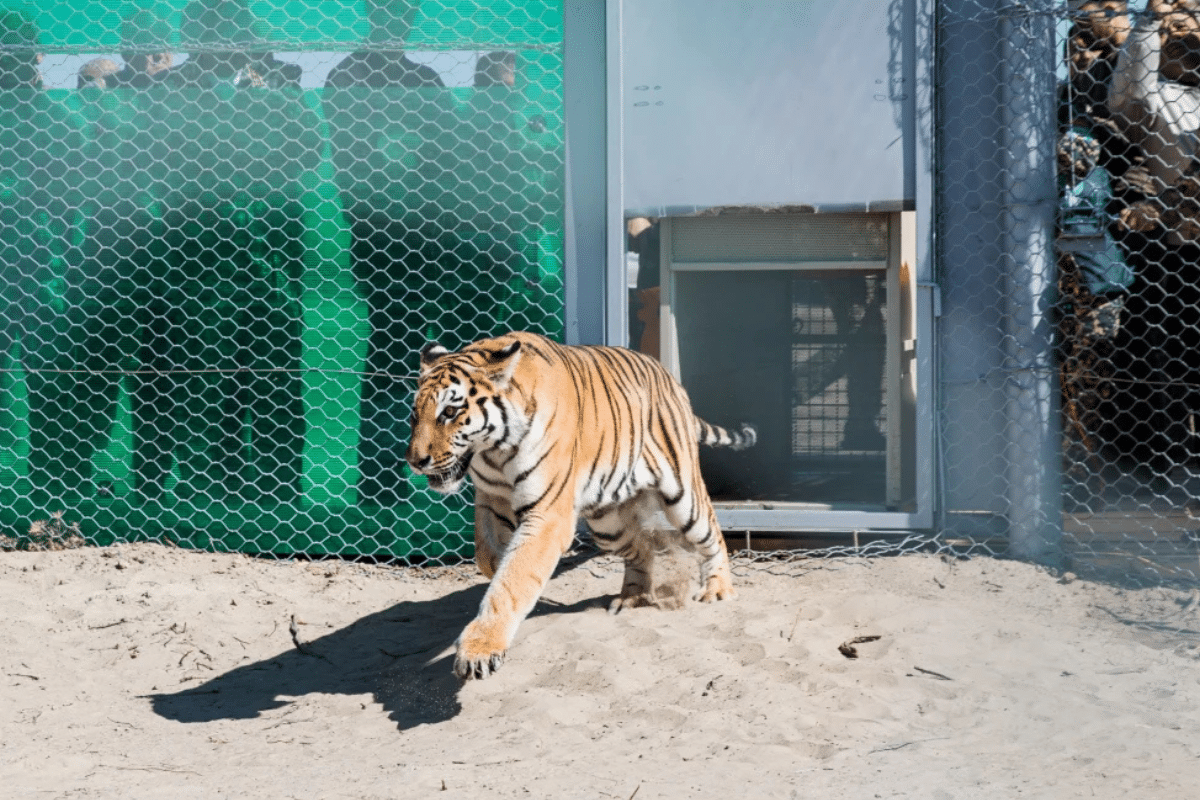
Kazakhstan releases first Tiger to the wild in 70 years
Kazakhstan has released a female Amur Tiger into the Ile-Balkhash Nature Reserve, reviving a central ecological role that has been absent since the 1940s. Part of a WWF-backed rewilding effort, the reserve, established in 2018, prepared for years by rebuilding Deer and Antelope prey populations.
The Tiger, named “Umit”, which means “hope” in the Kazakh language, could turn Kazakhstan into the first country in the world to restore tigers to an ecosystem from which they had completely disappeared.
Bolivia’s first successful Jaguar rehabilitation and release
A healthy rehabilitated Jaguar, Yaguara, stepped back into the wild in Bolivia’s first successful rehabilitation of a captive jaguar to the wild. Amid severe poaching and wildfires, many intentionally ignited to clear land for agriculture or cattle ranching, the release hopes to lay the groundwork for many more to come, helping to bolster the crucial ecological role the Jaguar holds in Bolivia’s natural systems.
“Yaguara has changed the history of Jaguar conservation in this country,” says Iván Márquez, the biologist overseeing post-release monitoring.
Hawaiian Stilt recovering after 50 years of efforts
The Hawaiian Stilt, or Aʻeo, a long-legged waterbird has been reclassified from endangered to threatened after five decades of work grew its population from fewer than 200 to more than 1,500. Described as a ‘success story in progress’, the recovery was driven by predator control and wetland restoration, though researchers stress continued effort remains essential.
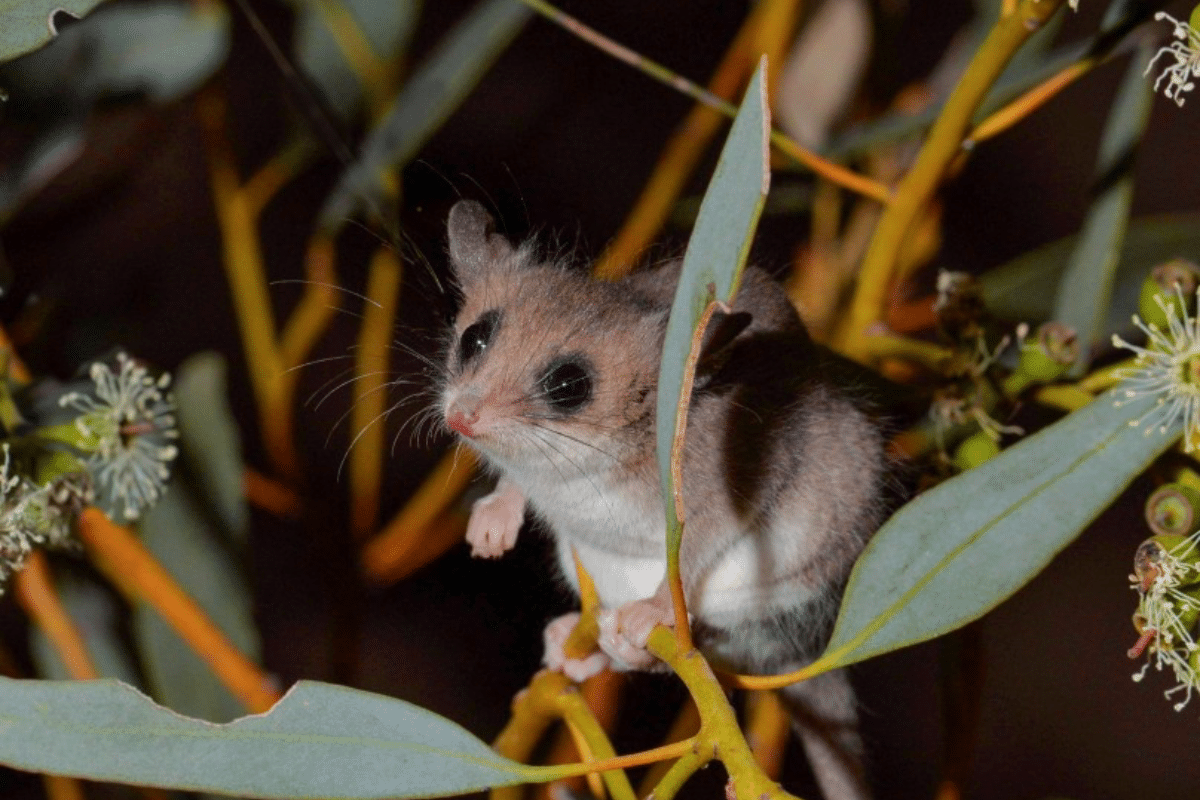
Rare Pygmy Possum resurfaces after 26 years at Australian sanctuary
Ecologists at Karakamia Wildlife Sanctuary near Perth captured a Western Pygmy Possum for the first time since the late 1990s – a sighting to seemingly celebrate the 35th anniversary of rewilding partner Australian Wildlife Conservancy. The predator-free sanctuary now supports 18 mammal species, 30 reptile species, and 123 bird species — the beginnings of proof that feral predator-free fenced reserves help life to rebound.
First baby Beavers born in Glen Affric in 400 years
At least two Beaver kits have been born in Glen Affric, the first in 400 years, following last October’s reintroduction of 11 adult Beavers to the Highland glen. This is part of a successful reintroduction project by rewilding partner Trees for Life.
Kākāpō Parrots have best breeding season in years
A total of 59 healthy Kākāpō chicks have hatched, New Zealand’s most successful breeding season in four years. The flightless parrot’s population has grown to 236 adults, up from just 51 in the 1990s, thanks to relocation to three predator-free islands.
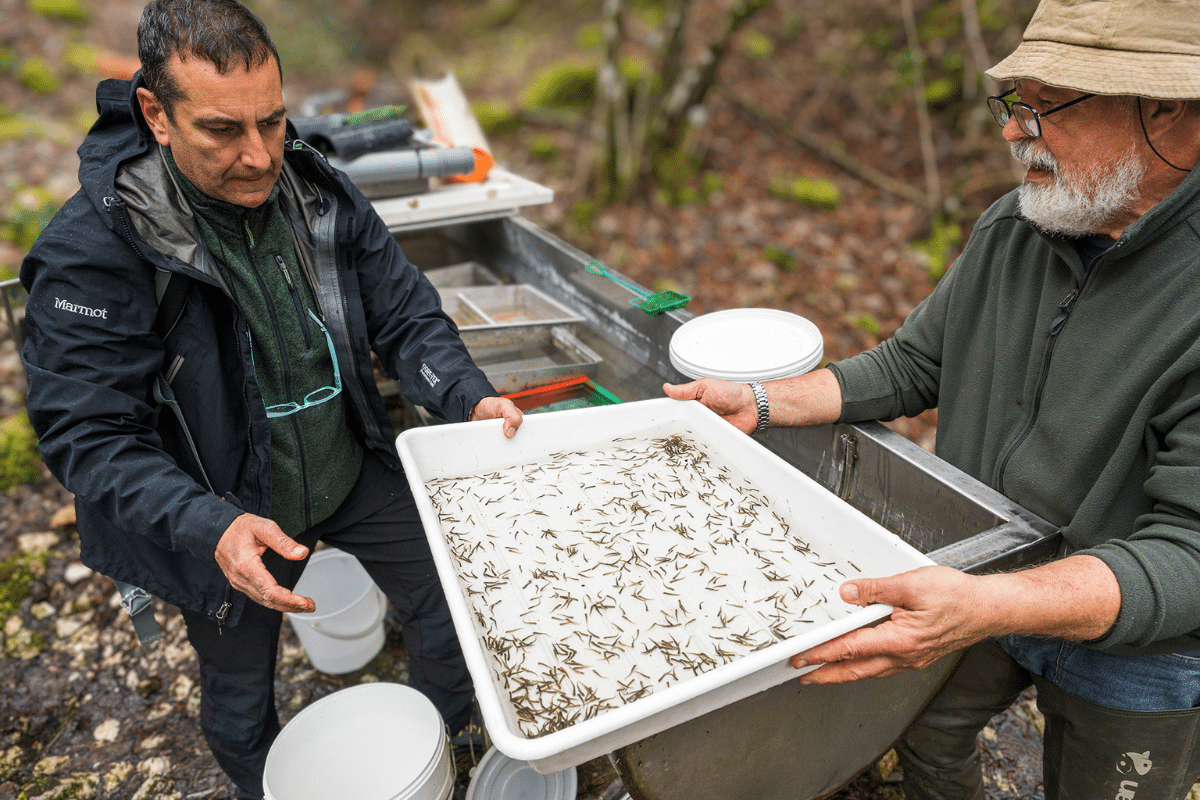
A thousand Mediterranean Trout released in Italy’s Apennines
Rewilding Apennines released between 800 and 1,000 young Mediterranean Trout at several points along the Romito stream in Italy’s Zompo lo Schioppo Nature Reserve. Combined with 2025 releases, roughly 5,000 young fish now support this genetically pure salmonid’s recovery in the Liri river basin.
The effort is part of a wider approach to see Italian rivers once again teem with fish. The Trout join approximately 8,000 young freshwater Crayfish that have been released into local rivers since 2021.
Red Wolves have best breeding season in a decade
U.S. Fish and Wildlife Service confirmed 12–16 surviving pups this spring for North America’s most endangered canid — the best count in over ten years — joining a wild population of only 28 Red Wolves. This is a beacon of hope for a population that has gone years without a single wild birth.
A $25 million grant is now funding wildlife crossings to tackle vehicle strikes, the pups’ top threat. Sights now turn to coexistence with this highly-persecuted species.
World’s rarest Pigs released back into the wild in India
Fifteen critically endangered Pygmy Hogs have been released into Assam’s Manas National Park, part of a Durrell Wildlife Trust programme to bring the species back from the brink and boost the health of native grasslands.
As a specialist grassland species, the hog acts as an indicator of ecosystem health: officials describe the reintroduction as vital not just for the species itself but for restoring the wider grassland habitat that supports countless other native animals. The goal now is a self-sustaining wild population of 300 animals by 2040.
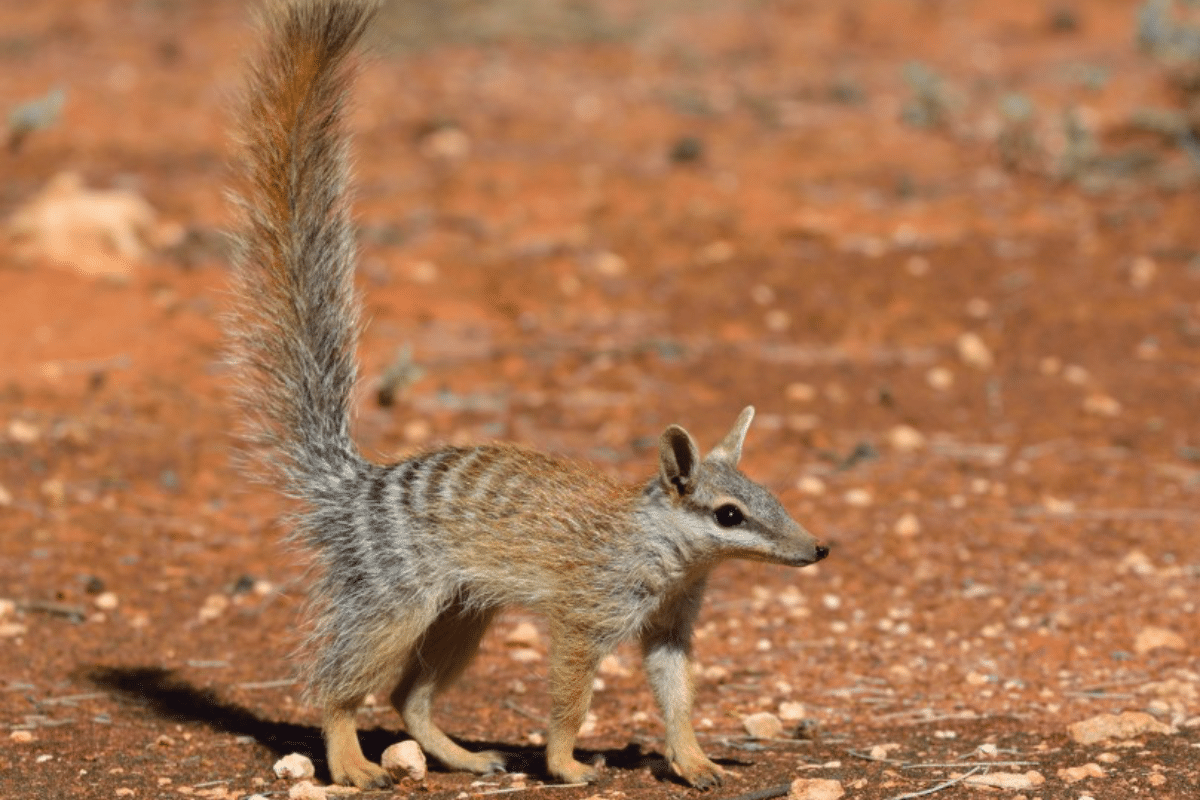
Improved the outlook for Australia’s unique termite-eating Numbat
The Numbat has moved from Endangered to Near Threatened on the IUCN Red List, following a decade-long review. Numbers had fallen to roughly 300 by the late 1970s after invasive feral cats and foxes decimated the species, before reintroductions by Australian Wildlife Conservancy helped drive the recovery.
Wildcat kittens born in Scotland for third year running
Saving Wildcats confirmed that released females have given birth in the Cairngorms National Park this June, marking a third consecutive year of wild breeding success. A NatureScot specialist called it one of the most encouraging signs a reintroduction project can have. The wild-born kittens are proof the cats are surviving and reproducing unaided.
The Wildcat is a native predator that helps keep ecosystems balanced by controlling small mammal and rabbit populations. Its behaviour significantly varies from feral domestic cats, which are often destructive to local wildlife.
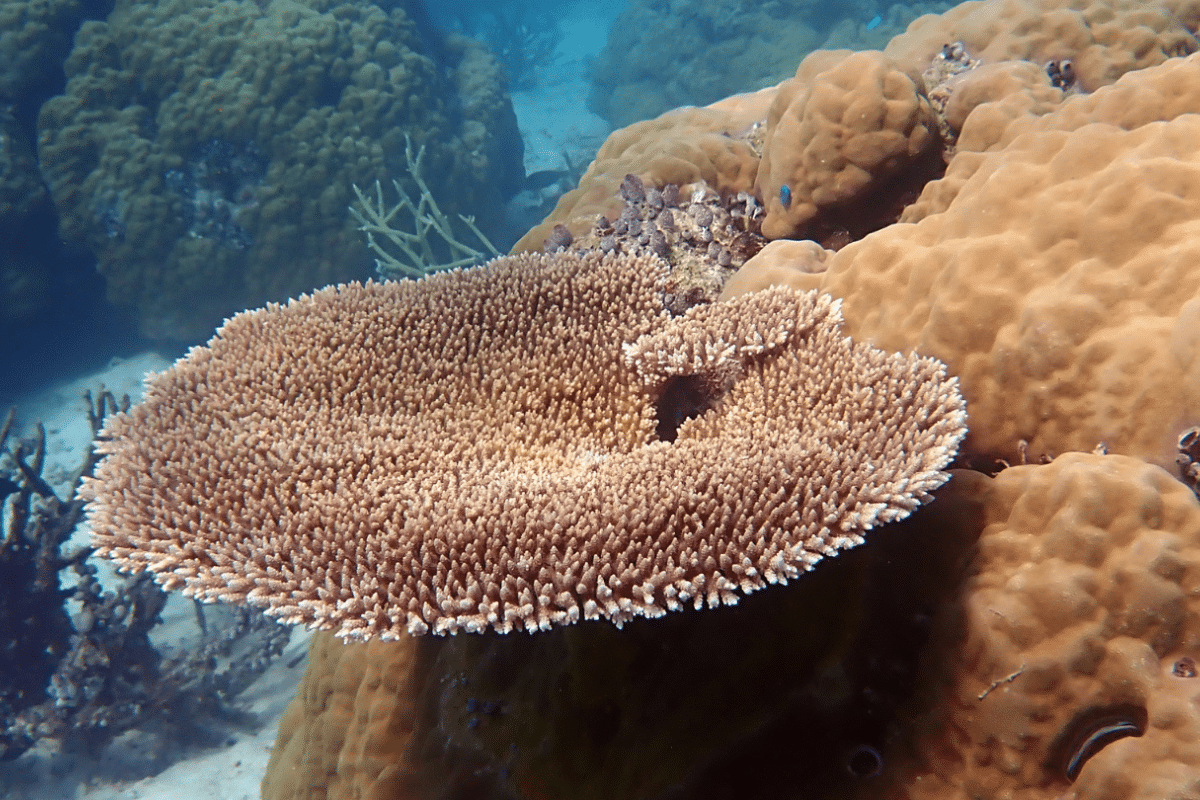
Seabird and Coral reef recovery following invasive rat removal in Palau
A year after invasive rats were removed from Ulong Island, seabirds are returning, nutrients are flowing from land to sea, and nearby coral reefs are rebounding faster than previously understood. Part of the Island-Ocean Connection Challenge (IOCC), the research is the world’s first experimental study demonstrating that seabird recovery following invasive rodent removal drives nutrient transfer from land to reef, confirming prior observational findings that restored islands benefit their surrounding ecosystems.
White Storks return to England’s Midlands after 600 years
Three juvenile White Storks have arrived at a specially built enclosure at Willington Wetlands in Derbyshire, marking the species’ first return to the Midlands since the 14th century. The 100-acre reserve, already home to Derbyshire’s first Beavers in over 800 years, aims to eventually support wild breeding Storks.
Rewilding by the Numbers
- Red Wolves: 28 wild individuals → 12–16 new pups this spring
- Kākāpō: 51 (1990s low) → 236 today
- Numbat: ~300 (1970s low) → downlisted to Near Threatened
- Hawaiian Stilt: <200 → 1,500+, downlisted
- Namibia Rhino poaching: down 53% year-on-year
- Pygmy Hog: 194 reintroduced since 1996, targeting 300 by 2040
- Fish: 183% increase in fish biomass, linked to seabird-derived nutrients beginning to fuel reef productivity
- Bridled Tern: 286% increase compared to an island where invasive rats remain and no removal took place)
We hope that you took some practical hope from the recent stories of nature’s revival, driven by local people and communities around the world. Dive into more rewilding success stories.

About the Global Rewilding Alliance
The Global Rewilding Alliance brings together over 300 organisations across every continent to catalyse a worldwide movement for nature’s recovery. We accelerate learning, convene evidence, and share the successes and benefits of rewilding —inspiring more organisations to rewild and unlocking new resources for rewilding. Learn more about our work.
Frequently Asked Questions
What is rewilding?
Rewilding is a nature recovery approach that focuses on bringing back natural processes, healing the web of life, and where necessary, bringing back missing species so landscapes can run dynamically and in balance. People are at the heart of rewilding efforts, from individuals, communities, indigenous peoples to governments and the international policy community.
Is rewilding actually working?
Yes — global rewilding projects have produced measurable results, including recovering predator populations, restored wetlands, and rebounding fish stocks in protected marine areas. Success varies by region and species, but long-term monitoring across Europe, Africa, Oceania, Asia and the Americas shows consistent biodiversity gains, and often socio-economic development, where rewilding has been sustained and locally-embedded.
What animals have been successfully reintroduced recently?
What's the difference between rewilding and conservation?
Conservation typically protects existing ecosystems and species populations from further decline, while rewilding actively restores species and processes that have been lost or in decline. Both approaches are context-dependant and crucial for a thriving future for people, nature and planet; conservation and rewilding work hand-in-hand.
Does rewilding help fight climate change?
Where can I find ongoing updates on global rewilding news?
The Global Rewilding Alliance reports on the stories and updates from the growing movement of rewilding organisations and on-ground efforts, as well as international policy and legal developments that favour nature recovery. Follow on LinkedIn, Instagram, and through their mailing list.