

Talking soil and regenerative farming. Credit: Furnace Brook
Based in UK”s East Sussex, Furnace Brook has a simple but bold idea: to heal a neglected landscape and bring it back into balance. This site has been used for centuries – a site of iron production, coppicing and intensive farming – but most recently, people have gathered for regeneration of both nature and community fuelled by long-term thinking. Over the years, Furnace Brook has transformed the land into a hub of community-led restoration, regenerative farming, and education. Despite localised pollution incidents, the team remain steadfast in their vision of a valley alive with wildlife, working farms, and thriving community life, where restoration becomes a way of living.
Nestled in a High Weald Area of Outstanding Natural Beauty, Furnace Brook is bound to be a place where nature connection is found. As our new Alliance Partner joins our network, we are invited to eighty acres of farmland, lakes, meadows that are becoming a home for wildlife, regenerative farming and a growing family of nature-based enterprises. This is a living landscape of rewilding and community collaboration that holds the vision of a thriving ecosystem for both wildlife and people.
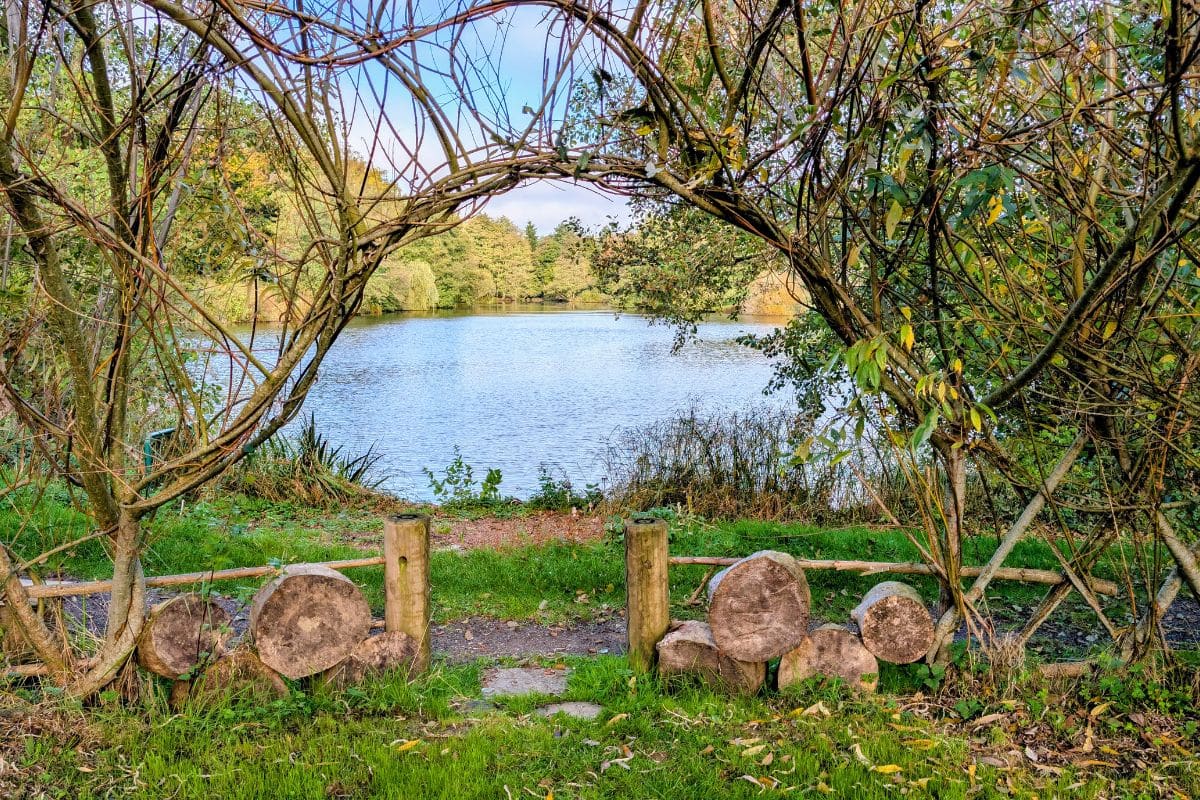
Lake through Willow Dome. Photo Credit: Furnace Brook.
Beneath its surface, Furnace Brook holds multiple layers of an active history. From iron production in the 14th century, to a working landscape from hops-picking to coppicing throughout the 1800s, it has now evolved into a vibrant rural hub for arts, ecology, and micro-enterprises, where wildlife is welcomed back alongside the people.
There is a strong calling that links the wellbeing of ecosystems to that of our own ‘mental ecosystems’; people can find respite from a busy world here in one of the most densely populated counties of the UK.
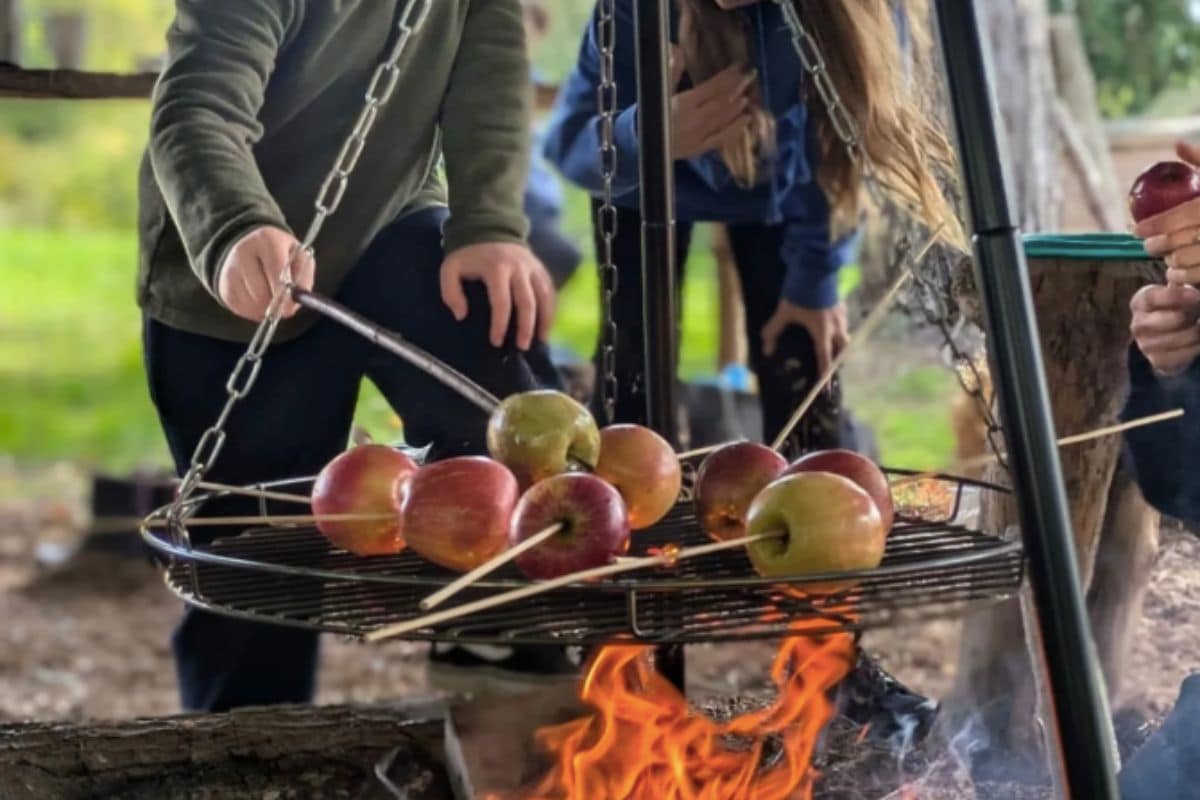
Moments of community at Furnace Brook. Credits: Furnace Brook
An Ecological Turning Point in 2024
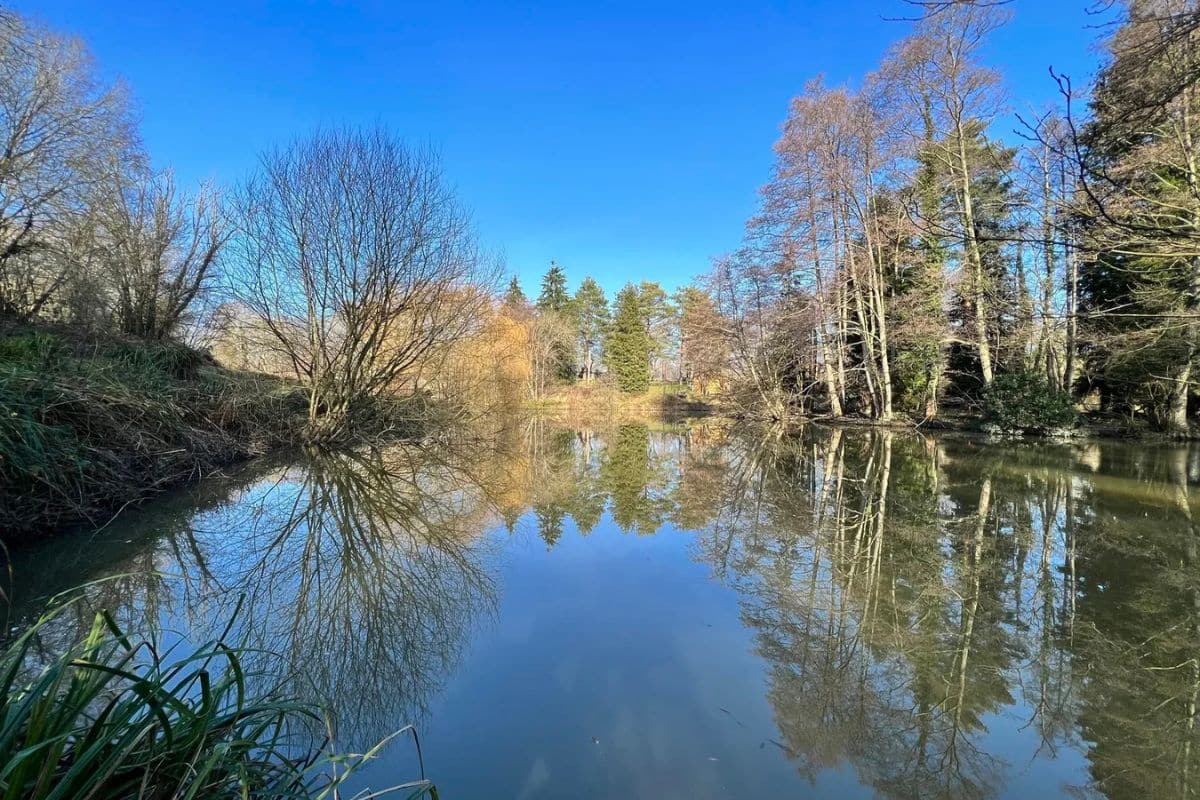
At Furnace Brook, the resolve to shift to regeneration was further solidified in 2024, when a major pollution event significantly harmed the on-site lake and surrounding hydrology. The silver lining to the incident was that it has catalysed a landscape-scale restoration programme.
Appropriately, they keep a quote from Jacques-Yves Cousteau in mind:
For most of history, man has had to fight nature to survive; in this century he is beginning to realise that, in order to survive, he must protect it.
Jacques-Yves Cousteau, French naval officer, oceanographer, filmmaker and author
The team is dedicated to restoring and enhancing the natural landscape through rewilding practices; restoring water flow and lake ecology, re-establishing coppice cycles, rebuilding soil health, supporting wildlife recovery and, of course, engaging local communities. By embracing horticulture principles and regenerative design, they are transforming the land into a biodiverse haven.
Credit: Furnace Brook
A place for research, learning, and reconnection with the natural world
Creativity is rife across their nine core themes: food, water, shelter, waste, energy, transport, biodiversity, carbon sequestration and health & wellbeing. That creative energy then feeds into a range of research-based activities: renewable energy generation and storage, carbon management, topsoil enrichment and regenerative design approaches to landscapes & structures – this is a place of wild imaginations!
The community farm puts soil health first and is a fast-track to getting people connected with the land, quite literally ‘getting their hands dirty’.

Credit: Furnace Brook

Credit: Furnace Brook
The Living Water Garden Project
Following the setback of a Category 1 pollution event in the stream that feeds the lake, a swathe of restoration work has kickstarted, led by the team and wider community. In this landscape shaped by water, they are:
- Replanting native reeds, wetland species & marginal plants
- Creating shaded refuges for fish & invertebrates
- Stabilising banks with native vegetation and improving riparian structure with woody debris & living edges
- Supporting wildlife return such as the natural recolonisation of invertebrates, eel migratory pathways and native aquatic plants
Now, floating pontoon islands have been set in place, marking the beginning of a regenerative bioremediation process using mushroom mycelium and thoughtfully chosen plants to bring the water back to life.
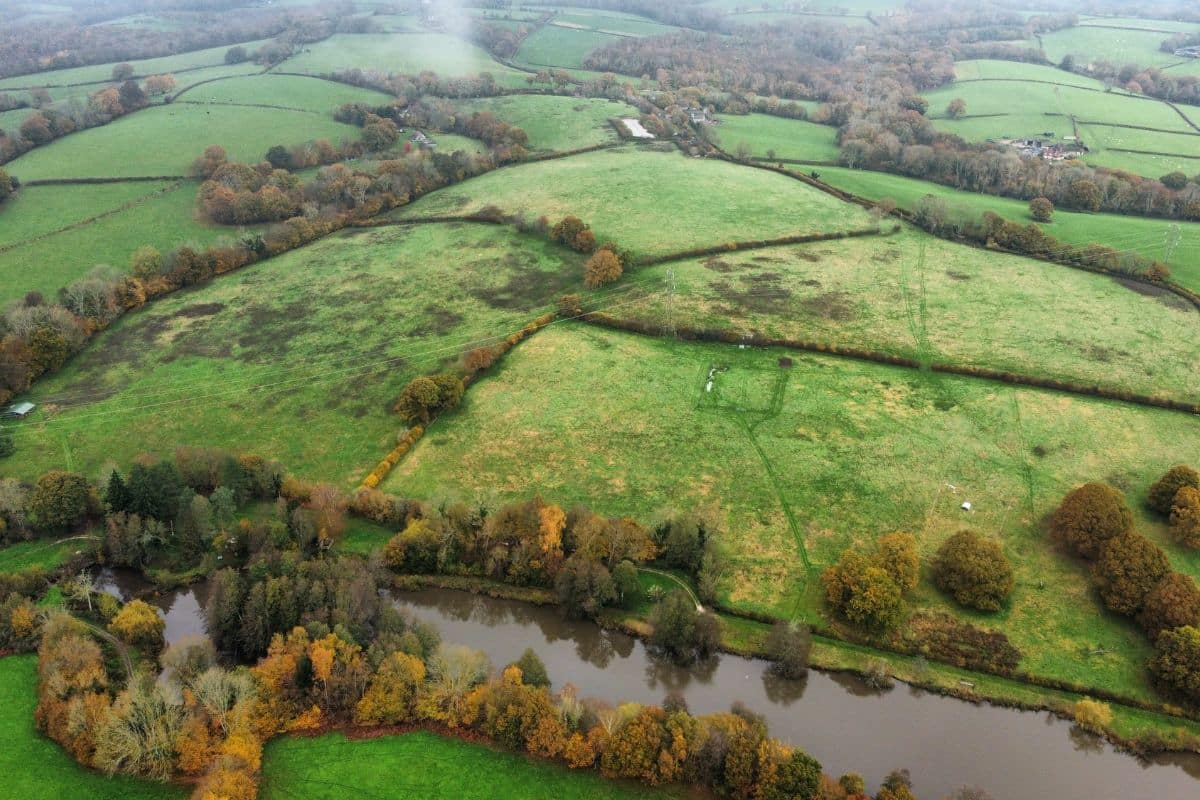
Landscape view. Photo credit: Furnace Brook.
Recently, they’ve purchased adjacent farmland and we’re looking forward to seeing the rewilding journey that awaits them! We are happy to welcome Furnace Brook to the alliance.