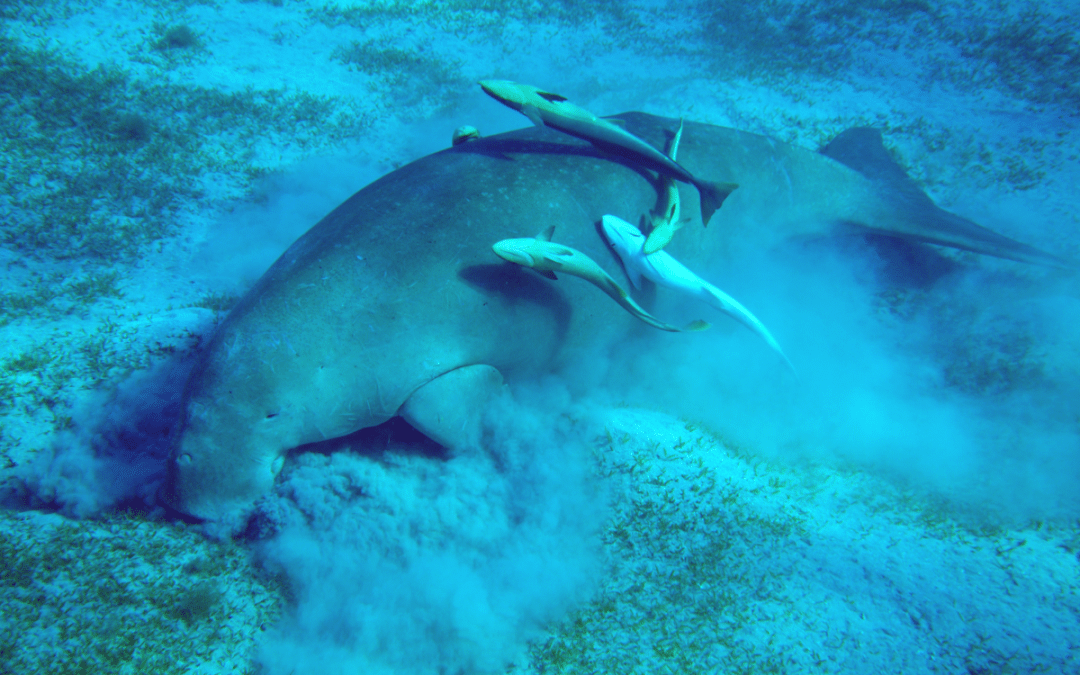
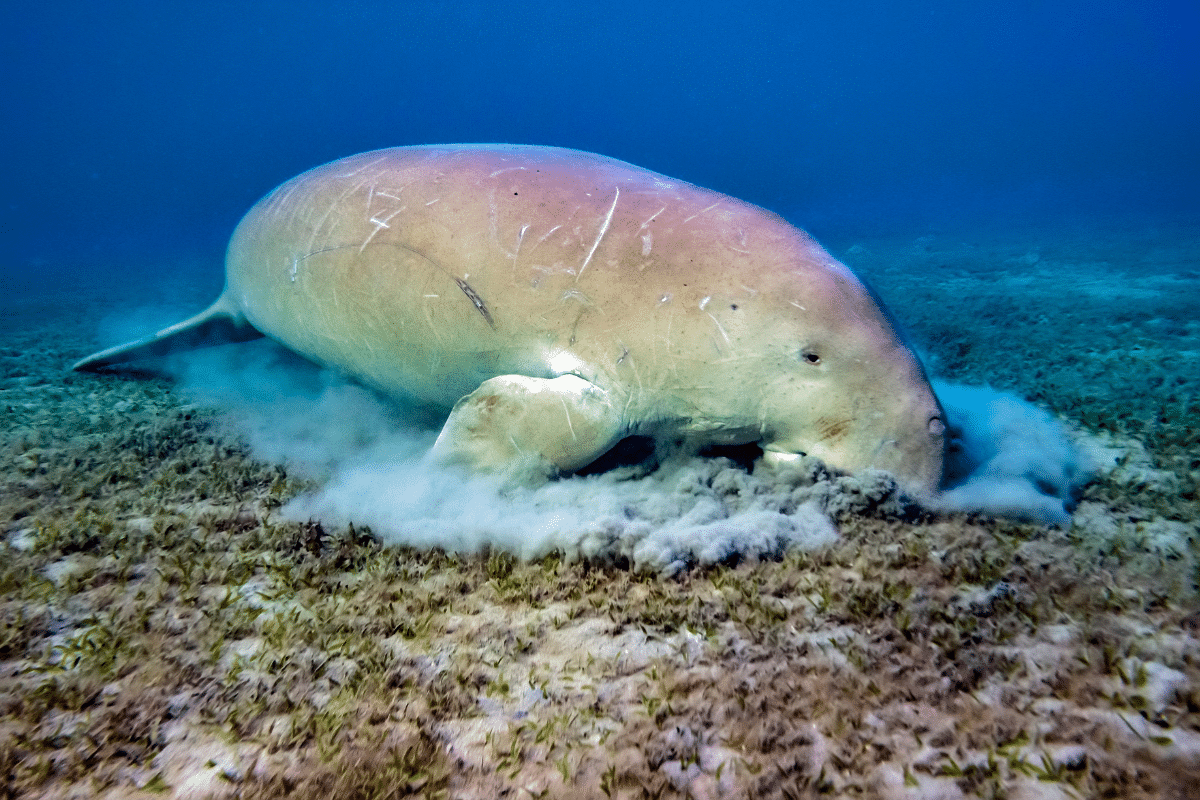
Dugong eating. Credit: vintrom from Getty Images
Dugongs are overlooked climate heroes. A study published in Frontiers in Marine Science in May 2026 — Integrating megafauna into blue carbon strategies: Dugongs could enhance seagrass carbon storage — reveals the outsized role that large grazers like Dugongs play in our world’s seagrass ecosystems.
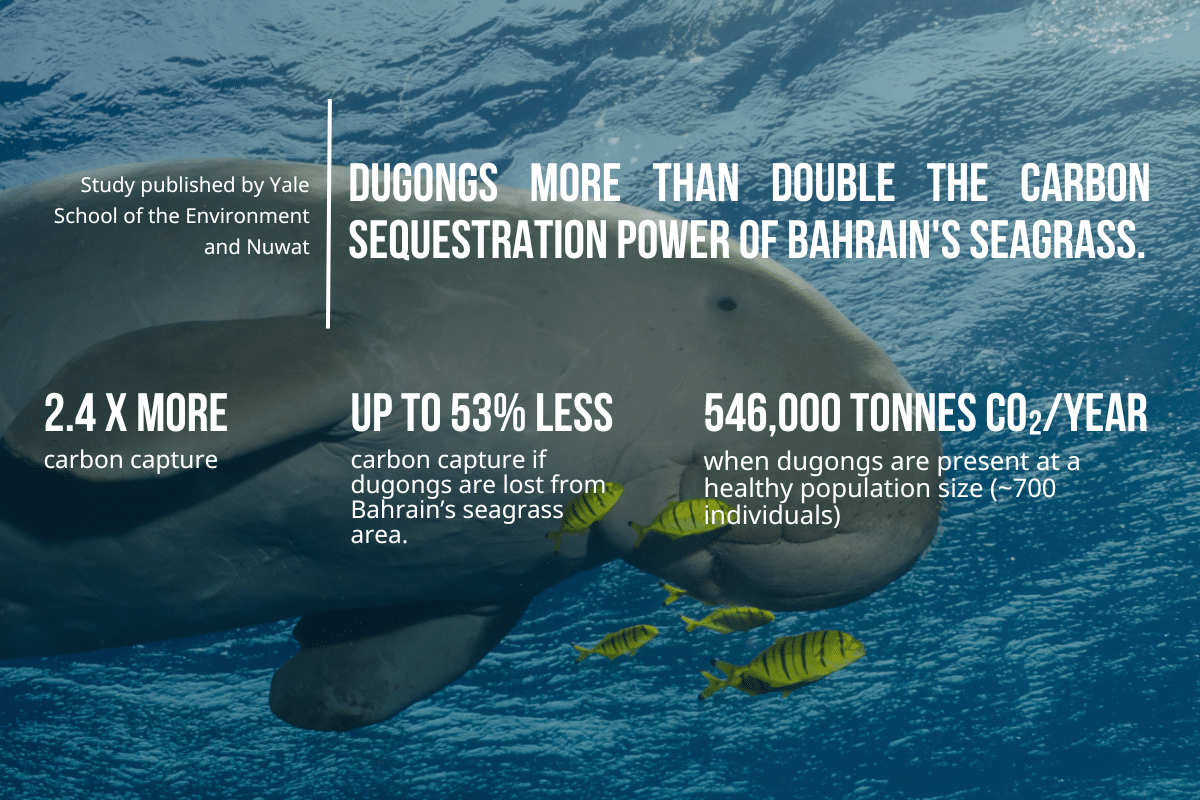
The findings, modelled on a seagrass meadow in Bahrain used by a herd of approximately 700 Dugongs, suggest their presence could increase seagrass carbon capture by more than two times compared to ecosystems without them. The study adds to the growing science of Animating the Carbon Cycle that shows nature recovery is a credible solution for the dual climate and biodiversity crises. It also marks the first use in a marine environment of the Yale-GRA model to quantify the role played by wild animals in climate change mitigation.
The Yale/GRA Model results: 700 Dugongs double carbon capture
Using a carbon and nutrient cycling model applied to the seagrass meadows of Bahrain, a key global hotspot for Dugongs, the study was led by Professor Oswald Schmitz of the Yale School of the Environment and Dr. Reem AlMealla of Nuwat, in collaboration with the Global Rewilding Alliance (GRA) and the International Fund for Animal Welfare (IFAW), supported by BNP Paribas.
The study found that a modelled seagrass meadow, grazed by a population of around 700 Dugongs, can more than double (2.4 times) the seagrass ecosystem’s carbon capture rate on average, and increase the amount of carbon stored in sediments by 2.6 times.
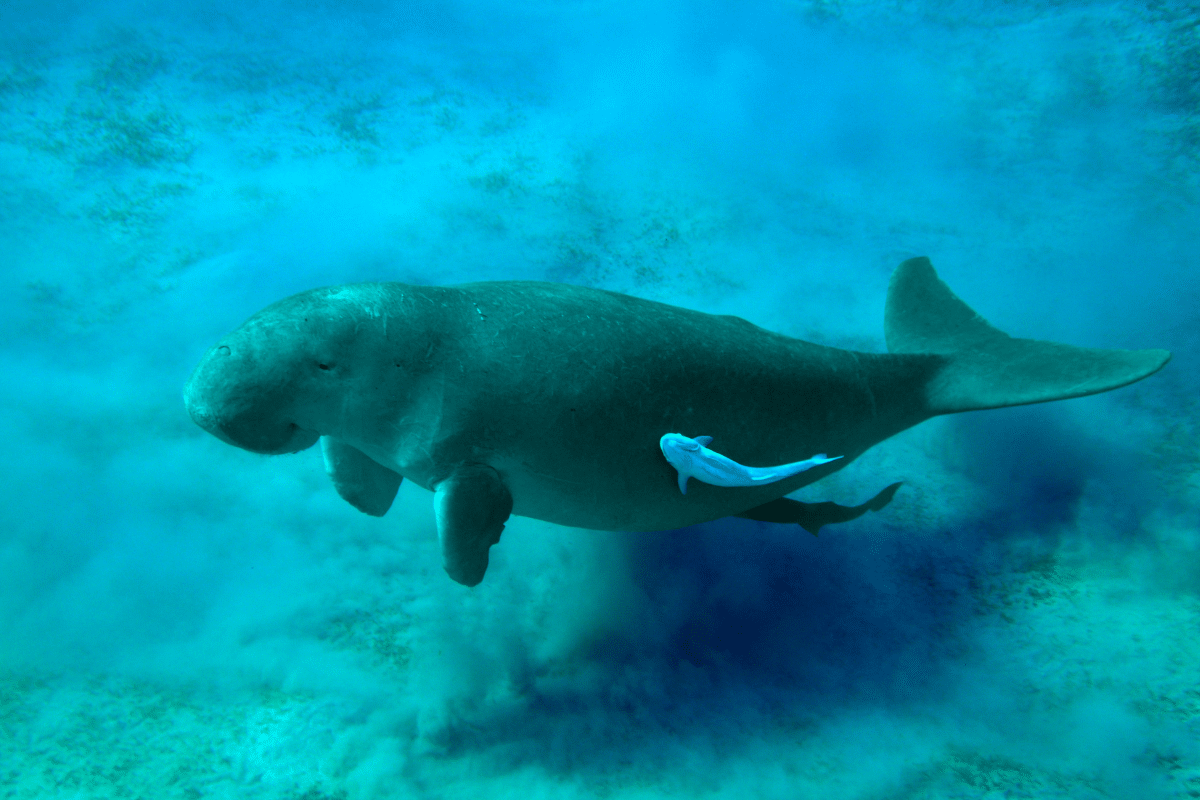
Dugong. Credit: lemga from Getty Images
Professor Oswald Schmitz, lead author and Professor of Population and Community Ecology at the Yale School of the Environment
| Scenario | Carbon captured per year |
|---|---|
| Without dugongs | ~67,000 tonnes C |
| With dugongs | ~149,000 tonnes C |
| Total CO₂ equivalent | ~546,000 tonnes CO₂ /year |
Schmitz, O.J. & AlMealla, R.K. (2026). Integrating megafauna into blue carbon strategies: Dugongs could enhance seagrass carbon storage.
To put that in perspective: this is comparable to emissions from major national sectors and highlights the importance of long-term sediment carbon storage. The estimated stored carbon is around 1.5 million tonnes of carbon, equivalent to approximately 5.4 million tonnes of CO₂. This amount represents decades to over a century of emissions from some national sectors. And if Dugong populations were to decline, carbon capture could fall by anywhere between 7 and 53%. Protecting Dugongs is, quite directly, protecting a national carbon sink.
The missing piece: wild animals
Until recently, seagrass ecosystems have been appreciated as one of the planet’s greatest carbon stores, with the focus on the role of plants and the sediment beneath them. But this isn’t the full picture. “Seagrass ecosystems are already recognised as important blue carbon habitats, but our research shows the animals living within these systems can substantially enhance their climate benefits,” added Professor Oswald Schmitz
Healthy seagrass meadows are living, dynamic ecosystems full of animals that actively shape how the ecosystem functions via their presence and interactions. Large marine grazers browse large amounts of seagrass, disturb the sediment, and release dung that helps nutrients cycle directly back through the system much faster, feeding new plant growth.
Vast seagrass beds cover 145 km² off the southeastern coast of Bahrain, making it one of the world’s most important habitats for Dugongs, with the area surrounding Hawar Islands hosting one of the world’s largest aggregations of Dugongs. Researchers estimate that Bahrain’s seagrass ecosystems could capture approximately 546,000 tonnes of CO₂ annually when healthy Dugong populations are present.
Dugongs: gentle giants, unexpected climate heroes
Dugong dugon are large marine mammals related to manatees; a megagrazer that feeds almost exclusively on seagrass. They are, in a very real sense, ecosystem engineers: animals that change the environment around them in ways that affect the whole system.
Here’s how Dugongs shape their seagrass habitat:
- Grazing strips back older seagrass, making way for younger, faster-growing plants that capture carbon more efficiently
- Nutrient recycling through their waste feeds new plant growth directly, bypassing the slow decomposition process
- Sediment disturbance from feeding affects how carbon is buried and stored underground
- Together, these feedback loops boost the overall productivity of the ecosystem
A seagrass meadow with Dugongs in it is, in carbon terms, a fundamentally different system from one without them. Animals are active participants in their ecosystems and true climate heroes.
Matt Collis, Senior Director of Policy at IFAW
Dugongs are not the only animals helping ecosystems store more carbon. A study published in Global Change Biology found that forests with healthy wild tiger populations store more carbon and remove more CO₂ from the atmosphere than forests without them.
Opportunities for Global Climate Policy
Until now, Dugongs and wild animals have largely been seen as passengers in both climate action and ecosystem protection, when all along they are the catalyst for healthy ecosystems to effectively capture and store carbon. The implications have global relevance: we should protect and restore these wild populations in order to drive effective climate mitigation, looking beyond only habitat protection. Even more so, this research provides a huge opportunity to align both biodiversity and climate policies at international and national levels.
Specific to Bahrain, the study supports the further incorporation of wildlife into national climate commitments, bringing their biodiversity and climate goals into alignment; the government has already written wildlife into their ambitions for their Nationally Determined Contributions (NDCs) under the UN Framework Convention on Climate Change, setting a bold precedent for our world’s leaders.
Bahrain’s current commitments already recognise coastal mangrove restoration as a climate priority, a strong foundation to build on, and they have recently written into their 2025 NDC their intention to go further:
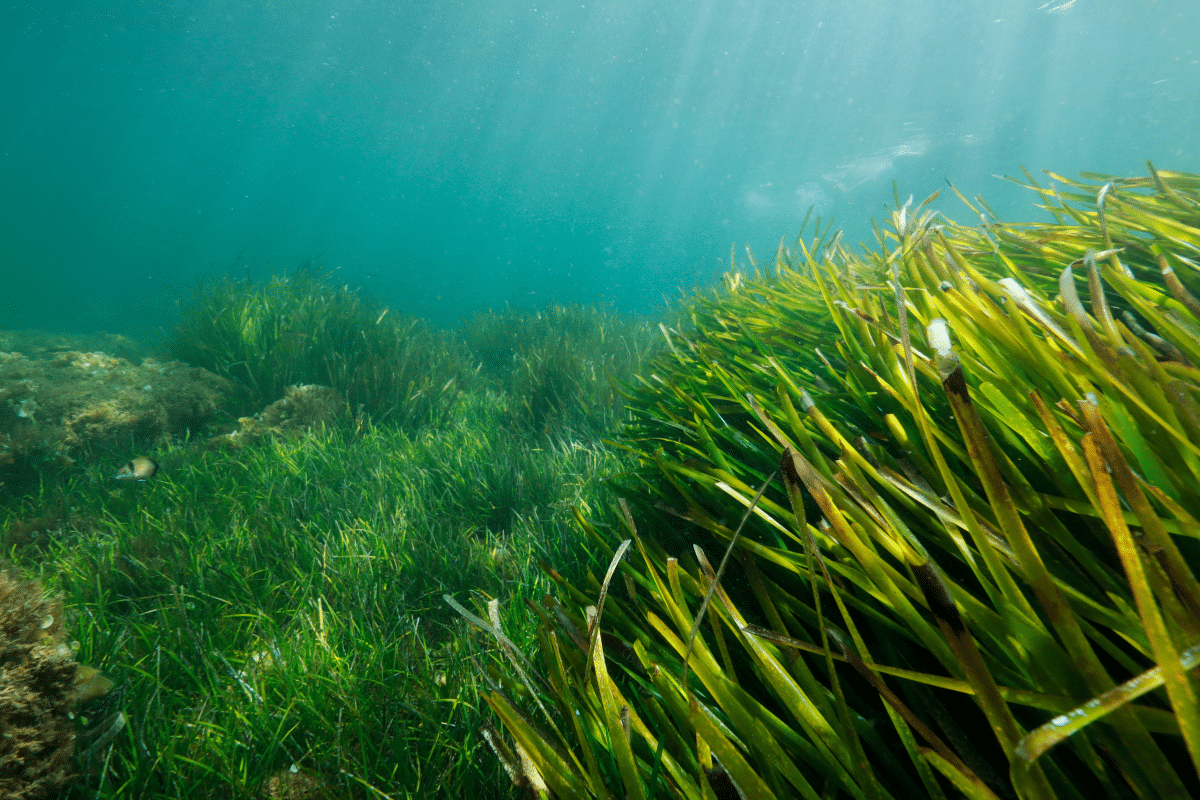
Seagrass meadows. Credit: Arnaud Abadie from Getty Images
Global Policy Recommendations
National governments and international policy bodies can incorporate these findings, enabled by Animating the Carbon Cycle (ACC) – a growing field of science and policy producing rigorous, peer-reviewed evidence that nature recovery is a credible, rapid, and cost-efficient climate solution. Learn, for instance, about the researched climate heroes, from whales to forest elephants, and how 9 species could draw down 6.4 billion tonnes of CO₂ annually. Some recommendations are:
- Integrate Wildlife into NDCs: Following these guidelines, governments can align their UNFCCC commitments with wildlife recovery as a national nature-based climate solution.
- Recognise Dugongs – and other wild animals – as climate-relevant species: Integrate Dugong conservation into climate and blue carbon strategies, identify target Dugong population ranges to maintain carbon capture capacity, and participate in the UNFCCC 2030 Seagrass Breakthrough.
- Align biodiversity and climate policy: Strengthen collaboration between climate, biodiversity, and coastal planning sectors, and embed blue carbon and megafauna roles into national biodiversity strategies.
- Invest in monitoring and research: support research on animal-driven carbon cycling, and develop national blue carbon datasets to support reporting.
Conclusion
The study shows that protecting wildlife is not only about conserving species, but also about safeguarding nature’s interconnected systems that allow ecosystems to function at their highest potential and help humanity mitigate and adapt to climate change.
Dr. Reem AlMealla, co-author and founder of NUWAT, Bahrain’s first ecological research think tank
By integrating seagrass and Dugongs into its climate commitments, Bahrain has a rare opportunity: to be a global pioneer in animal-inclusive climate policy, and to demonstrate that protecting nature and addressing the climate crisis are not just compatible, they are the same goal.
By more than doubling the carbon capture of seagrass ecosystems, Dugongs have been doing their part for a very long time. It’s time we recognise the key role of wild animals in ecosystems, in policy and practice.

About Nuwat
Nuwat for Environmental Research & Education is a Bahrain-based environmental research and conservation organisation dedicated to advancing environmental science and policy in the region through combining ancestral and local knowledge with scientific expertise. They co-authored this study alongside Yale University and play a key role in translating research findings into actionable recommendations for Bahraini and regional policymakers. Learn more about Nuwat.
About the Global Rewilding Alliance
The Global Rewilding Alliance is a worldwide organisation catalysing the rewilding movement through a network of over 290 partners working across every continent. In collaboration with Yale School of Environment, they have developed the Yale/GRA ACC Model — a tool that quantifies the positive climate impact of restoring and protecting wildlife populations. By calculating the carbon being stored and captured thanks to the presence of wildlife, the model guides conservation efforts and investments worldwide, turning ecosystems into powerful solutions for the climate and biodiversity crises. Learn more about our work.
Frequently Asked Questions
What is blue carbon?
Blue carbon is the carbon captured and stored by coastal and marine ecosystems — mainly seagrasses, mangroves, and salt marshes. What makes it special is that these ecosystems store carbon in their sediments for much longer than most land-based ecosystems, making them some of the most effective natural carbon sinks on the planet. As this study shows, the animals living in these ecosystems — like dugongs — play a bigger role in that storage than we ever realised, helping to more than double carbon capture.
What is seagrass?
Why are Dugongs important for climate mitigation?
What are NDCs?
What is the UNFCCC 2030 Seagrass Breakthrough?
What is Animating the Carbon Cycle (ACC)?
Animating the Carbon Cycle is a growing field of science and policy that studies how wild animals contribute to carbon storage in ecosystems around the world. It brings together peer-reviewed research showing that nature recovery — including the return of key species — is a credible, rapid, and cost-efficient climate solution. Learn more at animatingcarbon.earth.