

Photo credit – Forest First Samithi
Forest First Samithi is a visionary organisation that has spent the last 15 years healing the degraded habitats of India’s Western Ghats, demonstrating that large-scale nature recovery is built on the revival of humble grasses, the free flow of water, and the enduring wisdom of indigenous tribal communities. Focusing on the Kabini river catchment, a UNESCO-recognised critical corridor for Elephants and Tigers, the team meticulously uprooted invasive species. Within six months, native grasslands have reestablished, Elephants and Gaur have returned, 184 bird species have been recorded, and soil moisture increased by 35%. At the heart of this success is a deep, reciprocal partnership with local indigenous tribal communities, creating a scalable blueprint for rewilding.
The Global Rewilding Alliance is proud to welcome Forest First Samithi, a visionary organisation that has spent the last 15 years healing the degraded habitats of India’s Western Ghats. Their work demonstrates that large-scale nature recovery is built on the revival of humble grasses, the free flow of water, and the enduring wisdom of indigenous tribal communities.
Restoring a Critical Corridor
Forest First Samithi focuses its efforts on the Kabini river catchment within the Wayanad and Nagarahole sanctuaries, a UNESCO-recognised critical corridor for Elephants and Tigers.
Here, the landscape faces a silent crisis. Invasive species, primarily Senna spectabilis and Lantana camara, paint the hillsides a monochromatic green, forming dense thickets that smother native biodiversity. They deplete the soil’s moisture, eliminate vital fodder grasses, and fragment the habitat, escalating challenges for both wildlife and people. Forest First Samithi’s solution is a masterclass in patient, manual ecological restoration. The team meticulously uproots invasive trees, including the entire lateral root structure, to prevent secondary growth.
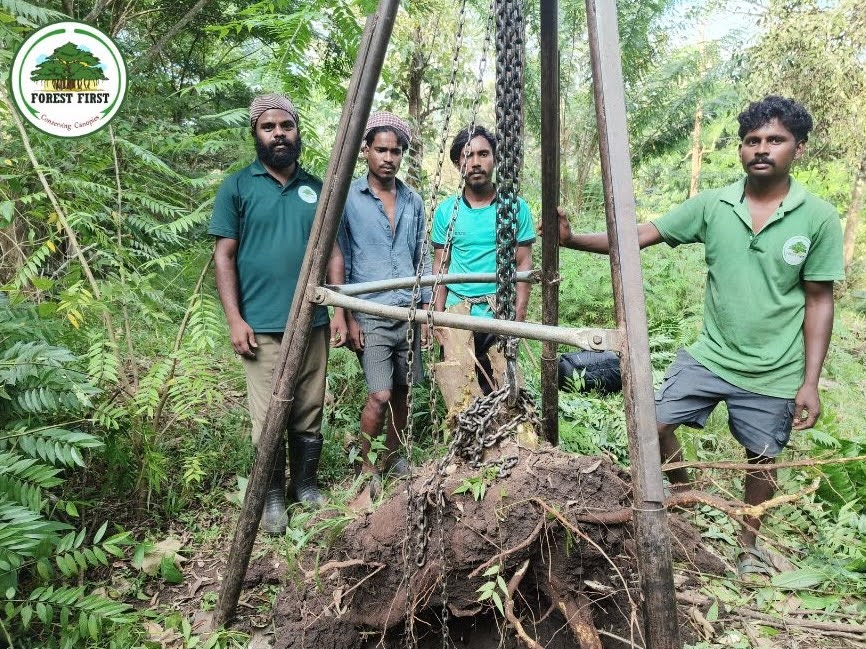
Senna root removal with tools. Credit- Forest First Samithi
The Unsung Heroes: Grass and Water
The results of this careful work are both rapid and remarkable. Within six months of uprooting Senna, native grasslands have naturally reestablished, with 15 palatable grass species recorded returning to the revived soil. This resurgence of fodder has a direct and visible impact on the landscape. Herds of Elephants and the curious Gaur are now seen foraging in these restored areas, their dung enriching the land just one day after the clearing. In the Senna eradicated area of the Tholpetty Range, Wayanad, a stunning 184 species of birds have been documented; a vibrant chorus affirms the habitat’s return to health. The initiative has also led to a 35% increase in soil moisture content, proving that healing the vegetation also heals the water cycle.
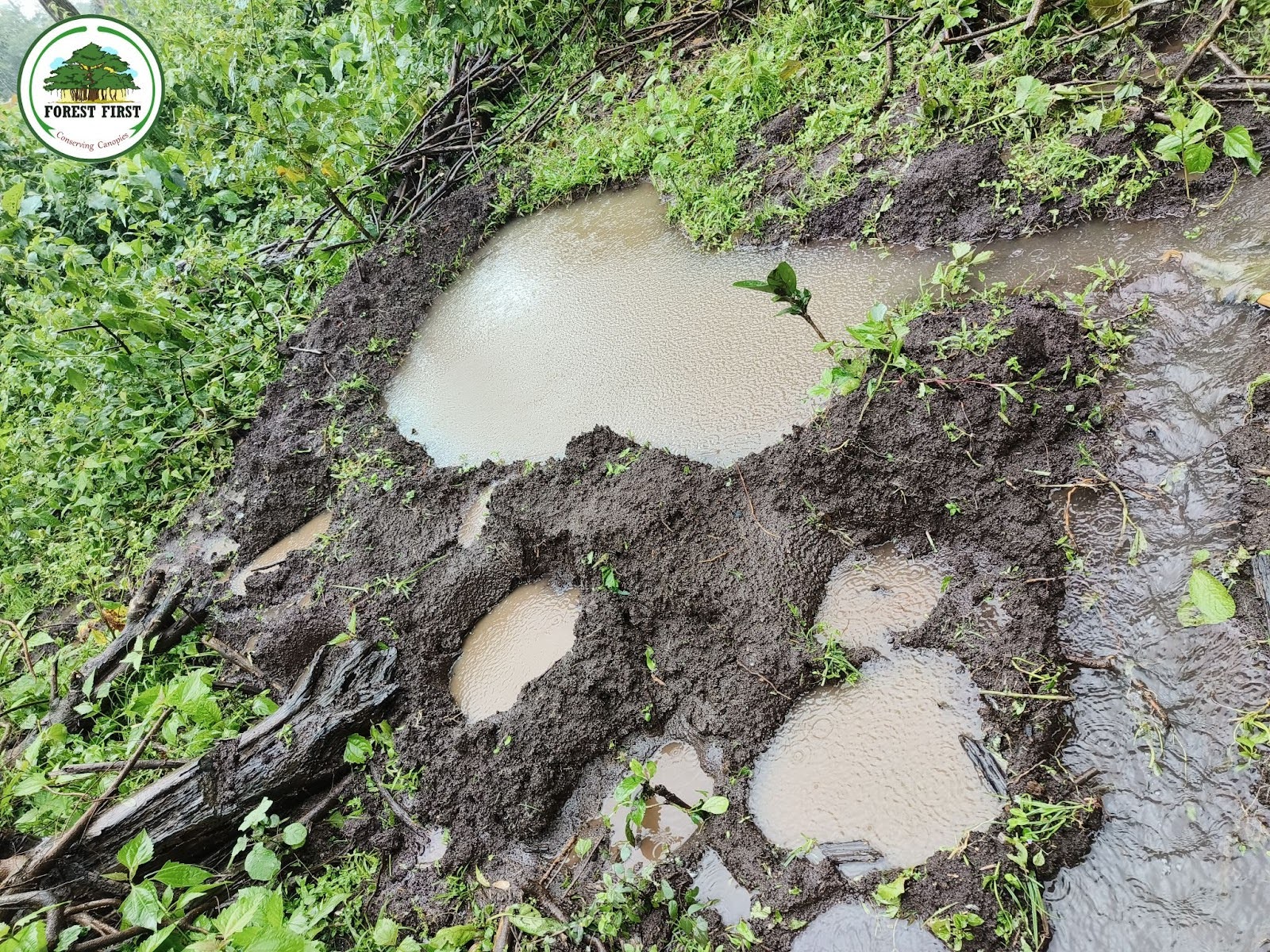
Elephant herds are seen in regions where Senna is eradicated. Credit- Forest First Samithi
The Human Root System
At the heart of this success is a deep, reciprocal partnership with the local indigenous tribal communities. Forest First Samithi employs and trains tribal members as “restorers”, making them the primary caretakers of the land. From seed collection and nurturing native Rare, Endangered, and Threatened (RET) tree species in nurseries to aiding in the removal of invasive species, these communities are the steady hands guiding the forest’s recovery. This model provides stable livelihoods, strengthens cultural ties to the land, and fosters a shared guardianship for the future. Overall, they have supported about 100 tribal households, creating a powerful synergy between human well-being and ecological integrity.
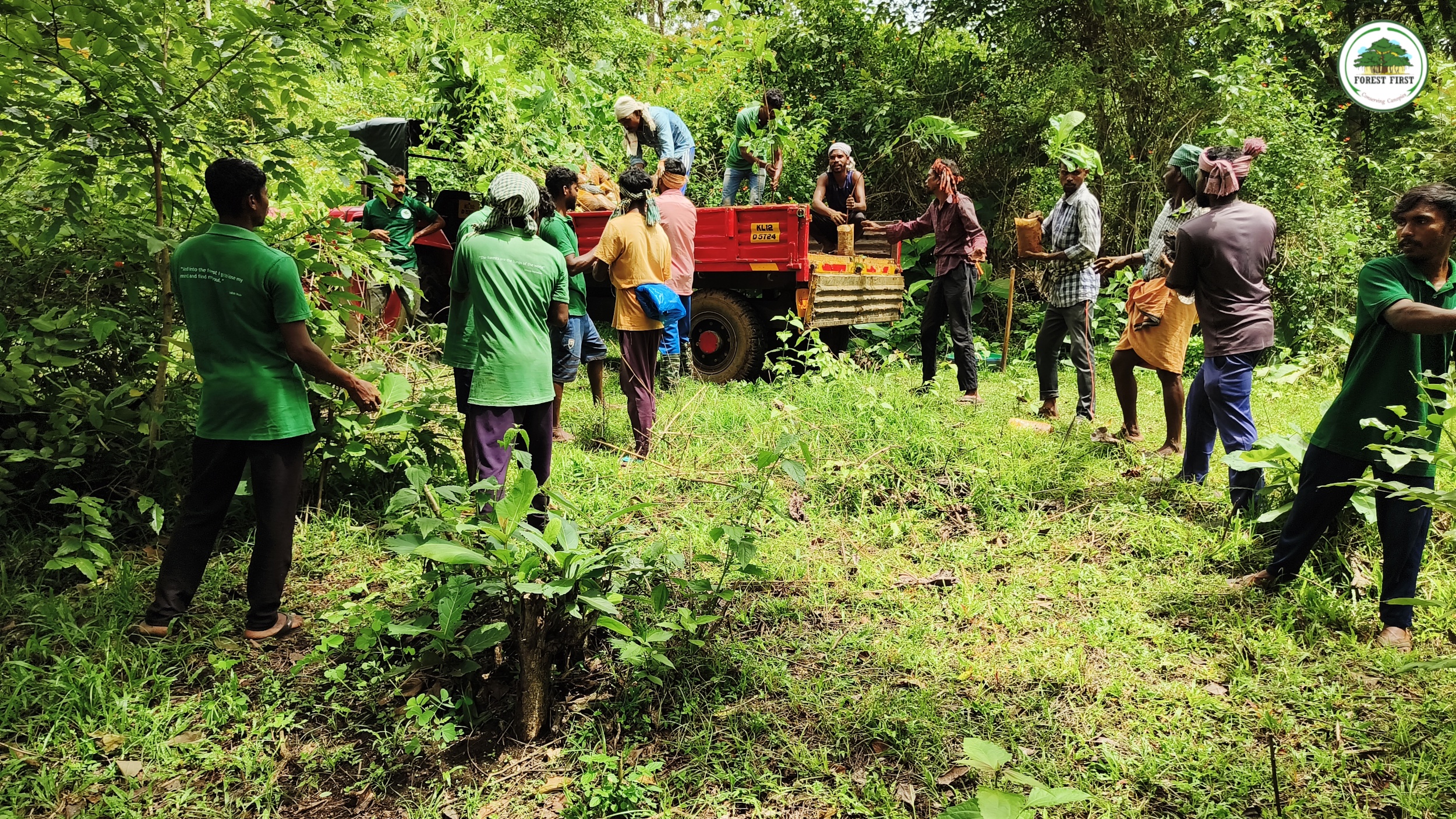
“Restorers” Unloading Native Saplings. Credit: Forest First Samithi
With over 560 acres of degraded habitat already under restoration and formal partnerships with state forest departments for thousands more, Forest First Samithi has created a scalable blueprint for rewilding. Their 12-month cyclical approach, from monsoon planting to summer fire monitoring, ensures year-round care for the landscape. By marrying ecological science with deep community partnership, they are sowing the seeds – literally – for a resilient and vibrant Western Ghats for generations to come.
Learn more about their inspiring work and how they put forests first!
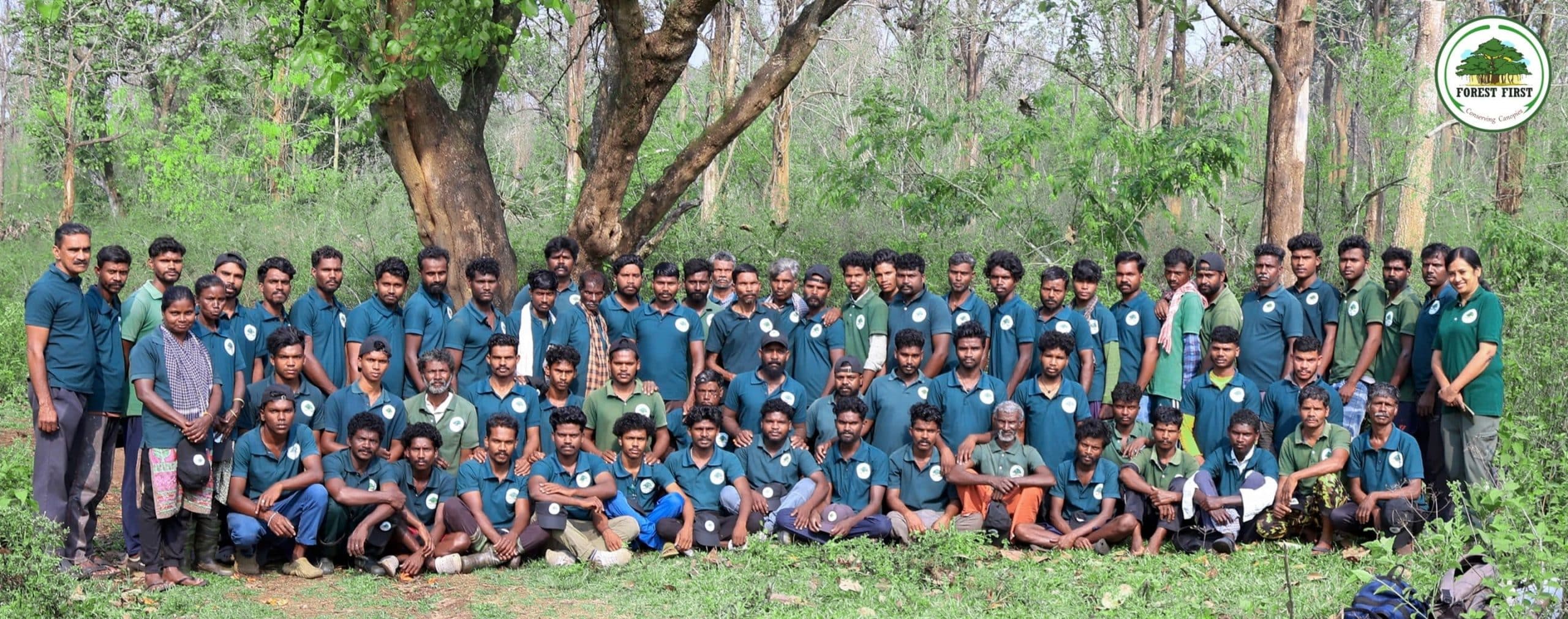
Forest First Samithi Team, March 2025. Credit: Forest First Samithi