
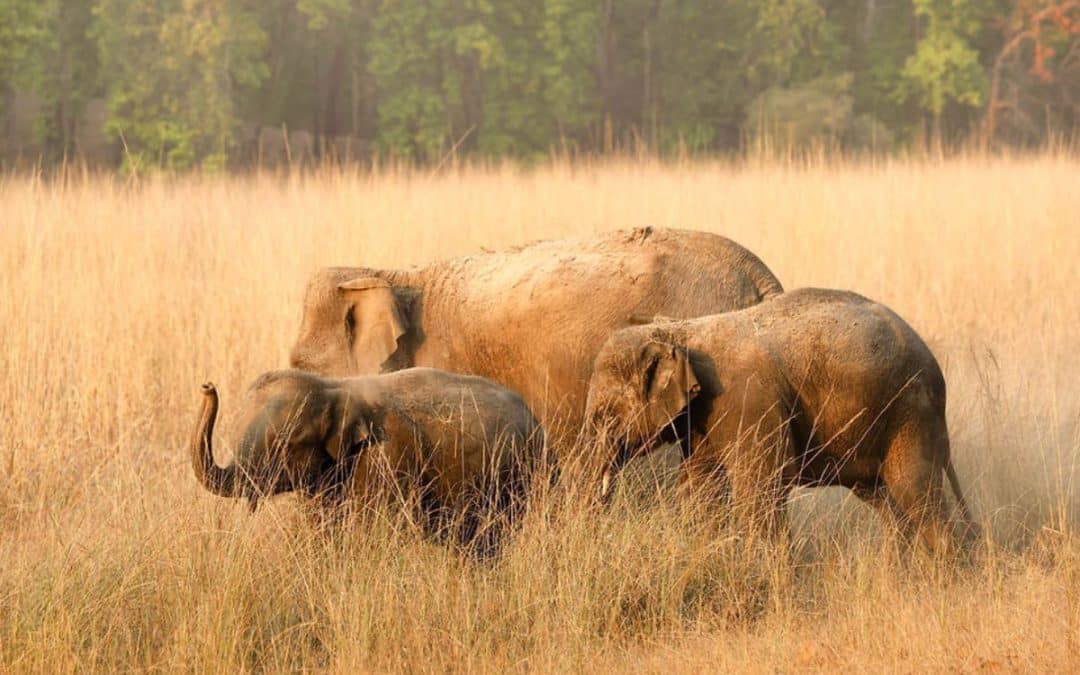
Asian Elephants. Credit: WRCS
The Wildlife Research and Conservation Society (WRCS) in India fosters human-wildlife harmony through community-based solutions. In areas of human-elephant conflict, they use low-cost methods like early alerts, chilli deterrents, and income-generating beehive fences. WRCS also conducts critical ecological research on the endangered Forest Owlet, involving local communities to protect nesting sites. They champion the reforestation of private MÄlki forests in the Western Ghats for connectivity, livelihoods, and climate benefits. Finally, WRCS promotes citizen science, organizing large-scale events like the Ujani Waterbird Count to monitor avian biodiversity.
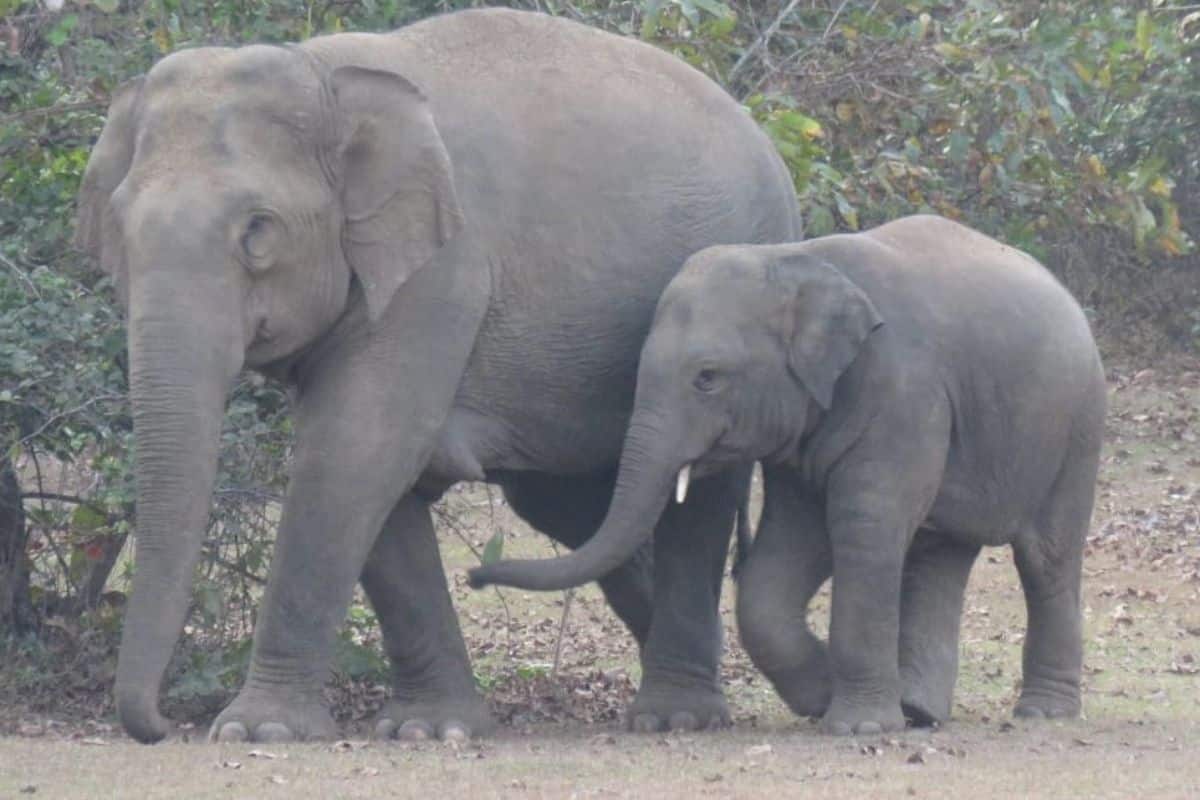
Majestic Asian Elephants. Credit: WRCS
The Global Rewilding Alliance is delighted to spotlight our Alliance Partner Wildlife Research and Conservation Society (WRCS). Based in Pune, India, WRCS brings two decades of experience in strengthening harmony between local communities and India’s wildlife populations through sustainable solutions.
Their work aligns with the Alliance’s vision of facilitating a future where people and wildlife thrive side by side, recognising that the successful preservation of biodiversity is intrinsically linked to flourishing human livelihoods. WRCS’s comprehensive project portfolio spans some of India’s most critical landscapes, ensuring a robust and pragmatic approach to nature recovery across multiple fronts.
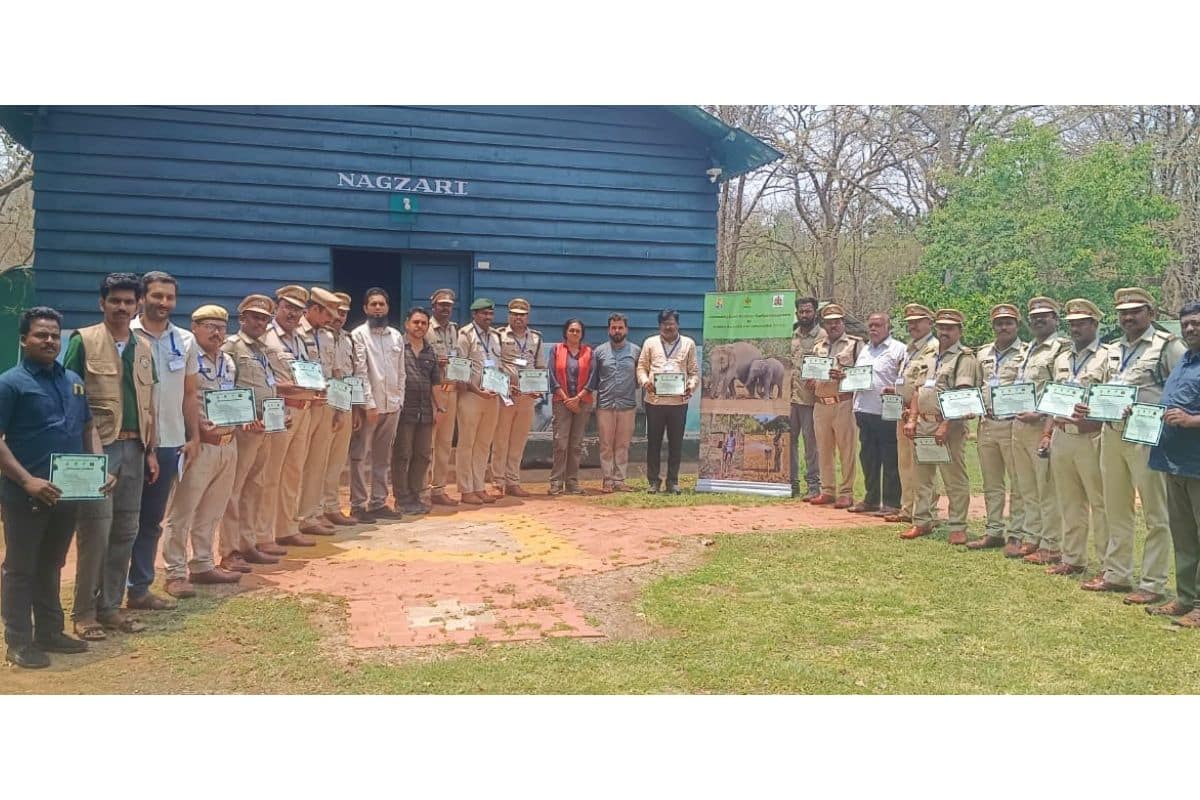
Training workshop for frontline staff. Credit: WRCS
Creating Pathways to Coexistence with Elephants
WRCS’s extensive work focuses on promoting peaceful coexistence, particularly in landscapes marked by human-elephant interactions in Karnataka and Madhya Pradesh. Their method involves low-cost, community-based solutions to promote healthy interactions with wildlife.
For those of us who have not had the opportunity to live alongside these giants, it is worth highlighting that, as with most co-living, it is not all easy and harmonious. Wild elephants are known for ‘crop-raiding’ unless warded off with friendly preventions.
WRCS is focusing on reviving traditional crop protections measures such as night guarding in addition to a few innovative techniques including the early alert system, chilly-based deterrents, audio-visual systems and beehive fence, an eco-friendly barrier using the Asian Elephant’s natural aversion to Bees, which simultaneously offers farmers a positive source of income through honey production (some might call that a win-win-win!).
The commitment to local safety is supported by issuing real-time SMS alerts to farmers, successfully warning them of wild elephant activity. This resulted in 13,110 alerts being distributed in North Kanara in 2024-25 alone.
Furthermore, WRCS champions the planting of alternative crops such as lemon, garlic, and chillies to serve as sustainable, natural bio-barriers around vulnerable paddy and maize fields. They empower local women by developing Elephant-themed handicraft livelihood initiatives, actively fostering positive perceptions of Elephants within communities.
WRCS actively conducts training workshops with government bodies for Forest Department staff in various states, strengthening capacity for conflict mitigation across diverse landscapes; all of which encourage everyone to share in the journey towards coexistence.
Protecting Central India’s Feathered Enigma: the Forest Owlet
A cornerstone of WRCS’s ecological research is the impactful project focused on the endangered Forest Owlet (Athene blewitti), India’s sole mainland endemic Owl species. This project aims to develop a holistic restoration strategy that successfully balances the birds’ ecological needs with sustainable resource use in Central India. Working across fragmented habitats in districts such as Khandwa and Burhanpur in Madhya Pradesh, and the Melghat Tiger Reserve in Maharashtra, WRCS monitors Owl populations and assesses movement patterns using advanced tools like radio telemetry.
Scientific efforts are integrated with strong community engagement, wherein workshops are organised in the Khandwa and Burhanpur districts to encourage local leaders and forest officers to protect trees that contain nesting cavities and minimise disturbances, promoting a shared vision for the protection of the Forest Owlet through initiatives like the creation of the “Dooda Mitra” group.
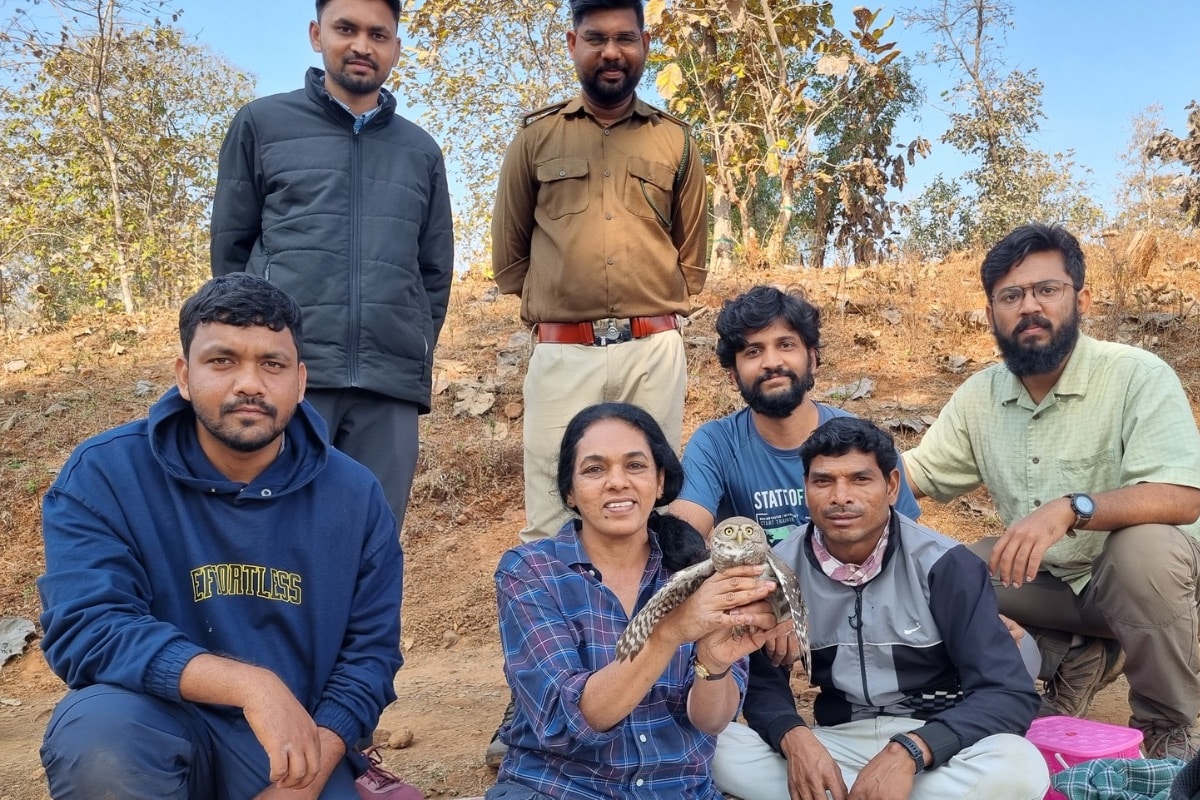
WRCS Director, Prachi Mehta, holding a Forest Owlet for installing a radio telemetry tag. Credit: WRCS
Nurturing Mālki Forests for Connectivity, Livelihood and Climate Change in Maharashtra
WRCS champions the recovery of forest connectivity through its vital Reforestation of Private Forests project centered within the Koyna-Chandoli corridor, which is part of the Western Ghats. This program targets private forests, locally known as Mālki forests, which are crucial for vital ecosystem services, including soil restoration and regulating watershed runoff. WRCS is actively promoting sustainable forest management in collaboration with local villages in the Satara District, covering a vast area of 9,300 hectares across 18 villages, of which 55% is private forest.
The project involves planting native trees on degraded lands with the help of local communities, positioning it as an income-generating activity that delivers tangible benefits for the people while strengthening connectivity for wildlife. The project will deliver substantial climate resilience benefits.
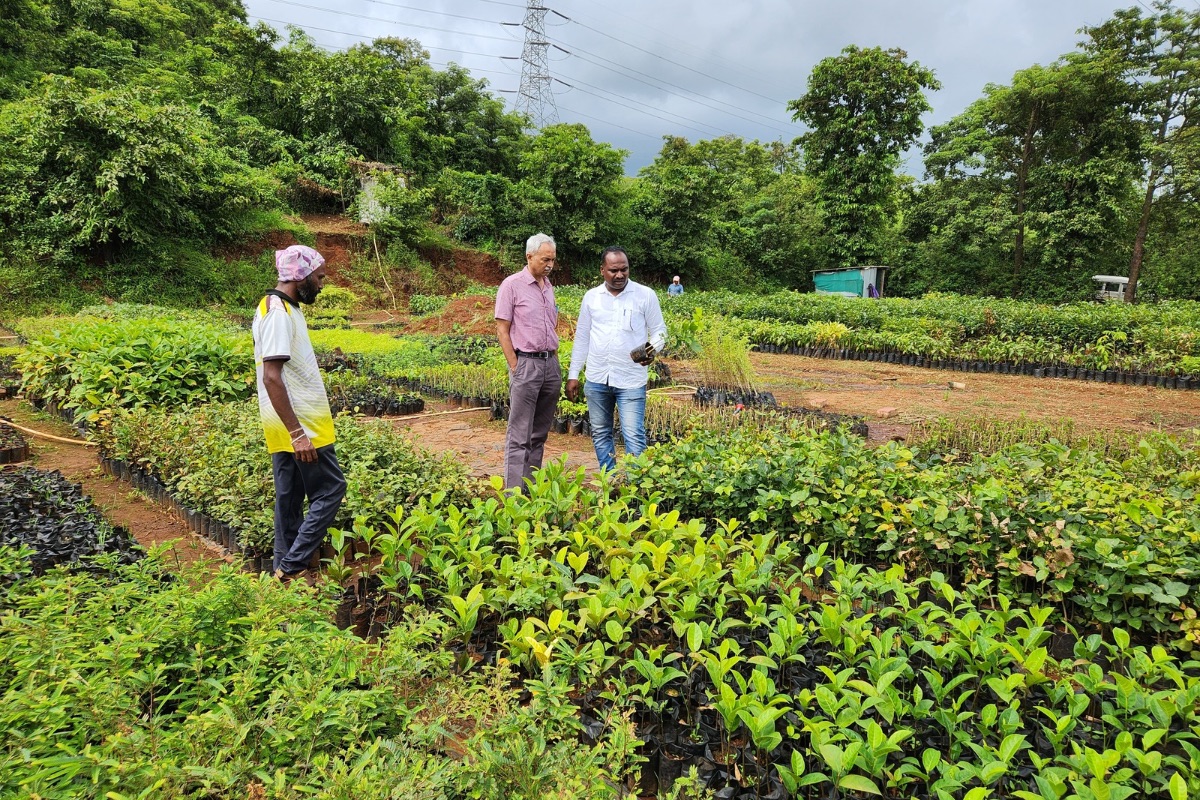
WRCS Director, Jayant Kulkarni, at a native plant nursery in Rasati village, Koynanagar. Credit: WRCS
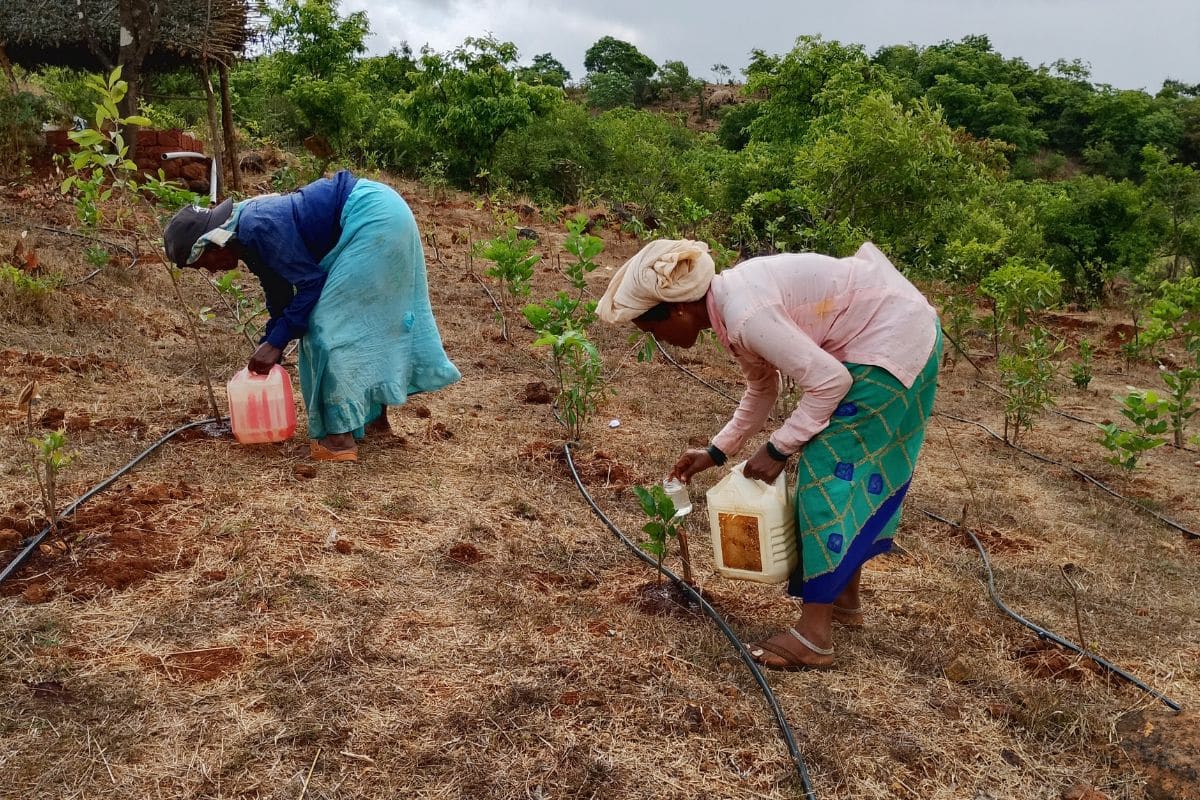
Application of organic fertilizers to plants. Credit: WRCS
Nurturing Mālki Forests for Connectivity, Livelihood and Climate Change in Maharashtra
WRCS champions the recovery of forest connectivity through its vital Reforestation of Private Forests project centered within the Koyna-Chandoli corridor, which is part of the Western Ghats. This program targets private forests, locally known as Mālki forests, which are crucial for vital ecosystem services, including soil restoration and regulating watershed runoff. WRCS is actively promoting sustainable forest management in collaboration with local villages in the Satara District, covering a vast area of 9,300 hectares across 18 villages, of which 55% is private forest.
The project involves planting native trees on degraded lands with the help of local communities, positioning it as an income-generating activity that delivers tangible benefits for the people while strengthening connectivity for wildlife. The project will deliver substantial climate resilience benefits.
Census by the Community in the Ujani Wetland
The Ujani Wetland Project leverages powerful citizen science initiatives to monitor and understand avian biodiversity at the Ujani Reservoir. Working closely with the Maharashtra Forest Department, WRCS organises a large-scale participatory event called the Ujani Waterbird Count.
These initiatives yield invaluable data; for instance, the March 2024 count covered 13 locations and documented over 20,000 individual birds belonging to 137 species. This collaborative methodology is pivotal in bridging the gap between scientific endeavors and local society, empowering citizens to connect deeply with the process of nature recovery.
The Global Rewilding Alliance celebrates WRCS’s model of fusing rigorous science with heartfelt community partnership to drive nature recovery across India. Their experience and dedication provide immense value to our growing global network, reaffirming our collective commitment to a wilder, healthier future for all.
Learn more about the full range of their inspiring work on their website.
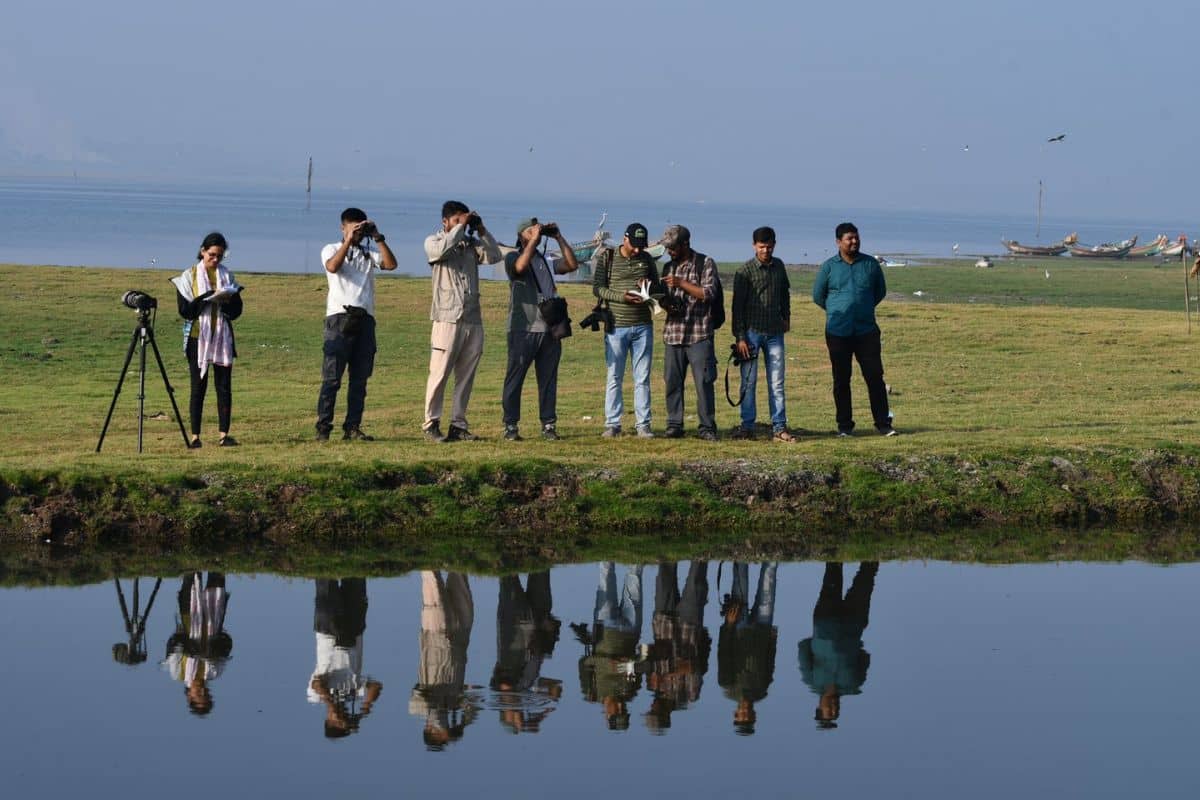
Bird count at Ujani wetland, March 2025, Credit: WRCS