
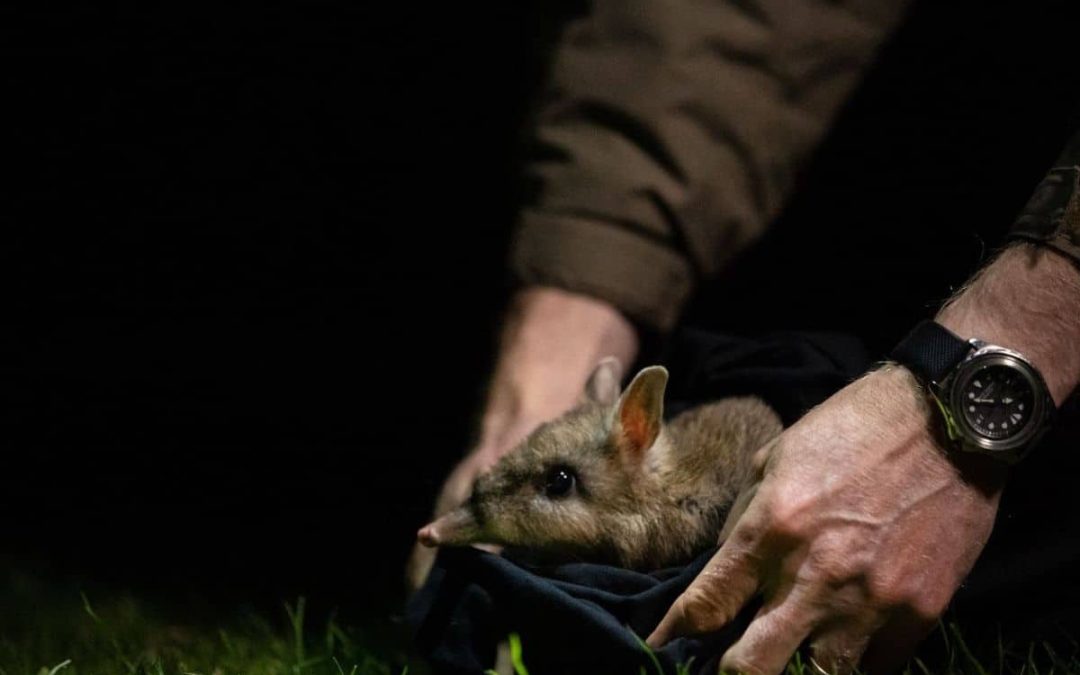
Eastern barred bandicoot. Credits: Phillip Island Nature Parks
Phillip Island Nature Parks, a new Alliance Partner located in Australia, is dedicated to a successful community-led rewilding effort focused on healing the island’s biodiversity and “keeping Country strong,” as described by the Traditional Owners, the Bunurong. This ambitious project aims to restore lost ecological functions by reintroducing ecosystem engineers and sentinel species like the Eastern barred bandicoot and Bush stone-curlew, supported by an integrated approach of science, technology, and strong community action, including citizen science, volunteering, and nature-led tourism. The core of this transformation is a deep partnership with local communities and the Bunurong Land Council, ensuring that the healing of the land honors deep connections between people and place.
Keeping Country Strong
Just off the coast of southern Australia, the world’s largest colony of Little Penguins has settled; populations are flourishing in the safety of their island home. Phillip Island celebrates this successful community-led rewilding story, driven by the vision and work of Phillip Island Nature Parks – our newest Alliance Partner.

Phillip Island is home to the largest little penguin colony in the world. Visitors can experience the magic of watching these amazing seabirds waddle home from the ocean to their burrows any night of the year from viewing platforms and boardwalks. Credits: Phillip Island Nature Parks
Striving to make this home as welcoming as possible for all of its wild inhabitants and communities is the focus for their ambitious project. Healing and reviving the island’s biodiversity and, as the Traditional Owners, Bunurong say, ‘keeping Country strong’.
Restoring the heartbeat of the island requires a bold rewilding mission – and Phillip Island Nature Parks is on it! They’re reviving the island’s lost ecological functions by bringing back ecosystem engineers and sentinel species—from the Eastern barred bandicoot to migratory Short-tailed shearwaters, and even the elusive Bush stone-curlew. These threatened species don’t just represent biodiversity—they help the entire landscape function as a living, breathing system. And this is what enables the ecosystems to provide the full set of ecosystem services we all depend on, from clean water to carbon drawdown.

PINP’s team monitor the Critically Endangered fairy tern on Phillip Island (Milawul). Rejuvenation of their habitat has taken place through the partnership of the Bunurong Land Council Aboriginal Corporation and with the support of the Department of Environment, Land, Water and Planning Nature Fund, the Penguin Foundation and Melbourne Water. Fairy terns nest above the high-tide mark on sandy beaches, laying one or two speckled eggs in shallow scrapes. Credits: Phillip Island Nature Parks
Protecting Species and Habitats
Delve deeper into their 2024 Threatened Species Report to see the energy that goes into each of these projects and the intricate links of critical habitat restoration – such as Wetlands of special importance (RAMSAR sites) – and strong healthy wildlife populations.
The protection of these species and the habitats they depend on is possible thanks to an approach that integrates science, technology, and community action. For example, using AI to identify invasive species or putting GPS trackers on domestic cats to understand their roaming patterns—cats are one of the biggest threats to the island’s wildlife. Furthermore, the Nature Parks supported the the local government to adopt 24hr domestic cat containment, to reduce the feral and stray cat population and the impacts of these predators on the native wildlife populations.

Little Penguins. Photo credit: Phillip Island Nature Parks
People at the Core
Local people are at the core of this transformation. While the island’s population swells in summer due to tourism, Phillip Island has embraced a model of nature-led tourism—where growth fuels ecological restoration. Volunteers serve as custodians to Eastern barred bandicoots, trapping and monitoring populations to support reintroduction efforts. Citizen scientists report sightings and roadkill incidents, assisting with understanding the spread of the population and helping identify collision hotspots to protect vulnerable species. Residents even plant threatened native flora in their own gardens, expanding habitat for pollinators and rare plants.

Bush Stone Curlew. Credits: Phillip Island Nature Parks
Now a proud member of the Global Rewilding Alliance, Phillip Island Nature Parks is showing the world how targeted, inclusive rewilding can revive lost ecosystems, inspire human stewardship, and create thriving futures for people and wildlife alike.