
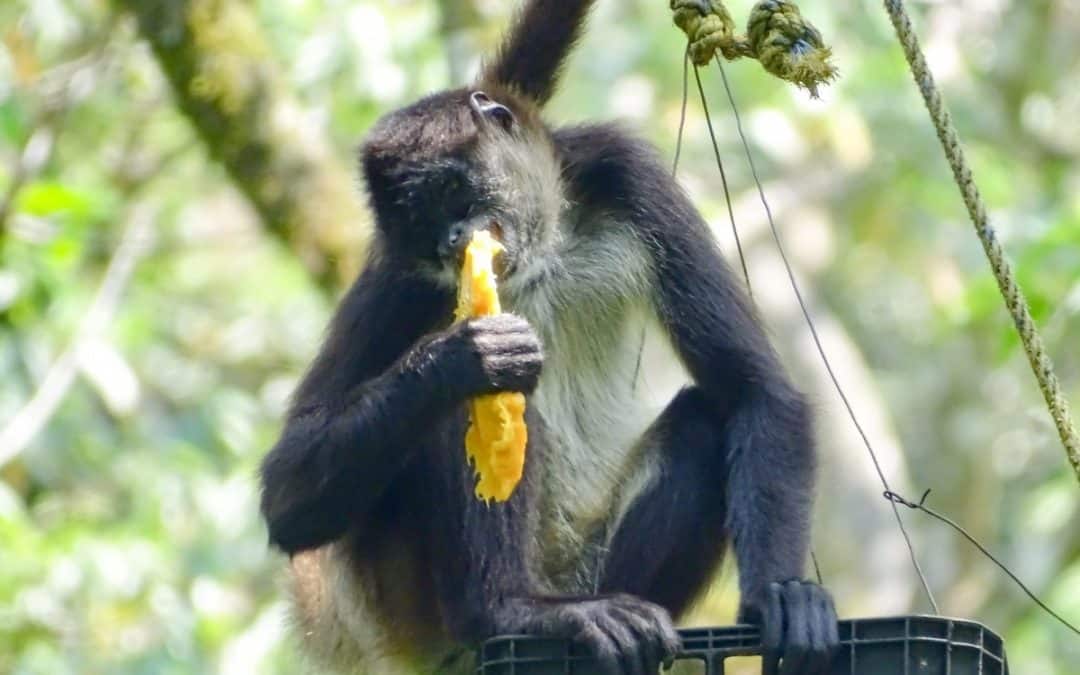
Simona, one of the monkeys in rehabilitation, enjoying a mango. Photo credit: CMRP.
The Centro Mexicano de Rehabilitación de Primates (CMRP) rescues, rehabilitates, and releases endangered primates, including Spider and Howler Monkeys, in Mexico. Facing threats from the illegal pet trade and habitat loss, CMRP guides primates through a rigorous five-to-seven-year recovery process before reintroducing them into the wild. Their efforts have seen successful releases and wild births, supported by deep community partnerships and educational outreach. Additionally, CMRP protects 661.27 hectares in Oaxaca through a carbon credit project, ensuring long-term forest conservation and empowering local communities to steward their land effectively.
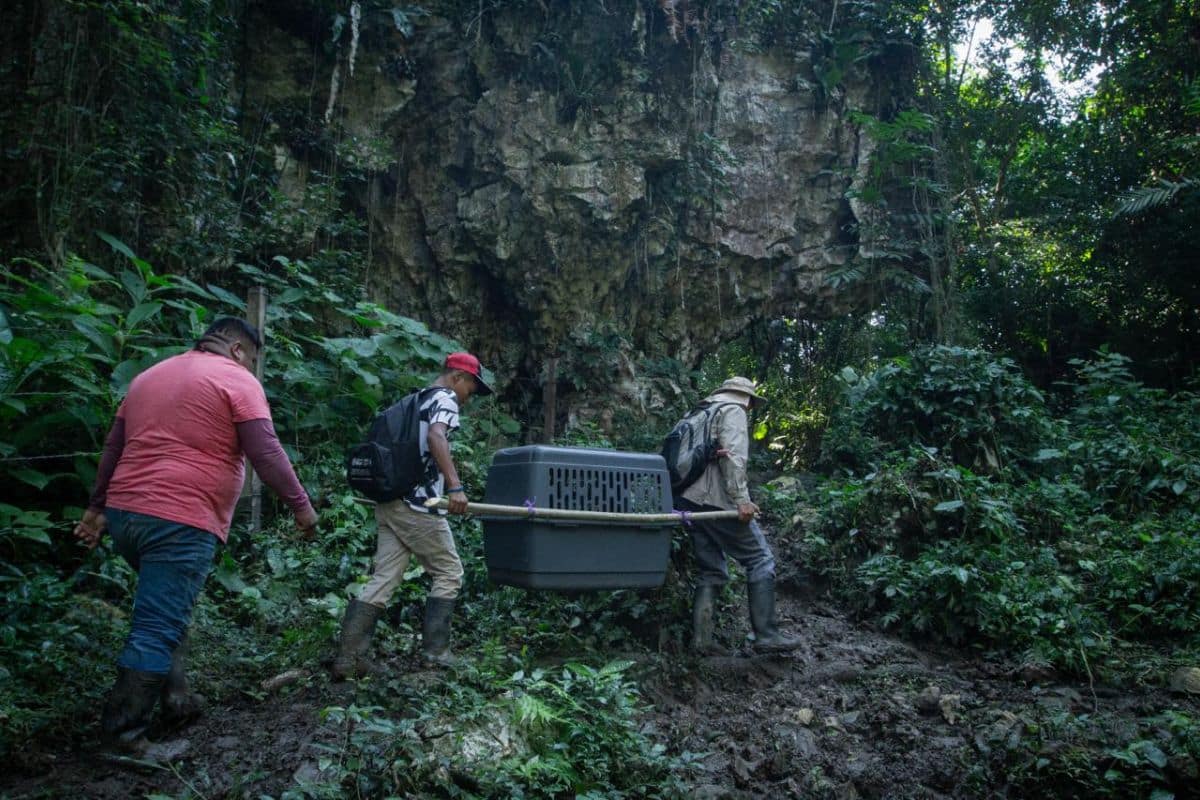
Community members transporting a spider monkey to its new home: an on-site rehabilitation enclosure in the middle of the forest of Nuevo Malzaga, Oaxaca. Photo credit: CMRP.
Humans are part of one vast, interconnected web of life.
The interconnectedness that we share with wild animals becomes more tangible in working with a species similar to us in so many ways – primates. Our Alliance Partner, Centro Mexicano de Rehabilitación de Primates (CMRP), works closely with primate species advocating for their protection and raising awareness around coexistence. This close-knit team joins forces towards the same mission: to rescue, rehabilitate, and (whenever possible) release primates, while also raising awareness so fewer of them end up in danger.
Rehabilitation of Mexico’s Monkeys with Science and Heart
In Mexico, three incredible primate species share the forests with us: Ateles geoffroyi (the endangered Geoffroy’s Spider Monkey), Alouatta pigra, and Alouatta palliata (both endangered Howler Monkeys).
Howler Monkeys (both the Yucatán black howler and the Mantled howler monkey) are famous for their powerful, deep roars that travel miles, filling the canopy with noise. Spider Monkeys are known for their long limbs and prehensile tails, they are agile canopy-dwellers.
All three face mounting threats from hunting and illegal trade, to habitat fragmentation, and being taken as pets in cities. These threats drive the mission of CMRP’s team to give these primates the chance to return to a life that is truly theirs: wild, free, and safe.
CMRP guides each rescued Monkey through a long, careful journey:
rescue → rehabilitation → reintroduction.
Many primates begin their rehabilitation story in urban areas, confiscated from illegal trade or surrendered after living as pets. From there, the team begins the slow and patient work of recovery at their center in Nuevo Malzaga, Oaxaca. Reintroductions happen only when the primates are physically, socially, and behaviorally ready; a process that often takes five to seven years.
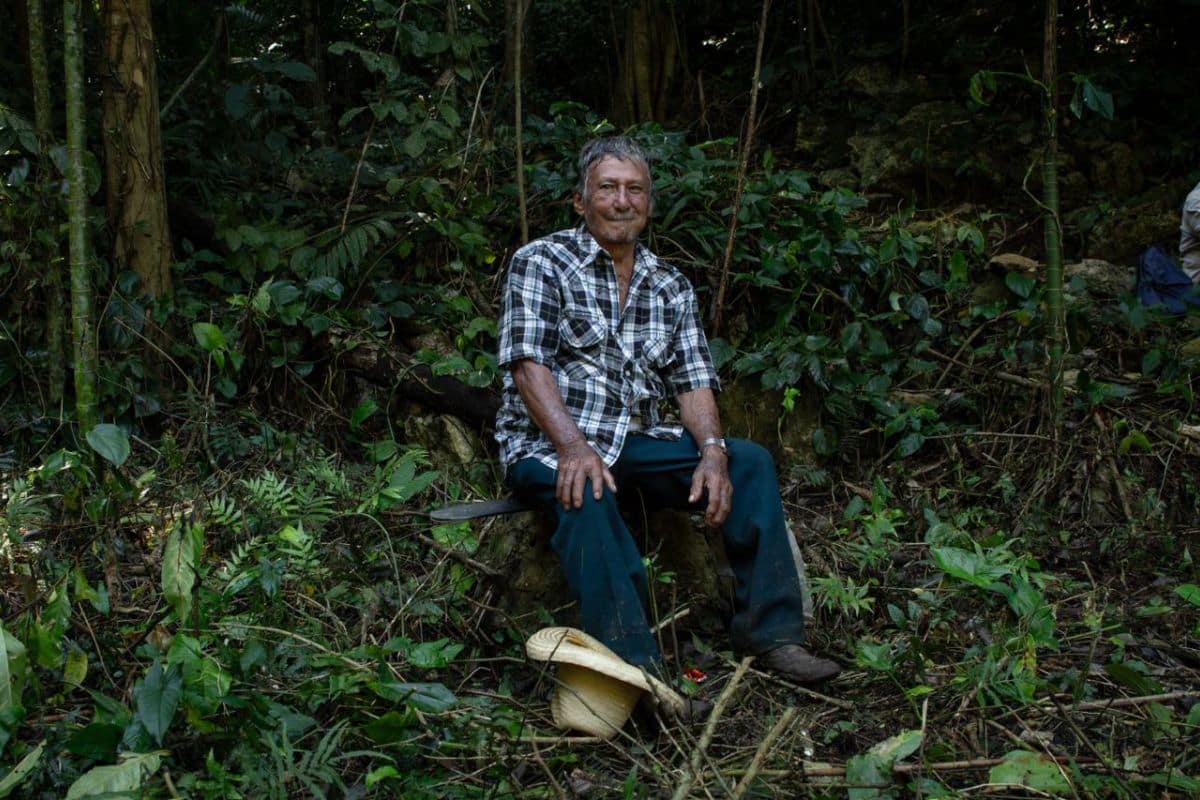
Credit: CMRP
Every primate returned to the forest helps revive an entire ecosystem—dispersing seeds, shaping habitats (quality of habitats), and keeping ecological networks alive. The team has calculated that the presence of just one Monkey can influence the reforestation of 500 trees per year per hectare. They are also intricately linked to the local folklore creating a strong bond with local communities.
Bringing the Howl and Swing Back to Mexico: Rewilding Successes
Last year, CMRP celebrated its first-ever complete rehabilitation and release, returning two female Spider Monkeys (Ateles geoffroyi) to the wild. It was a milestone for the organization, proving that years of patient care can restore freedom.
Now the team is preparing for its most ambitious release yet:
Seven Spider Monkeys on track for a soft release in Oaxaca. A gradual, supported reintroduction method ideal for individuals recovering from the illegal trade.
CMRP has also completed three Howler Monkey releases, despite Howlers being more fragile after captivity. Happily, two of the released females have already reproduced, welcoming three babies into the wild. These births celebrate the survival and healthy adaptation of the individuals.
Community Involvement: A Desire to See the Forest Alive
Releasing primates isn’t something CMRP does alone. Their work is deeply tied to local communities who become guardians of the landscapes where Monkeys are returned. These partnerships grow slowly, built on trust, shared values, and a collective desire to see forests full of life again.
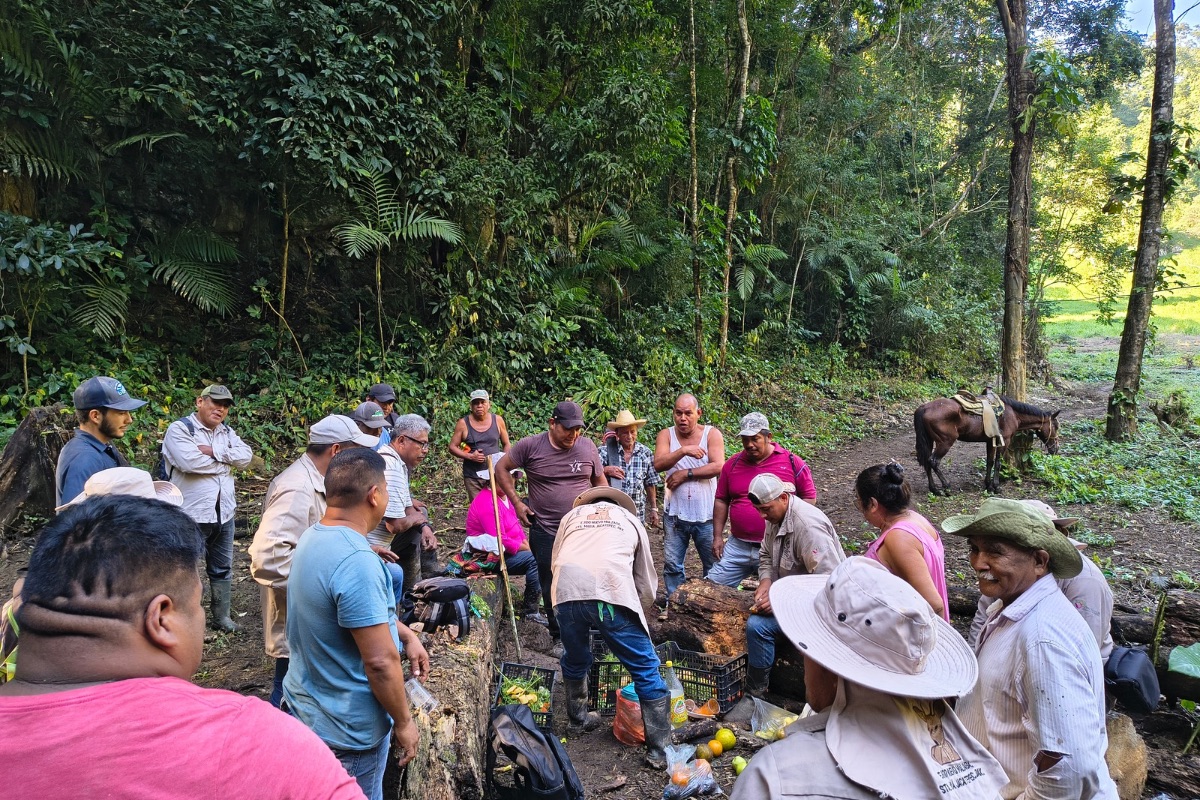
The community is celebrating the return of the Spider Monkeys to their communal lands, which they maintain with great effort and ecological and social awareness as advc (areas voluntarily dedicated to conservation). Photo credit: CMRP.
CMRP is set on a long-term vision. In order to reduce the multitude of threats faced by these species, they know that raising awareness is crucial. To interweave this awareness with existing scientific knowledge is their approach, they hold educational events as part of their strategy, with storytelling at the core.
A Forest Protected for the Long Term
Five years ago, CMRP launched a forward-thinking carbon credit project in partnership with Nat5Live and local communities. Together, they secured 661.27 hectares in Ejido Nuevo Malzaga (Oaxaca). The communities themselves help determine how the land is protected and how carbon income is reinvested, making the project both environmentally and socially sustainable.
Healthy, self-sustaining ecosystems draw down more carbon, strengthening climate resilience, and empowering local communities to steward their land in reciprocity and reconnect with their vital role in the natural world.
CMRP is demonstrating that meaningful change is possible and lasting. This 30-year commitment to restoring primate populations and the forests that sustain them reveals just how deeply intertwined our web of life truly is.
We are proud to have them in our Alliance!
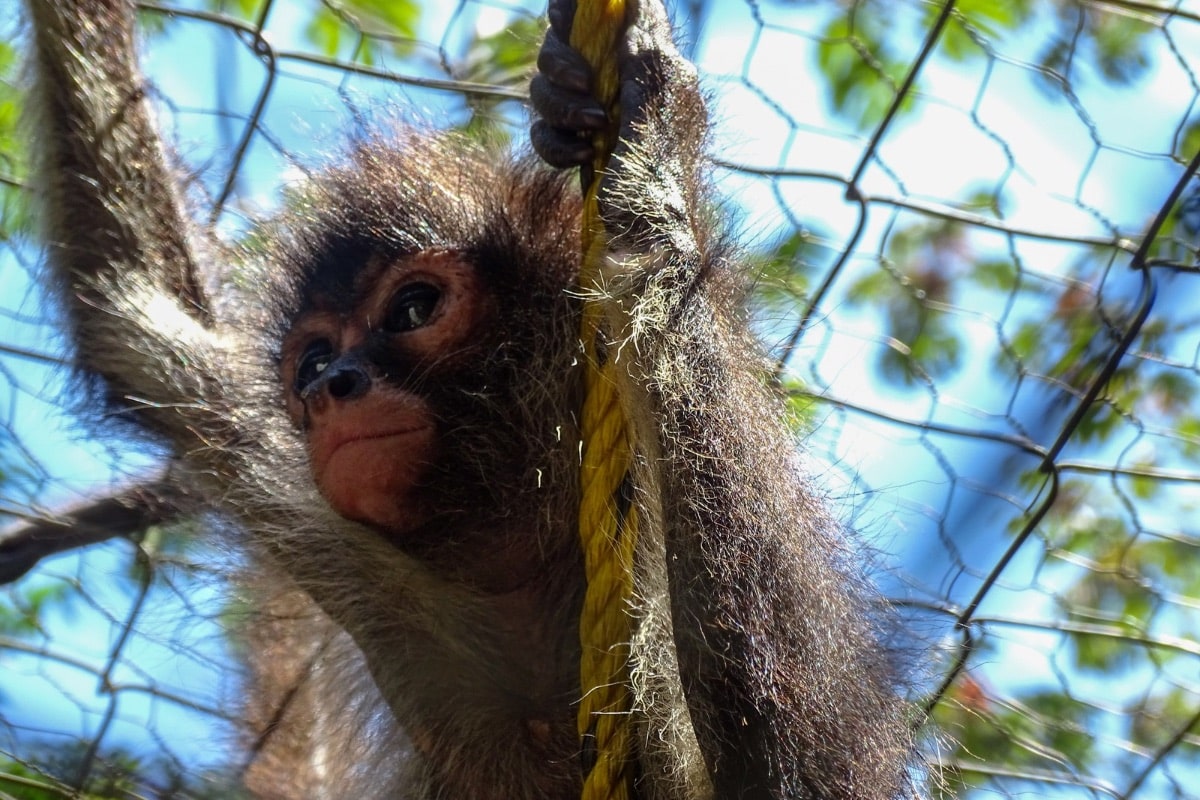
Rescued infant Monkey under CMRP’s care. Credit: CMRP