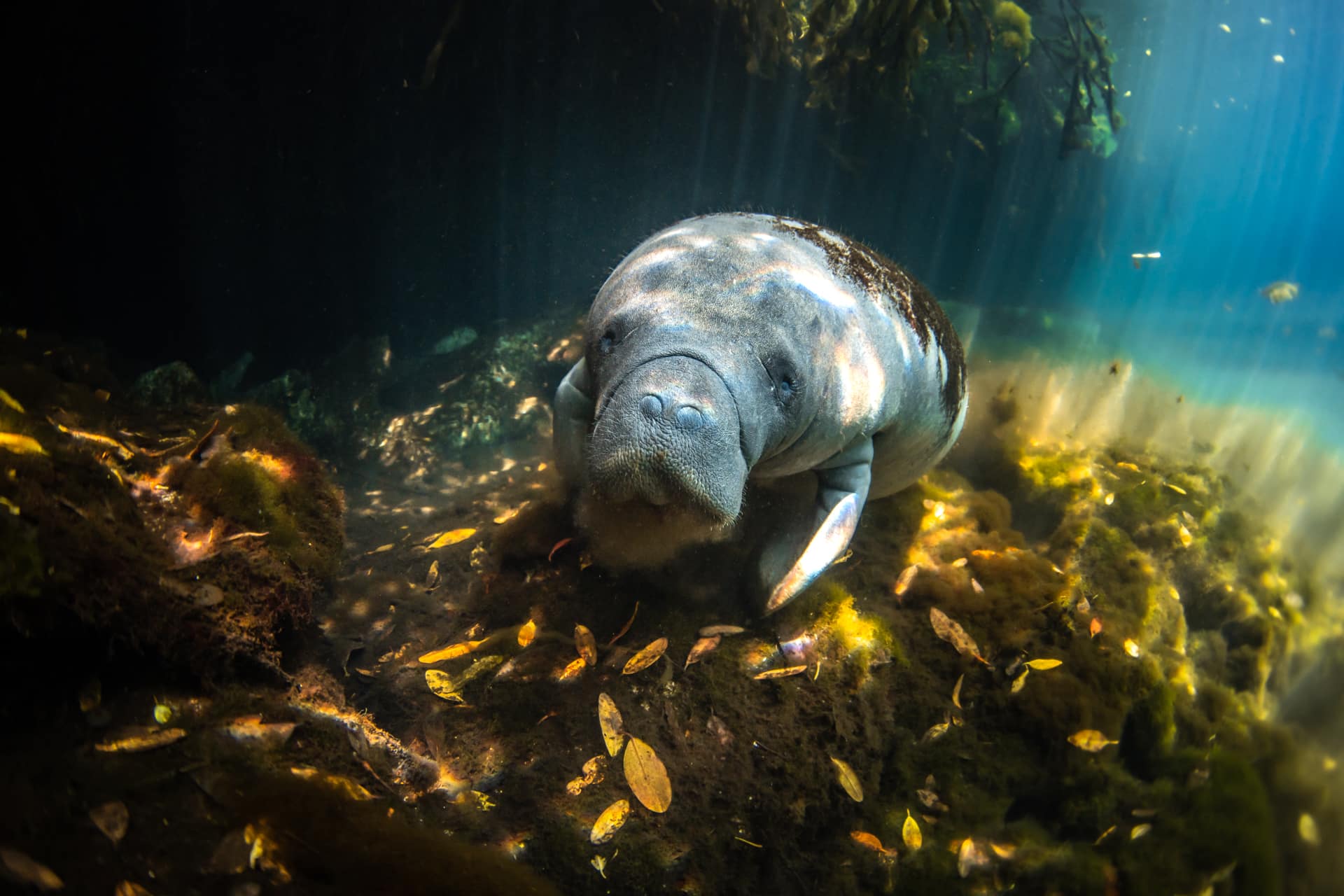
Two well-known facts: the ocean is responsible for an estimated one in two breaths, and is the planet’s largest carbon sink. But there is a less well-known fact: marine wildlife drive these processes. From Sharks, Whales and Dugongs, to Crabs and Mesopelagic Fish, an ocean full of life is our greatest climate partner.
Today, on World Ocean Day, the Global Rewilding Alliance launches a new report “Fisheries and Marine Carbon Processes in the Context of Climate Change”, by author Martin Miquel Pederson, produced in collaboration with the International Institute for Sustainable Development (IISD), which examines the relationship between marine ecosystems, industrial fishing, and the ocean’s role as a natural carbon sink.
Access the full report “Fisheries and Marine Carbon Processes in the Context of Climate Change“. A collection of case studies from among Alliance Partners engaging in ecosystem-based marine management, showing practical examples of initiatives taken to curb the negative effects of the fishing industry, is also available. Download: Case studies: Fisheries and Marin Carbon Processes in the Context of Climate Change.
Fish and the Biological Carbon Pump
The report lays out how the ocean is one of Earth’s largest natural carbon stores, having absorbed a substantial share of greenhouse gas emissions since the Industrial Revolution. Through its depth, circulation patterns, and biological processes, the ocean can store carbon for centuries to millennia, helping regulate the global climate system. At the center of this process is the Biological Carbon Pump, through which carbon fixed by phytoplankton at the ocean surface is transferred into deeper waters and marine sediments. While phytoplankton form the basis of this system, growing attention is being given by researchers on the role of marine vertebrates, particularly fish, in facilitating long-term carbon sequestration by mediating carbon fixed at the sea-surface to larger depth, where sequestration times are longer, in some cases reaching millenia.
This contribution, often referred to as “fish carbon”, occurs through ecological interactions such as vertical migration, nutrient transport, the production of sinking fecal pellets, and the natural sinking of carcasses to the deep ocean, which together help transfer carbon into deeper waters.
Research suggests that marine animals may be responsible for more than half of the carbon stored long term in the deep ocean, highlighting the important role fish play in regulating the global climate. Additionally, fish carbon may also take the form of facilitating sequestration in coastal Blue Carbon ecosystems, well known for their high long-term sequestration rates, such as seagrass meadows and mangroves, through trophic cascades and nutrient cycling.
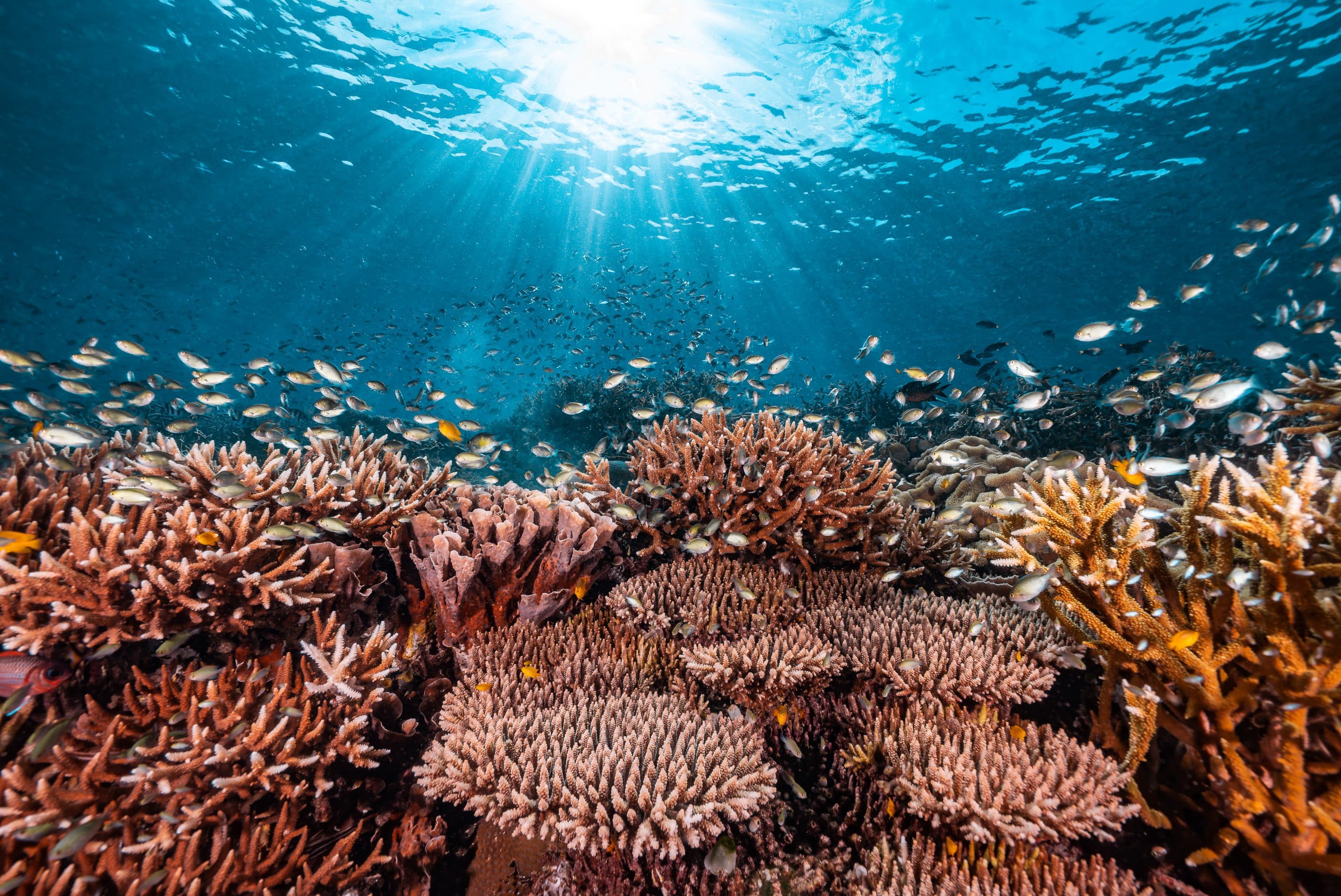
Photo credit: Ocean Image Bank / Noemi Merz
Industrial Fishing and Ecosystem Degradation
Despite these ecosystem services wild fish populations provide, the global fishing industry is operating at historically high levels. While aquaculture now supplies more than half of global aquatic animal production, marine capture fisheries continue to place immense pressure on wild fish populations. Case in point is how around 40% of assessed fish stocks are currently fished at biologically unsustainable levels.
The report showcases how industrial fishing affects far more than targeted fish populations alone. Fishing practices contribute to habitat destruction, disruption of food webs through the systematic removal of large predatory species, and the mortality of non-target species through bycatch. Fishing down the food web, the depletion of spawning aggregations, and destructive fishing methods such as bottom trawling alter ecosystems functioning across entire marine environments, putting the ecosystem services that fish provide, such as fish carbon processes, at risk.
Thus, intensive fishing may undermine the Biological Carbon Pump itself. As fish biomass declines, fewer animals remain to transport carbon into deeper waters through feeding, migration, defecation, and natural mortality. The extraction of large predatory fish additionally alters trophic structures and ecosystem balance, potentially reducing overall carbon sequestration potential.
Climate Change as a Multiplier of Marine Pressures
At the same time, marine ecosystems are increasingly being affected by climate change, which acts as a multiplier of existing pressures caused by industrial fishing. Ocean warming, acidification, marine heatwaves, deoxygenation, and changing ocean circulation patterns are altering marine habitats and reshaping fish populations across the globe. Many species are shifting poleward or into deeper waters in search of suitable environmental conditions, while warming waters and changing food availability are also associated with reductions in fish body size and ecosystem productivity. Together, these pressures further destabilize marine ecosystems already affected by overexploitation and habitat degradation.
Climate change also threatens the functioning of the Biological Carbon Pump itself. Rising ocean temperatures and increasing stratification reduce ocean mixing and nutrient circulation, potentially weakening the transfer of carbon into deeper waters. At the same time, declining fish biomass caused by overfishing may reduce the role marine animals play in transporting and storing carbon at depth. These overlapping pressures raise concerns not only for marine biodiversity and fisheries productivity, but also for the ocean’s long-term capacity to function as a climate regulator.
The Governance Problem
Nevertheless, fisheries governance frameworks have historically focused primarily on maximizing and sustaining extractable yields, often treating fish as economic resources rather than as integral components of ecosystem functioning. Much of global fisheries governance remains structurally oriented toward extraction, with policy frameworks frequently prioritizing short-term economic returns and competition over ecosystem resilience and long-term ecological stability.
This dynamic is reinforced by what has long been described as the “race for fish”, where competition between fishing actors incentivizes increased extraction before others can access the same resource. Such dynamics often encourage overcapacity, excessive fishing effort, and the continued expansion of industrial fishing even when ecological and economic returns diminish. Harmful fisheries subsidies, particularly fuel and capacity-enhancing subsidies, further intensify these pressures by enabling industrial fleets to continue operating in areas and at scales that may otherwise not be economically viable.
The report also highlights how certain fishing methods, particularly bottom trawling, generate disproportionate ecological impacts through seabed disturbance, bycatch, habitat destruction, and the resuspension of carbon-rich marine sediments. At the same time, illegal, unreported, and unregulated fishing further undermines conservation efforts and weakens fisheries management by obscuring true extraction levels and increasing pressure on vulnerable marine species and ecosystems.
Rethinking fisheries governance
At the policy level, however, the report also identifies pathways toward more ecosystem-based and climate-conscious fisheries governance. Marine Protected Areas (MPAs) and Other Effective area-based Conservation Measures can support the recovery of fish populations, protect carbon-rich habitats, and strengthen marine ecosystem resilience when effectively designed and enforced. Similarly, ecosystem-based fisheries management approaches, which account for food webs, habitat interactions, and ecosystem functioning rather than focusing solely on target species, may help better integrate biodiversity and climate considerations into fisheries governance. Such measures favoring increases in fish abundance not only benefit the ecosystem services fish provide, such as mediating carbon, but may also benefit fishermen themselves due to increased catches at lower effort.
Alternative governance structures may also help address the race for fish itself. Community-based fisheries management systems, territorial use rights, and other forms of property rights and co-management can create stronger incentives for long-term stewardship by linking the health of marine ecosystems to the long-term interests of fishing communities. Such approaches may help reduce destructive competition while supporting more stable fish populations, healthier ecosystems, and the ecosystem services they provide, including marine carbon sequestration.
Rewilding the Sea
The degradation of marine ecosystems caused by industrial fishing and climate change highlights the importance of rewilding approaches in the ocean. Restoring abundant fish populations, rebuilding trophic interactions, and allowing marine ecosystems to recover their ecological functioning can help strengthen the ecosystem services fish provide, including nutrient cycling, ecosystem resilience, and long-term carbon sequestration. For the Global Rewilding Alliance and its partners, this reinforces the relevance of marine rewilding not only for biodiversity recovery, but also for supporting the ocean’s role as a climate regulator and restoring healthier relationships between people and marine ecosystems.
Alongside the report, the Alliance is also releasing a collection of case studies from Alliance Partners engaged in ecosystem-based marine management and marine rewilding initiatives.
Chumbe Island, Marine Conservation Cambodia, and others: successful solutions at play
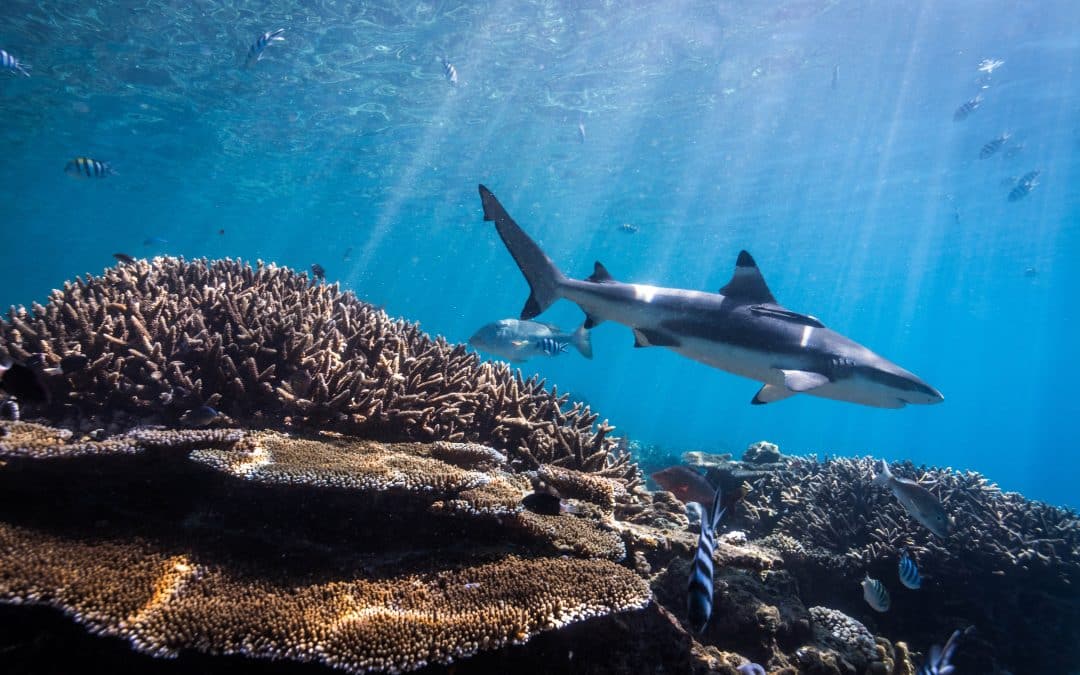
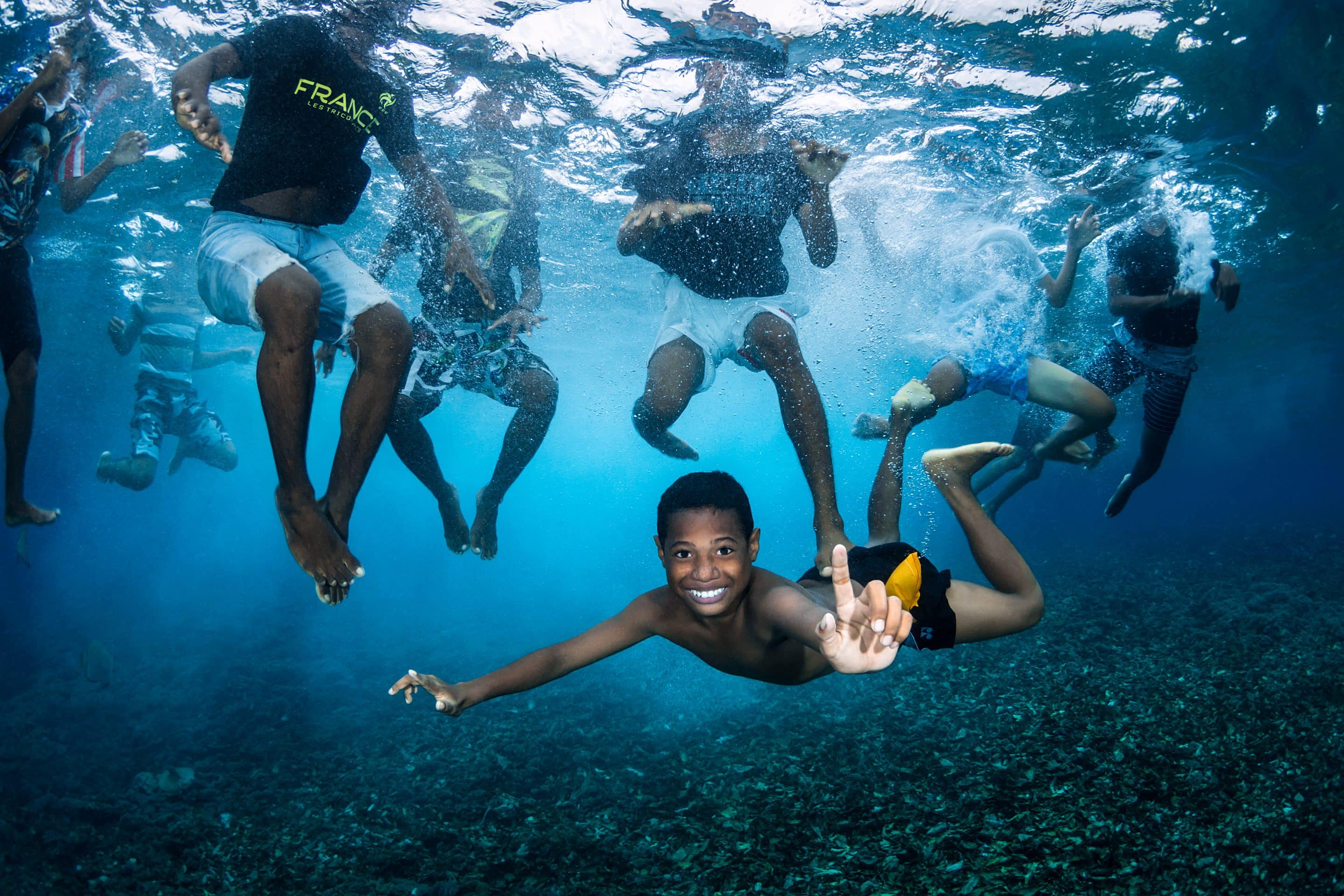
Off the sun-drenched coast of Zanzibar, where coral reefs once teemed with life before decades of overexploitation took their toll, a pioneering public-private partnership is returning resilience. In 1994, Chumbe Island Coral Park was gazetted as a fully protected marine sanctuary — one of the first of its kind to be privately managed and entirely self-financing. A single, self-sustaining model, based on ecotourism, conservation, and community education, has led to the return of reef sharks and a near-eightfold increase in fish biomass. Local former fishers now serve as the reef’s most dedicated guardians who bring both local knowledge and long-term commitment. Chumbe has been recognized as a UNEP global laureate for ‘Outstanding Environmental Achievement’, and was recently ranked as the top MPA globally for marine protected area governance effectiveness.
The case studies take us across our blue planet to Canada, England, and Bahrain, demonstrating the solutions in action. When our oceans are given space to recover and marine life thrives once again, the resulting abundance and stability is often reflected in both local communities and our global systems.
These examples showcase practical efforts being undertaken across different marine ecosystems to reduce ecological pressures, support the recovery of marine biodiversity, and promote more resilient and ecologically functional oceans.
Find the full report here, and the collection of case studies here.

About the Author, Martin Miquel Pedersen
Martin Miquel Pedersen holds an MA in Sustainable Societies and Social Change from the University of Geneva and has a background in communication, research, and sustainability. He is particularly interested in environmental policy and how governance frameworks can support effective solutions to the climate and biodiversity crisis. His interests also extend to social sustainability, exploring how environmental and social challenges intersect and how policies can promote both ecological resilience and human well-being. With a background in communications, he enjoys translating complex research and policy discussions into clear, engaging content that can reach a wider audience.