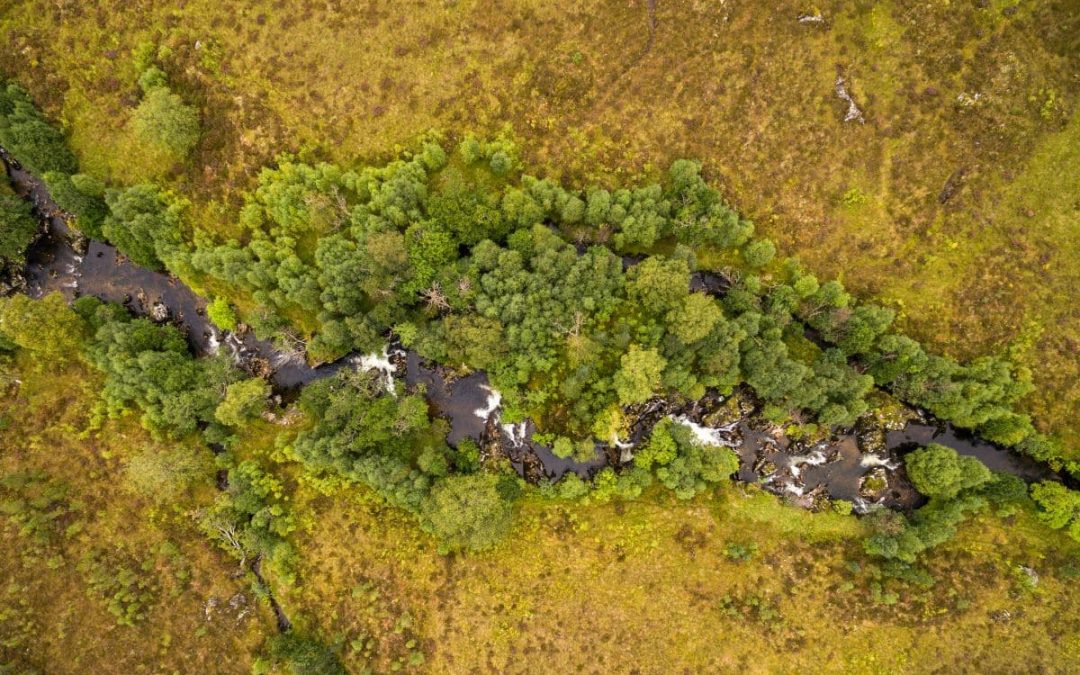
Credits: James Shooter – Scotland The Big Picture
This is a review of Robert Macfarlane’s non-fiction book, Is A River Alive?, exploring the concept of Rights of Nature through the lens of people, language, and rewilding. Nich Magnolfi recounts his reading of Macfarlane’s travels to Ecuador, India, and Canada, highlighting individuals dedicated to protecting rivers and nature.
Is A River Alive? by Robert Macfarlane: people, language and Rights of Nature
In 2022, the hottest summer on record, Robert Macfarlane and a one-hundred strong crowd gathered at the banks of the river Cam, in eastern England, to read aloud a Declaration of the river’s Rights. “Partway through,” writes Robert, “I had to stop speaking. I was overwhelmed by hope and futility. It was a mixture of a potency I’d never experienced before – and it silenced me.”
People, language and voices are at home in Robert’s writing. His exploration of a river’s life is grounded in a root idea – still very much in existence today – that rivers have something to say. Early on in the book he mentions the theme of a speaking landscape in children’s literature. Once, animals, trees and rivers were drawn with speech bubbles, with opinions expressed and feelings acknowledged. Many of these entities would be wise, some sly and others timid – but all would talk.
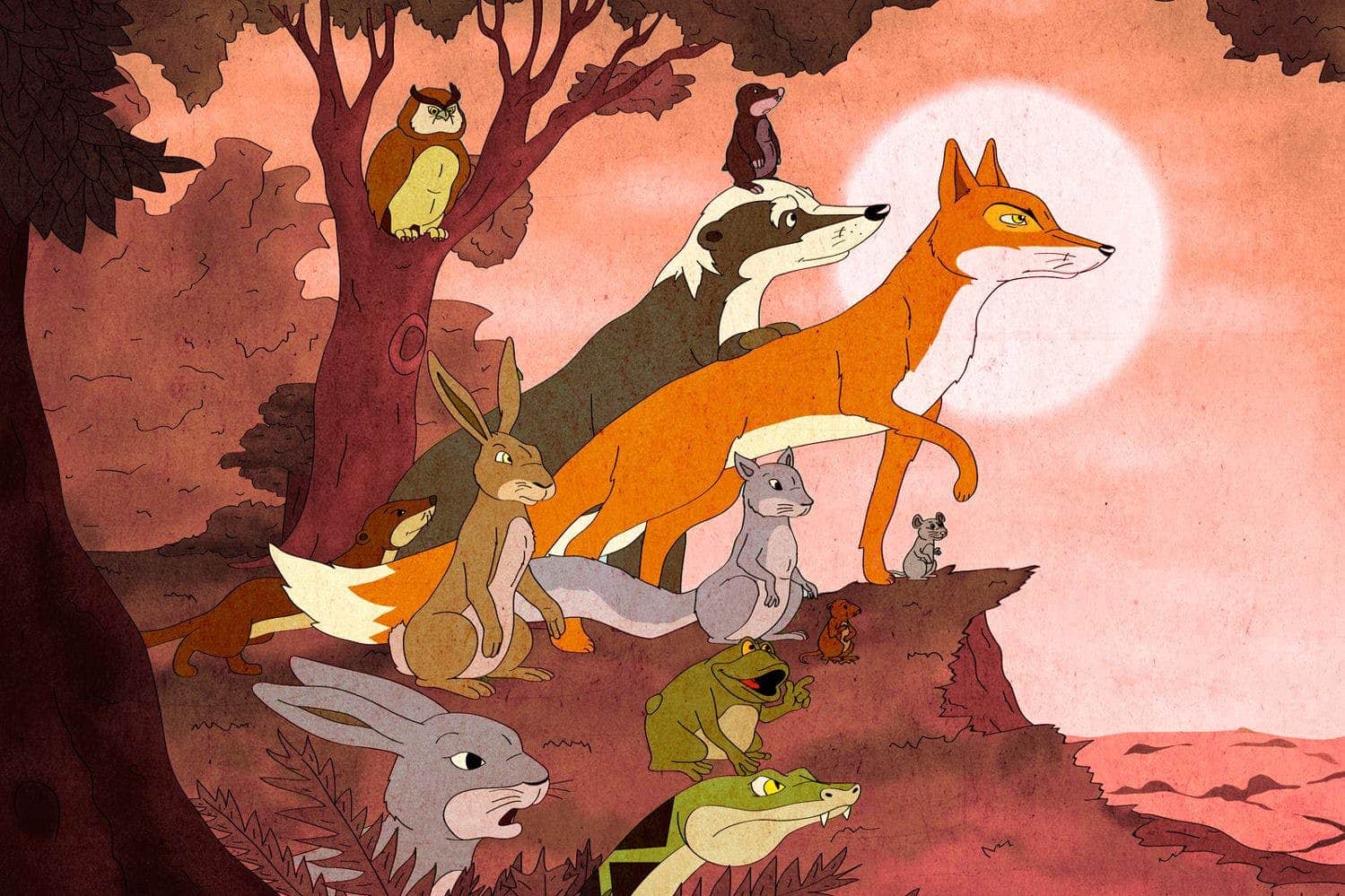
The Animals of Farthing Wood. The 1979 series of books and TV series told the story of a group of woodland animals whose home had been paved over by developers. They learn of a nature reserve where they will be safe, and undertake to make the journey together.
Nich Magnolfi, communications coordinator for the Global Rewilding Alliance, reviews Is A River Alive?, a non-fiction book by prolific author Robert Macfarlane, as part of the Wilder Reads column. The book is a recounting of Robert’s journey to Ecuador, India and Canada, places where rivers have been granted Rights of Nature, to varying degrees.
Ecuador: where rivers have constitutional rights
Robert’s travels begin at the waters of Los Cedros, a cloud forest filled with glowing fungi. Here, Ecuador has given Rights of Nature to Los Cedros, and embedded their protection in Ecuador’s constitution since 2008. Articles 71 to 74 read sentences of unique power:
The wording includes humans as “inseparable part of Nature.” And it is indeed two humans Robert meets, inseparable from Nature, that shine in the forest of glowing fungi.
The first is Giuliana Furci, a young fungologist recovering from the loss of her father, capable of discovering rare mushrooms by “feeling their opaque shine,” or simply listening. “If you know how to listen, fungi just . . . tell you where they are.” She later discovers a yet-unnamed species, an ally in increasing the protection of a cloud forest still under threat.
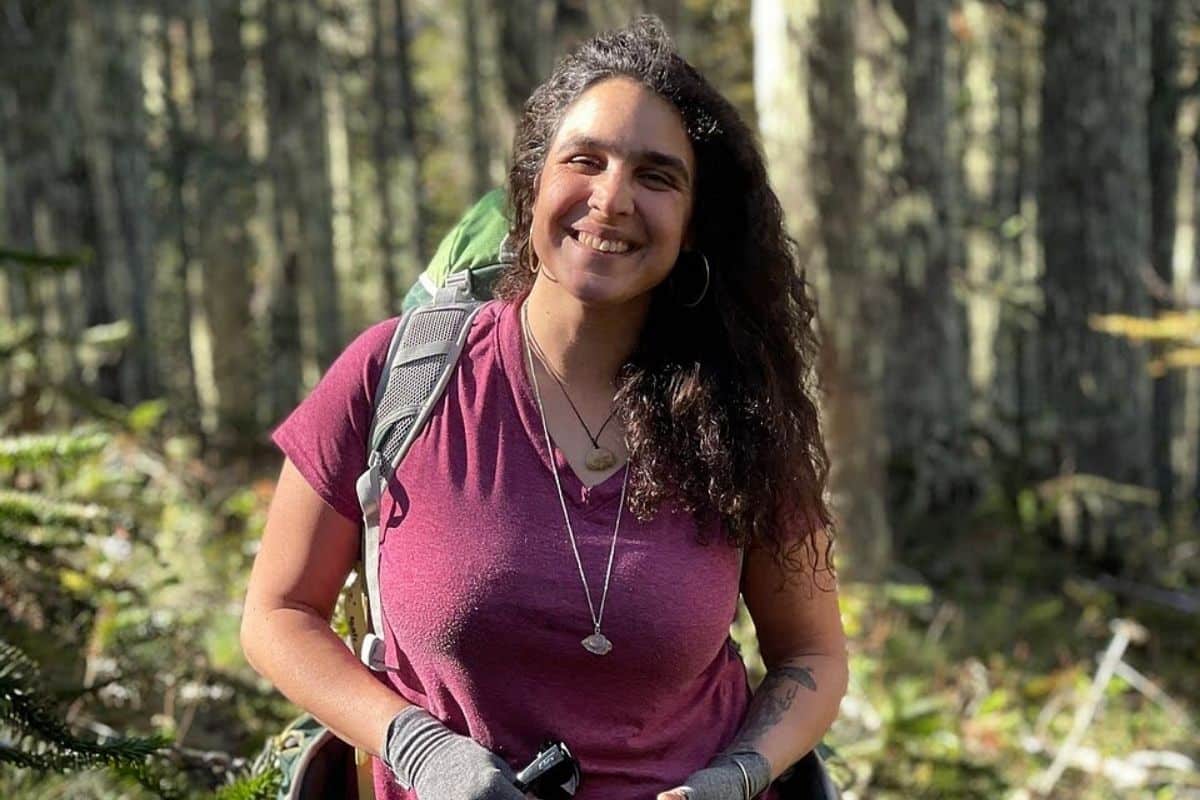
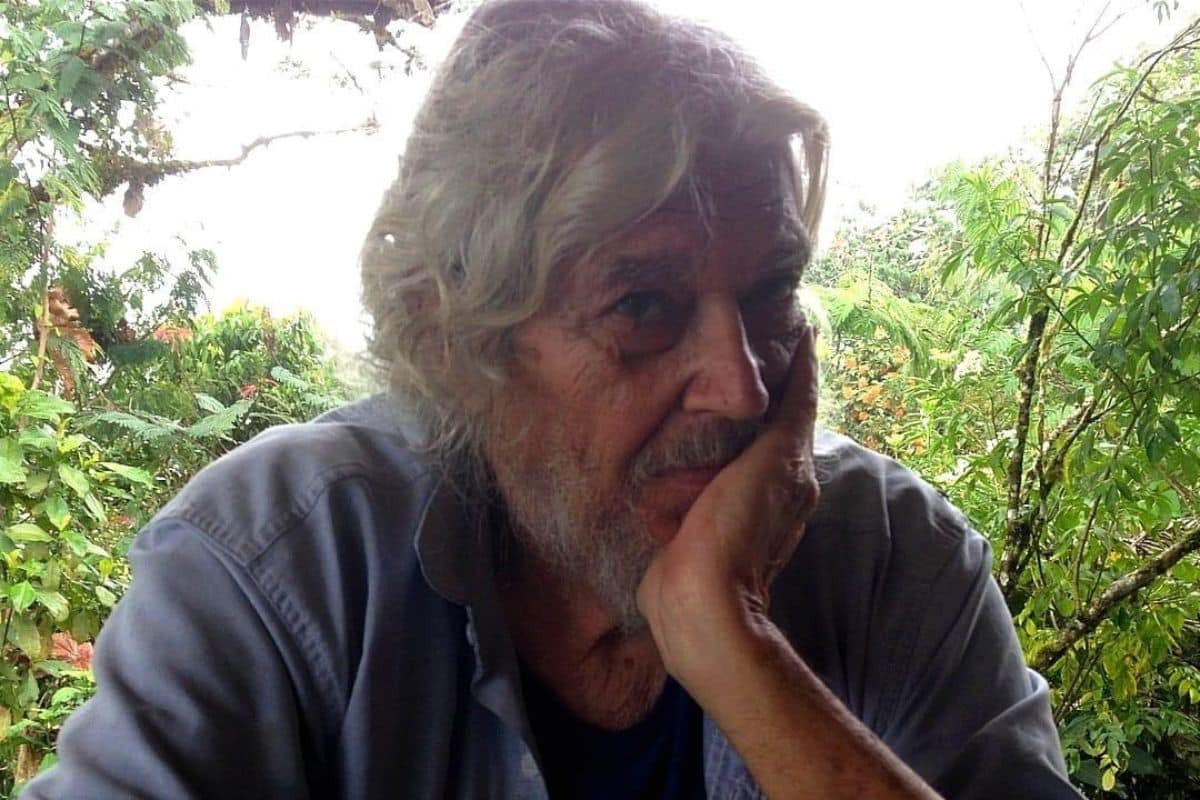
And second is Josef DeCoux (1951-2024), who began challenging the mining industry keen on Los Cedros rare minerals in the 1980s, finding a home deep in the cloud forest and sharing a shambled hut with several domestic cats, two dogs and a troop of howler-monkeys. It was he who brought the Rights of Nature case against the mining industry, collaborating with the local communities living at the fringes of the Cedar Forest. A man of deep solitude – capable of recovering from chemotherapy alone in his hut – but whose efforts are keeping the forest safe from the ever-looming mining and logging industries.
Our Ecuadorian journey ends with our well-versed protagonist gazing up at the stars. “Life, here, stands clear as process, not possession.”
Yuvan’s efforts in bringing life back to Indian rivers
Next, we find him amongst the corrugated metal huts of Chennai, in a place of ecocide. Robert names this chapter Ghosts, Monsters and Angels: Ghosts, the spirit of the three rivers of Chennai, now empty of life; Monsters, the rivers rising in catastrophic floods, like in 2015; and Angels, the people who dedicate life and spirit to restoring the rivers and rewilding the basin.
The story of one particular angel is worthy of a fable. Running away from home to escape the methodical beatings of his step-father, Yuvan Aves rose out of his childhood as a young man committed to healing humans, snakes and rivers. Making a name for himself as a snake-catcher, he waited 7 years before returning to his mothers home and banishing his step-father with a 10-worded sentence. At the time of Robert’s journey, Yuvan is also in a state of grief, having lost his sister recently.
Yuvan’s world is a world of many enemies: an illegal limestone quarry, Ennore Creek’s extirpation, and Sun Pharma, a corporation which has been discharging toxins into a bird sanctuary. The pressure mounted by these companies led to the murder of Chennai’s three rivers. Poetic prose drives the point home:
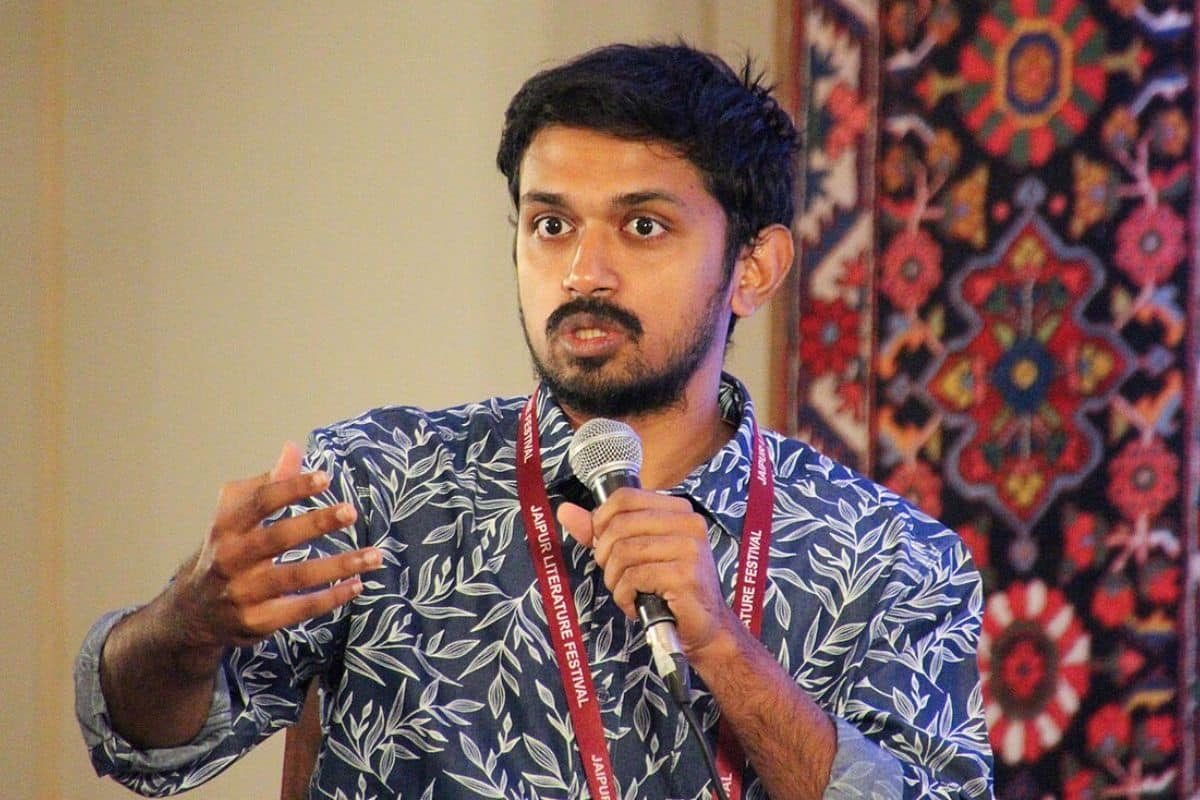
But Yuvan is not alone: there are allies in most unlikely places. In the marshes, where dragonflies swarm in their thousands. The wasp nest on his balcony. Schoolboys who fervently believe a river is alive. And the people massing like clouds to the shores of the ocean, to safeguard the Olive-Ridley nesting grounds. This “Turtle Patrol” walks the beach, protecting the turtles from stray dogs, tractors and bringing the eggs to a fenced hatchery.
Despite a desperate situation, Yuvan’s optimism flows in-between the lines of Robert’s writing. “Barrenness is almost always a state of mind, only rarely a state of land,” he says. The river is functionally un-alive, but it will never die, as long as there are people like Yuvan fighting for it.
Language flows like a river
The climax of the book takes place in the rapid waters of Quebec, a land of fast flow. Here the tone becomes more introspective, aided by the wisdom of First Nation philosophy and the experience of three wild Canadians, nicknamed the Boss, the Bear and the Salmon.
Travelling there with his friend Wayne, the third person in his pages coming to terms with loss, they plan to kayak from the mouth of the Magpie River. Despite having legal personhood, the Magpie River is still under threat from Hydro-Québec and Innergex Renewable Energy. But the joint resolutions of the Minganie local council and the Innu Council of Ekuanitshit stand strong. Rita Mestokosho, healer, guardian of Innu culture, and poet, greets Robert warmly, and gives advice I personally have taken to heart.
To Robert and Wayne, she asks to “give something to the earth, tobacco perhaps, or even just a word, a prayer, a song.” She asks them to always pitch their tent facing east, to see the sun first thing. She asks them to each find a question for the river, a question for you, from you, to the river. And lastly, she places a thick red cloth on their wrists, and asks them to tie it around the sacred tree – a tree that shines brighter than the rest.
Barrenness is almost always a state of mind, only rarely a state of land.
Yuvan Aves

Their first obstacle is the rapid named “the Saxophone”, because of its unique double-bend. Here Robert discovers, to his horror, that this is one of the places Hydro-Québec wants to build a dam, felling hundreds of thousands of trees and killing Lac Magpie. But here Robert sees, to his joy, the sacred tree: a tiny spruce, twenty centimetres tall. Spruces, in those extreme conditions, grow extremely slowly, so even a 20-centimetre spruce could be a hundred years old.
Robert reaches the end of the river without a question. Instead, he hears the river’s statement: find the current, find the flow – it may involve a great reach outward of mind and imagination.
Rewilding: the great reach of imagination
Rewilding is precisely that. A great reach outward of the mind and imagination. It is to rewild our minds, our souls and our actions, and turn this newfound Wildness toward the world. Robert helps us plot a path toward this great outward reach.
He calls for the reversal of shifting baseline syndrome (or ecological amnesia) to lifting baseline syndrome. A neat play of words that functions precisely as it should: an idea of an increase in Wildness, starting from our imagination. To close our eyes and imagine an ecosystem as it could be, not as it is. “[…] and create a future in which the expectation of children-to-come is that rivers flow free and clear.”
No approach to rewilding could be complete without indigenous knowledge. Rita’s advice, to find the sacred tree, is advice I warmly welcome you to take. Next time you find yourself in the woods, look for the sacred tree. As you search you will suddenly see a tree shining through the thick woods, looking quite clearly wild and sacred. I could not recommend this enough.
Robert’s linguistic curiosity opened our eyes to a Māori greeting: ko wai koe? It translates to who are your waters? To whom do you belong? Where are your stones, your pools & puddles, your algae? Robert’s waters are the River Dee, my waters are Bodanasasjön.
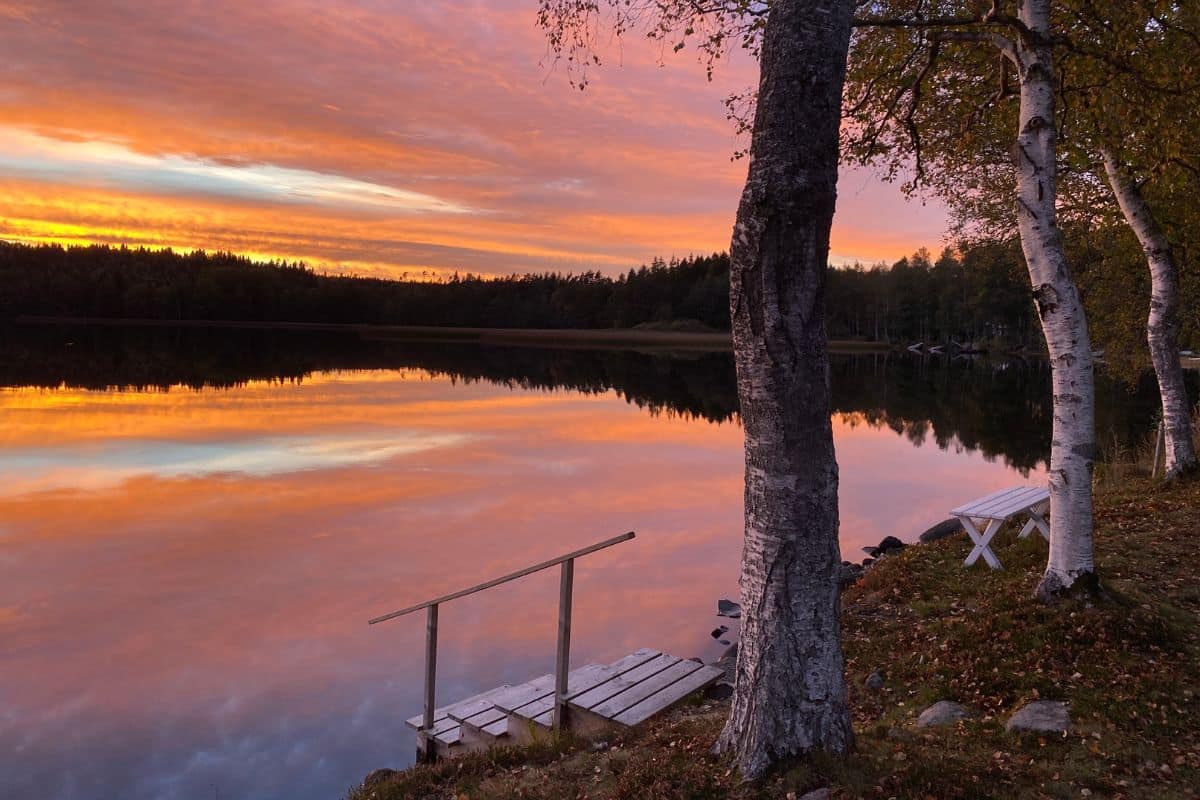
Are there any waters to which you owe a Declaration of Rights?
Answering the question: Is a river alive?
Robert’s flow from words to chapter, from rapids to pools, from life to lifetimes, is perhaps best exemplified by a voice from the future:
“One morning when we were walking to school together, my son asked me the title of the book I was writing.
‘Is a River Alive?’, I told him.
“‘Well, duh, that’s going to be a short book then, Dad,’ he replied, ‘because the answer is yes!’”

Robert MacFarlane Credit: Robert MacFarlane