
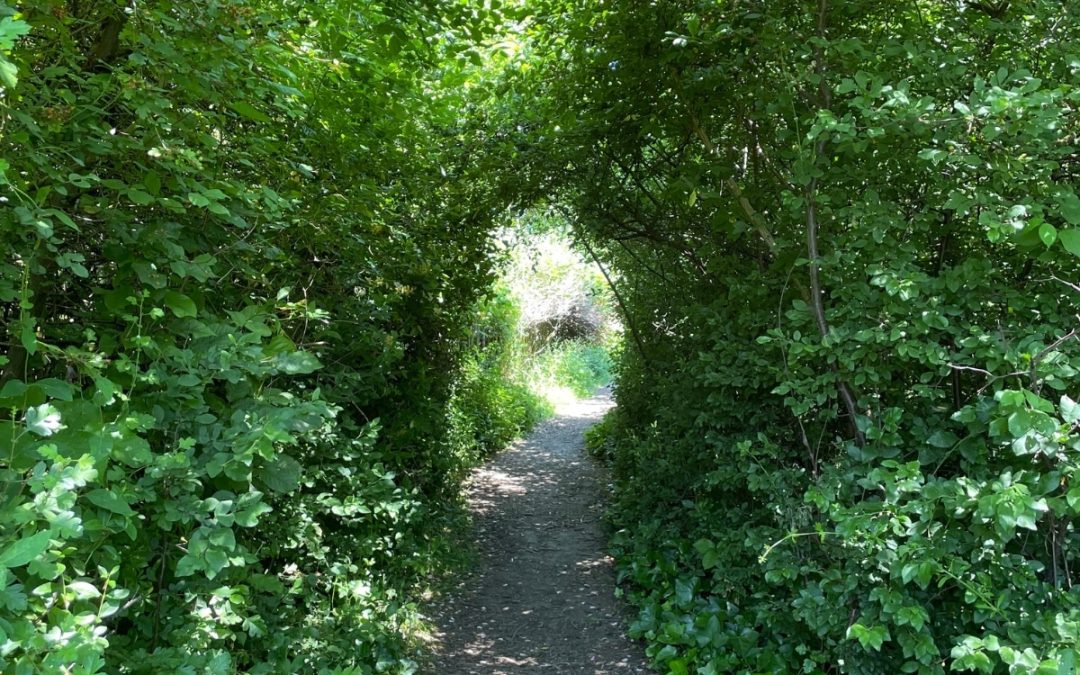
Tree tunnel in Gillespie Park. Credit: Annette Taylor.
Annette Taylor, author of the following article, outlines her findings from her Master’s degree in Sustainable Heritage at University College of London (UCL). We thank her for her research and enthusiastic contributions to rewilding!
In a time of rapid environmental and social upheaval, reconnecting with nature is more essential than ever for the health of both the planet and ourselves. Nature engagement has been widely demonstrated to benefit human well-being, particularly through sensory experiences such as sights and sounds. However, much of this research focuses on traditional green spaces such as forests and manicured parks. Rewilded environments, particularly rewilded urban settings, remain largely unexplored, particularly with how they affect us through the senses.
Why smell?
Among the five senses, smell is the most underappreciated in environmental well-being research. Yet it’s uniquely powerful. Scent bypasses the brain’s cognitive filters and connects directly to regions tied to emotion and memory. A single smell can calm, uplift, or transport us, often before we’re even aware of it.
When scent does appear in environmental discourse, it’s often framed negatively: traffic pollution, sewage, landfill odours. But there’s growing recognition that pleasant olfactory experiences, like those found in spas or Forest Bathing sessions, can lower stress and support mental health. These insights, however, have rarely been applied to the wild and unpredictable smells of rewilded urban spaces.
So, how do the earthy aromas of soil, water, plants, and even decay in rewilded urban environments shape our sense of well-being? As urban green spaces face increasing pressure, understanding the full potential of nature is no longer a luxury, it’s a necessity. For urban planners, landscape architects, therapists, and heritage professionals alike, scent offers a potent yet overlooked tool for healing, stewardship, and connection.
This blog explores how smell can help us reimagine our relationship with rewilded nature and connect to well-being in our everyday lives.
Smellwalking and Urban Forest Bathing
To explore this unique idea, I turned to two sensory-based methods: smellwalking and Forest Bathing.
Smellwalking, developed by urban olfactory researcher Victoria Henshaw, is a practice designed to bring conscious attention to scent in place. Though we are always breathing, we rarely notice what we smell unless it is overpowering or unpleasant. Smellwalking asks participants to slow down, breathe with intention, and tune into the often-overlooked dimension of smell. By cultivating this heightened “perceptual state,” it opens the door to a deeper, more embodied engagement with the environment.
Forest bathing, or Shinrin-Yoku, is a Japanese practice with decades of scientific backing. It encourages full sensory immersion through slow, mindful movement in natural spaces. Often associated with rural woodlands, the key practices of Forest Bathing: attentiveness, slowness, and full sensory awareness, are equally relevant in urban green spaces, especially those shaped by rewilding efforts.
In a conversation with Gary Evans, director of the UK’s Forest Bathing Institute, he highlighted how these sensory practices can foster not just personal well-being but a sense of care for the environment. “There are millions of potential triggers,” he told me. “Looking at the view, appreciating the birds, the colours, or smells… if you’ve been mindful and enjoyed the session, it’s going to be pretty hard not to want to do more” (personal communication, July 14, 2023).
Through these practices, smell becomes more than just a fleeting sensation. It can become a pathway to memory, connection, and even a renewed sense of purpose for the environment.
Case Study: Gillespie Park & Nature Reserve
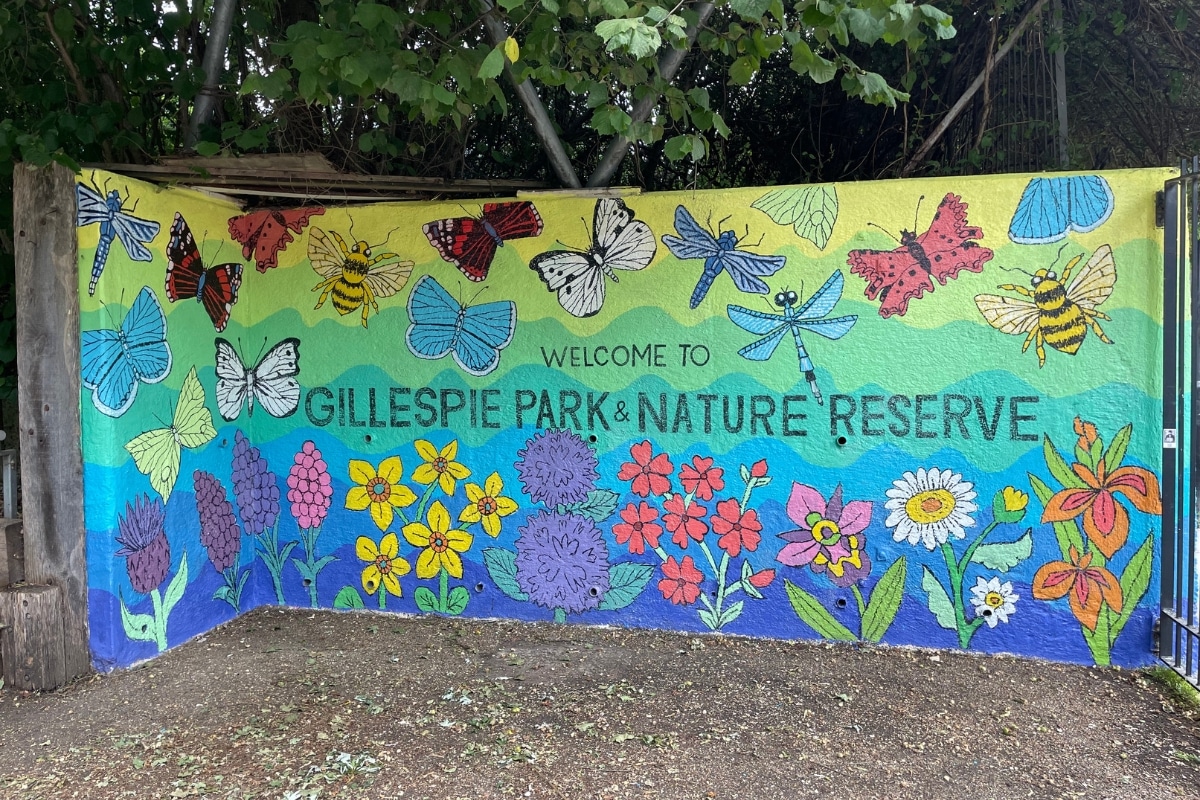
Entry to Gillespie Park. Photo credit: Annette Taylor.
To explore how smell influences our well-being in rewilded spaces, I needed a site rich in sensory potential and rooted in community. Gillespie Park, tucked beside Arsenal Stadium in Islington, offered exactly that.
At just 2.8 hectares, this former dairy and railway site now bursts with biodiversity, over 240 species of plants, woodlands, meadows, ponds, and butterflies. It hosts sustainability workshops, drag queen-led story hours, and community conservation efforts. Nature is largely left to lead here, supported by a small team of volunteers. With its layered history, urban edges, and ecological abundance, Gillespie is a small but mighty microcosm of what urban rewilding can be: welcoming, wild, and deeply connected to place.
The Smellwalk
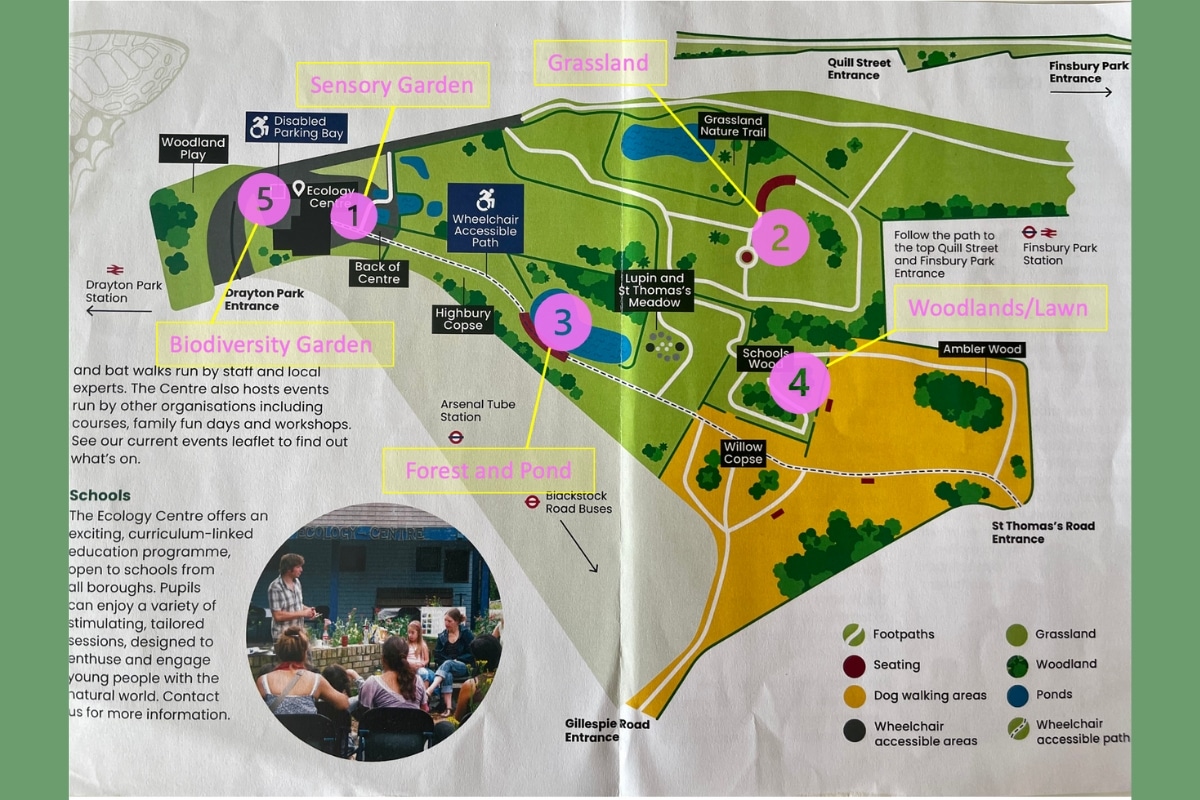
Smellwalk map. Photo credit: Annette Taylor.
To understand how smell shapes our experience of this space, I designed a smellwalk route through Gillespie Park with five stopping points:
- Sensory Garden (behind Islington Ecology Centre)
- Grasslands
- Forest and Pond
- Woods and Lawn
- Biodiversity Garden (in front of the IEC)
Volunteer participants walked the route, pausing to complete “smellnotes” at each stop. These documented scent intensity, duration, pleasantness, and smell associations, along with perceived colour and emotional tone. To measure the impact of these olfactory encounters, I created a self-assessment based on Dr. George Engel’s biopsychosocial model of well-being, which expands beyond traditional medical frameworks and considers the interconnectedness of physical sensations, mental states, emotional experiences, and social contact. I expanded this to include a ‘profound’ domain to capture moments of meaning, awe, or connection that may be encountered through smell.
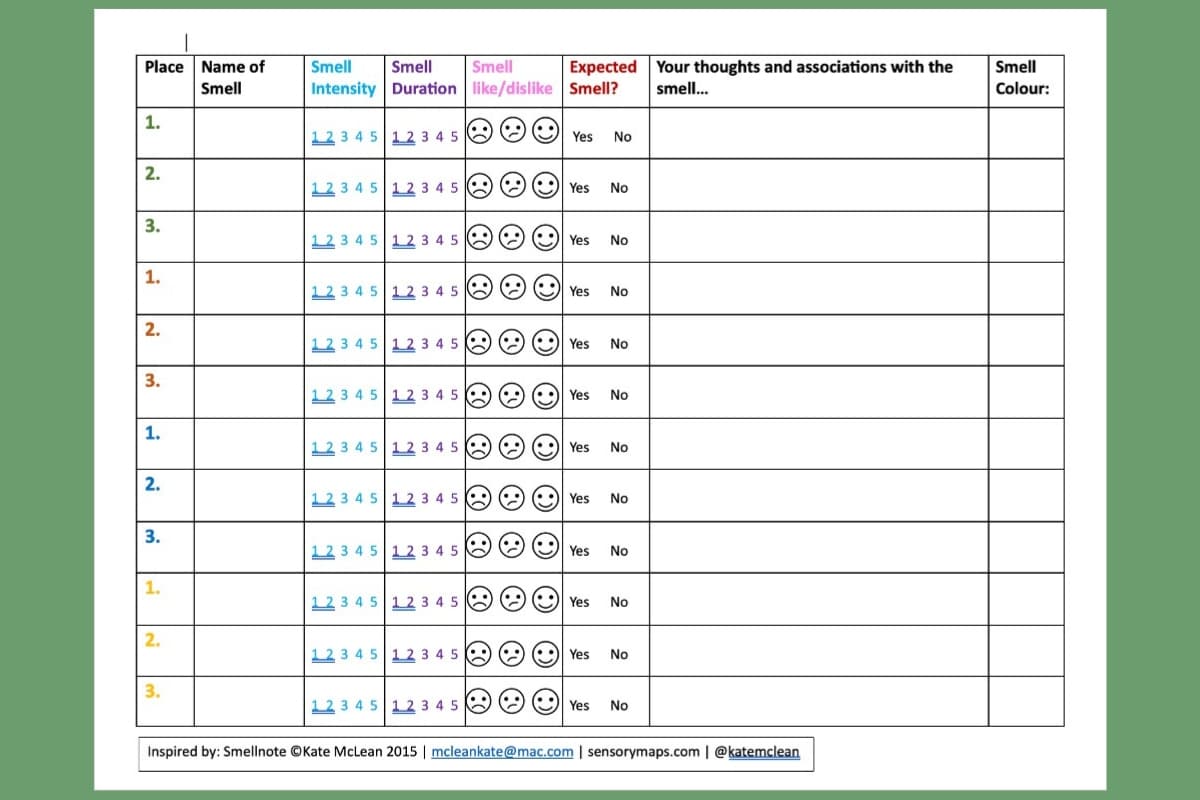
Smellnotes used. Credit: Annette Taylor.
What We Found
Across the smellwalks, participants reported notable boosts in well-being, especially in physical, cognitive, and emotional domains. While changes were sometimes subtle, the general trend was upward, with no decreases in physical well-being and only minor drops
elsewhere.
Out of 80 documented scents, nearly 80% were positively received. Descriptions like “a smell that embraces you” and “healthy clean living” reflected strong physical responses, while earthy and floral smells often sparked clarity, calm, or nostalgic memories. One participant, initially distracted by missing their morning coffee, later noted a dramatic jump in cognitive and emotional well-being, highlighting how scent can heighten presence and perception.
Social and profound well-being saw fewer fluctuations but offered the most intimate reflections. Scents evoked everything from backyard gatherings to a father’s workshop or an aunt’s flower shop; places of love, identity, and belonging. As one participant put it: “Alive without a need to prove anything.”
Memory, Place, and Ecological Belonging:
A strong connection emerged between olfactory experiences in Gillespie Park and participants’ personal memories. Interestingly, none of the recalled memories were directly associated with the park itself. Instead, the scents encountered prompted recollections of other natural, often wild, environments.
Scents not only evoked specific recollections but also helped shape participants’ emotional experiences of the environment, evoking feelings of nostalgia, excitement, and comforting familiarity. These emotionally charged memories, both pleasant and complex, become woven into the landscape itself, contributing to a person’s environmental identity and influencing their perceptions and behaviours in nature.
Many of these scent-triggered memories were also social, tied to relationships and shared experiences. For example, “California and eating tacos with my friend from when I was 14 in a VW Eurovan”, or “My grandma’s garden parties…”
Scents acted as a powerful bridge between past and present, fostering a sense of identity, belonging, and emotional attachment to place.
The intimate link between scent and memory reveals the significant role olfaction plays in constructing a sense of self and ecological belonging. Through smell, individuals form deeply personal relationships with natural places. Mindful practices such as smellwalking and forest bathing help nurture these connections, inviting a deeper engagement with nature through the senses.
Leading Forest Bathing researcher Dr. Qing Li suggests that the health benefits and emotional resonance of forest bathing can inspire greater care and responsibility for the natural world. In this light, the interplay between scent, well-being, and the environment becomes a mutually reinforcing relationship, one that not only enhances personal well-being but also supports the continuity of rewilding efforts.
Incorporating smellwalks and forest bathing into rewilded spaces can strengthen this relationship, encouraging emotional investment and environmental stewardship through sensory immersion.
Scent as Stewardship: Reconnecting Through the Nose
To meet the challenges of our rapidly changing world, we must explore every pathway to inspire pro-environmental behaviour, and smell offers a surprisingly powerful one. The olfactory sense roots us in memory, emotion, and the lived experience of place. By embracing this often-overlooked dimension of our relationship with nature, particularly in rewilded urban spaces, we unlock new ways to foster well-being, belonging, and ecological awareness.
Tuning into scent deepens our appreciation of the natural world and our place within it. In doing so, we not only support personal health, we reawaken our senses, rekindle our curiosity, and lay the groundwork for a more intimate, enduring form of environmental stewardship. When we begin to smell the world differently, we begin to care for it differently, too.
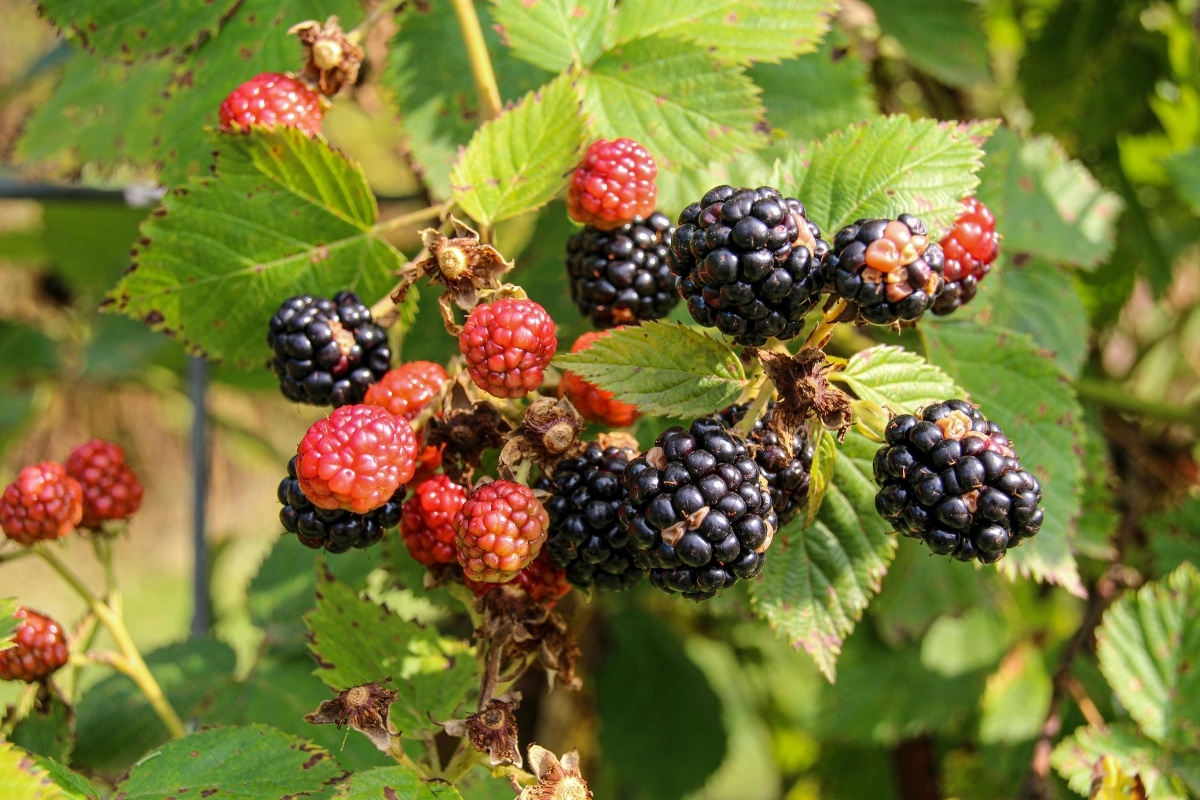
Photo credit: Rachael Holzman from Pexels.
Author Bio:
Hi there, I’m Annette Taylor. Raised in the wild beauty of the Rocky Mountains, my path has taken me from studying art history in San Francisco to excavating the Utah desert, exploring New Zealand’s diverse landscapes, and completing a master’s in Sustainable Heritage at UCL. Urban life in London sharpened my understanding of how vital natural spaces are for both environmental resilience and public well-being. This research explored a unique avenue of that connection. Now, I’m committed to using my skills to support
rewilding as a movement for ecological and cultural renewal.
Please get in touch with the GRA team if you would like full access to her study.
References:
Bentley, P. R., Fisher, J. C., Dallimer, M., Fish, R. D., Austen, G. E., Irvine, K. N., & Davies, Z. G. (2022). Nature, smells, and human wellbeing. Ambio, 52(1), 1–14.
Bratman, G. N., Olvera-Alvarez, H. A., & Gross, J. J. (2021). The affective benefits of nature exposure. Social and Personality Psychology Compass, 15(8).
Carver, S. (2012). (Re)creating wilderness: rewilding and habitat restoration. In P. Howard, I. Thompson, E. Waterton, & M. Atha (Eds.), The Routledge Companion to Landscape Studies. Routledge.
Doimo, I., Masiero, M., & Gatto, P. (2020). Forest and Wellbeing: Bridging Medical and Forest Research for Effective Forest-Based Initiatives. Forests, 11(8), 791.
Dr Qing Li. (2018). Shinrin-Yoku: The Art and Science of Forest Bathing. Penguin Books Ltd. Engel, G. L. (1977). The Need for a New Medical model: a Challenge for Biomedicine. Science, 196(4286), 129–136.
Evans, G. (2023, July 14). Gary Evans research interview (A. Taylor, Interviewer) [Personal communication]. Hamer, A. (2019, August 1). Here’s Why Smells Trigger Such Vivid Memories. Discovery.
Henshaw, V. (2014). Urban smellscapes: understanding and designing city smell environments. Routledge. Islington Council. (2022, August 17). Gillespie Park and Ecology Centre | Islington Council.
Islington Ecology Centre. (2020, October). The History of Gillespie Park. Islington Council. WHO, Regional Office for Europe. (2016). Urban green spaces and health. In World Health Organization iris. Institutional Repository for Information Sharing. WHO Regional Office for Europe.