An article by Swathi Palanichamy.
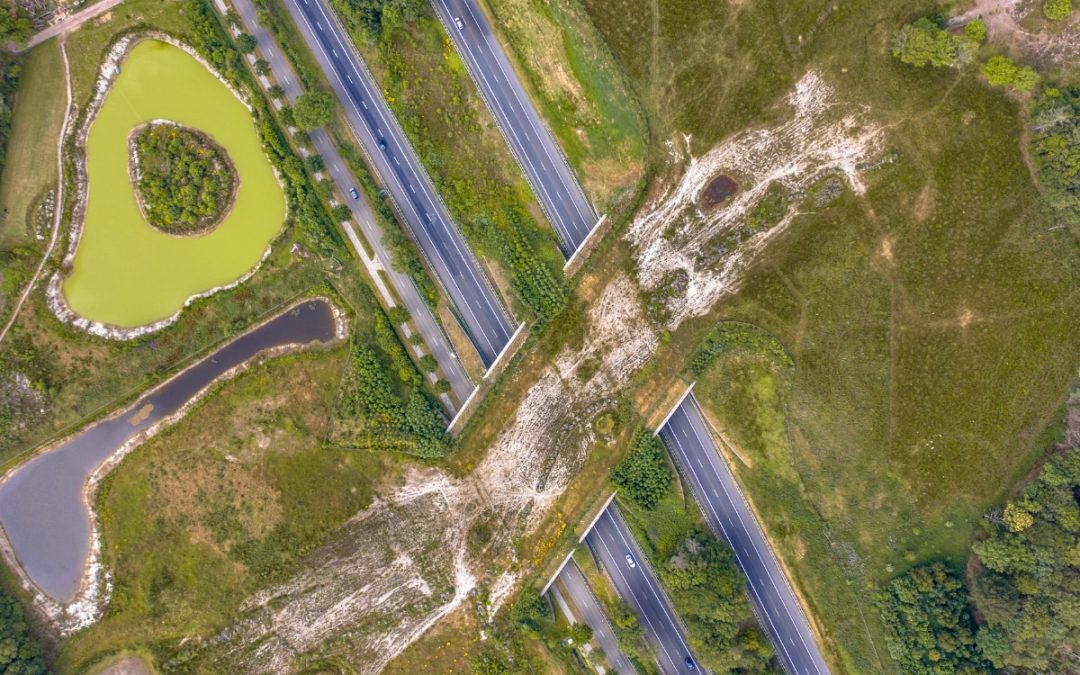
Photo credit: CreativeNature_nl from Getty Images.
Ever wondered why companies go out of their way to save endangered species or build bridges to boost habitat connectivity? What do they get out of it? Positive publicity by showing people that they care—sure! But there’s more.
Imagine you live in a region where foxes are rampant and are well-loved by the local community. Nearby, there’s a factory situated deep within the woods, and people don’t really seem to mind—in fact, they love the company for how nature-positive it is! It built plenty of green bridges for animals to roam around freely without being vulnerable to wildlife-vehicle collisions (WVCs). The company organised large-scale campaigns to spread awareness—the foxes taking centre-stage to pull at people’s heartstrings—and some locals even volunteered to help with construction. As icing on the cake, the company’s products are a hit in your region! Nice story, right? The factory runner has formed a legacy, and the people are all for it. The company may have done it out of sheer goodwill, and exercising corporate responsibility might as well be a fundamental part of its ethos.
However, there’s a missing piece of the puzzle. Regulations in many jurisdictions require companies to identify any potential threats they may pose to local biodiversity and implement appropriate mitigation strategies to avoid legal trouble. So, the company may have assessed its environmental impact and deduced that its freight trucks could cause significant WVCs on their way to the factory, which would then attract attention from local wildlife authorities—to mitigate this risk, the bridges were built. It is a fantastic example of how companies can benefit by transforming risks into opportunities through strategically placed environmental campaigns.
Photo credit: dschaef from Getty Images
Still think it’s just a story? Look closely, and you may find several companies that have done this in the past. My recent research in partnership with the Global Rewilding Alliance sheds some light on this as well—master’s dissertation supervised by the brilliant duo, Dr Jim Watson (Professor of Energy Policy, Director of the UCL Institute for Sustainable Resources) and Dr Alister Scott (Co-Director, Global Rewilding Alliance; Honorary Professor of Practice, UCL Institute for Sustainable Resources).
This study, ‘Developing a Framework to Enable Wildlife Corridors to Attract Corporate Sponsorship,’ involved in-depth interviews with corporate representatives after consulting with conservation experts from the Weald to Waves corridor project (UK) and Rewilding Britain to ensure the right questions were asked. Thematic analysis of interview data provided invaluable insights into building the business case for wildlife corridors after assessing companies’ past involvement with environmental projects, motivators and barriers to investing in wildlife corridors.
For example, when asked about their company’s previous investment in a wildlife corridor, an interviewee admitted: “I would say that most likely that particular activity was designed as a compensation or as a mitigation strategy to an affectation that was identified during the design process…the initial motivation of the transaction was not the wildlife corridor itself, but more a development issue that was identified.” Woven into our wider analysis, this comment illustrates how the ulterior motive to meet regulatory requirements—often hidden behind the veneer of corporate social responsibility—can also open the door to strategic environmental investments.
Why Do Wildlife Corridors Matter?
Wildlife corridors are natural pathways that enable species to move between isolated habitats, boosting genetic diversity and ecosystem health. They also help species migrate in the face of climate change, offering them escape routes from extreme weather and connecting them with more survivable habitats.
These corridors also function as powerful carbon sinks, capable of sequestering large amounts of carbon. Moreover, according to latest research, animals drive processes like seed dispersal and nutrient cycling, promoting vegetation growth and rebalancing the carbon cycle to enhance carbon storage. So, when companies invest in wildlife corridors, they’re also investing in climate adaptation (Corridor projects, take note—make sure you highlight this to companies! More on this later…)
Photo credit: bbsferrari from Getty Images
But there’s a catch, and it’s a biggie. Despite significant benefits, wildlife corridors often go underfunded, majorly relying on limited public sources and struggling to attract the funding and resources needed for large-scale implementation: enter the idea of corporate sponsorship. It can foster innovative partnerships between businesses and conservationists, leading to more synergistic outcomes.
For instance, Disney World’s support for the Florida Wildlife Corridor has not only provided vital funding but also leveraged Disney’s expertise in storytelling and public engagement to raise awareness about the project. This partnership demonstrates how companies can use their platforms to turn environmental initiatives into impactful, high-profile campaigns.
3 Steps to Building a Business Case for Wildlife Corridors
So, how can wildlife corridors capture the attention (and financial support) of corporations? Here’s a blueprint based on the study’s findings:
1. Clear, Credible Project Proposal: Transparency is essential. Companies require well-defined, measurable goals before committing funds. The study highlighted the importance of having independent third-party verifiers to ensure project credibility and prevent accusations of greenwashing. This external oversight increases trust, making companies more likely to invest in corridor projects.
2. Align with Corporate Goals: Sustainability is top-of-mind for many businesses today. So, it is important to demonstrate how wildlife corridors contribute to carbon sequestration and biodiversity preservation, aligning with Corporate Social Responsibility (CSR) and Environmental, Social and Governance (ESG) goals and hard targets like carbon offsetting. The study found that climate-related benefits are among the strongest motivators for corporate sponsorship, especially for companies looking to meet emissions reduction targets. One of the interviewees summed it up well: “I think anytime you can look for those types of intersections between the biodiversity benefit and the climate, or specifically, carbon benefit, I just think companies are likely to snap those opportunities up much more quickly because climate is the topic that is most discussed.” Additionally, most interviewees viewed tailoring the proposal according to the company’s specific needs as favourable to investment as it helps projects stand out. Whether it’s biodiversity or offset credits, BNG units*, risk mitigation or some other form of return on investment they’re after—customise your offerings and give them what they need!
*A quick note about UK’s Biodiversity Net Gain (BNG) Mandate: Effective from February 2024 for major developments and April 2024 for smaller ones, this mandate requires that new projects leave the site with at least a 10% increase in biodiversity compared to its original state, maintained for a minimum of 30 years. Developers are allowed to demonstrate an increase in biodiversity value either onsite or off-site. For example, if a housing project disrupts a woodland area, the developer must either enhance the remaining habitat or create new habitats (or purchase off-site BNG units or biodiversity credits or a combination of both) to ensure the overall biodiversity value rises by at least 10%.
Photo credit: Biodiversity Net Gain – An Introduction to the benefits, Natural England 2022.
3. Engage Local Communities: Successful wildlife corridors are built on local support. The study found that community opposition, landownership issues, and a lack of awareness often pose significant barriers to corporate investment. Engaging local stakeholders early on is key. A third-party facilitator can help bridge the gap, facilitating negotiations between landowners, communities, and conservationists, making the process smoother and ensuring transparency in the decision-making. These facilitators can also guide compensation structures, creating win-win outcomes for all parties.
Call for Action: Policymakers Assemble!
To further incentivise corporate investment in wildlife corridors, interviewees suggested that policies like the BNG mandate could be expanded and mandated in other countries following the UK’s example, and frameworks like the Taskforce on Nature-related Financial Disclosures (TNFD) made compulsory.
BNG’s potential could increase if connectivity metrics were integrated into biodiversity calculations. To this end, an interviewee of the study made a noteworthy suggestion alongside posing a radical question to policymakers: “I think that that’s probably the best way to position it, which is – it’s almost like a multiplier effect of having a wildlife corridor. So, if you have two farmers with two BNG units each worth 10, so in total it’s worth 20. Does a wildlife corridor now mean that in total they’re worth 30?” Simply put— by including a connectivity factor while calculating BNG units (as demonstrated by this study), wildlife corridors could offer a higher return on investment over individual sites, forming their unique selling proposition.
Additionally, interviewees had mixed opinions on the merit of biodiversity credits as their measurement lacks standardisation. To gain real value, they must be reliable and rigorously governed. This combination of policy incentives would create a powerful framework to attract corporate sponsorship, fostering stronger partnerships for ecological connectivity.
The road to a sustainable future is wide open—let’s hope companies take the scenic route through wildlife corridors!
Image Source from Photo Images
About the Author
Hi, I’m Swathi Palanichamy. I earned my Master’s in Economics and Policy of Energy and the Environment from University College London (UCL), studying at the Institute for Sustainable Resources (ISR) within the Bartlett Faculty of the Built Environment. I’m passionate about turning innovative ideas into actionable strategies—always looking for the link between research, real-world impact, and just outcomes!
References
Florida Wildlife Corridor Foundation (2024) 2023 Impact Report. https://floridawildlifecorridor.org/2023-impact-report/.
Martinez-Cillero, R. et al. (2022) ‘Functional connectivity modelling and biodiversity Net Gain in England: Recommendations for practitioners,’ Journal of Environmental Management, 328, p. 116857. https://doi.org/10.1016/j.jenvman.2022.116857.
Ministry of Housing, Communities and Local Government and Department for Levelling Up, Housing and Communities (2024) Biodiversity net gain. https://www.gov.uk/guidance/biodiversity-net-gain.
Rizzuto, M., Leroux, S.J. and Schmitz, O.J. (2024) ‘Rewiring the Carbon Cycle: A theoretical framework for Animal‐Driven ecosystem carbon sequestration,’
Journal of Geophysical Research Biogeosciences, 129(4). https://doi.org/10.1029/2024jg008026.
YALE/GRA (2025) Animating the Carbon Cycle. https://animatingcarbon.earth/.
For access to the full study, drop an email to: