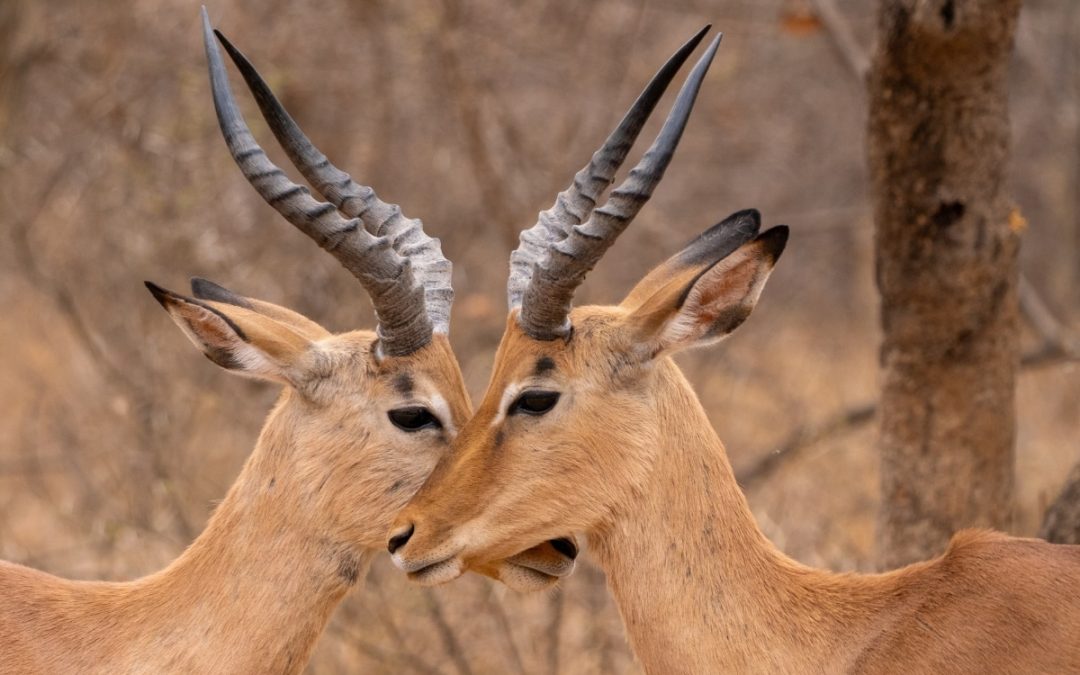
Impala Antelopes locking heads in savannah ecosystem. Credit: H.Bieser from pixabay.
In this short interview, Joe Gray and Eileen Crist talk to us about a recently published book that they co-edited: Cohabiting Earth: Seeking a Bright Future for All Life (SUNY Press, Nov 2024). Cohabiting Earth offers a positive new identity for humanity which envisions a path of harmony between humanity and Earth. A collection of writing from 23 different authors is combined with the message that there is no ‘human versus nature’; the wellbeing of both is inseparably entwined. The book underlines that a healthy future depends on three core principles: restraint, respect, and reverence for the planet we call home.
Introduction to the authors
Cohabiting Earth: Seeking a Bright Future for All Life (SUNY Press, Nov 2024). Joe is founding editor of the Ecological Citizen and Eileen is the author of numerous articles and several books, including, most recently, Abundant Earth: Toward an Ecological Civilization (University of Chicago Press, 2019).
The Q&A
What led you to collaborate on Cohabiting Earth?
We have worked together for a number of years as associate editors of a volunteer-run journal called The Ecological Citizen, and the connected blog Earth Tongues. As part of this project, back in 2019, we co-edited a special issue exploring the biodiversity crisis. That collection highlighted so many of the challenges being faced by the natural world in the face of humanity’s overreach into the ecosphere. And while it also offered glimpses of potential solutions, co-editing the book has offered us a way to take the next step and present a much more comprehensive vision of what a world in healing will look like.
Can you summarise the premise of Cohabiting Earth in a few sentences?
In Cohabiting Earth, we have brought together new writing by twenty-three contributors from across a range of disciplines that inform how modern humans can shift to a significantly more ecological mode of existence, allowing the natural world to rebound in spectacular ways. We have organised the chapters into three pillars that we believe will define such an existence: restraint in what we draw from the planet, respect for our non-human kin, and reverence for all of nature. These three pillars are underpinned by a worldview that honours intrinsic value in all life – in other words, ecocentrism. This is radically different from the currently dominant worldview – one that can be termed anthropocentrism – in which the natural world is valued exclusively or principally in terms of its usefulness to humans.
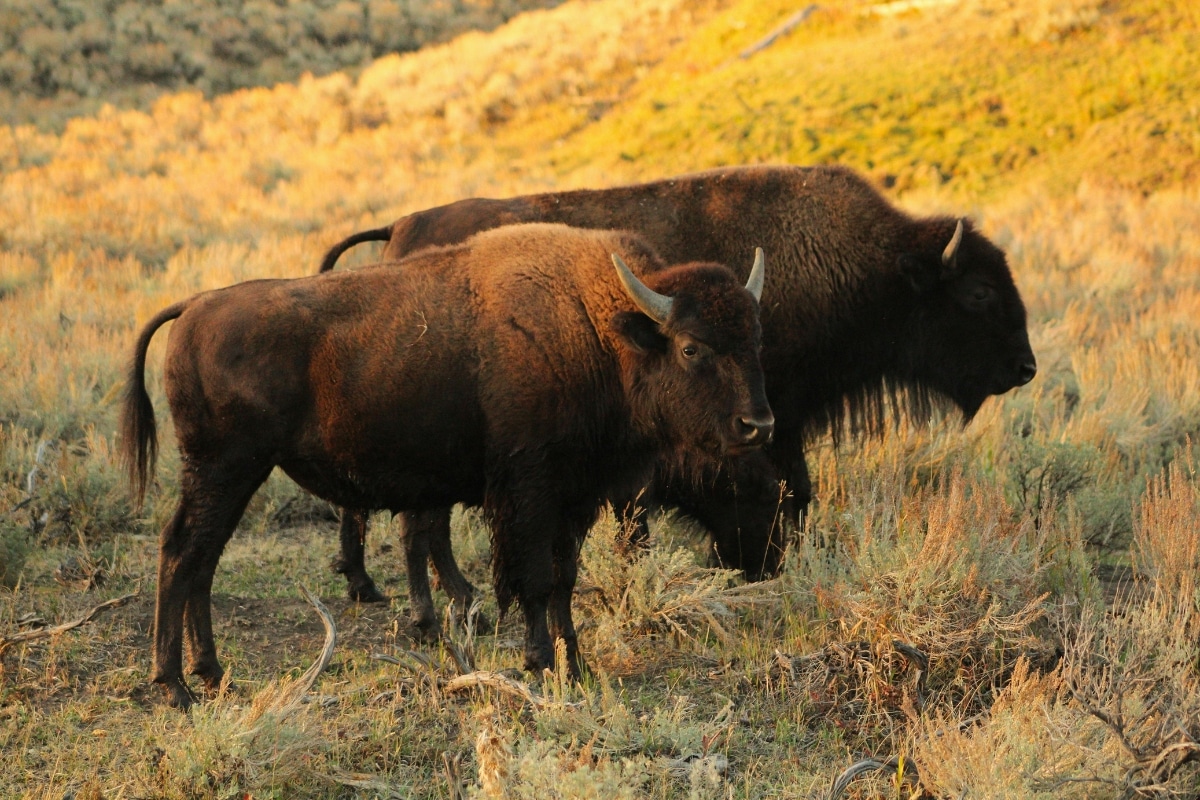
Bison grazing in Yellowstone National Park. Credit: Brianna Eisman from Pexels.
What is the role of rewilding in your vision for a more ecological civilisation?
For the Earth to thrive once more – for nature’s incredible diversity of life to be released from the stranglehold of an expansionist humanity – it is not enough only to reduce our footprint as a species and strongly protect the remaining wildlands. Rather, there are great acts of repair and healing that are also needed. And rewilding is going to be a huge part of this. One of the chapters in the book covers rewilding in detail, and it has been written by Reed Noss, a visionary ecologist who has been instrumental in developing the core concepts of this branch of conservation biology, as well as the idea of protecting half the planet. Rewilding is also explored as part of several other chapters, including those on coexistence with large carnivores, the fate of ocean life, the future of food systems, reverence for trees, and Indigenous wisdom.
What would you say to people who suggest that what is happening to the planet is simply human destiny?
We would refute that notion emphatically. In fact, a passage from the introduction to our co-edited book serves to explain our thoughts here. “In this time called the Anthropocene by many, we have indeed come to ‘meet the enemy’, but it is not us: it is not the human species or human nature. The enemy of the natural world, and of our own survival and potential as a unique lifeform, is an expansionist way of life premised on unrestraint, disrespect, and profound loss of reverence. Yet this way of life is not biologically ordained but historically contingent and inherited, ossified in political, economic, and educational institutions, and ongoingly inculcated into the social collective. The process of humanizing the planet is violent, and its endpoint unwholesome and moribund.”
Ours is the historical moment to awaken to the gift of belonging with a living planet and to become joyful participants who inhabit Earth with gratitude and grace.
Joe Gray and Eileen Crist, Cohabiting Earth
Could it be said that you are calling for a new human identity?
Yes, we are pointing towards both a new human identity and a new view of Earth – one that will enable us to cohabit Earth with beneficence and generosity. To get there will involve us willingly stepping down from our position of planetary domination so that we can flourish as a species alongside the countless others with whom we share the planet.
Is such a stepping-down not going to be a hard sell?
As we wrote in a blog post to accompany the book’s publication, we will have to accept what follows from relinquishing the crown of planetary rulers: “a revamping of economies to respect nature’s bounds; an amplification of human compassion; an opening-up to a vastly greater diversity of voices; and an enormous reduction in the standard of living for oligarchs and the uber wealthy.” For all of us, though, living in a world that is freed from humanity’s expansionist mindset – with climate destabilization, toxification, and other kinds of pollution following in its wake – will be better for both body and soul. The sell is really not as hard as it might at first seem.
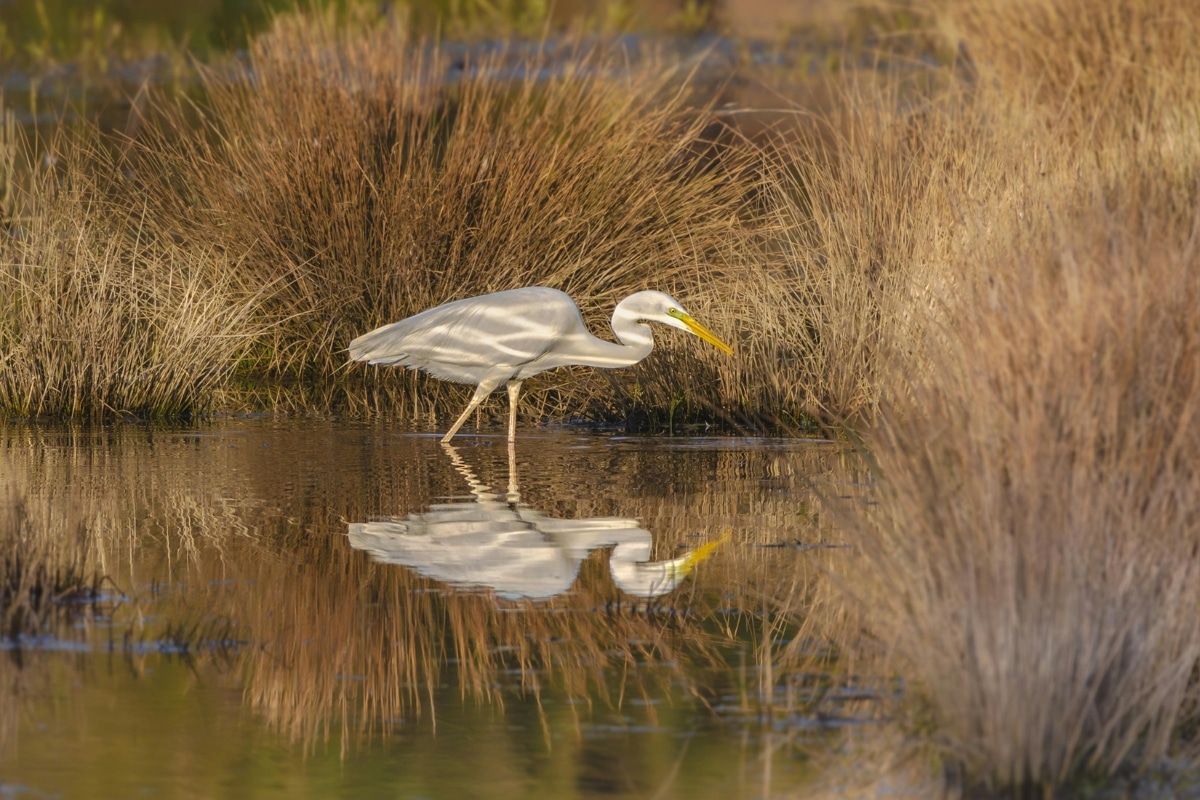
Egret standing in the water. Credit: Mark A Jenkins from Pexels.
Finally, in what ways does viewing nature as intrinsically valuable—rather than useful—open the door to more beautiful and hopeful outcomes for the living world?
This is an excellent question, for such a transformation in mindset is indeed akin to opening a door. Once a commitment to honour intrinsic value in our non-human cousins is realized, our perception of life is radically changed and the goal of a thriving biosphere becomes a natural focus for civilization. Rebounding biodiversity is no longer one item on a long wishlist. Rather, it is the bright light to guide humanity’s course. And thus we have the philosophy to save the Earth and save ourselves.
A final word
Joe Gray is an Associate Editor of The Ecological Citizen. Eileen Crist is Associate Professor Emerita of the Department of Science, Technology, and Society at Virginia Tech.
The book asks us to believe in transformational change; to believe in systemic change in our vision of the future and the thinking that underpins its creation.
Cohabiting Earth is a courageous book, both in the blunt assessment of the multiple cascading ecological/social crises we face and in the refusal to give up on efforts to make a better future. This eclectic collection of writers provides a roadmap of how we got here and where we need to go.
Robert Jensen, School of Journalism and Media at the University of Texas, and coauthor of An Inconvenient Apocalypse: Environmental Collapse, Climate Crisis, and the Fate of Humanity