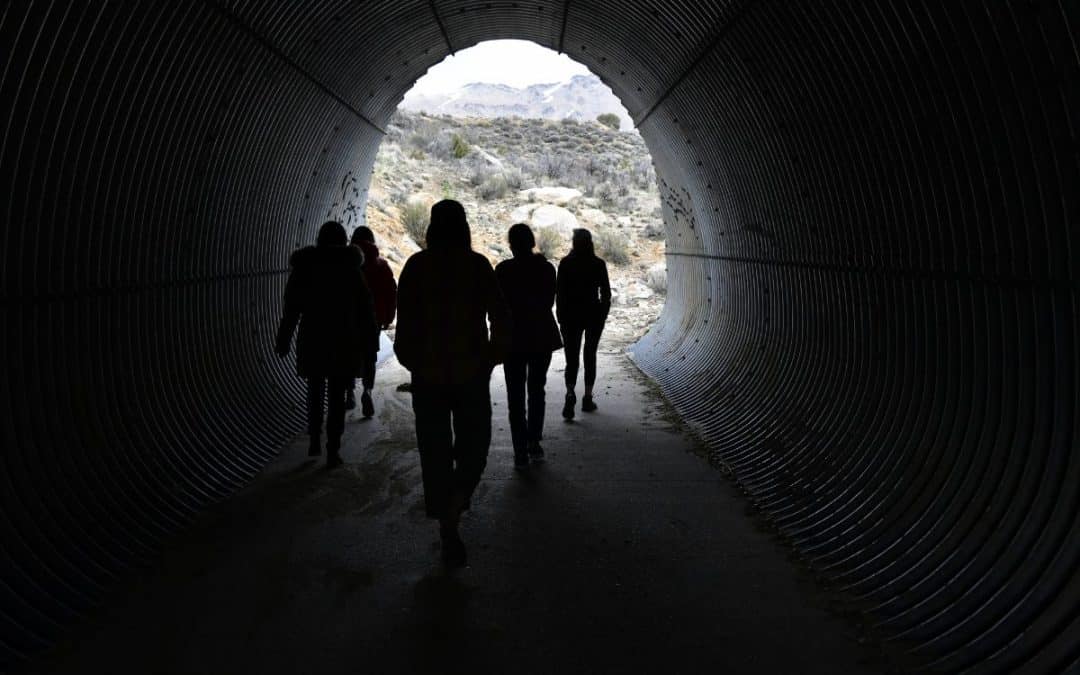
Wildlife underpass / Wildlands Network
Wildlands Network works across Canada, the United States and Mexico to create corridors for wildlife. Their work spans three decades, three nations and a coalition of stakeholders, focused on reigniting traditional migration routes for wild animals. Building infrastructure reduces collisions and reduces repair costs. Their research provides key information on the highly-endangered Red Wolf, as well as Jaguars, Ocelots and Bighorn Sheep. Creating critical gaps for wildlife passage in the US-Mexico border wall is key. By mapping exactly where animals still try to cross – and partnering with local communities to identify and protect key corridors – they push for legislative changes that have real impact.
The call to rewild our planet is a story of connection and of restoring the links life needs to flow freely across mountains, rivers, and borders. With a bold, trinational focus spanning the United States, Mexico, and Canada, Wildlands Network is a visionary organisation that has been championing ecological connectivity for over three decades. They are building a coalition of stakeholders, equipped with gap-filling data and supporting policy change, to reignite the ancient migration routes that have been used by wild animals across this continent for thousands of years, long before fences, roads, or borders existed.
Continental ‘Wildways’: reducing collisions and building resilience
Wildlands Network’s foundational work began with mapping North America’s essential ecological corridors, the ancient migratory routes and wildlife pathways, or Wildways, that have been fragmented by human infrastructure.

Bear on the US-Mexico border / Wildlands Network
Every day, over a million animals are struck and killed on U.S. roads with Americans spending $10 billion annually on vehicle damage from animal strikes. In response, Wildlands Network are pioneering Wildlife Crossings, a win-win for natural systems and human development. Infrastructure that supports the free and safe movement of wild animals over our highways is a proven solution for safer roads. Wildlife crossings with fencing can reduce those collisions by over 90%, giving Black Bears, Deer, Panthers, Wolves, Turtles, and Frogs reliable access to food, water, and mates. The Search for Safe Passage short film explains more.
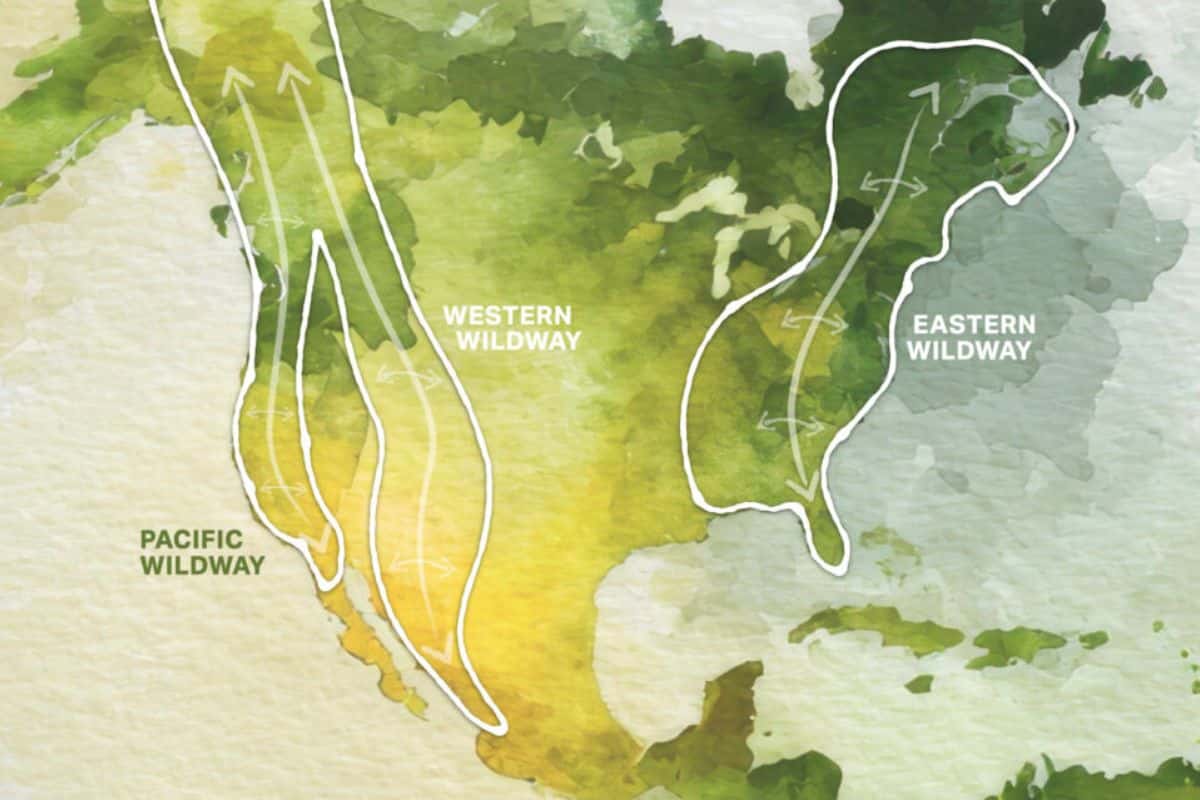
The continental vision / Wildlands Network
The solutions are place-based, ranging from highway overpasses planted with native vegetation to culverts under country roads. Their team encourages you to advocate for wildlife crossings, and show you how in this video.
Science and Policy: A Dual Pathway to Recovery
Wildlands Network masterfully integrates cutting-edge science with pragmatic policy. Their team uses sophisticated spatial modelling to identify the most critical gaps in habitat connectivity, providing a clear blueprint for action. Grand visions require grounded strategies.
This scientific foundation empowers their work to advance progressive legislation at both the state and federal levels. By fostering bipartisan support for nature recovery, they are transforming ecological principles into tangible, on-the-ground projects that reunite fractured ecosystems. Their team is actively advancing legislation that prioritises wildlife corridors and crossings, transforming transportation and land-use planning to make room for nature’s movement.
To date, over $898 million in public funds have been secured for wildlife, with 33 bills passed at state and federal level to protect habitat connectivity.
The Red Wolf: connecting their last stronghold
The Red Wolf is one of the most endangered mammals in the world. Today there are an estimated 28 individuals that survive in the wild, persecuted due to several misconceptions that their science team is working to debunk.
By conducting research and wildlife camera trapping in the Albemarle Peninsula of eastern North Carolina since 2015 – home to the only remaining wild individuals – they are gathering data that the presence of the Wolves may, in fact, support agricultural systems and game populations. This is fundamental work. By doing so, they also disprove the negative assumptions regarding Red Wolves – and prove that the Wolves do not have a negative impact on game animals in the region.
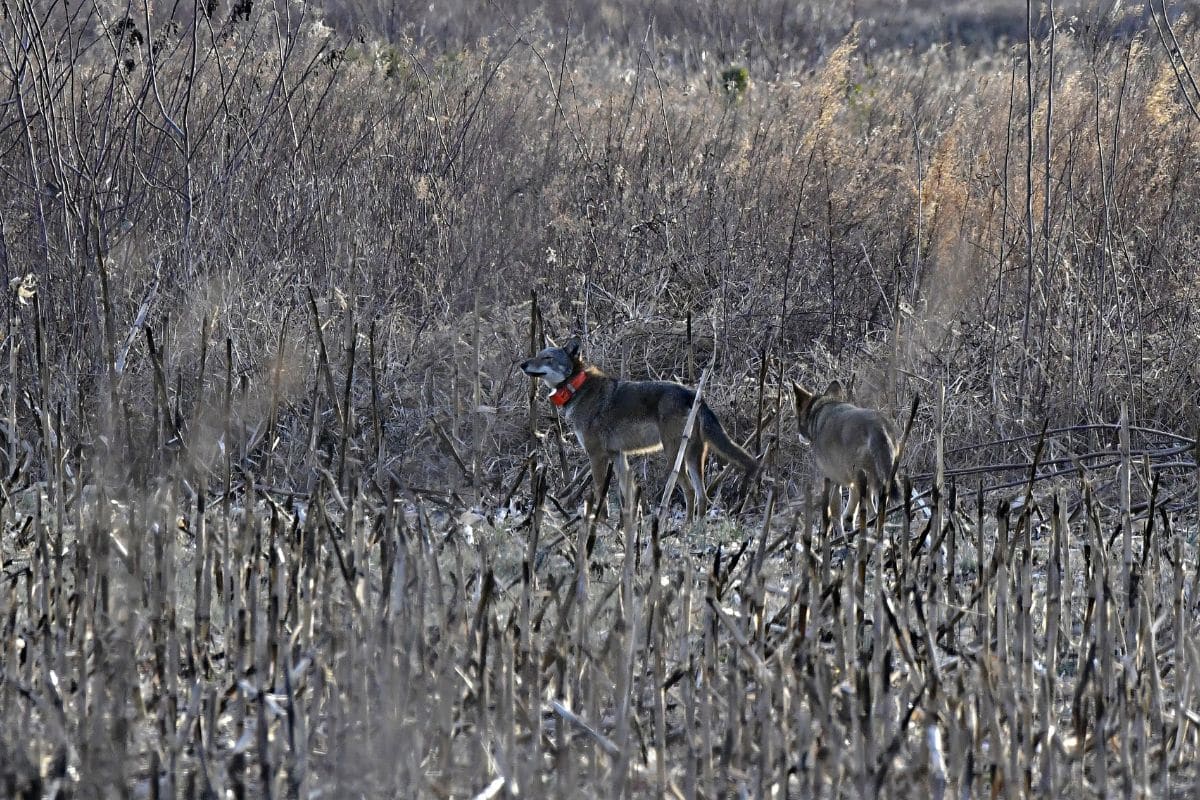
Collared Red Wolves / Wildlands Network
Historically, Red Wolves likely helped control raccoons and opossums, preventing these smaller predators from overpopulating and endangering native songbirds. For instance, the Bobwhite Quail – an economically and culturally important game bird species – are declining due to habitat loss and the overabundance of mid-level predator mammals. The return of Red Wolves, who predate these smaller predators, may positively impact the local abundance of bobwhite quail.
Beyond research, Wildlands take a holistic approach and support the return of Red Wolves by:
- Promoting tolerance for red wolves.
- Understanding the dynamics between red wolves and other populations of wildlife.
- Advocating for laws and policies that support the long-term vitality of red wolves.
- Researching viable habitat for red wolves long into the future.
- Advancing wildlife crossings over busy roads to ensure safe passage in areas critical to their survival.
The Red Wolf is just one outstanding example of the Wildlands approach that seeks solutions for people who share the lands with roaming wild animals.
Nature knows no borders: reconnecting our borderlands
For decades, the Ocelot and Jaguar populations straddling the U.S.-Mexico border has been squeezed by fences, highways, and shrinking habitat. As a result, their populations have been quietly disappearing. Border wall expansion is increasing and migration routes continue to be affected. In some key areas for Pronghorn, Mountain Lions and Bighorn Sheep, movement has dropped by as much as 86%.

Jaguar on the move / Wildlands Network
Wildlands Network researchers map exactly where animals still try to cross, turning raw data into evidence that policymakers can act on. They partner with local communities and Mexican conservation groups to identify and protect key corridors, and push for legislative changes that keep critical gaps in the wall open for wildlife passage.
The ingredients of science, coalition-building, and policy pressure is what moved the needle, giving jaguars and their neighbors a path back to reconnected habitat.
A Continental Community of Stewards
The Wildlands Network team works closely with a diverse network of local partners, including government agencies, nonprofits, and indigenous communities, to implement practical projects that restore habitat connectivity. This model of shared stewardship ensures that local knowledge and action are woven into recovery.
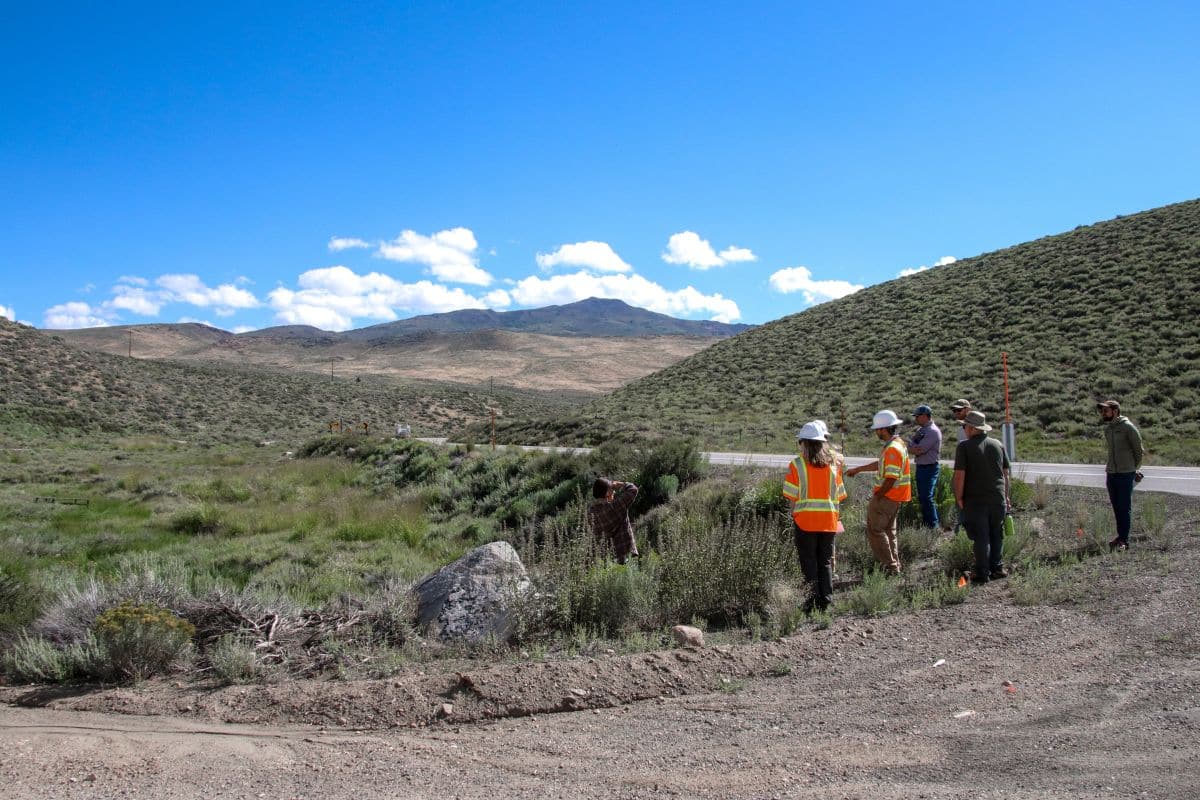
Wildlands team overviewing future site / Wildlands Network
Decade after decade, Wildlands Network has built precious experience in bridging political and ecological boundaries. We are honoured to have their expertise and continental vision as part of our growing global rewilding movement. We hope it proves to be an invaluable rewilding model.
Discover more about their vital work on their website.
Instagram: https://www.instagram.com/wildlandsnetwork/?hl=en
LinkedIn: https://www.linkedin.com/company/wildlands-network/posts/?feedView=all

About the Global Rewilding Alliance
The Global Rewilding Alliance brings together over 300 organisations across every continent to catalyse a worldwide movement for nature’s recovery. We accelerate learning, convene evidence, and share the successes and benefits of rewilding —inspiring more organisations to rewild and unlocking new resources for rewilding. Learn more about our work.